|

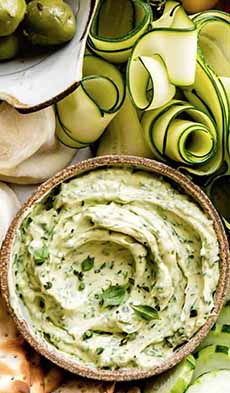
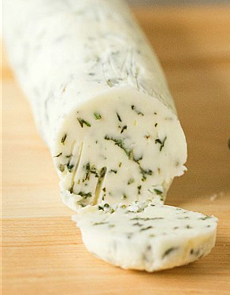
[1] Basil compound butter. The recipe is below (photos #1 and #2 © Vermont Creamery).
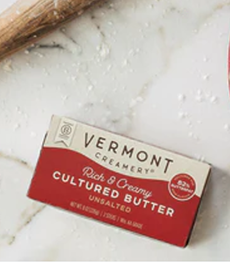
[2] Vermont Creamery’s cultured butter, a NIBBLE favorite, is available both unsalted and salted.
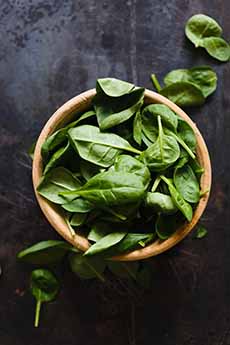
[3] Fresh basil (photo CCO Public Domain).
[4] Maître d’Hôtel butter, the original compound butter (photo © Brown Eyed Baker).
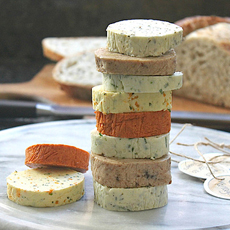
[5] Five different flavors of compound butter. To see an extensive selection, check out the compound butter at Epicurean Butter (photo © She Knows).
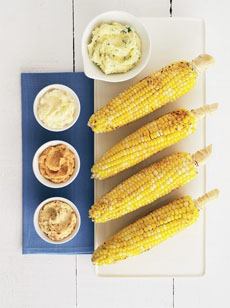
[6] Take your pick: corn on the cob with three flavors of compound butter (photo © Kraft).
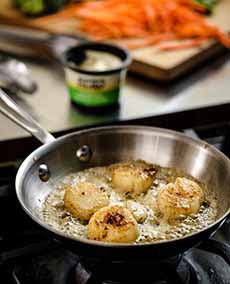
[7] Cooking scallops in Maître d’Hotel Butter (photo © Epicurean Butter).
|
|
Compound butter (flavored butter) is a chef’s trick to make savory dishes—and some sweet ones—taste better.
Seasoned with herbs, spices, or any other ingredients that would enhance and elevate a dish, compound butter can be used for/on/as a/:
Base for sauces, including pan sauces
Basting
Caramelizing onions and sautéeing vegetables
Cooking eggs
Finishing butter for poultry, steaks, and seafood
Grains: quinoa, rice, whole grains
Melted as a sauce
Pancakes and waffles
Pasta and other noodle dishes
Sautéeing and pan-frying proteins (photo #6)
Spread for bread, crackers, and sandwiches
Spreading over corn on the cob (photo #7) and other vegetables (including mashed and baked potatoes)
Tart and pie crust and other baking
The recipe for Basil Compound Butter follows, but first:
> The history of butter.
> The history of compound butter.
> The different types of butter: a glossary.
RECIPE: BASIL COMPOUND BUTTER
This recipe (photo #1), from Vermont Creamery, uses Vermont Creamery Unsalted Cultured Butter with 82% Butterfat (photo #2).
All of Vermont Creamery’s butter types are a cut above (or several cuts above). But you can substitute another unsalted butter.
Vermont Creamery’s lines of butter, cheese, and other dairy products are made with remarkable craftsmanship. Cultured cream (crème fraîche) is churned into thick, extra-flavorful butter. (See more about cultured butter below.)
Churned in small batches, the cream transforms into a rich European-style butter with up to 86% butterfat and a fresh-off-the-farm taste.
Use it as you would any butter: for baking, pan searing, sauces, and of course on bread, including toast.
Prep time is 30 minutes.
Ingredients For 6 Servings
1 cup lightly packed fresh basil leaves (photo #3)
½ cup unsalted butter at room temperature
¼ teaspoon freshly grated lemon zest
⅛ teaspoon fine sea salt
Preparation
1. BRING a small pot of water to a boil. Make an ice-water bath in a medium bowl.
2. ADD the basil leaves to boiling water; cook for 20-30 seconds or until bright green and wilted. Drain well.
3. SQUEEZE the basil with your hands to remove as much liquid as possible. Chop the basil finely.
4. PLACE the butter in a medium bowl; beat with a spatula or electric mixer to lighten it. Add the lemon zest, salt, and chopped basil; mix well.
Alternately, place all of the ingredients in the bowl of a small blender or food processor; pulse until lightly aerated, being careful not to melt the butter. Swirl the butter into a serving bowl or storage container.
5. USE immediately or refrigerate until cold or up to several weeks. Freeze for longer storage.
COMPOUND BUTTER HISTORY
Compound butter has long been a basic ingredient in French cooking. The French name is beurre composé (plural beurres composés). They are mixtures of butter and supplementary ingredients, used to enhance flavor in various dishes. They can serve as a sauce.
The original compound butter, Beurre Maître d’Hôtel (in English, typically called Maître d’Hôtel butter or parsley butter; in the U.S., steakhouse butter is a common term) was traditionally made tableside—by the Maître d’Hôtel†. This title usually referred to the head waiter. In French, the literal translation is “Master of the Hotel.”
We haven’t discovered which restaurant first created it, but it was a staple in fine French restaurants in the 19th century. According to one source:
A century and a half ago, it was the go-to accompaniment for tender grilled beefsteak….Period recommendations were to cut steaks a minimum of 3/4 of an inch thick, or up to twice as thick if preferred.
The maître d’hôtel whipped finely chopped parsley, lemon juice, and a bit of salt into softened butter* (it looked somewhat like photo #1), and pats were placed onto a freshly seared tenderloin steak to melt into the meat as it rested. The herbs and citrus added a fresh, bright note to balance out the richness of the butter [source].
Its use was extended as a flavor enhancer for baked goods, meats, seafood, and vegetables, and some flavors became popular as bread spreads (think of strawberry butter at brunch).
Over time, the ingredients whipped at tableside by the Maître d’Hôtel were transformed in the kitchen, blended, and rolled into a log that was kept in the refrigerator. The chef would take pats as needed for his dish.
When used as a topping, it is typically added just before the dish is served. Cinnamon butter, maple butter, and strawberry butter have emerged for pancakes, waffles, and toast.
When served atop the food, it can be placed on top during the last few minutes of cooking. Or, the pat is placed when the food is sent to the table. It can also be served melted from a small pitcher.
WHAT IS CULTURED BUTTER
Cultured butter is made in the European style, with pasteurized cream in a churn. This is just like regular butter but with one added step.
After pasteurization, the cream is fermented by adding a carefully selected bacterial culture. The cream rests for one day in a vat to allow the culture to produce a complex blend of flavor compounds.
As the cream thickens, it develops wonderfully tangy flavor notes of buttermilk and hazelnuts.
This is the source of the flavor difference between cultured butter and sweet cream, or American-style butter. After the fermentation, the cream is churned into butter.
“Making cultured butter is much like making wine,” says Vermont Creamery. “You want to ferment your cream like grapes, slowly, to produce the best aromas. The longer you culture, the better.”
________________
*We don’t know who created the first recipe, but subsequently, different maîtres added their own touches for flavor and color. Some of these include cayenne, Dijon mustard, garlic, paprika, shallot, vinegar, and Worcestershire sauce [source].
†At fine restaurants, the head waiter prepared certain dishes at the table for flare and showmanship. In addition to sauces, salads were tossed at the table, and desserts like Crêpes Suzette were flamed in front of enthralled diners.
|