THE NIBBLE BLOG: Products, Recipes & Trends In Specialty Foods
Also visit our main website, TheNibble.com.
|
March 12, 2015 at 5:09 pm
· Filed under International Foods, Trends
|

Bánh-mi, a Vietnamese submarine sandwich
on a baguette. Photo courtesy The Great
Pepper Cookbook by Melissa’s Produce. |
|
Nation’s Restaurant News, the major trade paper and website for those in the restaurant industry, reports that Americans are becoming more interested in trying new ethnic foods—especially (but not surprisingly) in restaurants.
What “ethnic” means varies from person to person. The NRA commented that the three most popular ethnic cuisines in the U.S.—Mexican, Italian and Chinese—have become so mainstream that they hardly count as “ethnic” these days.
Based on a survey of nearly 1,300 chefs, the NRA pinpointed five ethnic flavors and cuisines that it expects to see this year.
If you live in a major city like Los Angeles, New York or San Francisco (among others), you probably don’t have to go too far to try these. But if you haven’t had them, plan an “eating safari” for your next big city visit.
Here’s the full article by Bret Thorn.
|
|
SOUTHEAST ASIAN CUISINE
Southeast Asian cuisine was the fifth most frequently cited ethnic trend by chefs. While a full Vietnamese menu is a delightful alternative to Chinese cuisine, the trendiest item these days is the Vietnamese bánh mì sandwich.
Bánh mì is a Vietnamese version of a submarine sandwich made on a Vietnamese-style baguette (made with both wheat and rice flour). It can be vegetarian—pickled carrots, daikon and onions, for example—or include tofu or meat. Here’s a recipe.
PERUVIAN CUISINE
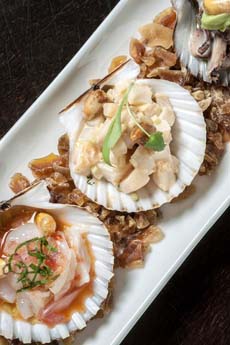
Peruvian food was the ethnic cuisine chefs pointed to fourth most frequently. Chefs at independent restaurants frequently offer ceviche, a raw seafood dish cured in a marinade, as an appetizer. Here’s a template to make your own custom recipe at home.
|
|
REGIONAL ETHNIC CUISINE
As restaurant customers become increasingly interested in learning about their food, calling something simply “Italian” or “Mexican” is not enough. Pinpointing exactly where in a foreign country a specific dish was created can add to its appeal. The chefs surveyed pointed to regional ethnic cuisine as the third most frequently cited ethnic trend.
Consider Hunam or Szechuan Chinese cuisine versus Cantonese; Venetian and Sicilian versus Tuscan Italian. Every country is divided into regions, each with its own delicious cuisine.
AUTHENTIC ETHNIC CUISINE
“Authentic” is a term that can mean as many things as “ethnic. The chefs surveyed pointed to the terms used together as the second most frequently cited ethnic trend. Unvarnished, unchanged dishes from foreign lands bring the true experience to the diner. Foodies don’t want their food dumbed down for “American palates.”
ETHNIC FUSION CUISINE
|
|

A trio of different ceviche recipes. Photo courtesy Raymi | NYC.
|
|
The number one trend has to do with the delight so many people take in mashups from different cultures. Recent hits include the cronut, the cheeseburger burrito and the ramen burger; although the concept applies to fine cuisine as well.
|
|
|
Permalink
|
|
March 12, 2015 at 8:45 am
· Filed under Cookies-Cake-Pastry, Recipes, St. Patrick's Day
|
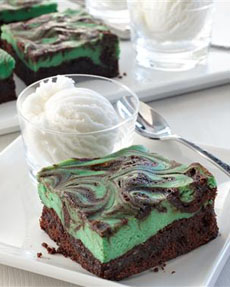
Irish Cream Swirl Brownies. Photo courtesy McCormick. |
|
The zebra brownie takes on a seasonal twist with a splash of Irish cream liqueur and green food coloring. Prep time is 20 minutes, cook time is 35 minutes.
RECIPE: IRISH CREAM SWIRL BROWNIES
Ingredients For 16 Servings
1 package fudge brownie mix (or adapt your own from-scratch recipe)
1 teaspoon pure vanilla extract
1 package (8 ounces) cream cheese, softened
1/4 cup sugar
2 tablespoons flour
1/4 cup Irish cream liqueur
1 egg
1/4 teaspoon green food color
Optional: vanilla ice cream
|
Preparation
1. PREPARE the brownie mix as directed on the package, adding the vanilla.
2. RESERVE 1 cup of batter. Spread the remaining batter in greased 9-inch square baking pan. (Tip: For easy clean-up, line the pan with foil, with the ends of the foil extending over sides of pan. Use foil handles to remove brownie from pan.)
3. BEAT the cream cheese, flour and sugar in medium bowl with electric mixer on medium speed until smooth. Add the Irish cream liqueur, egg and food color; beat until well blended. Pour over the brownie layer in pan. Drop the reserved 1 cup of batter by spoonfuls over the cream cheese layer. Cut through batter with knife several times for the marble effect.
4. BAKE as directed on package for 9-inch square baking pan. Cool in the pan on a wire rack. Cut into squares. Serve with a small scoop of vanilla ice cream, if desired.
|
|
|
Permalink
|
|
March 12, 2015 at 8:28 am
· Filed under Cocktails & Spirits, St. Patrick's Day
|
|
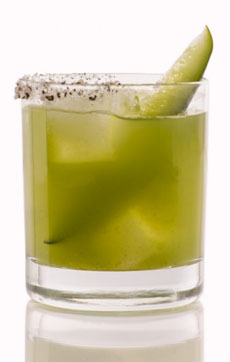
If your drink of choice isn’t beer or Irish whiskey, consider this green tequila drink with a green garnish for St. Patrick’s Day. It was sent to us by Milagro Tequila, titled “Cool as a Cucumber Margarita.”
Ahem. Every drink made with tequila is not a Margarita; yet, each week we are sent a mis-named “Margarita” recipe that only serves to confuse consumers. Let us elaborate:
WHAT IS A MARGARITA?
A classic Margarita is a tequila and lime juice drink sweetened by Cointreau or other orange liqueur.
While you can stretch the concept and substitute another fruit liqueur and/or fruit purée to call it, say, a Mango Margarita, you can’t call a cucumber drink with tequila that has no orange liqueur or lime juice a Margarita of any kind.
So, we renamed this cocktail. Feel free to submit your own name.
RECIPE: THE MEXICAN LEPRECHAUN
Ingredients Per Drink
2 parts silver tequila
1 part fresh lime juice
3 cucumber slices
Garnish: lime wheel and cucumber stick
Rim garnish: course ground sea salt and black peppercorn mix
Ice cubes
|
|
Green enough for St. Patrick’s Day. Photo courtesy Milagro Tequila. |
Preparation
1. MAKE the rim garnish and coat half the rim: With your finger, wet half the outside rim of a rocks glass with water; then twist the rim into a plate of the salt and pepper mix. You can garnish the entire rim, but not everyone may want the salt and pepper.
2. COMBINE the tequila, lime juice and cucumber slices in a blender. Blend and pour over fresh ice into the glass.
3. GARNISH with the cucumber spear and lime wheel and serve.
|
|
|
Permalink
|
© Copyright 2005-2026 Lifestyle Direct, Inc. All rights reserved. All images are copyrighted to their respective owners.