THE NIBBLE BLOG: Products, Recipes & Trends In Specialty Foods


Also visit our main website, TheNibble.com.

TIP OF THE DAY: Make Olive Oil Ice Cream


Olive oil ice cream (photo © Funkybg | Dreamstime).

  Ice cream is our favorite food, so we look for special ways to celebrate in July, National Ice Cream Month. A delicious olive oil ice cream recipe (you heard that right!) is below.

But first, we treated ourselves to three pints of Jeni’s Splendid Ice Creams, at $12.99 per pint. We found them in a specialty food market in New York City: Columbus, Ohio-based Jeni’s has begun distribution to specialty stores nationwide (see the store locator on the Jeni’s website). Jeni’s sells pints for $12.00, but the extra 99¢ was far better than the alternative of paying $65.00 in overnight shipping to get them from Columbus.

Jeni’s Splended Ice Creams are indeed splendid. Flavors such as Goat Cheese With Cherries and Sweet Corn are burned into our memory as the best ice cream we’ve ever had. The high price reflects the quality of the ingredients—it’s impossible to use better ones. You can taste the distinctive flavor of the local, grass-fed milk and cream.

But budget is a consideration for us, so for less than half the price, we’ll stick to Talenti Gelato. Both were NIBBLE Top Picks Of The Week (here are our reviews of Jeni’s and Talenti). But to our palate, Talenti Gelato is the best price-value ice cream out there: superpremium ice cream without the superpremium price.

 
For ice cream devotées, Jeni’s is a must-try. If there’s no Jeni’s near you, pick up a copy of Jeni’s ice cream cookbook.

Next, in honor of National Ice Cream Month and some very fruity Olave olive oil from Chile, we made our own ice cream: olive oil ice cream. (Fruity is just one of the flavor profiles of olive oil. See the others).

Olive oil ice cream?

If that sounds unusual to you, it was a new concept to us as well, when we first tried it in 2004. The occasion was the opening of Mario Batali’s pizzeria, Otto, in New York City. There was much to explore on the menu.

After a selection of appetizers and a pizza with lardo, we were handed the dessert menu and saw a collection of homemade gelato made by pastry chef Meredith Kutzman. We ordered the olive oil gelato—and liked the extra-creamy elegance so much that we had another dish! (Here’s the difference between ice cream and gelato.)


OLIVE OIL ICE CREAM RECIPE

In a basic custard base, olive oil substitutes for some of the heavy cream. There are as many recipes as there are recipe tweakers. Emeril Lagasse, for example, uses fewer egg yolks but amps up the fat by using half and half instead of milk. He also adds a teaspoon of vanilla extract. You can do your own tweaking to find your ideal recipe.

The key is great-tasting olive oil. You should be able to drink it from the spoon and say, “Delicious!”

Ingredients

  • 1-1/3 cups whole milk
  • 1/2 cup sugar
  • Pinch of salt
  • 1-1/2 cups heavy cream
  • 6 large egg yolks
  • 2/3 cup fruity Chilean extra virgin olive oil
  • Garnish: a drizzle of olive oil and a sprinkle of Himalayan or Maldon salt
  •  
    Olave is a fruity-style olive oil from Chile. You can buy it online (photo © Olave Olive Oil).
    _________________

    *We used fruity organic olive oil from Olave. You don’t want to use a peppery or grassy olive oil. See the different olive oil flavor profiles.

    Preparation

    1. WARM the milk, sugar, and salt in a medium saucepan.

    2. WHISK the egg yolks in a separate medium bowls. Slowly pour the warm mixture into the egg yolks, whisking constantly. Then scrape the warmed egg yolks into the saucepan.

    3. STIR the mixture constantly over medium heat with a heatproof spatula, scraping the bottom as you stir, until the mixture thickens and coats the spatula. Turn off the heat when the custard just slightly thickens.

    4. POUR the cream into a large bowl and set a mesh strainer on top. Pour the custard through the strainer and stir it into the cream.

    5. WHISK the olive oil into the custard and cream mixture until it’s well blended; then stir until cool over an ice bath.

    6. CHILL the mixture thoroughly in the refrigerator, then freeze it in your ice cream maker according to the manufacturer’s instructions. Yield: 1 quart.
     
     
    THE NEXT BEST THING

    If you don’t want to make olive oil ice cream from scratch, use fine olive oil as a topping for vanilla ice cream.

  • DRIZZLE olive oil over the top, as you would a syrup.
  • GARNISH with a pinch of coarse sea salt (for a salty counterpoint plus crunch). Pink Himalayan sea salt is especially lovely, as is the pyramid-shaped Maldon salt, which is also available in a wonderful smoked version.
  •  


    Comments off

    TIP OF THE DAY: 10 Uses For Bananas & Banana “Ice Cream” Recipe


    We didn’t buy quite this many, but it sure
    seemed like it! Photo by Alessandro Paiva |
    SXC.
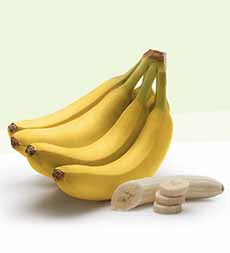
      We were overly enthusiastic when we purchased a very large bunch of bananas at an excellent price. But of course, it’s no bargain if half of them spoil.

    There were far more bananas than we could eat. It’s been too hot to turn on the oven to bake banana bread. And our overstuffed freezer precluded making banana ice cream (one of our favorites!).

    Fortunately, we received our weekly email from Care2.com—one of our favorite e-newsletters—promising 15 ways to use bananas.

    Written by Katie Waldeck, we repeat most of them here in edited form. Here’s the original article.

    We haven’t tried them (except for the banana soft serve), so let us know what you think.

     
    10 USED FOR BANANAS

    Beauty

    1. Condition Your Hair. Use Dr. Oz’s banana hair treatment.

    2. Whiten Your Teeth. Don’t throw away the peel: Rub the inner side on your teeth for about two minutes before brushing. The magnesium, manganese and potassium in the peel will help to whiten your teeth naturally.

    3. Make A Facial Mask. An anti-aging mask made from mashed bananas, heavy cream, honey and oat flour? Sounds like banana pudding! Here’s the recipe. Don’t let the dog get too close.

    4. Make A Sugar Scrub. Whip up a scrub to exfoliate your skin. Here’s a recipe. Make a double batch and bring some to a friend (keep it in the fridge until ready to use, and use it within a few days).


    Health

    5. Insect Bite. If you don’t have any cortisone cream or other medication, rub the inner banana peel on the bite to alleviate the itch.

    6. Splinter. Press the inside of the banana peel onto the splinter. The fruit’s natural enzymes are said to raise the splinter so you can remove it more easily.

    House & Garden

    7. Polish Leather & Silver. Rub the banana peel on the item and buff with a cloth. Hmm…test it on older shoes before trying it with the Louboutins.

    8. Fertilize Plants. Instead of tossing the banana peels, dry them and grind them into an excellent mulch for seedlings and young plants. Some say that the peels can also fight off aphids. But as one member of a gardening forum added to the conversation thread, “About the only way a banana peel would eliminate aphids would be if you placed the aphids on a flat surface and beat them with it.”


    Bananas growing on the tree. Photo by Sergio Roberto | SXC.


    In The Kitchen

    9. Dog Treat. Bananas are a perfectly safe, and perfectly healthy, treat for your beloved pooch!

    10. Make “Soft Serve.” Turn those extra bananas into a healthful and lower calorie approximation of soft serve ice cream. Make as much as you plan to eat at one time.

  • PEEL the bananas and cut into small pieces.
  • FREEZE for 2 hours and toss into a food processor.
  • BLEND in a food processor, scraping down the bowl as necessary, until the frozen chunks turn into “soft serve.”
  •  
    BANANA TRIVIA

    The banana “tree” is actually a jumbo perennial herb with huge leaves. The word “banana” is derived from the Arab word for finger, “banan,” referring to the fact that the bananas in a bunch look like fingers.

    Enjoy more banana trivia and the history of bananas.
      

    Comments off

    Nitrite-Free Fearless Franks From Niman Ranch


    Trade up to better franks. Photo courtesy Niman Ranch.
      Yesterday when we put the dogs on the barbie, they were uncured Fearless Franks from Niman Ranch.

    Not all hot dogs are created equal. Many supermarket brands are full of fat instead of meat and make up for the lower-quality meat by over-spicing.

    Bite into a Fearless Frank and you taste superior quality meat plus a delightful smokiness. The texture is firm and toothsome. The franks are fearless because the meat is free of antibiotics, added hormones, and nitrites, and is fully traceable.

    The all-beef franks are naturally cured with a proprietary blend of celery juice and spices. They give peace of mind to those who prefer nitrate-free preparations.

    Fearless Franks are more expensive but well worth it. The mantra: Eat better meat; if cost is an issue, eat less meat.

    You can buy Fearless Franks at Whole Foods Markets and other fine retailers, as well as online from Niman Ranch.

    > The history of hot dogs.

    > A brief history of meat preservation is below.


    THE DIFFERENCE BETWEEN CURED & UNCURED MEATS

    Cured meats (bacon, ham, contain the chemical preservatives sodium nitrite and (or) sodium nitrate. Sodium nitrate is added to preserve and enhance a meat’s flavors and shelf life.

    When nitrates break down through cooking, digestion, or other means, they form nitrites, which are potential carcinogens.

    Manufacturers and the USDA claim that the level of nitrates/nitrites is too low to cause problems. But there is enough of a controversy that it makes some people wary of ingesting nitrates and nitrates. They’ve given up hot dogs and other cured meats.

    Instead, look for uncured hot dogs, like Fearless Franks.


    Why Are Nitrates Used?

    Nitrates and nitrites are chemicals that occur naturally in all plant foods and some animal products.

    Both substances are extraordinarily useful to processed meat manufacturers. They provide cured meats with their characteristic flavor and pink color. These chemicals are also very important in food preservation; they’re especially good at inhibiting the growth of microorganisms, including those that cause botulism. They’ve been used for these purposes since the late 1800s.

    The chemical reactions leading to the creation of carcinogens are not subject to speculation, nor are the formations of the carcinogens themselves. Both are well-documented. Although carcinogens have been demonstrated to cause cancer in laboratory animals, and some research has suggested that individuals with heavy consumption of cured meats have higher risks of colon and pancreatic cancers, no research has shown definitively that they also cause cancer in humans.

     
    Uncured franks are made without nitrites. Photo courtesy Niman Ranch.
     
    This is why to many people, nitrates and nitrites are a non-issue.
     
     
    A BRIEF HISTORY OF MEAT PRESERVATION

    Ancient man preserved meat by cooking it until most of the moisture (which allows bacteria to grow) was removed. The result: jerky.

    Later, man searched for a less chewy solution, and found it in salt and saltpeter (the natural form of potassium nitrate).

    During modern times, a product called pink salt contains a standardized amount of sodium nitrite (it’s not the same product as the gourmet pink Himalayan sea salt) has become the preferred medium for curing and preserving meats.

    The use of nitrites and nitrates in the production of cured meats is now carefully regulated, with a concentration not to exceed 200 parts per million in finished products. Thus, The amount of nitrates and nitrites you ingest when eating cured products is considered to be negligible and, according to the USDA, does not pose any health risk.


    CHECK OUT WHAT’S HAPPENING ON OUR HOME PAGE, THENIBBLE.COM.


    Comments off

    COOKING VIDEO: Vegetarian Italian Sausage


    Since this week’s Top Pick is the Veggie Patch vegetarian line, our weekly video recipe follows suit.

    These delicious vegetarian sausages are billed as vegetarian in the video, but they’re actually vegan—no animal-based ingredients are used. Even the special flavoring, Bill’s Best Chik’Nish Seasoning, is vegan.

    The meatless sausages are made with a base of gluten flour and garbanzo bean flour, plus all of the traditional Italian sausage seasonings: garlic, onion, chili flakes, fennel seeds, oregano, pepper and paprika.

    You don’t have to stuff sausage casings, either. Because the flours act as bonding agents, the ingredients form a dough that is hand-rolled into sausage shapes, then steamed.

    Make them for yourself, or as a gift for a vegetarian or vegan friend.


    Comments off

    JULY 4TH RECIPE: Red, White & Blue Potato Salad

    Whenever we’re asked to a July 4th party, we always bring our Red, White & Blue Potato Salad. It’s special on Independence Day and potato salad occasion.

    While we generally enjoy sharing, we keep our exact recipe a secret. We worked for years to get the dressing right!

    But the United States Potato Board sent us a substitute red, white and blue potato salad recipe. It mixes three different potato types with onions, bell peppers, and ham in a balsamic vinaigrette. This fancy potato salad is a world away from a potato-mayonnaise mix, a delight for potato salad fans.

    The recipe was created by Jill Melton, MS, RD, former senior food editor of Cooking Light and director of communications for Food Insight. We had bacon on hand and substituted it for the ham: delicious!

    And a bonus: Here’s another red, white and blue potato salad recipe, with white stars cut from non-browning Envy apples.

    > Fun potato trivia (below).

    > The history of potatoes.

    > The different types of potatoes.

    > 60 more red, white and blue recipes.
     
     
    RED, WHITE & BLUE POTATO SALAD RECIPE

    Ingredients
     

  • 1 pound small white potatoes (Creamer,* Fingerling or Yukon Gold)
  • 1 pound small red potatoes
  • 12 ounces Purple Peruvian potatoes
  • 3 tablespoons walnut oil or olive oil, divided
  • 2 ounces chopped ham or bacon
  • 1/3 cup chopped walnuts
  • 8 garlic cloves, finely chopped
  • 3 tablespoons sherry or white balsamic vinegar
  • 1 cup finely chopped red or orange bell pepper
  • 4 green onions, chopped
  • 1/2 teaspoon salt
  • 1/4 teaspoon freshly ground pepper
  •  
    Preparation

    1. Cut the potatoes into 1-1/2 inch pieces (do not peel). Steam for 25 minutes or until the potatoes are tender.

    2. Heat 1 tablespoon of oil in a medium skillet. Add ham, walnuts, and garlic. Sauté 10 minutes. Add sherry vinegar, and stir well.

    3. In a large bowl, toss ham mixture with potatoes, additional 2 tablespoons of oil, red pepper, green onions, salt, and pepper. Serve warm or cold with grilled steak, burgers, chicken, or fish.
     
     
    Find more delicious potato recipes from the U.S. Potato Board.

     
    [1] A potato salad for any festive occasion (photo © U.S. Potato Board).

    Red, White & Blue Potatoes For July 4th Potato Salad
    [2] Petite potatoes in red, white, and blue (photo © Potato Goodness).

    Purple Peruvian Potatoes For July 4th Potato Salad
    [3] Some varieties of purple potatoes have a more blue hue, but for July 4th, we’ll pretend these are blue (photo © Mona Makela | iStock Photo).

     
    ________________

    *Creamer potatoes are potatoes that are harvested while young, tender, and small—often as little as one inch in diameter. The flesh contains a lower level of starch, which makes them suitable for boiling. Creamer potatoes are typically Yukon Gold or red potatoes, which are called gold creamers or red creamers, respectively.


    Alexia Brand Frozen Potatoes
    [4] Most of the potatoes sold in the U.S. are frozen. A large amount is sold to restaurants and other foodservice (photo © King Soopers).

    [5] Fresh potatoes are the second largest category. These Yukon Gold potatoes are a favorite of chefs and foodies (photo © Bonnie Plants).

      POTATO TRIVIA

    According to the USDA Economic Research Service, potatoes are the largest vegetable crop in the U.S., with an annual production of 41.3 billion pounds. More than one million acres of potatoes are planted annually—the equivalent of filling the entire state of Rhode Island with potato plants.

    The U.S. Per Capita Potato Consumption is 117 pounds a year. Here’s the breakdown of what we eat, based on the 2010 forecast:

  • Frozen Potatoes: 50 pounds
  • Fresh Potatoes: 37 pounds
  • Potato Chips: 17 pounds
  • Dehydrated Potatoes: 12 pounds
  • Canned Potatoes: 1 pound
  •  
     
    TOP 10 POTATO PRODUCING STATES
    (in Billion Pounds)†

    Potatoes are grown in all 50 states, but most of those 41.3 billion pounds are grown in:
    1. Idaho 11.5
    2. Washington 9.3
    3. Wisconsin 2.9
    4. Colorado 2.3
    5. North Dakota 2.3
    6. Minnesota 2.0
    7. Oregon 1.9
    8. Michigan 1.5
    9. California 1.5
    10. Maine 1.5

    ________________

    †2008 Figures from USDA/NASS.


    CHECK OUT WHAT’S HAPPENING ON OUR HOME PAGE, THENIBBLE.COM.


    Comments off

    The Nibble Webzine Of Food Adventures


    © Copyright 2005-2026 Lifestyle Direct, Inc. All rights reserved. All images are copyrighted to their respective owners.