THE NIBBLE BLOG: Products, Recipes & Trends In Specialty Foods


Also visit our main website, TheNibble.com.

TIP OF THE DAY: Tea Ice Pops

Some days are so hot and humid that iced tea isn’t quite enough.

So freeze it into ice pops.

Favorite herbal teas make tasty pops. Just brew them to twice the concentration—two tea bags or two teaspoons of loose tea per cup.

Add your sweeter and freeze. You can also add a half teaspoon of spirit (gin, tequila, vodka), liqueur, or a splash of wine.

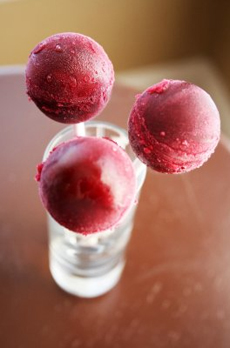
In the photo, chef Michael O’Boyle of Chicken Fried Steak.com has made ice pops with hibiscus tea, using round ice cube molds instead of conventional ice pop molds.

Make some and cool off!

Find more of our favorite recipes for sorbet and other frozen desserts.

 
Photo courtesy chef Michael O’Boyle, ChickenFriedSteak.com.


Comments off

PRODUCT: Courvoisier Rosé


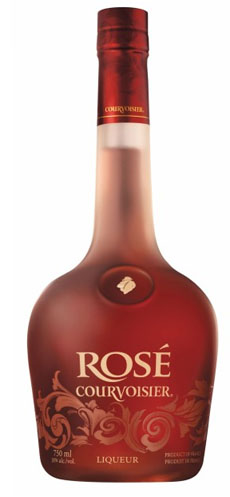
Photo courtesy Courvoisier.
  Rosé wine* is a summer favorite, lighter in alcohol and lighter on the palate than red wines. Last year, in the spirit of summer, Courvoisier, one of the world’s leading Cognac houses, launched Courvoisier Rosé.

With the color of a rosé wine, Courvoisier Rosé is a blend of Cognac—made from distilled grapes—and red wine grapes, pressed as they are for wine.

The color and flavor of Courvoisier Rosé are equally exquisite: a rosy-hued spirit with notes of blackberry, black currant, cherry, honey, peach and vanilla. It gives the impression of a fine liqueur rather than Cognac (liqueurs are distilled alcohol flavored with cream, flowers, fruit, herbs, nuts and spices, with added sugar).

Traditional Cognac is 40% alcohol alcohol by volume (80 proof), while Courvoisier Rose is only 18% (36 proof); the full flavor belies the lower alcohol.


Easy drinking Courvoisier Rosé is an innovation in the Cognac category, and can be enjoyed on every occasion, year-round. Try it with dessert!

A 750ml bottle has a suggested retail price of $24.99. Different and delicious in a handsome bottle, it’s a great gift item.

*The juice of both red and white wine grapes is white (or light) in color. The color of red wine comes from extensive contact the juice has with the pressed wine skins. Rosé wines, also called blush wines, are made from red wine grapes that are only allowed minimal skin contact—just enough to achieve the rosy color. The skins are then discarded, rather than left in contact throughout fermentation, as they are with red wine production.


We enjoy sipping Courvoisier Rosé as is, or added to sparkling wine—an update of the Kir Royale:

ROSÉ SPARKLER

Ingredients

  • 1 part Courvoisier Rosé
  • 1 part berry liqueur (blueberry, raspberry,
    strawberry)
  • 3 parts Champagne or other sparkling wine
  • Garnish: fresh berries
  •  
    Preparation

    1. Shake Courvoisier Rosé and liqueur together; strain into a chilled Champagne flute.

    2. Top with Champagne. Add 3 blueberries or 1-2 raspberries to the flute or on a cocktail pick, or perch a notched strawberry on the rim.
     
     
    Find more of our favorite cocktail recipes.


    The handsome bottle begs to be given a gift. Photo courtesy Courvoisier.

    Comments off

    TIP OF THE DAY: Rethink Pasta Primavera


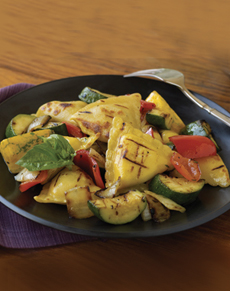
    A new look at Pasta Primavera, with shaved vegetable strips (photo and concept © chef Michael O’Boyle, Chicken Fried Gourmet.

      To add more excitement to your cuisine, rethink classic dishes. Tweak their preparation in one small way to make them seem new and different.

    Here’s a refreshing idea from Chef Michael O’Boyle of ChickenFriedGourmet.com: a different perspective on the classic dish, Pasta Primavera.

    Instead of cutting the vegetables into coins, matchsticks or other shapes, use your vegetable peeler to create long strips, mirroring the shape of fettuccine.

    Not only is it visually appealing, but the way the vegetables mesh with the fettuccine makes it easier to eat your veggies.

    Pick three veggies in contrasting colors: carrots, green-skinned zucchini, red bell peppers, violet-colored red cabbage and yellow-skinned summer squash. (When peeled, most of the zucchini and yellow squash will have only white flesh.)

     
    PASTA PRIMAVERA RECIPE, NEW SCHOOL

    The vegetables should be shaved into 3/8″ strips, or as close as possible to the width of the fettuccine.

    Ingredients

  • 2 carrots, peeled
  • 1 zucchini or yellow squash, unpeeled
  • 1 red bell pepper
  • 1/4 cup olive oil
  • Sea salt and freshly ground black pepper to taste
  • 1 teaspoon oregano or 1 tablespoon fresh parsley
  • 1 pound fettuccine
  • 1/2 cup grated Parmesan
  •  
    Preparation

    1. Cook the fettuccine according to package directions.

    2. When the fettuccine is almost finished cooking, quickly steam the vegetables (you can do it in the microwave—check after 15 seconds).

    3. In a large bowl, toss the pasta, vegetables and herbs with the olive oil. Season with salt and pepper, as needed. Sprinkle with grated cheese and serve; or allow diners to add their own cheese at the table, as you prefer.


    Comments off

    RECIPES: Mario Batali’s Pizza Concepts

    What’s up at your pizzeria? Is it dishing out the toppings you hunger for?

    Here’s what Mario Batali serves up at Otto Pizzeria in New York City:

    Familiar American Classics

  • Bianca, a white pizza with olive oil and sea salt
  • Marinara, tomato and garlic with heat from fresh chiles
  • Margherita, with tomatoes, basil and mozzarella di bufala (how buffalo mozzarella is different from cow’s milk mozzarella, which is called fior di latte in Italian)
  • Pepperoni, tomato with cacio* (a Tuscan sheep’s milk cheese), mozzarella and spicy salame (i.e., pepperoni)
  • Quattro Formaggi, tomato with four cheeses: cacio, mozzarella, ricotta and Taleggio, a mild, creamy yet aromatic cheese from the Taleggio Valley in Lombardy
  •  
    Do you want to eat this now? Here’s the recipe. Photo courtesy Babbo restaurant.
     

  • Quattro Staggioni, tomato and mozzarella with the “four seasons” represented by artichokes, cotto† (cooked ham), mushrooms and Swiss chard
  • Romana, with tomato, anchovy, capers, chiles and mozzarella
  • Vongole, the classic clam, garlic and mozzarella pizza
  •  
    *Cacio di Roma is a sheep’s milk cheese produced in Rome. It is often compared to Pecorino Romano, a more famous sheep’s milk cheese from the same region. Cacio is aged for only four weeks and is softer, with a better balance of salt and cream. It as an excellent depth of flavor despite its youth, and is popularly served as a simple pasta with cracked pepper. Pecorino Romano is aged for at least 6 months and is much saltier.

    †Prosciutto (pro-SHOO-toe) is the Italian word for ham, used in English to refer to dry-cured ham (prosciutto crudo). A regular cured ham—what Americans refer to as “ham,” in Italian is prosciutto cotto, cooked ham. Parma ham is prosciutto produced in the Parma Protected Designation of Origin area. Serrano ham, or jamón serrano (serrano means sierra or mountain) is a dry-cured Spanish ham, similar to prosciutto: both are covered with salt and then hung to dry. Since prosciutto is cured for 2 years and serrano for just 6 to 18 months, prosciutto is generally a drier product.
     
    Italian Twists

  • Aglio, Olio & Pepperoncino, garlic, olive oil and fresh chiles
  • Cacio e Pepe, mozzarella, cacio, Pecorino Romano, Parmigiano Romano and black pepper—a twist on the popular Cacio e Pepe pasta dish with cacio cheese and black pepper
  • Fennel & Bottarga, fish roe, typically from grey mullet or tuna), with tomato, peccorino and mozzarella cheeses (more on bottarga)
  • Funghi & Taleggio, wild mushrooms and Taleggio cheese
  • Potato, Anchovy & Ricotta—if you don’t like anchovy, substitute salmon caviar
  • Prosciutto Arugla, tomato, cacio and mozzarella cheeses, crudo (raw fish—think slices of sashimi) and arugula
  •  
    New Ideas

  • Lardo, draped with pork fat cured with herbs and spices (more about lardo)
  • Pane Frattau, on a crust of Sardinian bread with tomato, pecorino cheese and a fried egg
  • Swiss Chard & Goat Cheese
  •  
    Find more of our favorite gourmet pizza recipes.


    Comments off

    TIP OF THE DAY: Make Nut Vinaigrette

    Some people like to toss nuts atop a salad for taste and protein (toast the nuts first for even better flavor—here’s how).

    So instead of adding a teaspoon of Dijon mustard to flavor your vinagrette, try a ground nuts. Pistachio is delicious, as are pecan and walnut. But play with whatever you have on hand.

    If the recipe below is not nutty enough for you, add more by the teaspoonful until you reach your desired nuttiness (test the vinaigrette by dipping some lettuce into it, rather than tasting off the spoon).

    Use this ratio to start, whisking together:

  • 3 tablespoons olive oil
  • 1 tablespoon wine or sherry vinegar
  • 1 teaspoon ground nuts
  •  
    Dress your favorite greens or other vegetables. You can still toss some whole or chopped nuts onto the salad for even more flavor and texture.

     
    Pistachio vinaigrette in the blender. Photo and concept courtesy Chef Michael O’Boyle, ChickenFriedGourmet.com.
     
    HOW ABOUT NUT OIL?

    There is nothing more delicious in a vinaigrette than a fine nut oil. Walnut oil is a staple of our vinaigrettes and one of our favorite easy salad courses, mixed baby greens with a circle of goat cheese and a garnish of beets (try matchsticks or whole baby beets—don’t use pickled beets as the pickling liquid will clash with the dressing).

    We typically buy nut oils from La Tourangelle, a California company that is reliably excellent (it was a NIBBLE Top Pick Of The Week—read the review). Give a can as a gift to a fellow food lover.

  • Roasted Almond Oil
  • Roasted Hazelnut Oil
  • Roasted Pecan Oil
  • Roasted Walnut Oil
  • Roasted Pistachio Oil
  •  

    Once you open the container, keep it in the fridge. You’ll need to let it come to room temperature going forward (quick trick: put the bottle in a container of hot water), but it helps to keep the oil fresh.

    Another suggestion: When you first start to use nut oil, use 2 tablespoons plus one tablespoon olive oil in the vinaigrette ratio. Some people prefer a milder nut taste.

    Salad is about to taste a whole lot better!

    Find more of our favorite oils and salad dressings.


    Comments off

    The Nibble Webzine Of Food Adventures
    RSS
    Follow by Email


    © Copyright 2005-2026 Lifestyle Direct, Inc. All rights reserved. All images are copyrighted to their respective owners.