|
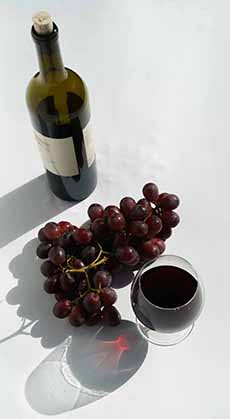
[1] Carménère has become a flagship grape in Chile (photo © Dziana Hasanbekava| Pexels).

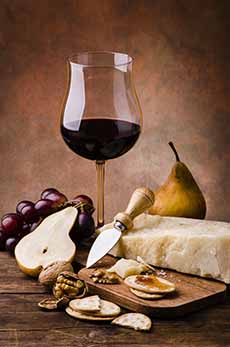
[2] The wine pairs very well with aged cheeses—in this photo, it’s Parmigiano-Reggiano (photo © Luigi Giordano | Dreamstime).
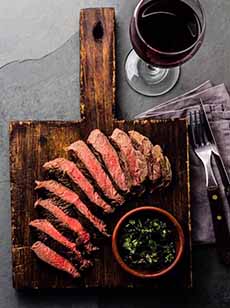
[3] Serve it with steak and most other meats (photo © Organic Beef Company| Facebook).
|
|
November 24th is National Carmenénère Day. Many people will say, understandably, “What’s that?”
People looking for a good value in red wine should take a look. Many bottles are available in the $10 to $20 range, with the crème de la crème going for $100 and more.
> The History Of Wine.
> The Year’s 25+ Red Wine Holidays.
> Pairing Wine & Cake.
> Pairing Wine & Chocolate.
> Pairing Wine & Desserts.
> Pairing Wine With Ice Cream & Sorbet.
THE HISTORY OF CARMÈNÉRE
Carmenénère is a red wine grape variety that originated in the Bordeaux region of France, a natural crossing of Cabernet Franc and Gros Cabernet. It was traditionally used in blending with other grape varieties, particularly Merlot and Cabernet Sauvignon.
The grape was thought to have been largely extinct in Europe due to the phylloxera epidemic* in the 19th century, but it was rediscovered in Chile in the mid-1990s.
It was then that Chilean winemakers discovered that some of the Merlot vines they were cultivating were actually Carménère. This led to the realization that Carménère had unknowingly been grown in Chile for decades, masquerading as Merlot.
With a focus on the Carménère varietal achieved great success in Chile, where it found a particularly suitable environment for cultivation†.
Carménère has become a flagship grape for Chilean winemakers, and it has gained popularity both domestically and internationally.
WHAT DOES CARMÈNÉRE TASTE LIKE?
Carménère wines are medium-bodied and known for their deep red color, often with a purplish hue, and a rich, full-bodied flavor profile.
They exhibit dark fruit notes such as blackberry, black cherry, plum, and raspberry, along with hints of green bell pepper, herbal, black pepper, and other spicy notes.
Some expressions may also showcase chocolate, tobacco, or vanilla notes.
The tannins in Carménère can be moderate to high, contributing to the wine’s structure, and the acidity is generally moderate. These make the wines well-suited for aging.
With age, the wine can develop additional complexity and time will smooth out its tannins.
As with all wines, the characteristics of Carménère can vary depending on terroir (the region where it’s grown, the climate, etc.) and the wine-making techniques employed.
PAIRING CARMÈNÉRE WITH FOOD
Carménère is easy to enjoy on its own and to pair with food, particularly with hearty dishes. Serve it with:
Aged cheeses
Grilled, roasted, or smoked meats: barbecue, beef, chicken, lamb, pork, turkey, veal, and stews
Spicy dishes
The wine’s herbal and spicy notes can also work well with dishes that incorporate herbs and spices, making it a versatile choice for pairing.
|