THE NIBBLE BLOG: Products, Recipes & Trends In Specialty Foods


Also visit our main website, TheNibble.com.

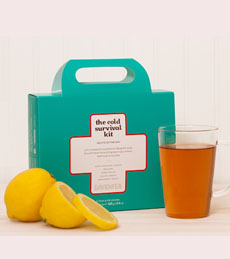
GIFT: Cold Survival Kit Of Tea


Perk up the misery of a cold or flu with
specially selected teas. Photo courtesy
David’s Teas.
  If you have a friend or loved one who’s been done in by cold and flu season, consider this misery-fighting Cold Survival Kit from David’s Teas.

The collection of five super-soothing teas helps battle virulent viruses:

  • Sip Secret Weapon at the first sign of a cold (white tea, almond slices, cacao nibs, licorice, goji berries, orange peel).
  • For a sore throat, try a little Super Ginger (ginger, rooibos tea, pink peppercorns, black pepper, white pepper) or Bravissimo (licorice root, chamomile, rose hips, orange peel, peppermint, goji berries).
  • Feeling queasy? North African Mint will settle your stomach (cardamom, peppermint, ginger, hojicha green tea, licorice root, fennnel, clove, black pepper).
  • And when all else fails, dip into your emergency supply of Cold 911 (eucalyptus oil, goji berries, juniper berries, peppermint, orange oil).
  •  

    The Cold Survival Kit is $19.50 at Davud’s Tea stores in Boston, Chicago, New York City, San Francisco and Westport or online at DavidsTea.com.


    HOW DOES TEA HELP A COLD?

    Tea isn’t a miracle cure, but when you’ve got a cold, every little bit helps.

    According to WebMD.com, people with colds should drink lots of fluids to prevent dehydration, compensating for the fluids lost in all that nose-blowing, coughing and sneezing.

    Hot liquids are better than cold ones: They help to relieve nasal congestion and the pressure from blockage. They also help to soothe the inflamed membranes that line the nose and throat, making breathing easier.

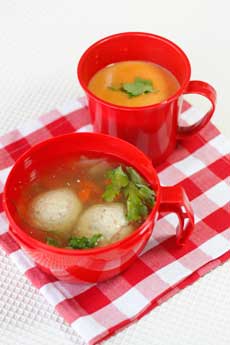
    The same dynamic comes from “Jewish penicillin,” chicken soup (any hot soup will do).

    If you’ll be drinking lots of tea, make some of it caffeine-free. Caffeine is a diuretic, which removes water from the body.

     
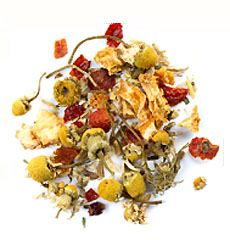
    Bravissimo, a throat-soothing, caffeine-free blend of chamomile, goji berries, licorice, orange peel, peppermint and rose hips. Photo courtesy DavidsTea.com.
     
    SPEAKING OF CHICKEN SOUP…

    You can also send a delicious chicken soup gift.
      

    Comments off

    VALENTINE GIFT: Rose Tea, Black & Herbal


    Rose tea is an old European tradition: Real rose petals are blended into black or herbal tea. Photo courtesy Republic Of Tea.

      For someone who’s counting calories and doesn’t want box of Valentine chocolate, how about some calorie-free rose petal tea?

    Consider these limited edition offerings from Republic Of Tea:

  • Rose Petal Black Full-Leaf Tea: This blend combines the light spice of delicate, young rose buds and rose petals with the sweet fullness of China black tea. A Victorian tradition, it was served in fine porcelain cups to kings and queens. A 2.8-ounce tin, certified gluten free, makes 50-60 cups of tea; $11.50.
  • Russian Rose Caravan Tea: This blend was created to celebrate the recent film Anna Karenina. The tea has a profile like Anna’s: bold, passionate, beautiful and elegant. The blend tea pairs the rich wood-smoke signature of fine black teas from the Russian caravans (China black tea, India black teas, Lapsang souchong smoked tea) with rose petals and aromatic rose flavor. A tin of 50 tea bags is $9.50.
  •  

  • Raspberry Rose Hibiscus Tea Bags (herbal): Raise a cup of this romantic, caffeine-free blend, with its base of flavorful, healthful Nigerian hibiscus petals, sweet dried raspberries and delicate rose petals. The fruity and floral notes are spot-on for Valentine’s Day. Tin of 36 tea bags, $11.50; also available in bulk.
  •  
    There‘s also a caffeine-free Valentine Gift Tea Set: a tin of Cuppa Chocolate Strawberry Chocolate Tea (rooibos herbal tea with chocolate and strawberry) and one of Raspberry Rose Hibiscus Tea, $23.95. The teas are packed in an attractive, reusable gift box with a gold foil-embossed red lid. We couldn’t find it using the website’s search box on the site, so use the link above.

    For those who say “hold the roses, just give me chocolate,” there’s a Cuppa Chocolate Tea Sampler Cube, $23.95, with calorie-free, chocolate herb tea bags in:

  • Banana Chocolate
  • Coconut Cocoa
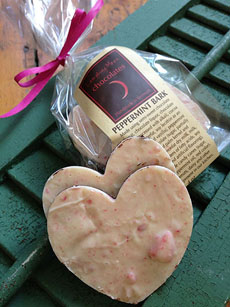
  • Peppermint Chocolate
  • Red Velvet Chocolate
  • Strawberry Chocolate
  •  
    Champagne is lovely, but tea is the best way to drink to your health on Valentine’s Day.

    FIND A RIOT OF INFORMATION ABOUT TEA IN OUR TEA SECTION.


    Comments off

    TIP OF THE DAY: Bake A Pie For National Pie Day

    January 23rd is National Pie Day (see all the American food holidays). Which pie should you choose for your celebration? The pie-sibilities are endless.

    The most popular pies, according to a survey* sponsored by the makers of Mrs. Smith’s and Edwards desserts:

  • Apple pie remains the perennial favorite, chosen by 27% of the voters.
  • This year there’s a tie for second place: chocolate pie and pecan pie, both at both 14%. Thirteen percent want cherry pie.
  • Pumpkin pie garnered 12% of the votes, and Key lime pie 10%; 10% chose “other.”
  • Whipped cream vs. no whipped cream: 38 % prefer their pies “naked,” versus 37% for whipped cream; 25% want it à la mode.
  •  
    Surveys give participants a finite number of choices. Internet searches searches tell a different “favorite pie” story. The top searched pies on Yahoo! over the past 30 days:


    America’s favorite pie. Photo courtesy USApple.org.

    1. Pecan pie
    2. Apple pie
    3. Sweet potato pie
    4. Lemon meringue pie
    5. Pumpkin pie
    6. Peanut butter pie
    7. Key lime pie
    8. Cherry pie
    9. Chocolate pie
    10. Buttermilk pie

    The next 10 most-searched pies: banana cream, chocolate pecan, Dutch apple (with a crumb topping of flour, brown sugar, oats and butter), blueberry, coconut cream pie, mud pie, egg custard pie, lemon pie, French silk pie (a variation of chocolate pie) and custard pie.


    The original pies were savory, not sweet:
    meat pies were the rule for the first thousand
    years or more. They were rectangular, not
    round; and the crust was often made just to
    hold the contents (it wasn’t eaten). Photo of
    chicken pot pie courtesy MackenzieLtd.com.
     

    THE HISTORY OF PIE

    While the French have the reputation as the great pastry makers, the ancient Egyptians, who were great bread bakers, worked out the details of early pastry.

    Theirs were savory pies: a dough of flour and water paste was made to wrap around meat and soak up the juices as it cooked. The dough was used as a vessel to cook the contents—in lieu of an expensive baking pan—and was typically not eaten.

    Pastry was further developed in the Middle East; it was brought to Mediterranean Europe by the Muslims in the 7th century. Another leap forward occurred in the 11th century, when Crusaders brought phyllo dough back to Northern Europe (the First Crusade was 1096 to 1099).

    Greek and Roman pastry did not progress further because both cultures used oil, which can’t create a stiff pastry. In medieval Northern Europe, the traditional use of lard and butter instead of oil for cooking hastened the development of other pastry types. Pies crusts developed, and the stiff pie pastry was used to provide a casing for various fillings.


    Pyes (pies), still predominantly meat, originally appeared in England as early as the 12th century. The crust of the pie was referred to as the “coffyn” because of its rectangular coffin shape. There was actually more crust than filling.

    Fruit pies or tarts (pasties) were probably first made in the 1500s. English tradition credits making the first cherry pie to Queen Elizabeth I (credit actually goes to anonymous chefs who toiled in her kitchens).

    By the 17th century, flaky and puff pastries were in use, developed by French and Italian Renaissance chefs. Pastry began to become highly decorated, with pastry chefs working intricate patterns on the crusts.

    Pie came to America with the first English settlers. The early colonists cooked their pies in long narrow pans called coffins. As with the Romans, those early American pie crusts often were not eaten, but simply created to hold the filling during baking.

    It was during the American Revolution that the term crust was used instead of coffyn, and the tradition of tasty crusts was on its way.
     
     
    FIND ALL THE TYPES OF PIES IN OUR PIE GLOSSARY.
    ________________
    *The survey was conducted among 1,000 adults the week of January 2, 2013.


    Comments off

    VALENTINE GIFT: Bailey’s Irish Cream

    Bailey’s Irish Cream has been a favorite since it was first introduced in the U.S., way back in 1974. The Irish whiskey and cream based liqueur is 17% alcohol by volume: delicious for sipping, for mixing into cocktails or as an ingredient in desserts.

    The first Irish cream liqueur on the market, Baileys was created by Gilbeys of Ireland, a division of International Distillers & Vintners. No one named Bailey was involved: The name was inspired by Bailey’s Hotel in London, an elegant Victorian townhouse in South Kensington that is now owned by Millennium Hotels.

    Over the years, the Original Baileys flavor had been joined by Caramel, Coffee and Mint variations. The most recent is Bailey’s Hazelnut.

    Any of the flavors would make a delicious Valentine gift, or a recipe ingredient in a cold or hot drink and/or dessert. You can even add it to your chocolate truffles recipe (or use one of Baileys’ recipes).


    Baileys Hazelnut Cream. Photo courtesy Gilbeys.


    Grab the Johnny Walker and perk up your
    marmalade. Photo by Elvira Kalviste | THE
    NIBBLE.


    RECIPES WITH BAILEYS IRISH CREAM

    While you can sip away on the rocks or in a hot drink, we love Baileys on ice cream: cookies or biscotti

  • Cocktails: Coquito, Iced Coffee, Martini, Mudslide, On The Rocks
  • Hot Drinks: Baileys Chai, Baileys & Coffee, Baileys & Hot Chocolate, Baileys Peppermint Cream, Baileys Velvet Mocha
  • Sundaes: Baileys Brownie Sundae, Crunch Sundae, Mocha Sundae, Salted Caramel, S’mores, Star-Spangled, Turtle Sundae
  • Cake: Black & White Bundt Cake, Brownies, Cheesecake, Salted Caramel Chocolate Pie
  • Other Desserts: Caramel Irish Cream Mousse, French Toast, Mint Chocolate Truffles, Tiramisu
  •  

    Check out all of the Baileys Irish Cream recipes.

    FIND MORE OF OUR FAVORITE LIQUEURS, SPIRITS & COCKTAIL RECIPES IN OUR COCKTAILS SECTION.


    Comments off

    TIP OF THE DAY: Single Malt Marmalade, Jam With Spirits

    We recently received a gift shipment of jams from Blake Hill Preserves of Grafton, Vermont, artisanal producers of chutneys, jams and marmalades.

    The fruits are sourced from local farms in season, when they’re perfectly ripe. Every batch is prepared by hand in a Vermont cottage kitchen.

    The four jars we received were equally delicious. The company focuses on combinations of flavors: Blackberry & Rhubarb, Blueberries & Summer Plum, Raspberry & Hibiscus Strawberry & Rhubarb. The line is certified kosher by OU.

    The jams are cooked slowly in traditional French copper preserving pans to concentrate the fruit flavors. Raw cane sugar is used as a sweetener; no commercial pectin or other additives are used.

    It takes eight to nine ounces of raw fruit to make every 10 ounce jar of jam or preserves. Compare that to large commercial brands, which can be 70% sugar.


    Raspberry jam is enhanced with hibiscus, creating a special flavor combination. Photo by Elvira Kalviste | THE NIBBLE.

    MARMALADE WITH SPIRIT

    Blake Hill Preserves also makes what they call “Top Shelf Marmalades,” which add a splash of premium spirits:

  • Lemon Lime Marmalade & Aged 100% Agave Tequila
  • Orange Marmalade & 10 Year Single Malt Whisky
  •  
    While you can certainly enjoy spiked marmalade on your morning toast, they (as with all jams) can be used as a glaze for grilled fish and meats, as a cheese condiment or an ice cream/sorbet topping.

    You can purchase the spirited and alcohol-free jams directly from Blake Hill Preserves. But you can also make your own.


    Grab the Johnny Walker and perk up your
    marmalade. Photo by Elvira Kalviste | THE
    NIBBLE.
      AN EASY WAY TO MAKE YOUR OWN SPIKED JAM
    OR MARMALADE

    There are two ways to do this: easier and easy. Start with already-made jam or marmalade, unless you’re up to the challenge of making it from scratch.

    Be sure to use good ingredients: quality jam/marmalade/preserves and quality Scotch, Tequila or other spirit.

    The Easier Way

  • Pour one tablespoon of liquor into the marmalade jar and stir to combine thoroughly. Cap, refrigerate and allow the flavors to infuse for a week.
  • Taste and add more liquor if you like. Let the flavors infuse for another week.
  •  
    The Easy Way

  • Empty the jam into a sauce pan and add the liquor. Stir over low heat for a few minutes.
  • Taste and add more liquor if you like. Return contents to the jar or serve in a dish.
  •  

    JAM, PRESERVES, MARMALADE: WHAT’S THE DIFFERENCE?

    Jam, jelly, marmalade and preserves are popular types of fruit spreads, which also include chutney, curd and fruit butter.

    Check out how they differ from each other in our Jam Glossary.


    Comments off

    The Nibble Webzine Of Food Adventures
    RSS
    Follow by Email


    © Copyright 2005-2026 Lifestyle Direct, Inc. All rights reserved. All images are copyrighted to their respective owners.