THE NIBBLE BLOG: Products, Recipes & Trends In Specialty Foods


Also visit our main website, TheNibble.com.

TIP OF THE DAY: Tea In A Moka Pot


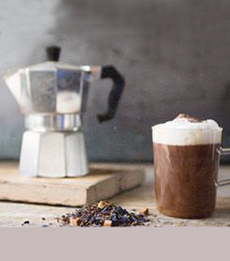
Use your moka pot to make tea! Photo
courtesy Java Tea Co.
  Some tea lovers have found new ways of brewing their beverage, beyond the traditional kettle and boiling water.

They’ve adopted coffee-brewing techniques, using tea leaves instead of ground coffee. It’s happening from coast to coast.

Press Tea, which opened last year in Greenwich Village, uses specially adapted espresso machines to achieve a “crema” on the top and a fresh, new, delightful brewed tea flavor.

Java Tea Company, in Cardiff-By-The-Sea, California (south of Encinitas), also adapts a coffee-brewing approach to its fine teas. They use the classic Italian moka pot (see photo at left).

You can see the process on the company website, but we’ve included it below.

One caveat: Give your moka pot a sniff. If there’s any residue aroma from coffee, run it through the dishwasher until it disappears. Otherwise, you may need a new moka pot.


MOKA POT BREWING TO MAKE TEA IN THE STYLE OF COFFEE

The moka pot process extracts the rich and bold flavors of the tea. Here’s how to brew it:

1. ADD water to base of the moka pot. Scoop two heaping teaspoons of your favorite loose tea blend into the cup.

2. BREW on high heat until percolation is complete. The tea will bubble over when ready.

3. POUR into a coffee cup and add a sugar cube if you like sugar (try these brown sugar cubes).

4. TOP with frothed milk or enjoy it black.

5. GARNISH with shaved dark chocolate or sprinkle with nutmeg.

 
It looks like coffee but it’s tea. Make it at home! Photo courtesy Java Tea Co.
 
Tell us how you like it!
 
FIND ANYTHING YOU WANT TO KNOW ABOUT TEA IN OUR GOURMET TEA SECTION.
  

Comments off

PRODUCT: Goat Cheese Crumbles


Photo by Béatrice Peltre | La Tartine
Gourmande in Boston. Check out her
beautiful food photos. Above, Apricot and Thyme crumbles with Cranberry and Thyme Crumbles in the background.
  “Crumbled goat cheese is the largest category of the goat cheese market,” says Allison Hooper, co-founder of the splendiferous Vermont Creamery. “People love them on salads, and appreciate the ease and convenience.”

Who knew? We typically see blue cheese crumbles in our New York City supermarkets. But since the stores in this cramped city tend to be smaller than elsewhere, we’ve never seen goat cheese crumbles. We simply take a log and crumble our own.

But the ease and convenience factor beckons, not to mention the delicious flavored crumbles Vermont Creamery has created:

  • Classic Chèvre* Crumbles (plain), with a recipe on the label for Raspberry Walnut Salad
  • Apricot & Thyme Crumbles, with a Beet Salad recipe (see photo below)
  • Cranberry & Tarragon Crumbles with a recipe for Orange Fennel Salad
  • Tomato & Basil Crumbles with a recipe for Quinoa, Edamame & Tomato Salad
  •  
    You can find all the recipes on the Vermont Creamery website.

    The fresh goat cheese is crumbled by hand and mixed with carefully selected dried fruit and fresh herbs. Fresh Goat Cheese Crumbles are available in 4-ounce containers with an MSRP† of $5.99.

    CLASSY CHEESE CRUMBLES

    Not all crumbled cheese products are of top quality. When we’ve purchased blue cheese crumbles at the supermarket, for example, they’ve tended to be dried out, hard and not pleasant.

    These crumbles are first-class, made with award-winning Vermont Creamery chèvre and the highest quality herbs and dried fruit.

    Unlike most other crumbles on the market, Vermont Creamery’s Crumbles do not use any mold inhibitors or anti-caking agents like cellulose, so there isn’t a “dry mouth feel.”
     
    *Chèvre is the French word for goat cheese (and also for the goat itself).

    †MRSP is the manufacturers recommended sale price.


    HOW TO USE CHEESE CRUMBLES

    Naturally high in protein and calcium, each serving of the Fresh Goat Cheese Crumbles contains fewer than 100 calories, adding flavor and nutrition to salads and other dishes. Use them to top:

  • Burgers (an occasion for lamb burgers!)
  • Broiled/roasted fish, meat and other proteins
  • Bruschetta, crostini, hors d’oeuvre
  • Pasta, potatoes, rice and other grains
  • Pizza and flat breads
  • Salads—green, pasta, egg salad, chicken salad, fruit salad, etc.
  • Sandwiches, for just a touch of flavor on grilled vegetable, ham
  • Soups and stews
  • Tacos, enchiladas, refried beans, quesadillas, tostadas and wherever queso fresco is called for
  • Vegetables, especially beets!
  • General garnish
  •  
    †If you are crumbling feta, first slice and run under cold water for 10 seconds to wash away any brine and firm up the cheese.

     
    A marriage made in heaven: goat cheese and beets—here, three varieties of beets. Photo by Béatrice Peltre | La Tartine Gourmande.
     
    HOW TO CRUMBLE CHEESE

    1. FIRM it. If the cheese is very soft, first put it in the freezer for 10 minutes to firm it up.

    2. CUT into slices or in half-inch cubes (for blue and feta).

    3. USE your fingers or the tines of a fork to break the cheese into small pieces, as fine as you like. Do not mash.

     
    Read our review of Vermont Creamery, a Top Pick Of The Week (actually, a Top Pick forever!).


    Comments off

    TIP OF THE DAY: Homemade Pizza


    Pizza dough, so much fun to knead. Photo by Mariha Kitchen | IST.
      It’s National Pizza Week. If you’re not already making homemade pizza, here’s an incentive to start.

    For the easy way, buy a pre-made crust, raw dough (we get ours at Trader Joe’s—delicious!) and add your favorite toppings. It’s healthier if you use a whole wheat crust.

    For those who like to bake, here’s how to make your own pizza dough and a championship recipe from chef Bruno DiFabio, a six-time winner of the World Pizza Games / Pizza World Championships.

    You may be a pure pepperoni person, or prefer a grilled veggie pizza. The most popular pizza toppings in America, according to one survey, are (in order) pepperoni, mushrooms, onions, sausage, bacon, extra cheese, black olives, green peppers, pineapple and spinach. (What, no anchovies?)

    But if you’d like to consider more creative ingredients, including those that you rarely find at a pizza restaurant. You can also use your leftovers. For your consideration:


    Proteins

  • Alternative cheeses: Brie, blue, feta, Gruyère, etc. (pick out something special in our Cheese Glossary)
  • Bacon in all its forms (types of bacon)—instead of four cheeses, consider four different types of bacon
  • Chicken, including BBQ or fried
  • Fried egg (crack the raw egg onto the pizza and let it cook in the oven
  • Lamb (ground—delicious with feta)
  • Seafood: clams, crab, scallops, shrimp, tuna
  •  
    Veggies

  • Artichokes, avocado
  • Broccoli rabe, broccolini
  • Capers
  • Chiles: fresh, dried
  • Fresh herbs: basil, oregano, rosemary, thyme
  • Greens: arugula, radiccchio; fennel (sautéed); chard, kale, mustard greens (including mizuna and tatsoi), spinach (sautéed)
  • Onions: caramelized, cippolini, leeks (sautéed)
  • Potatoes: roasted, sautéed, mashed (all delicious with rosemary); sweet potatoes (especially with sage and Gorgonzola)
  • Tomatoes: fresh, sundried
  • You can make pretty much anything work.


    DESSERT PIZZA
    You can also make dessert pizzas with bananas and other fruits, chocolate sauce, Nutella, nuts and raisins, and other ingredients you enjoy. Check out:

  • Piña Colada Pizza Recipe
  •  
    PERSONAL FAVORITES

    We enjoy making these “fusion” pizzas, incorporating ingredients from other cultures into the iconic Italian food:

  • Asian: roast pork, scallions, water chestnuts, hoisin sauce
  • Greek: anchovies, dill, feta, fennel seeds, ground lamb, sliced grape leaves (see the different Mediterranean-inspired recipes below)
  • Russian: sliced roasted potatoes, smoked salmon and salmon caviar
  •  
    How creative can you get? This “taco pizza” is topped with ground beef, salsa, shredded cheese, diced tomatoes, shredded lettuce and tortilla chips. From Due Forni | Las Vegas.

    MORE RECIPE IDEAS

  • Andouille Sausage Pizza With Onion Confit
  • Bacon & Walnut Pizza
  • BBQ Chicken & Buffalo Chicken Pizza Recipes
  • Bacon, Chicken & Ham Pizza Recipe
  • Gorgonzola Pizza With Caramelized Onions or with Pear & Walnuts
  • Greek Pizza Recipe: kalamata olives, spinach, onions, feta, sundried tomatoes
  • Middle East Pizza: lamb, Kalamata olives, feta
  • Potato & Pancetta Pizza, with asparagus, brick cheese, garlic and thyme
  •  
    THE HISTORY OF PIZZA

    How did the crust, tomatoes and mozzarella get together, especially when tomatoes were considered poisonous for their first 200-plus years in Europe?

    Check it out!


    Comments off

    RECIPE: Matcha Shortbread Cookies


    Bake ‘em or buy ‘em: matcha shortbread
    cookies from Tea Aura. Photo by River Soma
    | THE NIBBLE.
      January 6th is National Shortbread Day. Coming on the heels of new year’s resolutions, where many of us have resolved to eat better, what’s a cookie lover to do?

    Make matcha shortbread (or as a default, buy some).

    While it isn’t health food, matcha shortbread includes a very healthful ingredient—matcha tea. (See the nutritional benefits below).

    This shortbread recipe is from the Republic Of Tea, which sells matcha tea among hundreds of other varieties. They call the recipe “emerald shortbread” because of the green color. This recipe also includes ground almonds (protein—more nutrition!).

    You can use a shamrock cookie cutter for St. Patrick’s Day, a flower cookie cutter for spring or a Christmas tree cookie cutter for Christmas.
     
     
    RECIPE: EMERALD SHORTBREAD (MATCHA
    SHORTBREAD)

    Ingredients

  • 7 tablespoons butter, softened
  • 6 tablespoons powdered sugar
  • 1 egg yolk
  • 3/4 cup flour
  • 6 tablespoons finely ground almonds
  • 2 teaspoons matcha tea
  •  
    Preparation

    1. CREAM together the butter and powdered sugar. Mix in the egg yolk. In another bowl, combine the flour, ground almonds and matcha. Add to the first bowl and stir until the mixture forms a ball.

    2. ROLL into a 2-inch-wide log. Wrap and place in the freezer for 40 minutes until firm.

    3. PREHEAT the oven to 350°F. Line a baking sheet with parchment paper. Using a sharp knife, cut the log into 1/4-inch slices and arrange on the prepared baking sheet. Bake for 9 minutes, or until the cookies just begin to turn golden at the edges. Let rest for 5 minutes before transferring to a rack to cool completely.


    WHAT IS MATCHA TEA

    Matcha is a powdered green tea with the consistency of talc that is used in the Japanese tea ceremony, or cha no yu. The leaves for matcha are ground like flour in a stone mill. The powder is then whisked into water. (Here’s the whisk [chasen] that you can use to make your own.

    Powdered tea is the original way in which tea was prepared in Japan. The steeping of dried tea leaves in boiling water didn’t begin until the Ming Dynasty (1368-1644).

    Matcha tea has a wonderful aroma, a creamy, silky froth and a rich, mellow taste. It contains a higher amount of nutrients (vitamins, minerals, L-theanine amino acids, polyphenols, chlorophyll and fiber) than other teas, including steeped green tea.

    Matcha tea is expensive, but worth it if you love the flavor of matcha tea.

    According to MatchaSource.com, the price is a function of production costs.

     
    Matcha tea with the chasen, or whisk, used to stir it into a frothy beverage. The greener the matcha, the higher the quality. Photo courtesy Tafu | New York.
     

    Only the youngest, sweetest leaves are used. Covering the fields with bamboo mats (tarps) to create the shade-grown tea weakens the tea plants, and a longer recovery period is needed before they can be harvested again.

    At the factory, the stone grinders work slowly in order to maintain the nutrients in the tea, including the amino acid, L-theanine, which focuses the brain; it may help the body’s immune response to infection. Each grinder produces only about 40 grams of matcha in an hour.

    That being said, there are varying qualities of matcha tea. The deeper green color, the higher quality the matcha.
     
    TO GO WITH THE COOKIES

  • Matcha latte
  • Matcha ice cream and other recipes with matcha tea
  •   

    Comments off

    PRODUCT: Sardines, Delicious & Great For You


    Serve sardines topped with cress or with
    other salad greens for a light lunch, first
    course or main dinner course. Photo courtesy
    Payard | NYC, which grilled fresh sardines for this rexipe.
      If you’re trying to incorporate more fish into your diet, peel back a tin of quality sardines. It’s a break from the same old can of tuna, and the right brand can be a delightful discovery.

    BELA-Olhão, from the fishing community of Olhão, Portugal, has perfected the art of canning sardines. Plump, meaty and pretty, too—their silvery skins shimmer on the plate—these are gourmet sardines.

    The sardines are wild caught, sustainably fished off a non-industrial coast and 100% dolphin safe. They are packed within eight ours of the catch and canned in top-quality olive oil. They are certified sustainable by the Marine Stewardship Council.

    They’re available in plain plus delicious flavored varieties:

  • Cayenne Pepper Flavored Extra Virgin Olive Oil
  • Lemon Infused Extra Virgin Olive Oil
  • Lightly Smoked in Olive Oil
  • Lightly Smoked in Tomato Sauce
  •  
    Matiz, from Spain, is another top-quality brand. There’s no “fishiness” in these fine sardines. If your prior experiences with sardines have not been satisfying, give them a try.

    SARDINE NUTRITION & HEALTH BENEFITS

    Omega 3, 6 & 9. Among fish, sardines have the highest levels of omega-3, -6 and -9 essential fatty acids.They aid the body in transferring oxygen, help with muscle elasticity, brain activity and have a positive impact on the blood vessels and heart.

    Calcium. Sardines are super-rich in calcium: A 3.5-ounce serving has more calcium than a cup of whole milk! One 4.25-ounce tin provides 30% of your daily value.

    Coenzyme Q. Sardines are rich in coenzyme Q-10, plus a spate of vitamins and minerals. Coenzyme Q-10 can stave off heart disease, high blood pressure, cancer, even depression.

    More. Sardines are a good source of vitamin D, B12 and lean protein.

    Low mercury. With a mercury content of 0.016 ppm, the FDA calculates that sardines have one of the lowest levels of mercury among seafood. This may be a result of a diet that consists mainly of krill and plankton. The more kinds of other fish a species eats, the more likely it is to absorb the mercury levels of the fish that it feasts upon (which is why shark mercury levels are so high—they eat so many kinds of fish, some of which contain a high mercury content).

    SARDINES VS. SALMON

    Sardines are “the new salmon.” Now if only consumers would figure that out!

    Because of the move to eat more salmon, the wild fish have become less abundant, less sustainable, less nutritious and are suffering from epidemic-like outbreaks created when infected farmed salmon escape into the wild.

    There are numerous issues with farmed salmon—read this article in the New York Times by Taras Grescoe, author of Bottomfeeder: How to Eat Ethically in a World of Vanishing Seafood.

    The bottom line: Sardines are a great alternative.


    SERVING SARDINES

    All sardines need—fresh or canned—is a squeeze of lemon juice and some minced parsley (and if fresh-grilled, a few drops of quality olive). The quality of Bela-Olhão’s extra virgin olive oil means that no draining is required.

    Sardines are simple to serve:

  • On pasta with tomato sauce or simply olive oil, garlic and herbs
  • On garlic bread as a first course or a snack
  • On a bed of steamed spinach, a vegetable medley or a whole grain
  • In any green (substitute for tuna in a Niçoise salad)
  •  
    Or, make “sardine cakes” instead of crab cakes. Here’s a recipe for fresh, light, meaty sardine cakes from Bela-Olhão:

    RECIPE: SARDINE CAKES

    Ingredients For 4 Servings (2 Cakes Each)

     
    Bela Olhao sardines in plain and flavored olive oils. Photo by Melody Lan | THE NIBBLE.
  • 1 can (4-1/4 ounces) sardines in olive oil, drained and mashed
  • 1 can (15-1/2-ounces) cannellini beans, drained and rinsed
  • 1 cup pre-shredded part-skim mozzarella cheese
  • 1 small red or orange bell pepper, finely diced (about 3/4 cup)
  • 1-1/2 cups panko bread crumbs, divided
  • 1 large egg, beaten
  • 2 tablespoons lemon juice
  • 1 teaspoon dried tarragon
  • 1/2 teaspoon salt
  • Pepper to taste
  • 2 tablespoons canola oil
  •  

    Preparation

    1. MASH the beans in a large bowl using the back of a spoon until smooth but still a bit chunky.

    2. ADD sardines, cheese, pepper, 3/4 cup of the bread crumbs, egg, lemon juice, tarragon, salt, and pepper to taste and mix well to combine. Place the remaining bread crumbs on a plate.

    3. SHAPE the mixture into eight 1/2-inch thick patties and coat with the remaining bread crumbs.

    4. HEAT 1 tablespoon of the oil in a large nonstick skillet over medium-high heat. Cook the patties until golden brown, about 4 minutes per side. Add the remaining oil when you turn the patties.

    5. SERVE with a wedge of lemon, and optional tartar sauce or ketchup for dipping.
    SARDINES & SALAD

    Like tuna, sardines fit in to any green salad preparation. Try this recipe for a sophisticated Sardine, Cress & Almond Salad.
      

    Comments off

    The Nibble Webzine Of Food Adventures
    RSS
    Follow by Email


    © Copyright 2005-2026 Lifestyle Direct, Inc. All rights reserved. All images are copyrighted to their respective owners.