THE NIBBLE BLOG: Products, Recipes & Trends In Specialty Foods


Also visit our main website, TheNibble.com.

GIFT OF THE DAY: Just Spices, Extra-Fresh Spice Blends

Usually THE NIBBLE doesn’t review spices, salad dressings and other categories where it’s difficult to describe the differences or superiority of one brand over another.

After all, if you tried garlic powder from three different producers, what would you say? Once the garlic is cooked in the recipe, any brand will taste good.

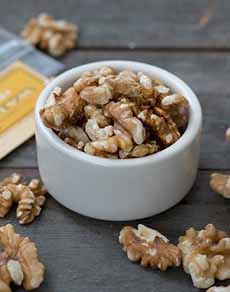
But when we met up with Just Spices, and the contents were so fresh, beautiful and aromatic (see photo #1) that we couldn’t resist them, both for our own kitchen and as stocking stuffers.

There’s something for everyone on our list—not just spices, but herbs, too:

  • BBQ Popcorn Seasoning
  • BBQ Seasoning
  • Extra Spicy Seasoning
  • Flavors Of Italy
  • Flavors Of Mexico
  • Guacamole Seasoning
  • Hickory Rub
  • Murray River Salt (beautiful apricot-hued crystals)
  • Oatmeal Spice Blend
  • Pancake Blend
  • Pizza Seasoning
  • Pork Rub
  • Savory Eggs Blend
  • Seafood Rub
  • Smoothie Boost
  • Spicy Garlic Blend
  • Spicy Popcorn Seasoning
  • Steak Rub
  • Sweet Potato Seasoning
  • Tellicherry Pepper
  • Texas BBQ Dip
  • Vegetable Broth Seasoning
  •   Just Spices Savory Eggs Blend

    Just Spices BBQ Popcorn Seasoning

    Just Spices Gift Box
    [1] Savory Eggs Blend, a beautiful selection of aromas, flavors and colors. [2] There are two popcorn seasoning blends: BBQ and Spicy. [3] Give individual spices or a box of six Kitchen Essentials (all photos courtesy Just Spices).

     
    Prices range from $5.49 to $6.99.

    A Kitchen Essentials gift box of six spices is $34.49, and includes BBQ Seasoning, Flavors of Italy, Murray River Salt, Spicy Garlic Seasoning, Tellicherry Pepper and Vegetable Broth Seasoning.
     
    WHAT TO GIVE

    We’re giving Oatmeal Spice Blend to our oatmeal-eating friends, BBQ and Spicy Popcorn Seasonings to our popcorn-popping friends, Spicy Garlic Blend to our garlic-loving friends, and so on.

    Just scan the list above to pick what will be loved by your family, friends and colleagues (and don’t forget to buy your own).

    The bright, hip packaging is terrific: “a gift waiting to happen” we thought, the first time we saw them. The color and aroma of the contents are unmatched by other brands we’ve purchased.

    In fact, the brand was started by three college friends who couldn’t find what they wanted at the supermarket.

    Take advantage of their inspiration and travels around the world to buy from the best small growers. Because they buy and produce in small batches, the spices are so vibrant and fragrant, we spent quite some time inhaling each one.
     
    Order yours at JustSpices.com.


    Comments off

    TIP OF THE DAY: Make A Cranberry Wreath…And A Mistletoe Ball

    Christmas Wreath With Cranberries

    Mistletoe Ball

    Bowl Of Cranberries

    Ocean Spray Cranberries Package
    [1] Make a cranberry wreath for Thanksgiving or Christmas, or [2] a cranberry and mistletoe “kissing ball” for Christmas (photos 1, 2 and 4 courtesy Ocean Spray). [3] Were cranberries served at the first Thanksgiving? No one knows* (photo courtesy Good Eggs).


    Sure, you can buy evergreen wreaths galore during the holiday season. But you can also have fun making your own, or as a gift for holiday hosts.

    A fresh cranberry wreath or mistletoe ball will last approximately one week. Replace the cranberries when they begin to soften.

    To extend the life of the cranberries, you can spray them with an even coating of shellac. Caution: For the safety of wildlife and birds, do not use shellac if you plan to hang wreath outdoors.

    To avoid staining, do not place fresh cranberries directly on lightly-painted surfaces or linens.

    CRANBERRY WREATH

    Ingredients

    For The Wreath

  • 1 12-inch evergreen wreath
  • 1 thin needle
  • 5 yards of strong cord or waxed dental floss, cut into five 36″ lengths
  • 1 12-ounce bag fresh cranberries
  • Hook for hanging
  • Optional: shellac
  •  
    For The Cranberry Ball

  • 1 five-inch Styrofoam® ball (or other size of preference)
  • Dark red acrylic craft paint (or other suitable for painting styrofoam)
  • 1-2 12-ounce bags fresh cranberries
  • 1 box metal pins with small flat heads, approx. 1″ long (approx 300 quantity)
  • 1 12-18″ length of 3/4″ wide red ribbon
  • 1 48″ length of 3/4″ wide red ribbon
  •  
    Preparation

    1. PREPARE the wreath. Start with one 36″ length of thread and a thin needle. Knot one end of the thread and string the cranberries one at a time by piercing through the center with the needle. Secure the end of the thread with a large knot.

    2. REPEAT with the 4 remaining lengths of thread. To make stringing cranberries easier, use waxed dental floss or try waxing the needle and thread with beeswax.

    3. WRAP each strand around the wreath 3-4 times.

    4. MAKE the ball: Paint the Styrofoam ball with red paint and set aside to dry. Painting the Styrofoam ensures that any spaces between the cranberries will be less noticeable.

    5. ASSEMBLE: Lay the wide red ribbon over the top of the wreath with the ends hanging down into the middle. Pin each end of the ribbon to the ball so it hangs in the middle of the wreath. To complete, attach the 48″ ribbon at the top of the ball and tie a bow.
    ________________
    *There is no complete record of the food at the feast shared by the Pilgrims and the Wampanoag in 1621. Two letters written near that time mention wheat, corn, barley, waterfowl, deer, fish and wild turkey. The Wampanoag ate cranberries and they may have brought some, but there is no direct evidence that they did so.

    HOLIDAY KISSING BALL

    Ingredients

  • 5” Styrofoam ball
  • Dark red acrylic craft paint (or other suitable for painting styrofoam)
  • 24-gauge beading wire
  • Hot glue gun/glue sticks OR wooden toothpicks
  • 1-2 12-ounce bags fresh cranberries
  • Holiday trim of choice: ribbon, mistletoe, holly, ivy, bells
  • Hook for hanging
  • Optional: shellac
  •  
    Preparation

    1. PAINT the ball with red craft paint. Set aside to dry.

    2. CUT an 18″ piece of wire and fold it in half. Push the folded wire all the way through the center of foam ball, leaving a 1” wire loop extending at bottom of ball and 3” of wire extending at top.

    3. ATTACH the cranberries to ball with the hot glue gun or toothpicks, covering the ball completely. Twist the wires at the top of the ball into a simple hook for hanging. Use ribbon to tie the mistletoe and other trim to the wire above and below the ball. Hang with a hook.

    4. INSERT a pin through each cranberry and press into the styrofoam, placing the berries as closely together as possible. Continue until all areas of the ball are covered with cranberries. TIP: Completing a section of berries close together is easier than continuing a single row all the way around the ball.

    ABOUT OCEAN SPRAY

    Cranberries are native to America, and first cultivated on Cape Cod around 1816.

    Ocean Spray was formed in 1930 by by lawyer and grower Marcus L. Urann and two other growers. Since then, the Ocean Spray cooperative has grown to more than 700 grower families all across North America.

    The cooperative’s first product was jellied cranberry sauce, followed by original Ocean Spray Cranberry Juice Cocktail, hitting the shelves a few years later.

    Since 1995, Wisconsin has produced the largest crop of cranberries, currently about 57% of the U.S. total production. Massachusetts, originally the largest producer, fell to second that year, and currently produces another 23%-30% of the crop. The remaining U.S. cranberry crop comes mainly from New Jersey, Oregon and Washington.

    The U.S. is the largest producer of cranberries, followed by Canada, Belarus, Azerbaijan, Latvia, Ukraine, Romania, Macedonia, Tunisia and Spain.

    Here’s more cranberry history and details of the different product introductions from Ocean Spray, and great details from the University Of Wisconsin (for example, where does white cranberry juice come from).


    Comments off

    GIFT OF THE DAY: Gingerbread Scone Mix

    November 21st is National Gingerbread Day…and also a reminder that it’s easy to make gingerbread scones with a $6.95 gourmet boxed mix from King Arthur Flour.

    We typically give small gifts to our Thanksgiving guests, and last year it was these scone mixes (this year it’s the Gingerbread Cake and Cookie Mix).

    The one-pound box makes 8 to 16 scones, depending on size. The mix is certified kosher by CRC.

    They’re whole grain, too, made with white whole wheat flour.

    The mix is certified kosher by CRC.

    The 1-pound box of mix makes 8 to 16 scones, depending on how you portion them.

    And you can use it to make gingerbread loaf, coffeecake, muffins, pancakes, and shortcakes.

    Get yours at KingArthurFlour.com.
     
     
    THE HISTORY OF GINGER

    Since ancient times, the Chinese and Indians used the ginger root as medicine. Ginger originated in the tropical rain forests of Southeast Asia.

    By the first century, it had been introduced in the Mediterranean via India and became a popular spice in Rome. It fell from use with the fall of the Roman Empire fell, to return during medieval times as a spice for baked goods and other sweets.

    Ginger has been traded throughout history longer than most other spices. It was valued for its medicinal merits: it is a popular warming spice, a digestive aid, and sometimes used to treat flatulence and colic. Today, ginger is easily accessible in local grocery stores and throughout markets, but back in the 14th century, it cost about the same amount as a live sheep or piece of livestock!

    Used as a medicine in medieval times, ginger became a popular holiday spice (it was too pricey to use year-round), most famously in gingerbread cookies.

    Ginger and other spices were brought back to Europe by Crusaders who traveled to the Holy Land. In 11th-century northern European countries, it was used to flavor buttermilk drinks and over the next two centuries became used in cooking meats and in ginger pastes.

    During the 13th and 14th centuries, Arabs traders voyaging to Africa and Zanzibar planted the rhizomes, spreading the cultivation of the plant.

    Many ginger-flavored baked goods have evolved since then, from muffins to cakes. Today, we offer this recipe from King Arthur Flour for gingerbread scones: perfect weekend breakfast and brunch fare throughout the holiday season.
     
     
    THE HISTORY OF SCONES

    You may have heard two different pronunciations for “scone.” The word is pronounced “skahn” in Scotland and Northern England (rhymes with gone) and “skoan” in the south of England (rhymes with own), the pronunciation adopted by the U.S. and Canada.

    Which is the authentic one? They both are!

    Scones are traditionally connected with Scotland, Ireland, and England, but exactly who deserves the honor of invention, no one knows for sure.

    Scones may well have originated in Scotland. The first known print reference, in 1513, is from a Scottish poet. However, in earlier eras, when communications were more limited, the creation of an actual item can have predated the first appearance of printed references by many years.

    Centuries ago, there weren’t newspapers that reported on the minutiae of life the way modern news sources do. There were no food columns in the local papers announcing that “McTavish Bakery has created a new griddle-fried oatcake called a scone—now available at 3 Sheepshead Lane.”

    In fact, there were few newspapers. Much of the population was not literate. So culinary historians rely on cookbooks and mentions in literature and other printed records. Given the perishability of paper, it is logical that many first-printed mentions of foods and other items may not have survived.

    What About The Name?

    One claim, probably not the best, says that scones are named for the Stone of Destiny at the Abbey Of Scone, a town upriver from Perth.

      Gingerbread Scones
    [1] Triangle scones with icing (photos £1, #2, #3 and #5 © King Arthur Flour).

    Gingerbread Scones
    [2] Round scones with sparkling sugar.

    Gingerbread Scone Mix
    [3] Scones, pancakes, muffins and more come from one box of mix.

    Ginger Root
    [4] Ginger root (photo by Jan Schöne | SXC).

    Scone Pan
    [5] Long before baking pans were invented, scone dough was shaped into a round, cooked on a baking stone and cut into wedges. Modern bakers can use scone pans like this one from King Art.

     
    It is a stone bench upon which Scottish kings once sat when they were crowned. The original was long ago removed to Westminster Abbey, and a replica stone stands in its place.

    Others say that the word derives from the Gaelic “sgonn” (rhymes with gone), a shapeless mass or large mouthful; the Dutch “schoonbrot,” fine white bread; and the closely-related German “sconbrot,” fine or beautiful bread. The Oxford English Dictionary favors the latter two.

    What About The Shape?

    Scones are related to the ancient Welsh tradition of cooking small round yeast cakes (leavened breads) on bakestones, and later on griddles. Long before the advent of baking pans, the dough—originally made with oats—was hand-shaped into a large round, scored into four or six wedges (triangles), and griddle-baked over an open fire.

    With the advent of stovetop and oven baking, the round of dough was cut into wedges and the scones were baked individually.

    Today’s scones are quick breads, similar to American biscuits. They are traditionally made with wheat flour, sugar, baking powder or baking soda, butter, milk and eggs, and baked in the oven—both in the traditional wedge form and in round, square, and diamond shapes. This recipe produces a hard, dry texture.

    Traditional English scones may include raisins or currants, but are often plain, relying on jam, preserves, lemon curd, or honey for added flavor—perhaps with a touch of clotted cream.

    Fancy scones—with dried fruit such as cranberries and dates, nuts, orange rind, chocolate morsels, and other flavorings—are best enjoyed without butter and jam.


    CHECK OUT WHAT’S HAPPENING ON OUR HOME PAGE, THENIBBLE.COM.


    Comments off


    © Copyright 2005-2026 Lifestyle Direct, Inc. All rights reserved. All images are copyrighted to their respective owners.