THE NIBBLE BLOG: Products, Recipes & Trends In Specialty Foods


Also visit our main website, TheNibble.com.

TIP OF THE DAY: A Pot Of Herbs

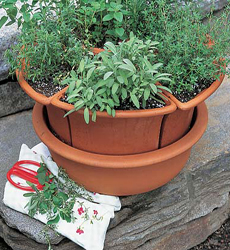
We were inspired by the photo below to plant a pot of herbs, otherwise known as container herbs.

If you don’t mind frequent watering, a pot puts fresh herbs at your fingertips—not to mention, provides lovely greenery and fragrance. You can keep one in a sunny kitchen spot, on the back steps, porch or patio, or go whole-hog like our friend Connie has just done and stake out an elaborate garden plot.

Your local nursery can provide assistance, and there’s plenty of advice online. Here are the steps to snipping:

1. Pick a sunny spot. Most culinary herbs originated in the Mediterranean and other sun-drenched regions, so they need at least eight hours of sunlight a day.

2. Seeds versus plants. Seeds typically need to be started indoors one to two months before it’s warm enough to move them outside. At this point in the season, look for plants (they’re also easier for beginners).

3. The right container. A larger pot of soil or potting mix* dries out more slowly. To keep the plants moist for the longest time, use the largest pot you can.


656SG4675

Your favorite herbs, ready to snip. Photo courtesy Whiteflower Farm.

 
*For containers, it’s better to use potting mix than potting soil. The latter is often poor quality soil with poor drainage. Potting mix is made mostly from organic matter (peat, composted plant matter) with good drainage.
 

4. Select your herbs. They should, of course, be the ones you use most often. Basil, rosemary, thyme and parsley are popular. We use chives every day for flavor or garnish. Don’t be seduced into planting something you don’t use, under the theory that if you have it, you’ll cook with it. Odds are that you won’t.

5. Choose watering-compatible herbs. That is to say, plant together herbs that require the same amount of watering. For example, basil likes more water, but rosemary likes drier soil. To keep the basil happy, you’d be over-watering the rosemary. Separate pots are called for.


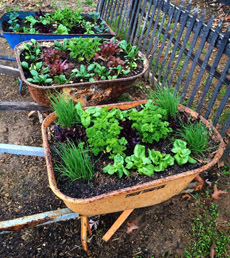
herbs-in-wheelbarrow-bonnieplants-230
Thinking outside the pot—and into a
wheelbarrow (with drainage holes, of
course). Photo courtesy BonniePlants.com.


6. Think outside the pot: How about something seasonal? Given that it’s iced tea weather, think about mint—which is a universal dessert garnish, too. How about some edible flowers—marigolds, nasturtiums and pansies, for example? They’re beautiful in salads, drinks, and as plate garnishes.

7. Prepare the container. Be sure there are sufficient drainage holes, and fill the container to a quarter of the pot’s depth with gravel or pebbles. They help with proper drainage.

8. Add the plants; plan to fertilize. The frequent watering required by herbs tends to wash nutrients from the soil/potting mix. Replenish them with fertilizer so your herbs will thrive. You can use a regular houseplant fertilizer every three weeks, at one-half the strength recommended; add a slow-release fertilizer when you plant; or look for a potting mix that contains the slow-release fertilizer.
9. Use daily. From breakfast eggs to a garnish for dessert, enjoy those herbs. The more you cut them back to use them, the more they grow. If you aren’t using a particular herb often enough, snip sprigs as a plate garnish or a cocktail garnish.


Comments off

Giardiniera, A Tangy & Versatile Pickled Vegetable Condiment

Giardiniera (jar-dih-NYAIR-uh) is an Italian word that means “from the garden.” In Italy, giardiniera has long been a way to preserve seasonal vegetables in vinegar for use during the winter.

Giardiniera is also called “sotto aceti,” which means “under vinegar,” a common term for pickled foods. It is often made with carrots, cauliflower, celery, onions and zucchini in red or white wine vinegar.

Veggies from the garden are pickled in vinegar, herbs and spices. In Southern Italy, olive oil can be added; Northern Italians seem to prefer a tangier, sharper vinegar brine.

Giardiniera is enjoyed regularly and is typically part of an antipasto.

Below:

> Many uses for gardiniera.

> A recipe to make your own.
 
 
GIARDINIERA COMES TO AMERICA

Italian immigrants brought giardiniera recipes to America in the late 19th and early 20th centuries. In Chicago, Italian-American communities transformed giardiniera into a spicy, oil-based relish rather than a purely vinegar-pickle vegetable.

They minced the vegetables more finely and added chile peppers or flakes for heat. “Chicago-style giardiniera” became a staple topping for Italian beef sandwiches, subs, pizza, sausages, and hot dogs.

The result is a pickled condiment used like other pickles on burgers, eggs and sandwiches, from the classic muffaletta of New Orleans to the Italian beef sandwich in Chicago to an everyday ham and cheese. (See more uses below.)

Today:

  • Italian style giardiniera is still widely eaten as an antipasto, with grilled meats, or alongside salads.
  • Chicago style giardiniera is a popular condiment for burgers, pasta, pizza, and sandwiches.
  • Variations now include mild to extra-hot blends made with chile peppers of different heat levels, and gourmet versions with artisanal oils.
  •  
    Giardiniera adds crunch, tang, spice and often, heat, to perk up anything it touches. Low in calories and high in veggie nutrition, it’s a guilt-free addition.

    Note: Chicago-style giardiniera is stored in oil (commercial brands often use a blend of olive and vegetable oils), which softens the heat and makes it more spoonable. It’s quite different from the crisp, vinegary Italian original.
     
     
    USES FOR GIARDINIERA

  • Appetizer: Time to revive the antipasto plate and relish tray.
  • Bloody Mary: Stir some in and provide a cocktail pick to spear the veggies.
  • Condiment: Place a bowl on the table with the main course. Giardiniera is especially delicious with grilled foods and casual foods (burgers, franks, sandwiches).
  • Dip or Spread: Chop and mix into yogurt, sour cream, mayonnaise, or a combination.
  • Eggs: Fold into scrambled eggs and omelets; serve as a condiment with other egg dishes.
  • Pasta: Toss giardiniera with any cooked pasta; add to oven-bound stuffed shells or other baked pasta recipes, including lasagna.
  • Pizza: Spoon it on! If making a frozen pizza, spread giardiniera over the top before placing it in the oven so it bakes right.
  • Salads: Add giardiniera into a tossed salad, tuna or chicken salad, pasta salad or potato salad for instant punch and color.
  • Sandwiches: Add to grilled cheese, meatball, muffaletta, submarine, burger, hot dog, or any basic sandwich (photos #1, #3, #4).
  • Side: Make “Italian cole slaw” by mixing with shredded red cabbage.
  •  
     
    RECIPE: MAKE YOUR OWN GIARDINIERA

    Bell peppers, carrots, cauliflower, celery, hot chiles and pitted olives are common, but you can add whatever appeals to you, including non-traditional ingredients like mushrooms and okra.

    There are mild and hot versions, the latter employing hot chile peppers.Enjoy it at home and bring a jar full as a house gift. After you make the first batch, you’ll be able to adjust the ingredients to create your ideal “signature” blend.

    You can cut the vegetables as you like, from chunky to a more finely diced relish.

    Note that if you use olive oil in the recipe, it will cloud up in the fridge. But will become clear again at room temperature.

    Ingredients

  • 2 cups water
  • 1/4 cup table salt
  • 1 cup small-diced carrots
  • 1 cup cauliflower florets
  • 4 to 8 Serrano chiles, sliced
  • 2 cloves garlic, minced
  • 1 stalk celery, diced small
  • 1 red bell pepper, diced small
  • 2 cups wine vinegar (red or white)
  • 1 tablespoon dried oregano
  • 1/2 teaspoon freshly ground black pepper
  •  
    Plus your choice of additional ingredients, such as:

  • Fennel
  • Gherkins
  • Jalapeño chiles, sliced
  • Mushrooms
  • Okra
  • Olives, green and/or black olives, pitted and halved
  • Oil: canola, olive, soybean or vegetable
  • Pimento (roasted red bell pepper)
  • Spices: dill, parsley, red pepper flakes
  • Pepperoncini
  •  
    ______________

    *Use good vinegar, and never distilled white vinegar.


    Italian Hoagie Sandwich
    [1] An Italian hoagie will often feature giardiniera (photo © DeLallo)

    Jars of Giardiniera
    [2] Giardiniera is made in mild and spicy versions (photo © DeLallo).

    Turkey Burger With Giardiniera
    [3] Turkey burger with giardiniera (photo © DeLallo).

    muffaletta-bettycrocker-230
    [4] A muffaletta sandwich with giardiniera. Here’s the
    recipe. Photo courtesy Pillsbury.

    Hummus Topped With Giardiniera
    [5] Fusion food: hummus topped with giardiniera (photo © DeLallo).

    Homemade Giardiniera In Jars
    [6] Homemade Chicago-style hot giardiniera. Here’s the recipe (photo © Taste Of Home).

    Preparation

    1. COMBINE water and salt in a non-reactive bowl; mix to dissolve. Add the vegetables and garlic. Cover and refrigerate overnight.

    2. DRAIN and rinse the vegetables. In a clean bowl, mix together the vinegar with the oregano and pepper. Add the vegetables and mix to combine. Allow to marinate overnight in the fridge, or up to two days.

    3. MOVE to an airtight container. Giardiniera improves over time, and will keep in the fridge for 2 to 3 weeks or longer.


    CHECK OUT WHAT’S HAPPENING ON OUR HOME PAGE, THENIBBLE.COM.


    Comments off

    TIP OF THE DAY: Fondant Cake Topper

    Here’s an idea to turn a plain cake into a stunner for Mother’s Day. All you need is the cake, fondant and a cookie cutter.

    But there’s a bonus below: an absolutely delicious, old-fashioned ginger-sultana cake, courtesy of the England’s high-end food store chain, Waitrose.

    Whether you buy or bake the cake, people will ooh and ahh over the beautiful rosette topping.

    WHAT IS FONDANT

    Fondant (sometimes called fondant icing) is a coating for cakes that is made from sugar and water, cooked to the soft-ball stage and then stirred or beaten to a creamy mass. It dries to a smooth, opaque matte finish and can be colored and/or flavored or left white.

    Fondant is formed into a dough, rolled out and laid over cakes (typically wedding cakes) or petit fours. It not only gives the cakes a smooth and elegant appearance, but acts as a preservative and protection: The dense fondant keeps the cake underneath moist for the extra day it may take to assemble and transport. Also, fondant does not mar easily like buttercream.


    fondant-petals-waitrose-recipe-230
    A rosette cake topper, made from petals of fondant. Photo courtesy Waitrose.


    We enjoy the taste and texture of fondant, although some people don’t care for the thickness or flavor. It should be noted that commercial fondant, bought already prepared, does not achieve the glory of made-from-scratch fondant. Homemade fondant can be addictively delicious, especially to people who like marshmallows.
     
    Other Types Of Fondant

  • Poured fondant is very smooth and shiny and typically used for decorating and filling cakes.
  • Sculpting fondant can be formed, like marzipan, into shapes and embellishments.
  • In the world of confection (as opposed to cake and pastry), fondant has a different meaning altogether. Among other things, it’s the creamy, white crystalline filling for maraschino cherry and other bonbons. Here’s more in our Chocolate Glossary.
  •  

    fondant-white-fondarific-230
    It’s easy to make a beautiful petal topping
    with fondant: scoop, roll, cut, place. Photo
    courtesy Fondarific.
     

    RECIPE: ROSETTE GINGER CAKE

    Prep time is 15 minutes, cook time is 35–40 minutes. The cake serves 8–10.
    Ingredients

  • 1/2 cup butter
  • 1/2 cup dark brown muscovado sugar
  • 1½ cups golden syrup, plus 2 tablespoons
  • 3 pieces stem ginger*, finely chopped, plus 2
    tablespoons syrup from the jar
  • 1 cup self-rising flour†
  • 3 teaspoons ground ginger
  • 1 teaspoon baking soda
  • 1/3 cup plus 1 tablespoon sultanas (golden raisins)
  • 2 large eggs, beaten
  • 1 cup whole milk
  • 2 cups white fondant
  •  

    *You can buy or make stem ginger: Blanch peeled, diced fresh ginger in boiling water for about 10 seconds; drain water and repeat process two more times. In a different saucepan, make a sugar syrup and then add the ginger, simmering for 20 minutes. Remove from heat, cool and store in an airtight container in the fridge.

    †Self-rising flour is flour with baking powder and salt already added. It is traditionally milled from softer, lower protein wheat; and it produces softer, more tender baked goods than all-purpose or higher-protein flours. If you don’t want to buy a bag, you can make a home version: Combine 1 cup all-purpose flour with 1½ teaspoons baking powder and ¼ teaspoon salt.
     
    Preparation

    1. PREHEAT the oven to 356°F. Grease and line the base of an eight-inch-round cake pan with nonstick baking parchment.

    2. PLACE the butter, sugar, 1 cup of golden syrup and the chopped ginger and syrup together in a small saucepan and heat gently, stirring until the butter has melted.

    3. PLACE the flour, ground ginger, baking soda and sultanas in a large bowl.

    4. WHISK together the eggs and milk in a pitcher. Pour the melted syrup mixture and the egg mixture into the bowl of flour and beat well with a wooden spoon until blended. Pour the mixture into the prepared cake pan and bake for 35–40 minutes, or until a skewer inserted into the center of the cake comes out clean.

    5. LEAVE the cake to cool in the pan, then invert the cooled cake onto a serving plate so that the flat bottom is on top. Brush with the remaining golden syrup.

    6. ROLL out the fondant on a sugar-dusted surface to the thickness of a pound coin. Using a 1- to 1-1/2 inch diameter cookie cutter, stamp out as many discs as possible (you should get 55–60 pieces). Arrange an overlapping ring of fondant discs around the edge of the cake. Continue to arrange the overlapping discs towards the center of the cake, alternating the direction in which the circles overlap each other so that each ring forms a rosette pattern. Allow the icing to set for a couple of hours before slicing and serving.
     
    There are more than 5,000 recipes can on the Waitrose website. Dig in!


    Comments off

    Brioche French Toast Recipe With Dulce De Leche

    Our mom didn’t have to be convinced to whip up a batch of French toast, one of her favorite weekend breakfast foods.

    While she used challah, eggs and cream to rich effect, here’s an even richer recipe—a signature brunch dish at the Sushi Samba restaurants in New York City (there are other locations nationwide).

    If you’re in New York City for a brunch, head to Sushi Samba’s Gramercy or West Village locations. The French toast is on the $30 pre-fixe menu; bottomless Prosecco can be added for an additional $25.

    Everyone else: Make it yourself at home!

    You may notice that there’s no dulce de leche in the recipe below. That’s because dulce de leche is made by heating sweetened condensed milk until it caramelizes.

    Soaking the bread in sweetened condensed milk embeds the flavor of dulce de leche in it.
     
     
    RECIPE #1: DULCE DE LECHE* BRIOCHE FRENCH TOAST

    Ingredients For 4 Servings

  • 5 slices brioche, cut in half into 2-inch-thick pieces
  • 1 can sweetened condensed milk
  • 1 can evaporated milk
  • 4 eggs
  • 1/2 teaspoon ground cinnamon
  • 1 teaspoon vanilla extract
  • ¼ cup granulated sugar
  • Garnishes: fruits of choice, powdered sugar
  • Optional: maple or other syrup
  •  
    _________________

    *Sushi Samba, which has a Brazilian flair, uses the Portuguese term, doce de leite, instead of the Spanish dulce de leche.

       
    dulce-de-leche-brioche-sushisamba-230
    [1] It doesn’t get richer than this (photo © Sushi Samba | NYC [now closed])!
    Brioche Loaf

    [2] A loaf of brioche (photo © King Arthur Flour ).

     
    Preparation

    1. PLACE brioche in a 275°F oven for 5-10 minutes to dry.

    2. COMBINE all the liquid ingredients and add the bread. Allow the brioche to soak for 1-2 minutes.

    3. COOK on a flat top or in a nonstick sauté pan for 2 minutes per side and finish in a 350°F oven for an additional 3 minutes, or just until the center has firmed.

    4. GARNISH with the fruits of your choice and powdered sugar.


    Brioche With Chocolate Spread
    [3] Parisian pâtissièr Pierre Hermé bakes round loaves of brioche (photo © Pierre Hermé).

    morning breakfast on serving tray french Brioche and white cup o
    [4] A brioche roll—specifically, brioche à tête, with a “head” (photo © Elena Moiseeva | iStock Photo).

      WHAT IS BRIOCHE

    Brioche (bree-OASH) is light, slightly sweet bread made with eggs, yeast and butter, and glazed with an egg wash. Richer than a standard loaf of bread, brioche is used as a breakfast bread, for French toast and in combination with luxurious first courses such as foie gras and smoked salmon.

  • A standard brioche loaf is called brioche Nanterre, after the commune in the western suburbs of Paris.
  • The style of rolls baked in fluted tins with a small ball of dough crowning the top are called brioche à tête—brioche with a head (see photo above).
  • Almond brioche is sliced from a loaf of brioche, cooked so it looks like French toast, and topped with frangipane (crème pâtissière flavored with ground almonds), sliced almonds and powdered sugar.
  • Orange brioche is filled with orange cream an topped with sugar.
  • Brioche is made in rolls and loaves, and also in gingerbread men-type shapes topped with sugar.
  •  
    The word comes from Old French, broyer, to knead. The expression, “If they have no bread, let them eat cake,” commonly mis-attributed to Queen Marie-Antoinette (1755-1793), wife of Louis XVI. There’s more about this below.
     
     
    THE HISTORY OF BRIOCHE

    The word brioche first appeared in print in 1404. The recipe is believed to be based on a traditional Norman recipe, a form of which may have been brought to Gaul by the Romans (but Southern Europe was not focused on dairying, hence no butter, using olive oil instead).

    The sweetness of the bread led it to be served as a pastry or as the basis of a dessert, with many local variations adding other ingredients, fillings and toppings [source].

    Brioche is the best bread for French toast and bread pudding, and also famously served with foie gras and other meat-based terrines and mousses.

    The philosopher Jean-Jacques Rousseau, in his 1783 autobiography “Confessions,” writes that “a great princess” is said to have advised, regarding what to do about starving peasants, “S’ils n’ont plus de pain, qu’ils mangent de la brioche”. This is commonly translated as “If they have no bread, let them eat cake.”

    After publication, it was speculated that these words of compassion and noblesse oblige [not!] actually referred to Maria Theresa of Spain (1638-1683), the wife of Louis XIV (her husband’s paternal grandmother), or various other aristocrats. If so, Marie-Antoinette may have known, and repeated, the phrase, which has since been attributed to her.

    Either way, both aristocratic ladies, who never went without, could have used some compassion.


    Comments off

    FOOD HOLIDAY: National Moscato Day

    It’s National Muscat Day, celebrating a wine that hasn’t been discovered by enough Americans—especially those who enjoy a fruity wine with a touch of sweetness.

    We’ve enjoyed white Moscato for years, as well as the sparkling styles like Asti Spumante and its semi-sparkling cousin, Moscato d’Asti (both made in the Piedmont region of Italy).

    But we only recently received our first bottle of red Moscato, from our friends at Gallo Vineyards. It retails for about $7.99 per bottle, and we’ll be bringing bottles of both red and white Moscato to gatherings this summer.

     
    THE HISTORY OF MOSCATO

    Once upon a time, in a land called Muscat and Oman (a country that encompassed the present day Sultanate of Oman and parts of the United Arab Emirates), a wine was enjoyed so much that someone brought the grape seeds back to Rome for cultivation.

    In turn, the Roman Legions brought Moscato to Gaul (encompassing present-day France). Today France and Italy are renowned producers of Muscat.

      gallo-red-moscato-230
    Red moscato is made by a number of producers. Photo courtesy Gallo.
     

    The are different strains of the muscat grape, including Muscat noir, black Muscat, which has a dark skin (red to dark purple) and is used to make the red variety.

    Moscato is light bodied and low in alcohol—meaning that most people can have a second glass without feeling it. Gallo’s red Moscato has a perfumed nose and a palate laden with notes of citrus, honey and peach.

    With its delicate sweetness and fresh acidity, this refreshing, medium-bodied wine is best enjoyed chilled, with anything from a cheese place to spice cuisine to dessert.

    Here’s more on moscato, including 13 different ways to serve it.
      

    Comments off

    The Nibble Webzine Of Food Adventures
    RSS
    Follow by Email


    © Copyright 2005-2026 Lifestyle Direct, Inc. All rights reserved. All images are copyrighted to their respective owners.