A Recipe For Cinco De Mayo: Menudo, A Hearty Mexican Soup
|
|
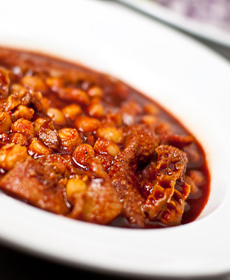
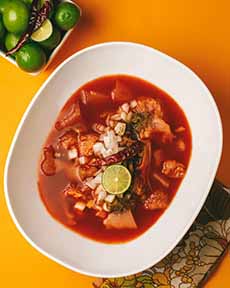
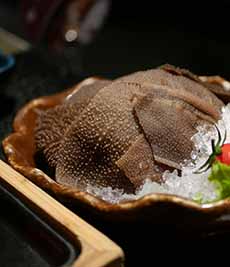
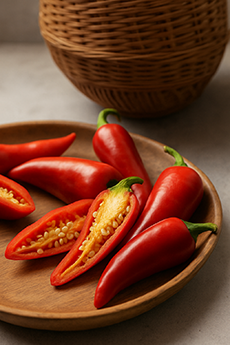
Chef Johnny Gnall’s mother grew up in Mexico City. She discovered her talent for cooking at a young age, and amassed recipes from friends and family while still a young girl. Her greatest teacher, however, was her nanny, Eulalia, a native Mexican. A tremendous source of knowledge on authentic Mexican cooking, many of Eulalia’s recipes dated back several hundred years. In honor of Cinco de Mayo, Johnny shares this one. “Menudo is a traditional Mexican soup made from tripe (cow stomach). It is very hearty and lore suggests it as a hangover cure. Foreign to most Americans, tripe is actually a lot better than it sounds. If cooked right, its flavor and texture become like that of great pot roast. “Buttery and velvety on your palate, the meat almost melts in your mouth and gives an unmistakable richness to the whole dish. If you’re still not convinced and the thought of stomach is a bit much (or your butcher doesn’t have any on hand), you can substitute chuck roast for a more American-friendly menudo. “Traditionally, you would use a casuela, a large earthenware pot; but any pot will do if you’re short on Mexican earthenware.” There is also an unrelated Philippine menudo, a stew made with sliced pork and calf’s liver in tomato sauce. January is National Menudo Month. The recipe follows. Also below: > The year’s 25+Mexican food holidays. Elsewhere on The Nibble: > The year’s 15 soup holidays. Ingredients 1. PLACE the bay leaf, garlic and onion in a piece of cheesecloth tied with kitchen twine, or other device for easy removal. 2. DICE the beef into half-inch pieces and place in a large pot. Add the onion, garlic, herbs and salt and fill the pot the remainder of the way with water. Bring to a boil and simmer for about 4 hours, or until the meat is fall-apart tender. Then turn off the heat and remove the bay leaf, garlic and onion. 3. BOIL the corn in a separate pot until tender, about 20 minutes. Drain. 4. COOK the corn. Cover to keep warm and set aside. 5. MAKE the chile sauce. Soak the chiles in hot water for 20 minutes. Then combine them in a blender with the other ingredients plus enough of the beef broth to keep things spinning with ease. Once blended, strain and add to the pot of beef. Simmer for 20 more minutes, then add the corn. 6. SERVE with the garnishes on the side so people can add what they like. Add some warm tortillas into the mix and you are good to go! Menudo, the hearty Mexican soup or stew known for its distinctive flavors and reputed hangover-curing properties, has a rich history spanning several centuries. Menudo originated in northern Mexico, in the states of Sonora and Chihuahua, in the Spanish colonial period, the late 16th or early 17th century. It began as an economy measure, to utilize all parts of a slaughtered animal. Tripe, the lining of the cow’s stomach lining, was the key ingredient. It provided pural and working-class families with an affordable way to feed large gatherings. The long cooking time required to tenderize the tripe (7-8 hours) made it ideal for communal weekend meals when families had time for extended preparation. In the original recipe, tripe was joined by hominy (nixtamalized corn kernels known in Spanish as pozole, red chile peppers, onions, and various herbs and spices (cilantro, lime, oregano). Invariably, regional variations emergedme. In northern Mexico, the original “red” version with red chile peppers predominates, while in central Mexico, a white version without chiles (menudo blanco) is common. Some areas add pigs’ feet or calves’ feet for additional texture and flavor. Mexican-American communities brought menudo to the U.S., but unlike other standards of Mexican cuisine, it hasn’t taken off in the mainstream. Menudo remains an important cultural dish in both Mexico and Mexican-American communities, where it’s often available in restaurants on widely available in Mexican restaurants, particularly on weekends. It can also be found at festivals, and is made for special occasions. Most historians believe that maize was domesticated in the Tehuacan Valley of Mexico. Numerous varieties were cultivated by the Olmecs and Mayas. Corn had spread throughout Mesoamerica by 2500 B.C.E. In a region with so many varieties of corn, names evolved. The type of corn grown in the U.S. is called elote (ee-LO-tay). Peruvian-style corn, with giant white kernels, is called maiz (ma-EES), spelled maize and pronounced MAYS in English. |


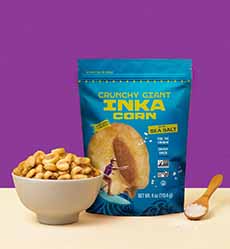
It is also called choclo in Peru (more than 30 varieties of corn are grown in every color and size imaginable). These jumbo kernels have a different texture than American corn varieties and are less sweet. They were first cultivated in Cusco, the city high in the Andes that was once the capital of the Inca empire.
Choclo has been a staple of the Peruvian diet for thousands of years. It is used to make everything from tamales to soups and pastries.
It can typically be found frozen or dried at Latin markets and online.
THE YEAR’S 25+ MEXICAN & TEX-MEX FOOD HOLIDAYS & OTHER REASONS TO CELEBRATE
Plus, every Tuesday is Taco Tuesday and every Friday is Fajita Friday†!
TEQUILA HOLIDAYS
And every Friday is Fajita Friday†!
________________
*Dia de la Raza and is celebrated across Mexico to mark the official recognition of the indigenous people of the country.
†Cinco de Marcho is celebrated every year, 12 days before St. Patrick’s Day. A play on the Mexican holiday name, Cinco de Mayo, this made-up holiday was created by revelers to prepares their livers for all the drinking that happens on St. Patrick’s Day. All participants are advised to drink safely and in moderation.
|
|
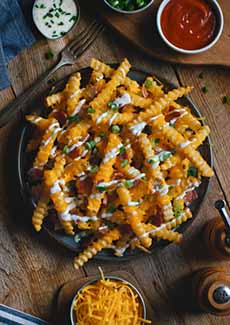
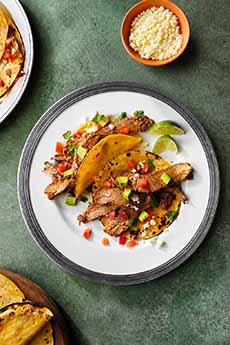
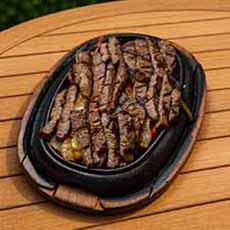
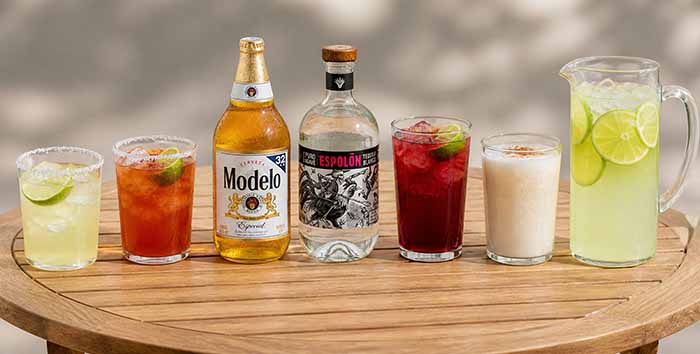
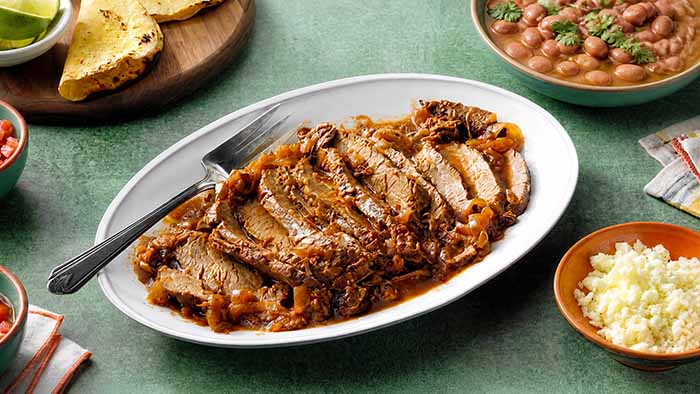
Updated August 2026 July 13th is National French Fries Day, a cause for celebration because it’s another reason to have fries—maybe for all three meals! How many types of French fries have you had? Crinkle cut and curly fries, sure. But how about Boardwalk Fries? Carne Fries? Elvis Fries? Newfie Fries ?. Each year we like to serve up a different way to serve French fries. This year, start with the American version of Poutine: Carne Asada Fries. After the recipe, we’ll delve into carne asada itself, the popular Mexican grilled steak that can be the centerpiece of a cookout or warm-weather gathering. Below: > How carne asada is enjoyed in Mexico. > More ways to serve carne asada. > Drinks to serve with carne asada. Elsewhere On The Nibble: > The history of French fries. > The different types of fries: more than 40! > Top 10 favorite dips for fries. > How to make the best French fries. > Make your own signature fries. > French fry styles around the world. > The different types of potatoes: a photo glossary. > The year’s 30 potato holidays. > The year’s 24 fried food holidays. > The year’s 30 potato holidays. > The year’s 25+ Mexican and Tex-Mex food holidays. > Food fun: The world’s largest French fry. Carne asada, which means “grilled steak” in Spanish, is a Mexican dish of grilled and sliced beef (skirt steak, sirloin steak, tenderloin steak, or rib steak). It’s served as a main dish with rice and beans, or as an ingredient in other dishes you’ll find below. This recipe was developed by Jonathan Melendez, food blogger from The Candid Appetite, for the Idaho Potato Commission, a source for great potato recipes. You can save time by purchasing the salsa and guacamole. 1. MAKE the fries. Heat a large pot (a Dutch oven is great here) over medium-high heat. Fill it a bit less than halfway with vegetable oil. Attach a deep fryer thermometer and heat the oil to 350°F. 2. PEEL the potatoes and cut them into thin fries. Immediately place the fries into a bowl of cold water to prevent them from turning brown and to rinse away the excess starch. Drain the potatoes and dry them thoroughly with a clean kitchen towel. Make sure they’re completely dry; you don’t want any moisture in the oil. 3. FRY the potatoes in batches until light golden brown, about 3 to 5 minutes. Stir with a slotted spoon and transfer to a wire rack set over a baking sheet. Continue frying the rest of the fries. 4. HEAT the oil to 375°F and fry the potatoes a second time (in batches as well), until deep golden brown and crispy, about 1 to 2 minutes. Transfer back to the wire rack and sprinkle with salt to taste. 5. GRILL the steak. First, heat an outdoor grill or a stovetop grill pan, over medium-high heat until hot. 6. COMBINE in a large bowl combine the flap steak with the salt, pepper, granulated garlic, onion, paprika, oregano, and Worcestershire sauce. Mix until evenly seasoned. Cook the meat until charred on both sides, about 5 to 7 minutes. Transfer to a cutting board and allow to rest for a few minutes before chopping into cubes. 7. ASSEMBLE the fries on an oven-safe platter, baking sheet, or individual ramekins. Sprinkle with the shredded cheese and place in a 350°F oven for about 5 minutes to melt the cheese. 8. REMOVE from the oven, top with the chopped carne asada, sour cream, guacamole, tomatoes, pickled jalapeños, cilantro, and queso fresco, as desired. Serve right away. Carne asada, Spanish for grilled or roasted meat, is served in numerous ways (see the next section). In northern Mexico, carne asada is also very often served simply as grilled beef on a shared platter, with tortillas and accompaniments so everyone can assemble their own tacos. The steak is marinated in lime juice, garlic, salt, and spices, then charred over an open flame. It’s then sliced thin across the grain or chopped. In Mexico, a home cookout or carne asada gathering is always festive. How’d you like to host your own gathering? To start with, you need a grill for that open flame (you can also make it in a skillet on the stove top, but you won’t get that great grilled flavor). Here’s the rest: Eating the individual components on a plate is also conventional. It also offers the option of avoiding gluten and carbs from the tortillas, and is potentially less drippy. Mission and other tortilla manufacturers do make gluten-free versions. |
|
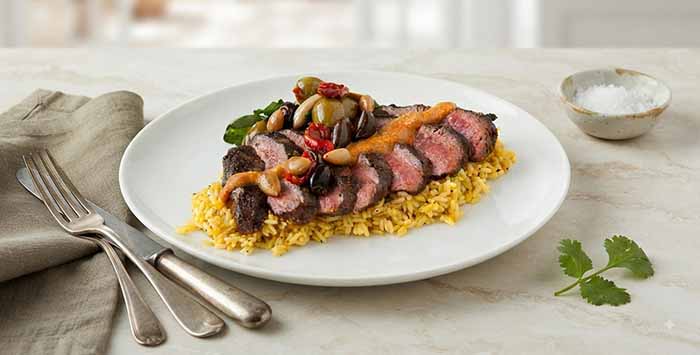 [10] An elevated presentation of carne asada at Eddie Merlot’s (photo © Eddie Merlot’s). 4. MORE WAYS TO SERVE CARNE ASADA Alcoholic Drinks Carne asada, literally “grilled meat” in Spanish, was not originally the name of one fixed recipe or a particular steak cut. Rather, it simply described beef cooked over high heat, traditionally over charcoal or wood. Today, thanks to the expansion of Mexican cuisine in the U.S., it usually refers to thin, grilled beef—often skirt, flap, or flank steak—served sliced or chopped. It’s a popular meat for tacos. Its roots are in northern and northeastern Mexico, where cattle ranching developed after Spanish colonization. Cattle did not exist in pre-Columbian Mexico; they arrived with the Spanish in the 16th century. In the ranching regions that became especially associated with carne asada—such as Sonora and Nuevo León*—beef became an important food, and open-fire grilling suited working ranch life as well as outdoor celebrations. Early carne asada was likely quite simple: a flavorful but economical cut of beef, grilled over fire and seasoned primarily with salt. Lime, garlic, chiles, herbs, and more elaborate marinades are now common, but they vary substantially by household, butcher shop, and region. The characteristic smoky flavor is often associated with charcoal or mesquite grilling. The finished meat may be served with tortillas, beans, grilled onions, salsa, and guacamole—or diced for tacos, burritos, tortas, and other dishes. Importantly, in northern Mexico, “a carne asada” can mean the gathering as well as the food: a family-and-friends cookout centered on a grill, rather like an American backyard barbecue. Beef may be the centerpiece, but chicken, chorizo, seafood, vegetables, beans, rice, salsas, and beer are also often part of the occasion. Mexican immigrants carried these grilling traditions to the United States in the early 20th century. Carne asada became especially important in California, Arizona, Texas, and other Southwestern communities, where carnicerías sold prepared marinated meat and taquerias turned it into a familiar taco filling. The BBC notes that printed references to U.S. carnicerías selling marinated meats go back to 1930. Over time, it moved from Mexican and Mexican-American home cooking and neighborhood taquerias into mainstream American restaurant menus. So the short version is: Carne asada began as northern Mexican ranching food, evolved into a beloved communal grilling tradition, and became a cornerstone of Mexican-American taco culture—not merely “marinated steak.” If you’re a beef lover, plan to have some soon. †Every Friday became “Fajita Friday” following an advertising campaign by Mexican-food brand Old El Paso in 2022. It was promoted as a Friday-night, at-home fajita ritual in the U.S., and a major 2023 campaign in the U.K. followed. Fajita Friday echoes Taco Tuesday: Tuesday taco specials appeared in U.S. newspaper ads as early as the 1930s, while the phrase “Taco Tuesday” emerged in the 1970s. Gregory’s Restaurant & Bar in New Jersey began a Taco Tuesday promotion in 1979 and later held a state trademark; regional fast-food chain Taco John’s helped popularize the phrase nationally and received a federal trademark in 1989. CHECK OUT WHAT’S HAPPENING ON OUR HOME PAGE, THENIBBLE.COM. |
||



CHECK OUT WHAT’S HAPPENING ON OUR HOME PAGE, THENIBBLE.COM.

