International Fusion Fries & French Fry Trends
|
|
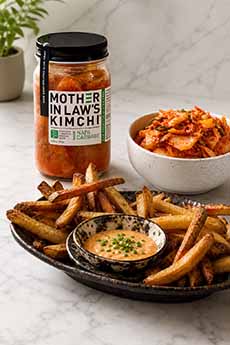
Updated August 2026 July 13th is National French Fry Day. In previous years we’ve created a glossary of the different types of French fries, and a variety of recipes from the Canadian favorite, poutine, to the two new recipes below. This year our focus is on fusion food, where fries are seasoned or otherwise prepared with the flavors or techniques of other countries. These examples were reported by Flavor & The Menu, a magazine for chefs. Below: > Recipe: Japanese-influenced daigaku imo fries. > Recipe: Mexican-influenced carne asada fries. Elsewhere On The Nibble: > The history of French fries. > The different types of fries: more than 40! > Top 10 favorite dips for fries. > How to make the best French fries. > Make your own signature fries. > The different types of potatoes: a photo glossary. > The year’s 30 potato holidays. > The year’s 24 fried food holidays. > Food fun: The world’s largest French fry. Fries have always been on the menu in the U.S., and they’re moving on up. According to recent data from Technomic’s MenuMonitor, fries have shown a 46.5% growth on menus at better restaurants since 2010. Americans consumers are eating even more fries today than a few years ago. Technomic’s MenuMonitor finds an increase in the number of appetizer fry items on menus, as well as in the number of side fry items at fine-dining restaurants, up by 5% since 2013. Rather than using grapeseed oil or canola oil, some top chefs are frying their potatoes in duck fat or goose fat, even beef tallow, each of which give the fries a distinctive, luxurious flavor. Another trend… These take inspiration from the loaded baked potato. Poutine, the beloved Canadian dish of fries topped with cheese curds and gravy, is currently the fastest-growing way of loading fries, according to Technomic. Fast-food versions of loaded fries have been noted, often as limited-time offers, such as Wendy’s BBQ Pulled Pork Fries and Baconator Fries, topped with Cheddar cheese sauce, bacon and shredded Cheddar. Regional or global fusion profiles also prevail, such as: As Americans consume more and more hot sauce, spicy fries—like Five Guys’ Cajun fries—have become a popular option at chain restaurants. You can shake cayenne or hot sauce on your fries, or use sriracha ketchup, but here’s what the professionals are doing: Chef Brian Goodman of Sawyer’s Street Frites and The Greenhouse Tavern in Cleveland advises: “Anything that can be on pasta, you could also make into a frite dish.” His carbonara frites are inspired by the pasta favorite—with black pepper, pecorino cheese and pancetta pepato—and are a huge draw at Cleveland Browns’ FirstEnergy Stadium. Now, how about some recipes? |
|
|
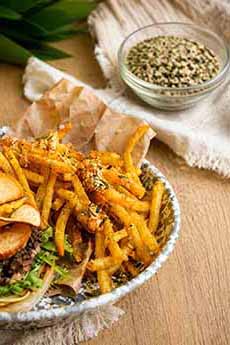
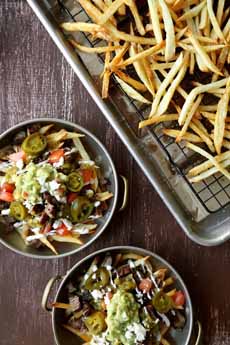
3. FUSION FRIES RECIPE #1: JAPANESE DAIGAKU IMO FRIES Daigaku imo is a Japanese dish of caramelized potatoes, traditionally made with sweet potatoes and black sesame seeds. The name translates as “university potatoes”: The dish was a popular snack at universities in Tokyo in the early 1900s. This recipe, which came to us from the Idaho Potato Commission, is from Chef Eric Yung of Elite Catering in Dayton, Ohio. He uses white russet potatoes and “tones the sweetness of the dish down to a kettle corn level.” Ingredients 1. COMBINE the sugar, syrup and soy sauce in a small pot until the mixture is reduced and nappe consistency. Nappe, a French term meaning “layer,” is a consistency that allows a sauce to coat the food evenly. It should be neither too thick nor too thin. 2. SCRUB the potato well and cut into wedges, leaving the skin on for color (you can peel it if you want). Place the cut pieces in cold water. When ready to fry, drain the pieces and pat dry. Place in the fryer until cooked through and lightly browned. 3. REMOVE the potato from the fryer, drain and combine with the syrup mixture. Toss to coat (you can stir the potato into the syrup); the potato will shine if coated properly. Sprinkle with some gomashio. Separate the potato pieces so they don’t get stuck to each other, and serve. This recipe, from food blogger Jonathan Melendez of The Candid Appetite, was also sent to us by the Idaho Potato Commission. In his take, Jonathan tops French fries with all the ingredients for Carne Asada (not unlike the Chinese-Peruvian dish, lomo saltado, photo #6). To save time, use store bought salsa and guacamole. Ingredients |
||
|
Preparation 1. HEAT a Dutch oven or other large pot over medium-high heat. Fill it a bit less than halfway with vegetable oil. Attach a deep fryer thermometer and heat the oil to 350°F. 2. PEEL the potatoes and slice them into thin fries. Immediately place the fries into a bowl of cold water to prevent them from turning brown, and to rinse away the excess starch. Drain the potatoes and dry them thoroughly with a clean kitchen towel. Make sure they’re completely dry; you don’t want any moisture in the oil. 3. FRY the potatoes in batches until light golden brown, about 3 to 5 minutes. Stir with a slotted spoon and transfer to a wire rack set over a baking sheet. Continue frying the rest of the fries. Heat the oil to 375°F and fry the potatoes a second time (also in batches) until deep golden brown and crispy, 1 to 2 minutes. Transfer the fries back to the wire rack and sprinkle with salt to taste. 4. HEAT an outdoor grill or a stovetop grill pan over medium-high heat until hot. In a large bowl, combine the flap steak with the salt, pepper, granulated garlic, onion, paprika, oregano and Worcestershire sauce. Mix until evenly seasoned. Cook the meat until charred on both sides, about 5 to 7 minutes. Transfer to a cutting board and allow to rest for a few minutes before chopping. 5. ASSEMBLE: Arrange the fried potatoes on an oven-safe platter, baking sheet or individual ramekins. Sprinkle with shredded cheese and place in a 350°F oven for about 5 minutes to melt the cheese. Top with chopped carne asada, sour cream, guacamole, tomatoes, pickled jalapeños, cilantro and queso fresco. Serve immediately. Fusion food combines (“fuses”) ingredients, cooking techniques, or culinary traditions from two or more distinct food cultures in a single dish. Since the world became a global village, chefs and home cooks have looked for new ways to bring excitement to conventional dishes. Fusion food can be intentional and innovative, or it can develop naturally through migration, trade, and cultural exchange. The term is broad, so not every dish influenced by another cuisine is necessarily “fusion”—in fact, we question the inclusion of Tex-Mex (see the ‡footnote). Here are some undeniably fusion dishes: If you’re a creative cook, consider the fusion dishes you like to create—and create them! ________________ *If the feta is too salty, soak the block in fresh water for 15 minutes. Rinse, taste, and soak again as necessary. †Döner vs. Gemüse kebab: The traditional Döner kebab is made with lamb or minced veal/beef. Gemüse kebab is made with chicken thigh meat. ‡Tex-Mex is referred to as “Mexican culinary traditions adapted with ingredients and techniques associated with the U.S.” When we pursued the “American ingredients and techniques” side of Tex-Mex, we are told that it “reflects Texas ingredients, ranching culture, U.S. food production, and adaptations made by Mexican American cooks in Texas. It is not simply Mexican food with unrelated American ingredients added; Tex-Mex developed as its own regional cuisine.” Aha: It’s a regional cuisine, but it could be a region of Mexico. Go back before 1845, before the Texas Annexation, and it was! The Republic of Texas had declared independence from the Republic of Mexico in 1836, which led directly to the Mexican-American War (1846–1848). Mexico lost; Texas went from a region of Mexico to a region of the U.S. Common American or distinctly Texan influences include a larger amount of meat due to Texas ranching. Yellow cheeses (Cheddar and cheese sauces made from processed cheese) are associated with Tex-Mex, rather than Mexico’s white cheeses (cotija, queso fresco, queso Oaxaca, or cotija, e.g.). Wheat-flour tortillas are Mexican, but their widespread use in Texas, especially for burritos, breakfast tacos, and fajitas, became a hallmark of Tex-Mex. Is this “fusion?” Not IMHO. By the way, a food that isn’t Tex-Mex, but Cal-Mex, is tortilla chips. They were invented by a Mexican-American woman in L.A. Here’s the scoop. CHECK OUT WHAT’S HAPPENING ON OUR HOME PAGE, THENIBBLE.COM. |
||