THE NIBBLE BLOG: Products, Recipes & Trends In Specialty Foods


Also visit our main website, TheNibble.com.

Make A Mango Cobbler: A Recipe For Any Time Of The Year

April 13th is National Peach Cobbler Day. Why would someone place a peach holiday in a month devoid of fresh peaches? We have the answer below .

And we have a substitute recipe for today: You can find fresh mangoes year-round*, and they make a delicious cobbler.

The year’s 4 mango holidays:

  • May 5: Cinco de Mango, promoted by The National Mango Board
  • June: National Mango Month
  • July 18: National Tropical Fruit Day
  • July 22nd: National Mango Day
  •  
    Below:

    > The recipe for mango cobbler.

    > Why National Peach Cobbler Day is held in April.

    Elsewhere on The Nibble:

    > Classic peach cobbler recipe.

    > The history of cobbler.

    > The history of mangoes.

    > The difference between cobbler, crumble, crisp, betty, buckle, grunt, pandowdy, slump, and other baked fruit dishes.

    > The different types of pies and pastries: a photo glossary.
     
     
    RECIPE: MANGO COBBLER

    Igredients

  • 4 cups chopped peeled mangoes (about 3 medium)
  • 2/3 cup sugar
  • 1/2 teaspoon ground cinnamon
  • 2 tablespoons cornstarch
  • 1 tablespoon cold water
  • 1 tablespoon butter
  •  
    For The Topping

  • 1 cup self-rising† flour
  • 1 tablespoon sugar
  • 3 tablespoons shortening
  • 1/2 cup 2% milk
  •  
    Preparation
    Optional Garnish

  • Ice cream
  • Whipped cream
  •  
    Preparation

    1. COMBINE the mangoes, sugar and cinnamon in a large saucepan. Cook and stir until the mixture comes to a boil.

    2. COMBINE the cornstarch and water until smooth; stir into the pan. Cook and stir for 2 minutes or until thickened.

    3. TRANSFER to a greased 11 x 7-inch baking dish. Dot the top with butter.

    4. MAKE the topping. In a small bowl, combine the flour and sugar. Cut in the shortening until the mixture resembles coarse crumbs. Stir in the milk; mix well.

    5. DROP by tablespoonfuls onto the hot fruit. Bake, uncovered, at 400°F for 20-25 minutes or until bubbly and golden brown. Serve warm.
     
     
    WHY IS PEACH COBBLER DAY IN APRIL?

    At first glance (and at second glance, too), it seems dumb—OK, strange—to hold a peach holiday in a month when no peaches are available in most parts of the country until the “stone fruit” months of June through August.

    When we drilled down to discover that the choice of a date in April was completely intentional, and has everything to do with industry marketing rather than the harvest cycle.


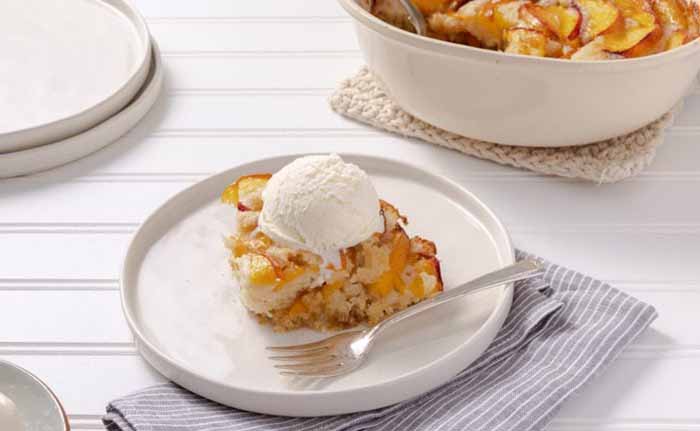
    Mango Cobbler
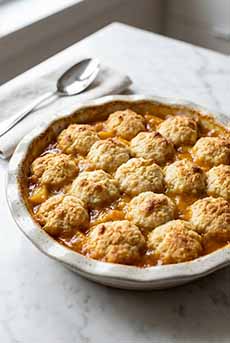
    [1] Mango cobbler, great on its own or when peaches aren’t in season (Abacus photo).

    Whole & Sliced Mangoes
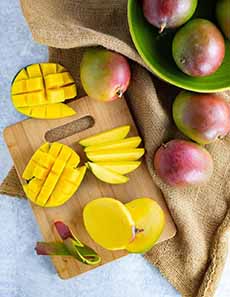
    [2] Different mango varieties reach their peak at different times of the year. See the *footnote (photo © Melissa’s Produce).

    Bag Of White Lily Self Rising Flour
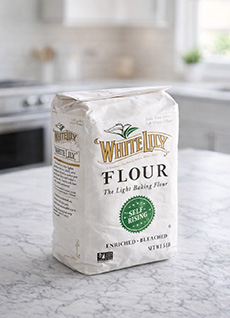
    [3] See the †footnote for why it’s important to use self-rising flour in a cobbler (Abacus Photo).
     
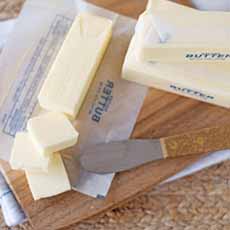
    Sticks Of Butter
    [4] In cobblers, where a biscuit-like dough is dropped on top, the butter fries the bottom edge of the dough that is touching the fruit and crisps up the very top. The middle of the “cobblestones” remains fluffy while the exterior gets a slight, buttery crunch (photo © Go Bold With Butter).

     
    National Peach Cobbler Day was created by the Georgia Peach Council in the 1950s. Their goal was specifically to promote canned peaches.

    By placing the holiday in April, they encouraged people to buy and use inventory from the previous year’s harvest during a time when fresh fruit was unavailable.

    According to sources, “This strategy proved that a great cobbler doesn’t actually require fresh peaches; high-quality canned peaches, which are often packed at the peak of ripeness, can produce an excellent result year-round.”

    According to us, canned peaches are no substitute for fresh or even frozen peaches.

    However, this was the 1950s, when the canned crop of convenience foods had American housewives making everything with canned fruit, canned soup concentrates,

    Mango Cobbler
    [5] If you want something more interesting than vanilla ice cream, consider coconut, candied ginger, or macadamia nut. You can soften vanilla ice cream and mix in your inclusion of choice (photo © Taste of Home).

    ________________
     
    *Per The National Mango Board; Ataulfo / Honey mango late February–mid July; Tommy Atkins mango early March–mid July; Kent mango January–early February and again in December; Keitt mango August-September plus some in spring; Haden mango March–early May; Francis mango May–July.

    The primary reason to use self-rising flour instead of all-purpose flour is for convenience and consistency, particularly in recipes like biscuits, pancakes, and cobbler toppings. Self-rising flour is essentially all-purpose flour that has already been premixed with baking powder and salt (most brands use a ratio of about 1 ½ teaspoons of baking powder and ½ teaspoon of salt for every 1 cup of flour). This saves you two steps and ensures that the leavening agent is perfectly distributed throughout the flour, which helps prevent clumping/uneven rising in the dough.

    Secondly, in the U.S., most self-rising flours (especially Southern brands like White Lily or Martha White) are made from soft winter wheat, which has a lower protein content than standard all-purpose flour. Lower protein means less gluten formation. This results in a softer, fluffier, and more tender crumb. This is why self-rising flour is the “gold standard” for Southern-style biscuits or delicate cobbler drops (all-purpose flour can sometimes make those same recipes slightly tougher/breadier.
     

    CHECK OUT WHAT’S HAPPENING ON OUR HOME PAGE, THENIBBLE.COM.


    Comments off

    Ele Chocolates Probiotic Bites: A Chocolate A Day Is Good!

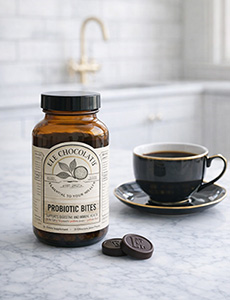
    Ele Chocolates Probiotic Bites
    [1] Each morning, we enjoy one Probiotic Bite with our first cup of coffee (Abacus Photo).

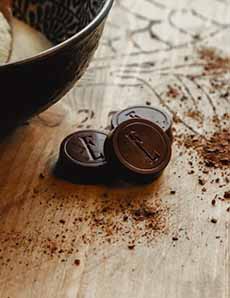
    Ele Chocolates Probiotic Bites
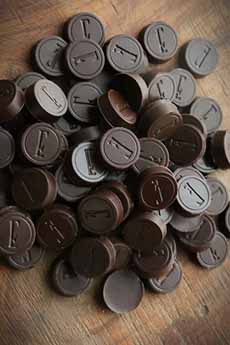
    [2] The bites are made from organic 70% cacao (dark chocolate (photos #2, #3, #5, and 6 © Ele Chocolates).

    Ele Chocolates Probiotic Bites
    [3] Tempting, but you can only eat one a day, the effective dose.

    Cacao Beans
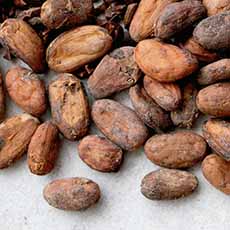
    [4] It begins with single origin, organic, Fair Trade certified cacao beans (photo © Tetiana Bykovets | Unsplash).


    The Nibble doesn’t typically cover health and wellness foods. But we were treated to a jar of Probiotic Bites from Ele Chocolates and we liked them so much, that after our initial supply ran low we became a monthly subscriber.

    After several months, they’ve become such a part of our morning ritual that they’re our Top Pick Of The Week.

    With Mother’s Day coming up, we’re gifting bottles to several of our friends.

    What if you could start the day with a piece of chocolate that’s delicious, healthful, and probiotic, yet contributes just 62 calories along with your morning cup of coffee or tea? (It can be consumed without any beverage at all.)

    Designed as a functional supplement, the delicious flavor comes from single origin, organic, Fair Trade certified, 70% cacao dark chocolate. The innovative product is made by Ele Chocolates, a partnership between of one of our favorite artisan chocolate lines, The Cordial Cherry (another Nibble Top Pick Of The Week), and Synbiotic Health, a biotech company specializing in probiotics.
     
     
    WHAT’S IN THEM?

    The ingredients are simple: cacao, coconut oil, and billions of friendly microorganisms from specific probiotic strains. The magic comes from how they’re put together.

    The Bites:

  • Are a blend of Bifidobacterium adolescentis (iVS-1®)† and Bifidobacterium longum (iVE-15®)†, totaling about 3 billion CFUs.
  • Are gluten-free with no added refined sugars, milk, soy, or wheat.
  • Contain the prebiotics Inulin and XOS†.
  • Are safe for children and adults, including women who are pregnant or breastfeeding.
  •  
    Below:

    > How do Probiotic Bites help your system?

    > Why two particular strains are used.

    > Where to buy.

    > About Ele Chocolates.

    > About Synbiotic Health.

    Elsewhere on The Nibble:

    > What is probiotic food?

    > Probiotics, prebiotics, and synbiotics.
     
     
    PROBIOTIC BITES: HOW DO THEY HELP?

    While these statements have not been evaluated by the Food and Drug Administration.

    Probiotic Bites are not intended to diagnose, treat, cure, or prevent illness or disease.

    Ele says that taking one Probiotic Bite a day can help you maintain a healthy and balanced digestive and immune system.

    Their tests have shown that the Probiotic Bites:

  • Improve digestion and overall gut health with live probiotics, friendly bacteria that are good for the digestive system by keeping the microbiome balanced. This in turn helps to promote better digestion: less bloating and easier elimination.
  • Provide better immune support. Good bacteria crowd out the bad ones so the gut can’t be taken over by less friendly bacteria and pathogens.
  • Improved lactose digestion. The probiotic IVS-1® is continously studied to prove its effectiveness in reducing symptoms and reactions to poor lactose digestion.
  •  
    Jar Of Ele Chocolates Probiotic Bites
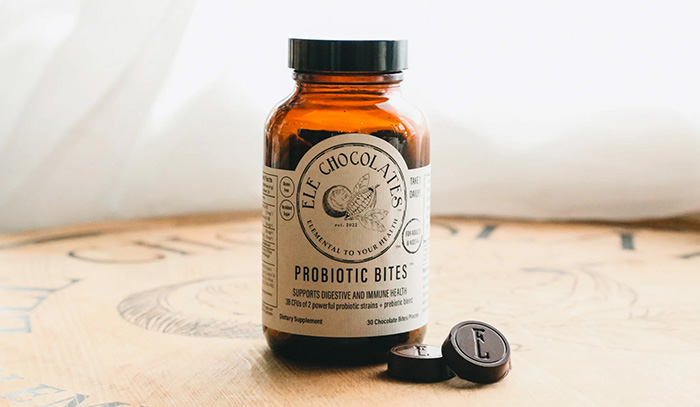
    [5] We take a moment each morning to enjoy the peace and tranquility of our Probiotic Bite. Seriously!
     
     
    WHY THESE PARTICULAR PROBIOTIC STRAINS ARE USED

    Standard probiotics, like the “live” ones found in some yogurts, often die off in the stomach. These two strains were selected using in-vivo selectio” (iVS) and in-vitro enrichment (iVE), techniques used to find the “tough” bacteria that can actually reach the gut alive and perform functional tasks like producing vitamins or calming inflammation.

    These two specific strains of probiotic bacteria were developed by Synbiotic Health.

    Bifidobacterium adolescentis, iVS-1®, is naturally occurring in the human gut and is chosen for its “ecological fitness,” meaning it’s particularly good at surviving the journey through the digestive system and colonizing the gut.

  • Folate Producer: It’s a robust producer of folate (Vitamin B9), which is essential for DNA synthesis and cardiovascular health.
  • Lactose Digestion: It contains a high number of lactase genes, potentially helping those with lactose maldigestion*.
  • Intestinal Barrier: Clinical studies have suggested that it helps improve the integrity of the intestinal barrier, reducing “leaky gut.”
  • Neurotransmitter Support: It has the genetic capability to synthesize GABA, a neurotransmitter that helps regulate anxiety and stress.
  •  
    Bifidobacterium longum, iVE-15®, is one of the most well-researched probiotic species. The iVE-15 strain is specifically selected for its ability to thrive in the human microbiome.

  • Short-Chain Fatty Acid (SCFA) Production: It helps produce butyrate and acetate, which fuel the cells lining your colon and support a healthy gut environment.
  • Pathogen Defense: By lowering the pH in the colon, it creates an acidic environment that is inhospitable to harmful bacteria.
  • Immune System “Conversation”: It helps fine-tune the immune system’s response, helping it distinguish between harmless food and actual threats.
  • Longevity: While B. longum is famous for being a “founder” bacteria in infants, strains like iVE-15 are used in adults to maintain metabolic and digestive balance.
  •  
     
    GET YOUR PROBIOTIC BITES

    We don’t give healthcare advice. We also don’t use probiotic supplements—we don’t need them.

    So we can say, as an avocational user: We’re in it for the chocolate. It’s a happy and healthy way to start the day. To us, Probiotic Bites are a treat.

    If you do take probiotic supplements, consult with your healthcare provider for advice.

    One consideration might be the cost. With a 10% discount for monthly subscribers, a 30-day supply is $45 a month.

    Is it worth $1.50 a day—or is it even possible for many budgets—to enjoy a piece of good-for-you chocolate?

    We can only say that it makes us happy to wake up each morning and head to the kitchen to make coffee and enjoy our Probiotic Bite.

    > The Bites are sold on the company website as well as on Amazon.

    While there are rave reviews, i.e. “this solved my problem,” on both sites, we were surprised to see a couple of lower reviews on Amazon because the purchasers didn’t like the taste.

    Frankly, we love the taste…but as we all know, chacun à son goût, to each his own taste.
     
    Jars Of Ele Chocolates Probiotic Bites
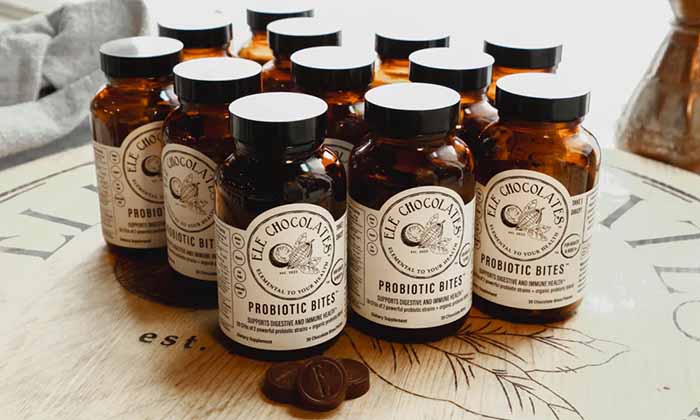
    [6] A year’s supply. Actually, you can get your monthly refills in sustainable brown bags.
     
     
    ABOUT ELE CHOCOLATES

    “Ele” (pronounced EL-uh) is short for “Elemental,” a name that reflects the company’s mission to support health at its “elemental core.”

    The name signals that the product is a fundamental building block for gut health, rather than just a standard confection.

    The company was founded in 2022 as a collaboration between Melissa Stephens, the artisanal chocolatier of The Cordial Cherry, her daughter, Hannah Humeniuk, and biotech company Synbiotic Health.

    The CEO of Synbiotic, a customer of The Cordial Cherry, reached out to propose combining their chocolate-making expertise with his company’s probiotic strains.
     
     
    ABOUT SYNBIOTIC HEALTH

    Synbiotic‡ Health is a biotechnology company that specializes in the research and development of “ecologically advanced” probiotics and synbiotics. Unlike many supplement companies that simply market existing strains, Synbiotic Health is a research firm that discovers and licenses its own proprietary bacterial strains.

    The company is considered highly respected within the scientific and nutraceutical communities due to their academic pedigree and rigorous approach to clinical validation. The company was founded in 2017 by four prominent microbiome researchers, world-renowned experts in gut ecology and fermentation.

    Their lead strain, iVS-1®, is backed by peer-reviewed human clinical trials published in high-impact journals like Microbiome and Applied and Environmental Microbiology.
     
    ________________
     
    *Maldigestion is the biological process of what is happening (or not happening) in your gut. Lactose intolerance is physical symptom: how you feel because of maldigestion.

    Inulin (FOS) (25 mg) is sourced from organic Jerusalem artichokes. Xylooligosaccharides (XOS) (15 mg) are sourced from organic cane sugar.

    More terms to know:

    Synbiotic is the “1+1=3” of gut health. It’s the combination of a probiotic (the live bacteria) and a prebiotic (the fiber “food” that helps those bacteria grow).

    CFU (Colony Forming Units) is the measure of how many billions of live, active bacteria are in each chocolate bite.

    In-Vivo Selection (IVS) is is the process Synbiotic Health uses to pick bacteria that have been proven to survive inside a living body, rather than just in a petri dish.
     

    CHECK OUT WHAT’S HAPPENING ON OUR HOME PAGE, THENIBBLE.COM.


    Comments off

    For Caramel Corn Day: Caramel Corn Recipe Without Corn Syrup

     
    We don’t use corn syrup in our cooking or baking, so on National Caramel Corn Day, April 6th, we make a recipe that requires none. Instead, the corn is made with real caramel sauce.

    If you feel like popping along with us, below you’ll find:

    > The caramel corn recipe without corn syrup.

    > Why do most recipes include corn syrup?

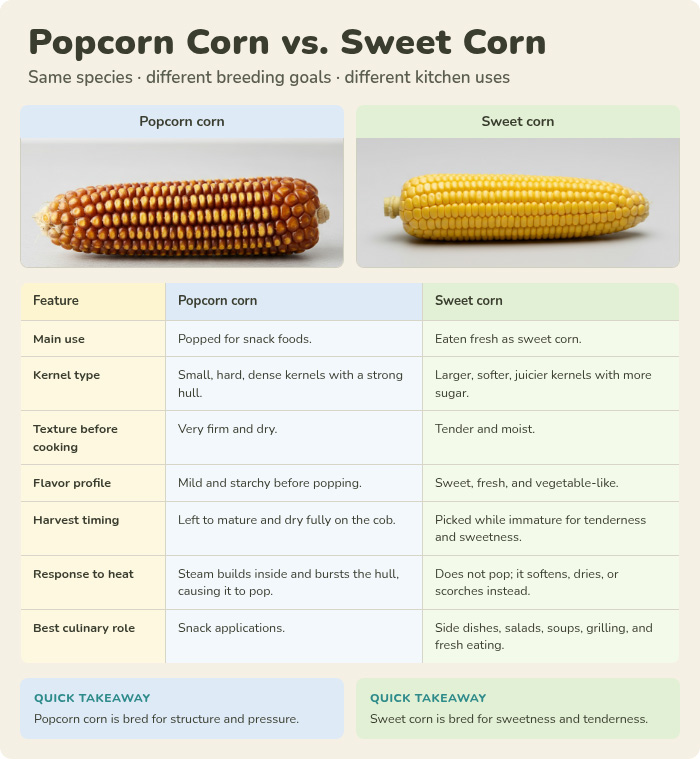
    > The difference between popping corn and sweet (table) corn.

    Elsewhere on The Nibble, dig into:

    > The history of caramel corn.

    > The history of popcorn.

    > The history of corn.

    > The year’s 13 popcorn holidays.

    > More popcorn recipes.

    There are two types of caramel corn:

    While “caramel” is often used as a catch-all term, the richness and depth of the real caramel sauce used in this recipe come from the emulsion of fats and sugars. Commercial “caramel corn” is typically made with a simple sugar-and-oil glaze.

  • Homemade caramel corn recipes often use real, butter-based caramel, as does the recipe below. It produces a thick, opaque coating. The fat in the butter prevents the sugar from forming a perfectly clear, hard “glass” shell that is familiar in commercial products.
  • Store-bought caramel corn typically uses a sugar glaze rather than a buttery, rich coating. With store-bought, the sugar is added directly to the popping vessel or during a high-heat glazing process to create a thin, glass-like layer of caramelized sugar from corn syrup and soy lecithin, that is crisp and brittle. Commercial “glazed” popcorns often use.
  •  
    Caramel Corn With Mix-Ins
    [7] We like to serve a bowl of plain caramel corn with separate mix-ins, so people can customize their own. The photo shows chocolate chunks, peanuts, and pecans, but you can offer anything from bacon or dried cherries or cranberries to M&Ms and toffee bits (Abacus Photo).
     
     
    RECIPE: CARAMEL CORN WITHOUT CORN SYRUP

    For a salted caramel version, increase the salt to 1 teaspoon and add a light sprinkle of flaky sea salt over the top just before baking.
     
    Ingredients For 8 Servings

  • 1 cup unsalted butter, softened
  • 1 cup brown sugar, firmly packed
  • 1/2 teaspoon salt
  • 8 cups popped popcorn
  • Optional: 1 cups pecan halves, salted/honey roasted peanuts, or a mix (photo #7, above)
  •  
    Preparation

    1. PREHEAT the oven to 250°F. Lightly grease a large roasting pan or oven-safe bowl.

    2. MAKE the caramel: Beat the softened butter, brown sugar, and salt until light and fluffy, about 3 minutes. The mixture should be smooth and creamy.

    3. COMBINE the popcorn and caramel: Remove any unpopped kernels before coating. Place the popped popcorn and optional 1 cups pecan halves in the pan. Drop spoonfuls of the caramel mixture over the popcorn and toss gently but thoroughly, to coat as evenly as possible. Tip: We grease our hands with butter to hand-toss.)

    4. BAKE AND STIR. Bake at 250°F for 55 minutes, removing the pan every 15 minutes to stir and redistribute the caramel coating. This low-and-slow method ensures even coating and proper crisping without burning.

    5. COOL. Spread the finished caramel corn onto a sheet of parchment paper in a single layer and allow to cool completely, about 25 minutes. The caramel will crisp up as it cools.

    6. BREAK into clusters and serve. You can serve the optional mix-ins (photo #7) and let people customize their corn. Store in an airtight container for up to one week.
     
    Tip

  • Use freshly popped popcorn for the best texture. Old popcorn will turn out chewy rather than crispy, and when popcorn has a lot of unpopped kernels, it’s often because the kernels have dried out too much.
  •  
     
    WHY DO MOST CARAMEL CORN RECIPES USE CORN SYRUP?

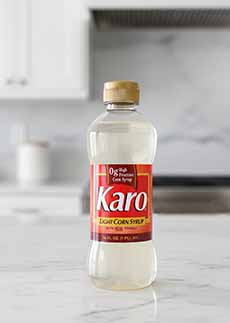
    Corn syrup (photo #6) is a functional ingredient that prevents crystallization.

  • When sugar is cooked at high temperatures, it has a tendency to recrystallize—i.e., the dissolved sugar molecules can suddenly bond back together and turn grainy or sandy.
  • Corn syrup, being a different type of sugar (glucose rather than sucrose), interferes with that crystallization process and keeps the caramel smooth and glossy.
  •  
    When making caramel corn, specifically, it enables a:

  • Smoother, more even coating, enabling the caramel to adhere to the popcorn more uniformly.
  • Crispier texture, helping the caramel set to a harder, glassier finish.
  • Longer shelf life, keeping the caramel corn crisper longer by resisting moisture absorption.
  •  
    But it doesn’t impact the flavor, so we’re more than happy to use only brown sugar and butter in our recipe instead of brown sugar and corn syrup.

    Brown sugar contains molasses in it, which has some natural resistance to recrystallization. Combined with butter and a low-and-slow baking method, we achieve a very satisfying result.

    It may be slightly softer and less glassy than a corn syrup version, but we don’t notice.


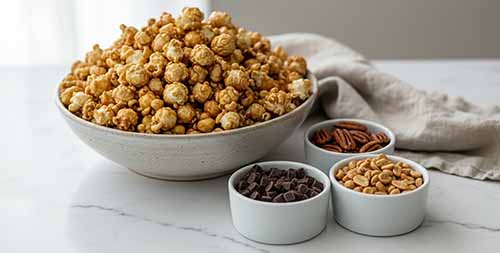
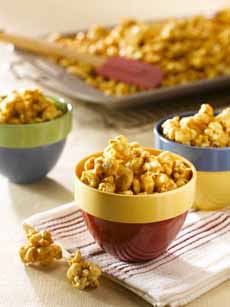
    A Bowl Of Caramel Corn
    [1] Treat yourself to some homemade caramel corn made with real caramel (photos #1 and #2 © National Popcorn Board).

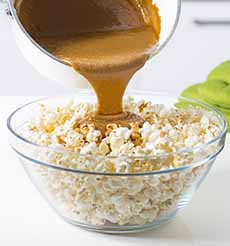
    Pouring Caramel On Popcorn
    [2] It’s as easy as pouring caramel sauce over popcorn.

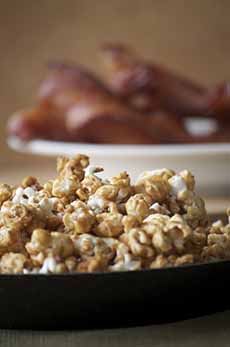
    A Bowl Of Bacon Caramel Corn
    [3] How about mixing in chopped bacon (photo © Evan Dempsey | THE NIBBLE)?

    Caramel Popcorn Fudge
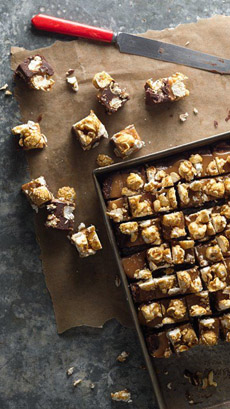
    [4] Here’s a fun recipe: triple caramel fudge with dulce de leche, caramel candies, and caramel corn (photo © Betty Crocker).

    A  Bowl Of Caramel Corn Ice Cream
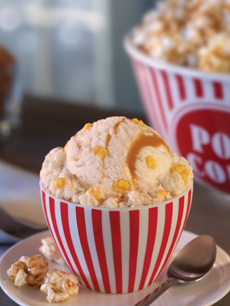
    [5] In January 2014, Baskin Robbins’ Flavor of the Month was Movie Theater Popcorn: popcorn-flavored ice cream, butter popcorn crisp pieces, and a salty caramel ribbon. Make your own version with your ice cream flavor of choice topped with caramel sauce and garnished with caramel popcorn (photo © Baskin-Robbins).

    Bottle Of Karo Corn Syrup
    [6] Nice for popcorn balls, but not for our caramel corn (Abacus Photo)!


    THE DIFFERENCE BETWEEN POPCORN AND SWEET CORN

    What’s the difference between the corn kernels we eat (sweet corn, a.k.a. table corn), and the kernels we pop?

    They are actually quite different varieties of corn:

    Corn (Zea mays) has several distinct varieties:

  • Dent Corn/Field Corn (Zea mays var. indentata): Harvested mature and dry, and used for livestock feed, ethanol, and processed foods like corn chips, hominy, masa (for tortillas), and corn oil.
  • Flint Corn/Calico Corn (Zea mays var. indurata): Hard-kernel corn used for foods like polenta and as decorative Indian corn, livestock feed, and industrial applications.
  • Flour Corn (Zea mays var. amylacea): A soft, starchy corn used to make cornmeal.
  • Popcorn (Zea mays var. everta): A type of flint corn with a hard shell and high moisture content.
  • Sweet corn (Zea mays var. saccharata or rugosa): Table corn, i.e. the corn we eat (kernels, on the cob, corn syrup), as well as non-food uses (see *footnote).
  •  
    Popcorn Vs. Sweet Corn Chart
    [8] Popcorn and sweet corn are quite different subspecies (Abacus Chart).
     
    ________________
     
    *Sweet corn’s high sugar content makes it primarily a human food crop compared to starchy field corn. Beyond human consumption, it’s used for livestock fodder (corn cobs, stalks, and leftover kernels), cosmetics (corn syrup is used in toothpaste and mouthwash), medicine (husks and corn silk are sometimes used in traditional medicine to treat issues such as bladder irritation), industrial applications (the starch is used in adhesives and bio-plastic), and in some cases, biofuels (while field corn is the primary source, the sugars in sweet corn can be used for ethanol production).
     

    CHECK OUT WHAT’S HAPPENING ON OUR HOME PAGE, THENIBBLE.COM.


    Comments off

    It’s National Something On A Stick Day. Here’s What To Eat!

    Beef & Chicken Yakitori Shewers
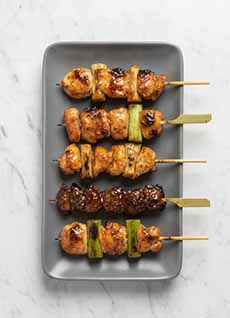
    [1] The classic: Japanese yakitori, a cousin to Middle Eastern kebabs (Abacus Photo).

    Pizza On A Stick
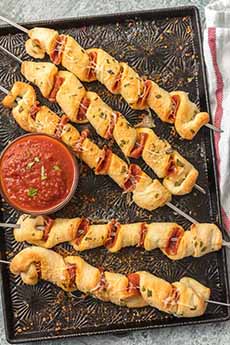
    [2] The new: pizza on a stick. Here’s the recipe (photo © The Cookie Rookie).

    Mini PB&J Sandwiches On A Skewers
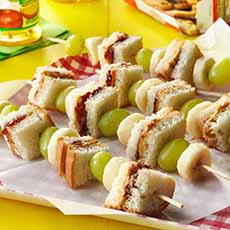
    [3] PB&J on a stick. Here’s the recipe (photo © Taste Of Home).

    Tornado Potatoes (On A Stick)
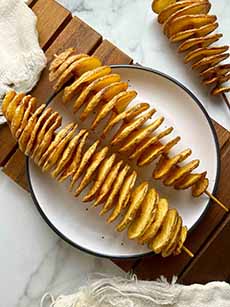
    [4] Tornado potatoes (a.k.a. Chip Sticks, Potato Springs, Potato Twisters, Ribbon Fries, Rotato, Spiral Spuds, Twisted Taters, and who knows what else) are always fun, and you can make them at home. Here’s the recipe (photo © Grumpy Recipes).

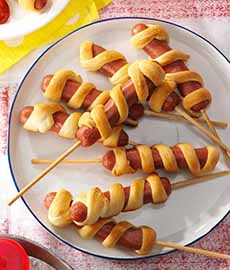
    Hot Dog On A Stick
    [5] Hot Dogs In A Sweater. Here’s the recipe (photo © Taste Of Home).


    March 28th is one of the quirkier food holidays: National Something On A Stick Day.

    From before written history, meat on sticks (no plates and cutlery in those days) to the accidental invention of the Popsicle in at the beginning of the 20th century…

    …to cheesecake on a stick, deep-fried candy bars on a stick, ravioli on a stick, and everything else on a stick, humans have been eating food from strips of wood.

    In fact, there’s even a second holiday to celebrate food on a stick: July 11, National State Fair Food Day.

    In case you can’t decide what, exactly, you want on your stick, here are some suggestions.

    Elsewhere on The Nibble:

    > 10 more on-a-stick ideas, including macarons on a stick!
     
     
    SOMETHING SAVORY ON A STICK

  • Antipasto Skewers: Cubes of cheese and deli meats with olives and pickle chunks.
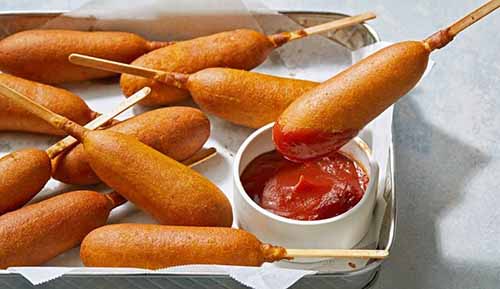
  • Corn Dogs: A hot dog (no roll) dipped in cornmeal batter and deep-fried (photo #6).
  • Kebabs & Skewers: Anything from Middle Eastern shish kebabs and Japanese yakitori (grilled chicken—photo #1) to Southeast Asian satay (marinated meat with peanut sauce). Or just skewer shrimp, cherry tomatoes, and zucchini chunks (maybe some pineapple, too).
  • Hot Dogs: Skewered and wrapped in biscuit dough, sometimes called Dogs In Sweaters (photo #5). Take that, Pigs In Blankets!
  • Pasta Skewers: Tortellini with mozzarella cubes, marinara dip, and optional shrimp or chicken.
  • Pizza Rolls: Rolled up pizza on a stick (photo #2).
  • Tornado Fries: A spiral-cut potato on a long skewer (photo #4).
  •  
    A Platter Of Corn Dogs
    [6] The classic: corn dogs. These are made in an air fryer! Here’s the recipe (photo © Taste Of Home).
     
     
    SOMETHING SWEET ON A STICK

  • Candy & Caramel Apples: One of our favorite things on a stick, especially when rolled in toffee bits or nuts.
  • Cake Pops: Bite-sized balls of cake mixed with frosting and dipped in a candy coating, pleasing people since 2008.
  • Fruit Kebabs: The healthiest food on a stick, a skewer of grapes, melons, pineapple, and strawberries.
  • Ice Pops & Ice Cream Bars: From simple fruit juice pops to chocolate-coated ice cream bars studded with garnishes. A shout-out to our favorites from Magnum.
  • Marshmallows: Stack them on a stick, toast them (a candle at the table works), and serve with chocolate dip and graham cracker crumbs, for s’mores on a stick.
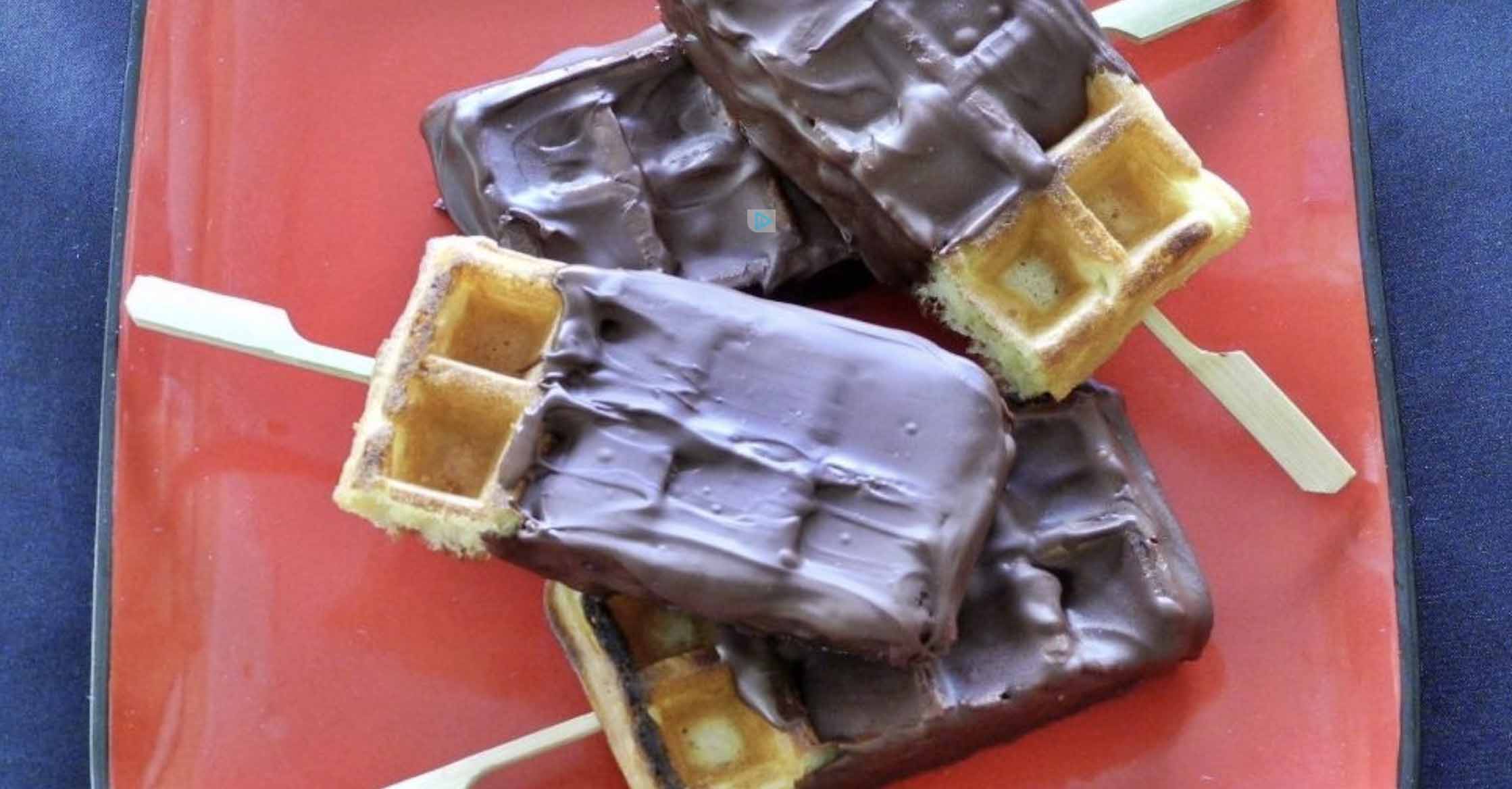
  • Waffle Pops: Waffles on a stick inside, dipped in melted chocolate (photo #7, below).
  •  
    Waffles On A Stick
    [7] Waffles on a stick are a breeze to make. Here’s the recipe (photo © Food 52)..
     
     
    NOUVELLE-ON-A-STICK

  • Breakfast on a Stick: Waffle cubes, sausage chunks, pineapple chunks.
  • Fried Pickles: Popular at state fairs, you can add olives, hot dog chunks, sweet gherkins, whatever.
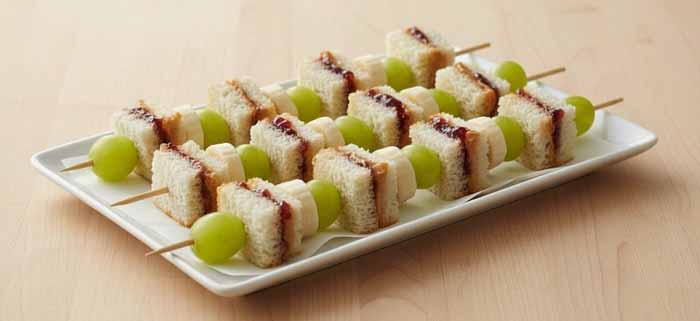
  • Peanut Butter & Jelly Sandwiches: Small, crustless sandwich squares or other favorite sando on a stick (photo #8, below).
  • Anything: The only limit is your creativity.
  •  
    Mini Peanut Butter & Jelly Sandwiches On A Stick
    [8] Who said you can’t eat PB&J from a stick? Here’s the recipe (Abacus Photo).
     

    CHECK OUT WHAT’S HAPPENING ON OUR HOME PAGE, THENIBBLE.COM.


    Comments off

    The Top 10 Whiskey Cocktails For International Whiskey Day

     
    It’s International Cocktail Day, and you know what that means: Happy Hour!

    We list the top 10 whiskey cocktails below. Try one that you haven’t had before.

    Below:

    > The 10 top whiskey cocktails, ingredients, plus links to the history of each.

    > Up, down, neat, on the rocks: how your drink is served.

    Elsewhere on The Nibble:

    > A brief history of whiskey, styles of whiskey, and why it’s spelled whiskey or whisky.

    > The history of cocktails.

    > The history of Happy Hour.

    > Whiskey Glossary: terms and definitions for Bourbon, Scotch, Irish Whiskey, and more.

    > The year’s 25+ whiskey holidays.
     
     
    THE TOP 10 WHISKEY COCKTAILS

    While “top” lists can be subjective, these ten are widely considered to be the classic cocktails that every whiskey lover should try.

    If you’re new to cocktails, some terminology:

  • “Up” = chilled in a shaker, strained into stemmed glass. The term used to be “straight up,” but this term now has a different meaning. See the section below.
  • “Neat” = room temperature, no ice, in a rocks glass.
  • “On the Rocks” = chilled in a shaker with ice, strained over ice.
  • Rocks glass = lowball glass or Old Fashioned glass.
  • Expressed = the technique of twisting a citrus peel (lemon, orange, grapefruit) over a drink to release its aromatic oils onto the surface.*
  • Highball glass = tall glass with a volume of 8–12 ounces. It’s used for a Bloody Mary, Gin & Tonic, Dark ‘n’ Stormy, Paloma, Rum & Coke, and Whiskey Soda.
  • Collins glass = a tall glass of 10–14 ounces in volume. Taller and narrower than a highball glass, it’s used for a Tom Collins, of course, and also a Gin Fizz, Harvey Wallbanger, Long Island Iced Tea, Mojito, and Spiked Arnold Palmer.
  • Here’s a discussion of the difference between the two glasses.
  •  
    And now, the cocktails.

    If some of these cocktails are new to you—as they were to us—it’s because your “cocktail culture” days ended with the new millennium. The others have been around since the 19th and 20th centuries.
     
    Old Fashioned. It’s the “original” cocktail, dating back to the early 19th century. Ingredients: Bourbon or Rye, sugar or simple syrup, Angostura bitters. Garnish: orange peel.

    Served: in a chilled rocks glass (a.k.a. an Old Fashioned glass, photo #1).

    > Old Fashioned cocktail history.
     
     
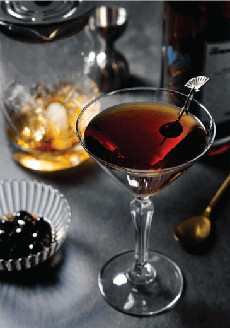
    Manhattan. The sophisticated cousin of the Old Fashioned. Ingredients: Rye whiskey (which has a spicier flavor profile to stand up to the sweetness of the vermouth, red vermouth, and Angostura bitters. Garnish: a Maraschino cherry.

    Served: straight up in a coupe or Martini glass, or on the rocks in a rocks glass (photo #2).

    > Manhattan cocktail history.
     
     
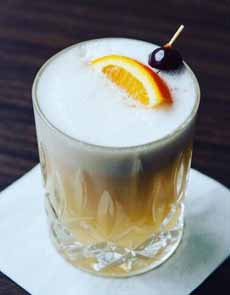
    Whiskey Sour. A balance of bite, tart, and sweet. Traditional versions include an egg white for a silky, frothy texture. Ingredients: Bourbon, fresh lemon juice, simple syrup, and optional egg white. Garnish: a maraschino cherry and/or a slice of orange, sometimes speared together as a “cherry flag.

    Served: in a rocks glass over ice or a chilled coupe glass (photo #3).

    > Whiskey Sour Cocktail History.
     
     
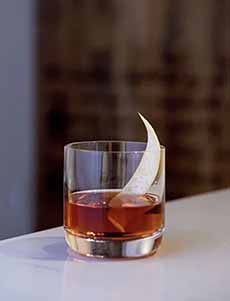
    Sazerac. The official cocktail of New Orleans, and one of the oldest cocktails in America, it’s famous for its complex layers of anise and spice. Ingredients: Rye whiskey (some recipes substitute Cognac), Peychaud’s bitters, a sugar cube, and an Absinthe rinse in the glass. Garnish: a lemon peel or twist is expressed over the drink to release its oils and then often discarded.

    Served: straight up in an absinthe-rinsed, chilled rocks glass (photo #4).

    > Sazerac cocktail history.
     
     
    Mint Julep. The official drink of the Kentucky Derby. Ingredients: Bourbon, muddled fresh mint leaves, sugar or simple syrup. Often made with high-proof bourbon to counter the rapid dilution from the crushed ice. Garnish: mint leaves.

    Served: in a silver or pewter mug over a mound of crushed ice to keep it extra cold (photo #5).

    > Mint Julep cocktail history.
     
     
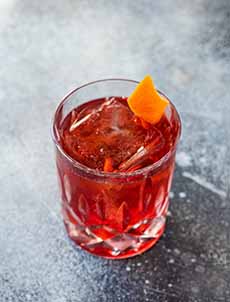
    Boulevardier. Essentially a Negroni made with whiskey instead of gin. Ingredients: Bourbon or Rye, Campari, and sweet red vermouth. The richness of Bourbon creates a heavier, warmer drink, compared to the botanical crispness of gin. Garnish: orange twist or peel, often expressed over the drink.

    Served: stirred, not shaken, either straight up in a chilled coupe glass or on the rocks in a rocks glass, frequently over a single large ice cube (photo #6).

    > Boulevardier cocktail history.
     
     
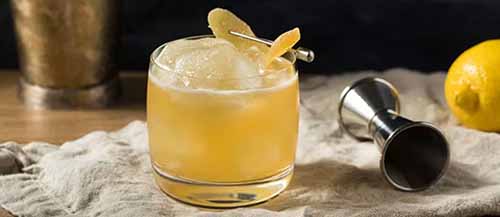
    Penicillin. A modern classic (created in 2005) that has a “medicinal” but delicious flavor profile. Ingredients: Blended Scotch, honey-ginger syrup, fresh lemon juice, and a float of smoky Islay Scotch on top. Garnish: candied ginger or crystallized ginger on a pick.

    Served: in rocks glass over ice (photo #9, below).

    > Penicillin cocktail history.
    Penicillin Cocktail
    [9] Penicillin cocktail (photo © Diageo Bar Academy).
     
     
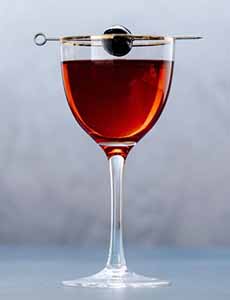
    Rob Roy. The Scotch version of a Manhattan. Using Scotch instead of Rye or Bourbon produces a maltier, sometimes peatier profile. Ingredients: Scotch whiskey, sweet red vermouth, and Angostura bitters. Garnish: one or two maraschino or brandied cherries.

    Served: stirred, not shaken, straight up in a coupe or Martini glass (photo #8).

    > Rob Roy cocktail history.
     
     
    Irish Coffee. The most famous hot cocktail. Ingredients: Irish whiskey, hot coffee, brown sugar, and a layer of unsweetened, hand-whipped heavy cream. Garnish: freshly-grated nutmeg.

    Served: in a pre-warmed, stemmed (often tulip-shaped), heatproof glass (photo #7).

    > Irish Coffee cocktail history.


    Old Fashioned Cocktail
    [1] Old Fashioned cocktail (photo © Adam Jaime | Unspash).
    Manhattan Cocktail
    [2] Manhattan cocktail (photo © Tommy Bahama).
    Whiskey Sour Recipe For National Bourbon Day
    [3] Whiskey Sour cocktail (photo © The Mercury Atlanta).
    Sazerac Rye Cocktail
    [4] Sazerac cocktail (photo © Old Forester.

    Pear Mint Julep Recipes
    [5] Mint Julep (photo © Ruth’s Chris Steak House).
    Boulevardier Cocktail
    [6] Boulevardier cocktail (photo © Kitchen Swagger).

    Handled Irish Coffee Glass
    [7] Irish Coffee cocktail (photo © Libbey).
    Rob Roy Cocktail
    [8] Rob Roy cocktail (photo © Tim Nusog | Food & |Wine).

     
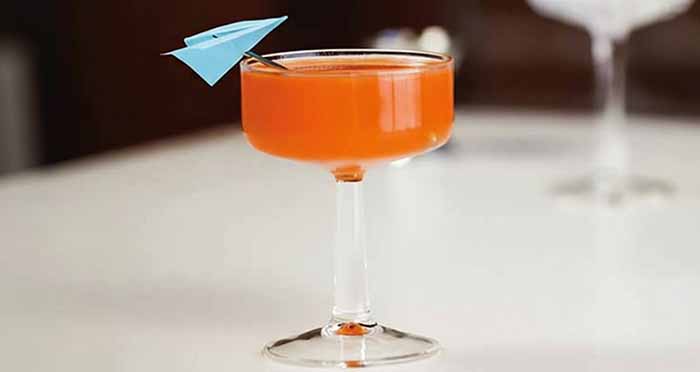
    Paper Plane. A modern classic (created in 2008) that’s an “equal parts” drink, easy to remember and very balanced. Ingredients: Bourbon, Aperol, Amaro Nonino, and fresh lemon juice. Garnish: lemon twist or a small paper airplane.

    Served: shaken and served “up” (chilled without ice) in a coupe or cocktail glass.

    > Paper Plane cocktail history.
     
    Paper Plane Cocktail
    [10] Paper Plane cocktail (photo © Liquor.com).
     
     
    THE DIFFERENCE BETWEEN “UP” AND “STRAIGHT UP

    In our student bartending days, a drink strained into a glass with no ice was called “straight up.” The term is still used, but its meaning has become a major source of confusion and debate in the bar world.

    In modern mixology, the terms have diverged to mean two different things, and modern bartenders have shifted toward, “up” in order to be more precise and avoid mistakes.

    Here’s why the terminology has shifted.
     
     
    The “Up” vs. “Straight Up” Confusion

    Up means that the drink is shaken or stirred with ice to chill it, then strained into a glass (usually a coupe or Martini glass) and served without ice.

    Straight usually means a spirit served at room temperature, poured directly from the bottle into a glass with no ice and no mixing (essentially, “neat”).

    Because “straight up” combines both words, it creates a linguistic problem. If a customer orders a “Bourbon, straight up,” one bartender might hear “up” (chilled and strained) while another might hear “straight” (room temperature and neat).

    To avoid serving the wrong drink, many professionals have dropped “straight” and now use only “up.”
     
     
    2. The “Neat” Factor

    The rise of the word “neat” has also pushed “straight up” out of favor. In the past, “straight” and “neat” were often used interchangeably. Today, “neat” is the term to order a room-temperature spirit.

    By using “up”” for chilled/strained and “neat” for room-temp/unmixed, the term “straight up” became a middle ground that caused more problems than it solved.
     
     
    3. Regional and Generational Differences

    Yet, the term “straight up” is still very much alive in casual bars, older establishments, and pop culture. If you walk into a neighborhood tavern and order a “Martini, straight up,” the bartender will almost certainly know you want it chilled and strained into a stemmed glass.

    However, in high-end craft cocktail bars, you will almost exclusively hear “up.” Bartenders there are trained to use “up” to distinguish it from “down” (a chilled drink served in a rocks glass without ice, like a Sazerac).

    While “straight up” isn’t wrong, it has become a bit of an old school phrase that modern bartenders are slowly phasing out in favor of the more clear “up.”
     
     
    4. The “Straight” vs. “Up” Rules of Thumb

    If you want to ensure you get exactly what you want regardless of the bar, use:

  • “Up” = chilled, no ice, stemmed glass. When you order a drink “up,” the bartender will serve it in a stemmed glass. The “up” refers to the drink being elevated away from the table and your hand.
  • Examples: A classic Martini, Manhattan, or Sidecar. Glassware: Martini glass, coupe, or Nick & Nora.
  • “Neat” = room temperature, no ice, rocks glass.
  • “On the Rocks” = chilled, rocks glass, served over ice.
  • The original Martini was served in a stemmed glass, but many fans prefer theirs on the rocks because it stays colder for longer, even if it dilutes faster.
  • “Down” = rocks glass, no ice, served in a flat-bottomed rocks glass.
  • ink that is chilled and strained (like a Martini) but you want it served in a flat-bottomed rocks glass without ice.

  • A Sazerac is a classic “down” drink. It’s chilled and stirred with ice, but then strained into a chilled rocks/Old Fashioned glass with no ice cubes.
  •  
    Some very casual bars or high-volume spots (like a busy nightclub or a dive bar) may serve everything in a rocks glass simply because they don’t want to deal with the breakage or storage of stemmed glasses. In those cases, “up” just means ““chilled and strained,” regardless of the glass.
     
    Scotch On The Rocks With A Twist
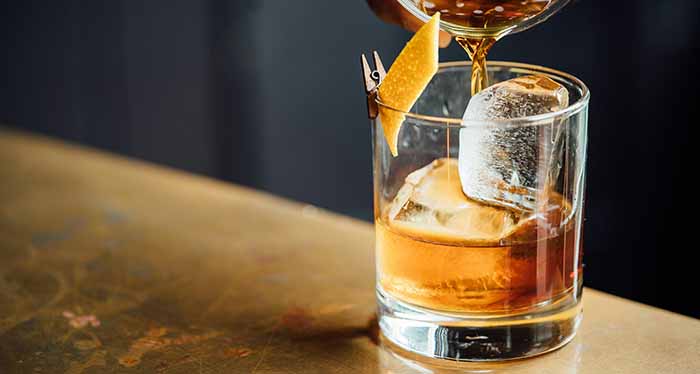
    [11] Scotch on the rocks with a twist (photo © Adam Jaime | Unsplash) .
     
    ________________

    *Why is a citrus peel expressed (twisted) over a cocktail? This action sprays a fine mist of essential oils from the peel’s skin (the flavedo), creating a powerful aromatic experience that boosts scent, alters perception of flavor, and balances bitterness.
     
    The Boulevardier is a 1920s Prohibition-era cocktail created in Paris by American expat Erskine Gwynne, a writer who named it after his literary magazine, The Boulevardier, a monthly magazine for American expats in Paris that he published from 1927 to 1932. Harry McElhone, of Harry’s New York Bar, popularized it in his 1927 book, “Barflies & Cocktails.” The drink is a whiskey-based variation of the Negroni, traditionally using bourbon, Campari, and sweet vermouth. While the Negroni remained popular, the Boulevardier faded into obscurity for many decades. It was rediscovered in the 2000s, driven by the craft cocktail renaissance, and is now recognized as a modern classic. While the 1:1:1 ratio is classic, some modern bartenders use a higher ratio of bourbon to balance the bitterness of the Campari, often preferring 3:2:2 or 2:1:1 ratio.
     
    The Rob Roy, created in 1894 at New York City’s Waldorf Astoria hotel, is essentially a Scotch-based Manhattan. It was developed by bartender Charles McPherson to promote an operetta about the Scottish hero Robert Roy MacGregor, and it became an instant hit. It remained a staple in New York hotel bars until Prohibition began in 1919.
     
    ††Paper Plane, created in 2008 by bartender Sam Ross at the popular Milk & Honey bar in New York City, is a modern cocktail classic. Inspired by M.I.A.’s song Paper Planes, it was developed by Sam Ross and Sasha Petraske at the Milk & Honey bar in New York City, as a favor for a former colleague, Toby Maloney, who wanted a summer drink to serve at his Chicago bar, The Violet Hour. It’s a twist on the Last Word word cocktail, featuring equal parts bourbon, Amaro Nonino, Aperol, and lemon juice.
     
    The Penicillin cocktail was created in 2005 at the Milk & Honey bar in New York City, by an Australian, bartender Sam Ross. A riff on the Bourbon-based Gold Rush cocktail, it was named tongue-in-cheek for its medicinal, “cure-all” properties. It became an instant classic in the 21st-century cocktail revival.
     

    CHECK OUT WHAT’S HAPPENING ON OUR HOME PAGE, THENIBBLE.COM.


    Comments off

    The Nibble Webzine Of Food Adventures

    Follow Us On:


    © Copyright 2005-2026 Lifestyle Direct, Inc. All rights reserved. All images are copyrighted to their respective owners.