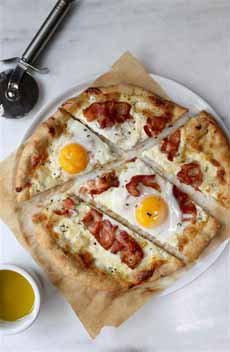
[1] Carbonara pizza uses two ingredient of Spaghetti Carbonara: bacon and eggs. Have it as a breakfast pizza! Here’s the recipe from Today.com.
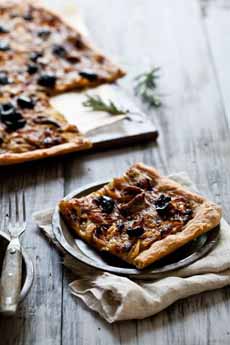
[2] Pissaladière, a specialty of Nice, France, made with niçoise olives, anchovies, onions and Provençal herbs. According to a former mayor of Nice, the layer of onions on a pissaladière should be half as thick as the crust. Here’s the recipe from Saveur.
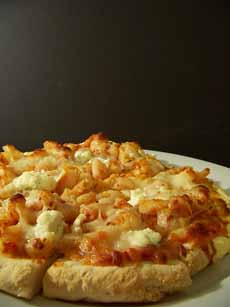
[3] A baked ziti pizza. The idea is said to have been born as a way to use leftover pasta. Here’s the recipe from Hey That Tastes Good.
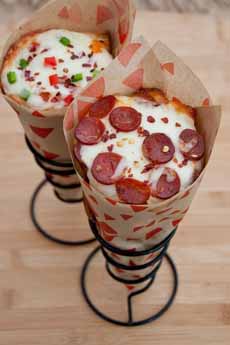
[4] Pizza cones. Here’s the recipe from Une Cuillere En Bois (use Translate.Google.com if you don’t read French).
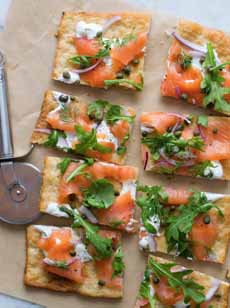
[5] Smoked salmon pizza. Here’s the recipe from Spoon Fork Bacon.
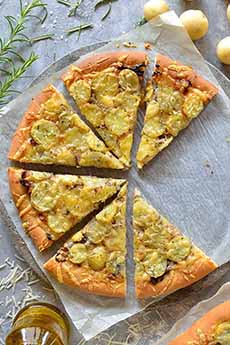
[6] A potato and caramelized onion pizza with Gruyère. Here’s the recipe (photo © Domestic Gothess).
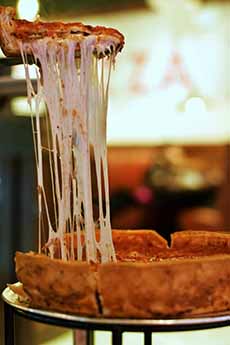
[7] Chicago deep dish pizzas (photo © Chenyu Guan | Unsplash).
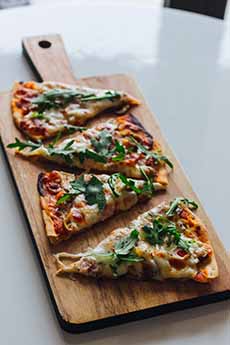
[8] If you like arugula, top your pie with fresh baby arugula. It’s one of our favorites (photo © Sahand Hoseini | Unsplash).
|
|
The second week in January is National Pizza Week, February 9th is National Pizza Day/World Pizza Day and October is National Pizza Month.
In fact, there are 11 pizza holidays in the U.S. Here’s the full list.
A couple of years ago, Food Republic sent us a large infografic with a global look at 50 different ways to eat pizza.
We didn’t think the infographic worked in our format, but we [finally!] transcribed it. We present them to you in alphabetical order.
Pick something new to have this week. We’re going for a piece of Maltese pizza, and a piece of Frutti Di Mare chaser. If we knew where to find it, we’d have a sashimi pizza chaser after that.
More than 50 pizza varieties follow. Elsewhere on The Nibble:
> The history of pizza.
> The year’s 16 pizza holidays.
[8] Bubble pizza is actually a casserole made with biscuit dough, that puffs up into pull-apart bites. Here’s a recipe (photo © Taste Of Home).
50+ DIFFERENT TYPES OF PIZZA
These are just some of the hundreds of possible variations, from BBQ chicken pizza to eggplant pizza to mushroom pizza and beyond. If not specified, the pies have a conventional crust.
Bagel Pizza: tomato sauce, cheese and pepperoni on bagel halves.
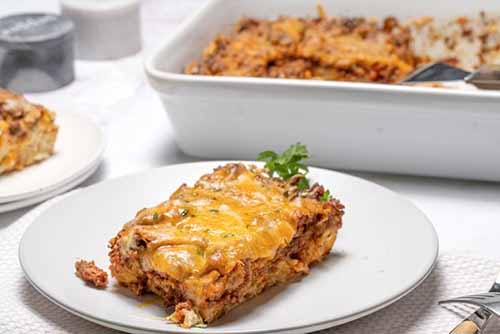
Baked Ziti Pizza: cooked ziti, tomato sauce, mozzarella, ricotta.
Breakfast Pizza: sausage, cheddar, scrambled eggs topped with bacon (photo #1).
Bubble Pizza: a casserole-style dish made from canned biscuit dough, layered with pizza sauce, cheese, and toppings, then baked until the biscuits puff up into pull-apart bites (recipe—photo #8)
California Pizza: a thin, crisp crust and creative, gourmet toppings like BBQ chicken, avocado, goat cheese, artichokes, or even duck sausage, popularized by chefs like Ed LaDou and Wolfgang Puck.
Carbonara Pizza: guanciale, pecorino-romano cheese, heavy cream, scallions, black pepper, eggs (photo #1).
Calzone*: bread dough folded over meat, cheese and vegetables, and baked.
Cauliflower Crust: cooked cauliflower mixed with egg and cheese, baked, topped, then baked again.
Chicago Pizza/Deep Dish Pizza: crispy deep dish, cheese, tomato sauce.
Colorado Pizza: Also known as Colorado Mountain Pie, this thick-crust pizza has a large, hand-braided edge and uses honey instead of sugar in the dough. The pies are massive, frequently sold by the pound, and intended to be dipped in honey for a sweet crust dessert.
French Bread Pizza: French bread sliced lengthwise, tomato sauce, cheese, pepperoni (far better than the English muffin pizza).
Frutti Di Mare Pizza: tomato sauce, mussels on the half shell, clams, octopus, squid, shrimp.
Detroit Pizza: A rectangular pie with a thick crust that is crispy and chewy, traditionally topped with tomato sauce and Wisconsin brick cheese that goes all the way to the edges (other toppings are used).
Grandma Slice: square slice, cheese topped with tomato sauce.
Greek Pizza: tomato sauce, mozzarella, feta, kalamata olives, fresh tomatoes, oregano.
Grilled Pizza: grilled dough, tomato sauce, cheese, toppings, cooked on an outdoor or indoor grill that imparts a unique smoky flavor and char marks,.
Hawaiian Pizza: tomato sauce, mozzarella, ham, fresh pineapple.
Jumbo Slice: an extra-large slice of pizza.
Kebab Pizza From Sweden: tomato sauce, cheese, sliced kebab meat, yogurt sauce, pepperoncini.
Lahm Bi Ajeen (lebanese meat pie): ground spiced lamb, fresh tomatoes, onions, garlic, pine nuts.
Mac & Cheese Pizza: elbow macaroni, cheddar, American cheese and mozzarella.
Maltese Pizza: potato, fresh tomato, anchovies, olives, rosemary (photo #6).
Margherita Pizza: San Marzano tomato sauce, buffalo mozzarella and fresh basil (representing the colors of the Italian flag), cooked in a wood-burning oven. A specialty of Naples.
Mexican Pizza: tortillas, enchilada sauce, tomatoes, black peans, scallions, Mexican cheese blend.
Neapolitan Pizza: a historic and protected** style of Italian pizza from Naples, with a soft, thin, airy crust with a raised edge (cornicione), cooked rapidly (60-90 seconds) at high heat in a wood-fired oven, traditionally topped with simple, high-quality ingredients like San Marzano tomatoes, Mozzarella di Bufala or fior di latte, fresh basil, and EVOO.
New England Pizza: a Greek-style pan pizza, with a thick, chewy crust, ample olive oil, and a blend of mozzarella and cheddar cheeses.
New Haven Pizza: a thin-crust, coal-fired Neapolitan pizza known locally as apizza (from Neapolitan “a pizza,” meaning “the pizza”).
New York Slice: thin crust, tomato sauce, cheese, oregano, chile flakes.
Pan Pizza: a thick, hearty style baked in a deep, oiled pan, resulting in a buttery, crispy bottom and sides with a soft, pillowy interior.
Pepperoni Pizza: topped with slices of a this American (yes!) variety of spicy salami with a signature red color, it’s the most popular topping in the U.S.
Philadelphia/Phillly Pizza: Philly-style pizza is a tomato pie on focaccia-like squares with a thick, soft, yet crispy crust, sweet tomato sauce, and minimal or no cheese (sometimes just Parmesan). It’s designed to be eaten at room temperature or cold (hence no congealed mozzarella).
Pissaladière: bread dough, caramelized onions, anchovies, garlic, niçoise olives (photo #2).
Pizza Cone: dough baked into a cone, filled with layers of tomato sauce and cheese (photo #4).
Pizza Marinara: one of the oldest types of pizza, simple with no cheese, topped only with tomatoes, garlic, oregano, and olive oil; named after the fishermen (mariners) because the ingredients were easy to preserve for long sea voyages.
Potato Pizza: a delight for potato lovers, sliced Yukon golds, purple Peruvians, or mashed potatoes plus fresh herbs are delish on a white pizza. Perhaps add thin-sliced zucchini, and drizzle with EVOO.
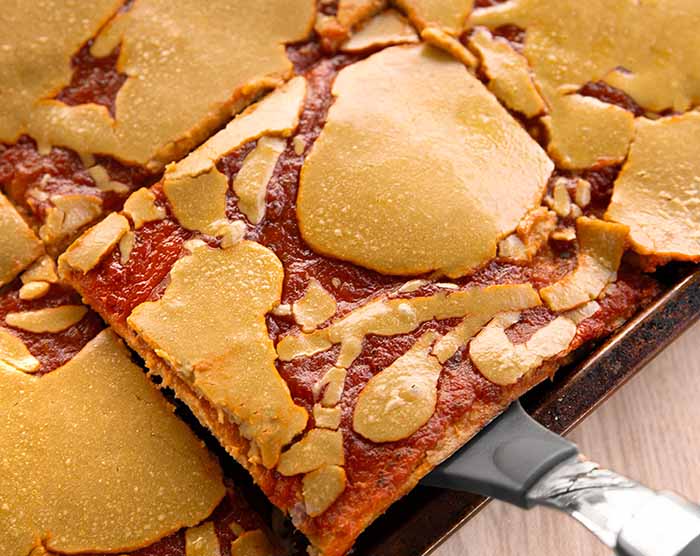
Pourable Pizza: This 1980s school lunch staple pours a liquid dough onto sheet pans—no kneading required (photo #11). Fun for a crowd: Here’s a recipe.
Quad City Pizza: malt dough, spicy tomato sauce, crumbled Italian sausage and mozzarella cheese, sliced into strips.
Quattro Formaggi: tomato sauce; mozzarella, gorgonola, fontina and asiago cheeses.
Roman Al Taglio† or Roman Pizza: thick square slices with various toppings, sold “by the cut.” See also Detroit Pizza.
St. Louis Pizza: yeast-free thin crust, sweet tomato-oregano sauce and Provel‡ cheese, “tavern-cut” into squares.
Salad Pizza: romaine, cucumbers, tomatoes, feta, olives, Greek dressing.
Scottish Pizza Crunch: half a pizza, battered, deep fried and served with French fries and vinegar.
Sicilian Pizza: thick but airy crust, tomato sauce, cheese, sliced into rectangles (photo #9).
Smoked Salmon Pizza: a white pizza with smoked salmon can be made even more luxurious with a topping of salmon caviar and an underpinning of sliced Yukon Gold potatoes; add fresh dill (photo #5). Wolfgang Puck’s version uses crème fraîche, smoked salmon, black caviar, red onion, and dill. See also frutta di mare pizza and white clam pie.
Stromboli*: meat, cheese and vegetables rolled into bread dough and baked.
Stuffed Crust Pizza: hot dogs or mozzarella sticks rolled and baked into the edge of the crust.
Sushi Pizza: deep-fried rice crust, sashimi, scallions, tobiko, spice mayo.
Tarte Flambée: thin crust, crème fraîche, white onions, bacon lardons.
Tavern-Style Pizza: a very thin crust cut into squares for easily handling with a drink.
Tomato Pie: thick crust, fresh tomato sauce, sprinkled with romano cheese.
Tuna & Sweet Corn: tuna, corn, red onion, cheddar cheese.
White/Bianca Pizza: garlic, ricotta, mozzarella.
White Clam Pie (“Abizza”): littleneck clams, pecorino-romano cheese, garlic, oregano, olive oil, also made with red sauce (see also Seafood Pizza).
World’s Most Expensive Pizza: crème fraîche, salmon roe, black caviar, truffle, edible gold.
Ziti Pizza: leftover ziti or other pasta, used as a topping (photo #3). See also mac and cheese pizza.
|
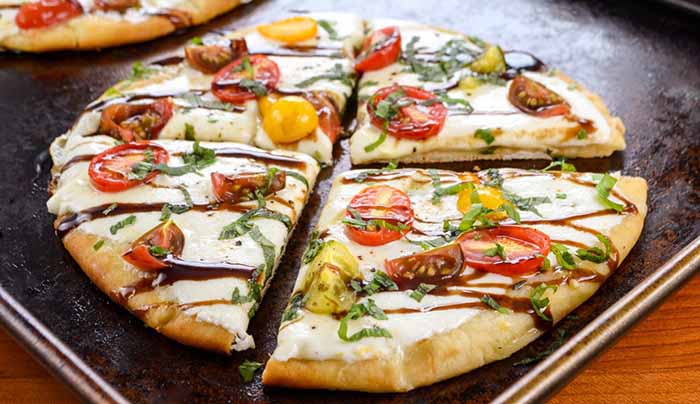
[9] If you enjoy a Caprese salad, top your pizza with it, including balsamic glaze. Here’s the recipe (photo © For The Love Of Cooking).
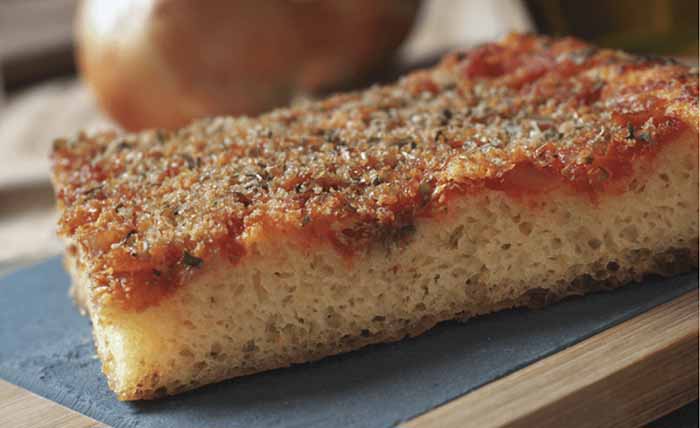
[10] Sicilian pizza is hearty slice based on from Sicily’s sfincione (thick sponge). It has an airy, fluffy, focaccia-like base, topped with a robust tomato sauce and often, onions, breadcrumbs, and hard cheese like caciocavallo (photo © Flavor & The Menu).
[11] Pourable pizza. Here’s the recipe (photo © Hannah Kaminsky | Bittersweet Blog).
________________
*Calzones are basically folded pizzas, made from pizza dough and stuffed with the same ingredients as pizza – almost always tomato sauce and mozzarella cheese, usually ricotta, often pepperoni, and maybe some other cheese and cured meats – and then folded over like an omelet. Stromboli are more like pizza rolls.
**Neapolitan pizza holds legal protections, primarily as a Traditional Specialty Guaranteed (TSG/STG) product in the European Union since 2010. This safeguards its traditional, specific preparation method. This legal protection, often enforced by the Associazione Verace Pizza Napoletana (AVPN), requires strict adherence to ingredients (San Marzano tomatoes, mozzarella di bufala/fior di latte) and methods (wood-fired oven at ~485°F, hand-stretched dough). In addition, the art of Neapolitan pizza making is recognized as a UNESCO Intangible Cultural Heritage.
†Pizza al taglio or pizza al trancio is a baked in large rectangular trays, and generally sold in rectangular or square slices by weight.
‡According to Wikipedia, “Provel is a white processed cheese particularly popular in St. Louis cuisine, that is a combination of cheddar, Swiss, and provolone cheeses, and tastes nothing like any of them.” It is sold in blocks, like supermarket cheddar, and is “rarely used elsewhere.”
CHECK OUT WHAT’S HAPPENING ON OUR HOME PAGE, THENIBBLE.COM.
|