THE NIBBLE BLOG: Products, Recipes & Trends In Specialty Foods


Also visit our main website, TheNibble.com.

Bourbon Pear Bread Pudding Recipe For National Pear Month

December is National Pear Month. World Pear Day is December 2nd. So celebrate with this delicious recipe for Bourbon Poached Pear Bread Pudding.

Pears poached in Bourbon…cubes of sweet brioche bread…a custard of eggs, milk..and the warm spices of the season: Who can resist?

Plus, it’s perfectly seasonal, from the beginning of fall through the holidays.

Whether it’s for dessert or a Kaffeeklatsch* the flavors in this Bourbon Poached Pear Bread Pudding have broad appeal.

For adults, a shot of Bourbon on the side or in a cup of tea or coffee only adds to the festiveness.

And yes, you can also add the shot to a glass of milk, perhaps with a touch of nutmeg.

Even more festive: a glass of this Bourbon Milk Punch recipe.

> How to tell if a pear is ripe.

> The history of pears.

> The different types of pears.

> The history of Bourbon.

> The history of bread pudding.

> More bread pudding recipes, both sweet and savory.
 
 
RECIPE: BOURBON-POACHED PEAR BREAD PUDDING

  • Select firm fruit—semi-ripe but not hard. If the pears are too soft/overripe they’ll fall apart in the poaching liquid.
  • Anjou or Bosc pears are two good choices for poaching. They absorb the poaching liquid well and maintain their shape.
  •  
    Thanks to Colavita for the recipe.

     
    Ingredients For The Bourbon Poached Pears

  • 2 semi-ripe pears, one halved and one cut into 1/2″ cubes
  • 2 cups water
  • ½ cup bourbon
  • ½ cup sugar
  •  
    For The Bread Pudding

  • ½ brioche loaf, cut into 1″ cubes
  • 2 eggs, beaten
  • 2 cups whole milk
  • ⅓ cup maple syrup
  • 1 teaspoon vanilla extract
  • 1 teaspoon nutmeg, divided into two halves
  • 1 teaspoon cinnamon
  • 1 pinch salt
  • 1 tablespoon Colavita Premium Selection Extra Virgin Olive Oil (or substitute)
  • 1 cup heavy whipping cream
  •  
    For Serving

  • Optional: caramel sauce, cajeta†, or dulce de leche [here’s a recipe]
  • Optional: vanilla ice cream instead of whipped cream
  •  
    Preparation
     
    1. PREHEAT the oven to 350°F. Spread the brioche cubes onto a baking sheet in a single layer and toast them for 10 minutes, or until they’re golden brown and crunchy.

    2. COMBINE the water, Bourbon, and sugar in a small sauce pot and bring to a boil. Once you no longer smell alcohol, add the chopped and halved pears and turn the heat to low.

    Allow the pears to poach until they’re al dente, about 7 minutes (the texture should be a bit harder than a ripe pear). Strain and set aside to cool.

    3. WHISK together in a large mixing bowl the eggs, milk, maple syrup, cinnamon, vanilla, salt, and 1/2 of the nutmeg. Add the toasted brioche and poached pear, gently tossing to coat.

    Set aside for 5-10 minutes to allow the bread to soak up the wet ingredients.

    4. BUTTER or oil a 9″ x 11″ baking dish. Pour the mixture into the baking dish and nestle the two halves of the other pear into the pudding, making sure to brush the cut surfaces with EVOO.

    5. BAKE for 35-45 minutes, until a toothpick comes out clean from the middle. While the pudding rests for 2-3 minutes…

    6. WHISK the heavy whipping cream and remaining nutmeg into a soft whip. Serve family style or plated, with a scoop of vanilla ice cream and a drizzle of caramel sauce/cajeta/dulce de leche.
     
     
    ________________
     
    *The Kaffeeklatsch originated around 1900, when German housewives would take a break during the day and gather at each others’ homes to drink coffee and chat. Kaffee is German for coffee and Klatsch means chat or gossip.

    †Cajeta is a version of dulce de leche made with goat’s milk. Goat’s milk gives cajeta a unique flavor, a thicker consistency, and generally a darker color.


    CHECK OUT WHAT’S HAPPENING ON OUR HOME PAGE, THENIBBLE.COM.


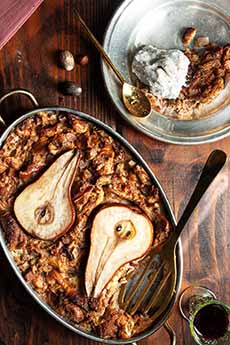
    An oval baking pan of fresh-from-the-oven pear bread pudding
    [1] The Bourbon Pear bread pudding with a garnish of poached pears (photo © Colavita).

    Three Bosc pears on a counter
    [2] Bosc pear are a good choice for poaching (photos #2 and #3 © Good Eggs).

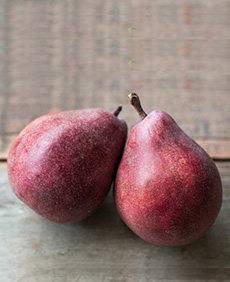
    Anjou Pears
    [3] Anjou pears are equally good for poaching. Anjou pears can be either red or green, and the color doesn’t affect the flavor or texture. The two varieties are similar in taste and can be used interchangeably in recipes.

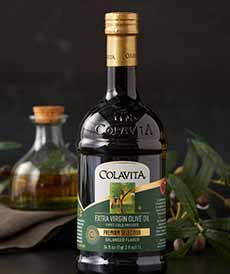
    Colavita Extra Virgin Olive Oil
    [4] Colavita has many delicious dessert recipes that use their extra-virgin olive oil instead of butter, making them good for vegans, the lactose intolerant, and those who don’t want the cholesterol of butter (photo © The Fresh Market | Facebook).

    A Jar Of Homemade Dulce de Leche
    [5] Dulce de leche can be purchased, but here’s a recipe if you want to make your own (photo © Karolina Kolodziejczak | Unsplash).

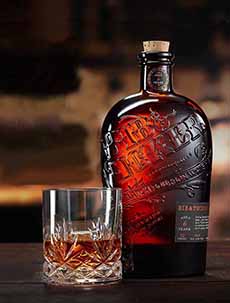
    Bib & Tucker Bourbon Cocktails For National Bourbon Day
    [6] You can serve a shot of Bourbon with the dessert or one of these Bourbon cocktails (photo © Bib & Tucker).


    Comments off

    Chocolate Peppermint Bark Recipe For National Peppermint Bark Day

    December 1st is National Peppermint Bark Day, celebrating one of our favorite holiday treats. Every year we purchase it from Enstrom, our favorite brand after tasting every one we could get our hands on over the years.

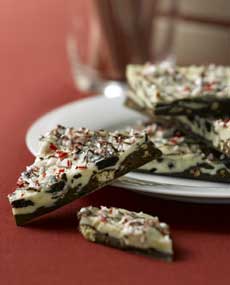
    It’s a symphony of white chocolate, dark chocolate, vanilla cookies, chocolate cookies, and crushed peppermint. This perfect combination yields a confection that’s delicious with hot or iced coffee, tea, hot chocolate, and milk.

    Enstrom sells it in a gift box. Williams-Sonoma has a private label version in a tin, made for them by Guittard.

    What makes one peppermint bark better than the next? It’s all about the quality of ingredients and the ratio.

    We love the combination of chocolate and mint, so every so often, we whip up this really easy recipe from scratch.

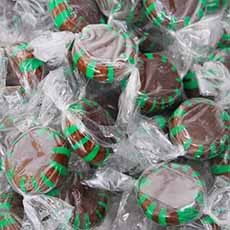
    Our own personal touch is using Starlight chocolate mints (photo #5) instead of red-and-white peppermints.

    But yesterday, we made a new recipe, compliments of our colleague Hannah Kaminsky of Bittersweet Blog. Prep time is just 10 minutes!

    Something about the combination of creamy chocolate slabs, festooned with crunchy red and white striped mint confections seems to strike a chord with everyone, young, old, jolly, and curmudgeonly alike.

    This bar looks beautiful, but the real beauty is in its simplicity. If you’ve forgotten to get someone a holiday gift, or need a last-minute contribution for a party, make some peppermint bark.

    The recipe follows.

    > Ways to use extra bark, below.

    > More peppermint bark and chocolate bark recipes.

    > The history of chocolate bark.

    > All of the chocolate holidays.
     
     
    RECIPE: THREE-COLOR HOLIDAY PEPPERMINT BARK

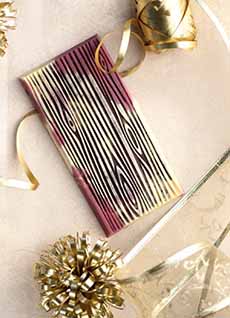
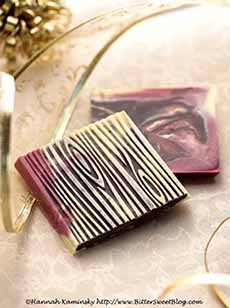
    Hannah made the top of her peppermint bark look like tree bark, by using this wood-grained chocolate bar mold. We didn’t have time to order them, so we piped a bunch of Christmas trees. You can use any decor and any shape, if you want to create something other than rectangles and squares.
     
    Ingredients

  • 6 ounces 100% food-grade cocoa butter, melted
  • 3/4 cup confectioner’s sugar
  • 1/2 teaspoon vanilla extract
  • 1 candy cane, very finely ground
  • 2 teaspoons beet powder (for color)
  • 1/4 teaspoon peppermint extract
  • 1/4 cup Dutch-process cocoa
  •  
    Preparation

    1. SET out three candy bar molds that can hold approximately 2 ounces each; set aside.

    2. WHISK together in a medium bowl the melted cocoa butter, confectioner’s sugar, and vanilla, mixing thoroughly until completely smooth. Pour about 1/3 of the mixture into the molds, dividing it equally among them.

    3. DIVIDE the remaining mixture in half, pouring the other half into a second bowl. Into the first bowl, add the ground candy cane, beet powder, and peppermint extract. Once smooth, pour it into the molds, right on top of the first white layer.

    4. WHISK the cocoa into the second bowl, and pour it on top of the white layer, filling the molds. Use a toothpick to gently swirl all three colors together, marbling the layers without completely blending them. Carefully…

    5. MOVE the molds into the fridge and let them rest, undisturbed, for 1-2 hours or until set.

    6. POP the bark out of the molds, wrap them in plastic, and store in a cool place.
     
     
    WAYS TO USE CHOCOLATE BARK

    If you don’t want to eat it plain,

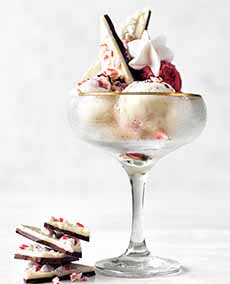
  • Garnish ice cream or frosted cakes.
  • Chop up and top a cheesecake, custard, mousse, or pudding.
  • Chop and mix into cookie dough*.
  • Add to a cheese board or dessert platter.
  • Serve with a complementary cocktail: Black or White Russian, Brandy Alexander, Chocolate Martini, Crème de Cacao or other chocolate liqueur, Grasshopper, etc.
  •  
    ________________
     
    *The Toll House Cookie was created by accident in 1924 when Ruth Graves chopped and mixed a chocolate bar into cookie dough, thinking it would melt into a chocolate cookie. Here’s the whole story.


    A Bar Of Chocolate Peppermint Bark
    [1] This recipe was made in both rectangular bars and squares, but you can use any chocolate mold you have (photos #1 and #2 © Hannah Kaminsky | Bittersweet Blog).

    Homemade Chocolate Peppermint Bark
    [2] Large bars (photo #1) make a more impressive gift, but smaller pieces are better for serving.

    A Plate Of Enstrom Peppermint Bark
    [3] Enstrom Peppermint Cookie Bark is our favorite, and a great holiday gift for a chocolate lover (photo © Enstrom).

    Ice Cream With A Peppermint Bark Garnish
    [4] Use some of the bark to garnish ice cream (photo © Williams-Sonoma).

    Starlight Chocolate Peppermint Candies
    [5] We use Starlight Chocolate Peppermint Candies in our own recipe for peppermint bark (photo © Snackivore Store | Amazon).


    CHECK OUT WHAT’S HAPPENING ON OUR HOME PAGE, THENIBBLE.COM.


    Comments off

    Uncle Jerry’s Pretzels: Gifts & Personal Pretzel Fantasies

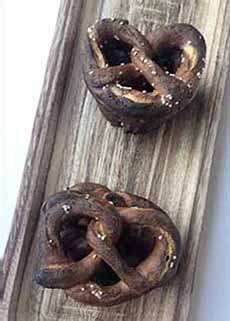
    Two Large Uncle Jerry's Pretzels On A Board
    [1] Extra Dark Pretzels from Uncle Jerry’s are our new favorite (all photos © Uncle Jerry’s Pretzels).

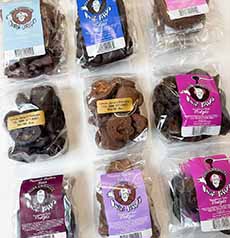
    Bags Of Assorted Uncle Jerry's Pretzels
    [2] The eight-ounce bags are perfect for gift bags, stocking stuffers, and party favors.

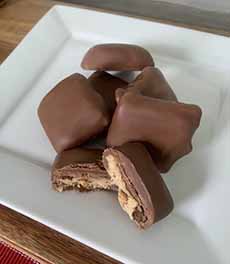
    Chocolate Covered Peanut Butter Pretzel Bites
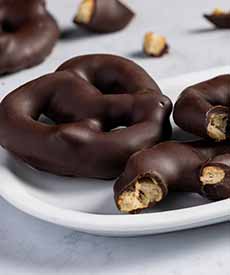
    [3] We lost our heart to these Peanut Butter Pretzel Bites, in dark or milk chocolate. If you’re a fan of chocolate-peanut butter cups, just wait until the salty crunch of pretzels is added.

    Dark Chocolate Covered Pretzel
    [4] All chocolate-covered pretzels are available in dark and milk versions.

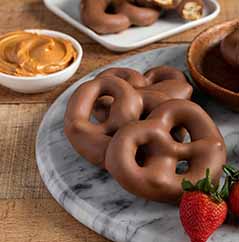
    Milk Chocolate Covered Pretzel
    [5] A great suggestion: Serve the pretzels with a dish of peanut butter for dipping.

    Chocolate-Covered Pretzels
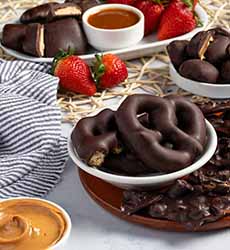
    [6] Clockwise from top left: Peanut Butter Pretzel Bites, Caramel Pretzel Bites, Pretzel Bark, Chocolate-Covered Specials. All are available in both dark and milk chocolate.

    Chocolate-Covered Pretzels
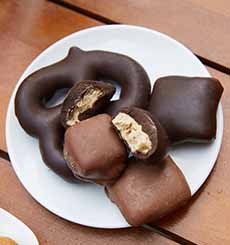
    [7] Our “happy plate”: Chocolate Covered Specials, Peanut Butter Pretzel Bites, Caramel Pretzel Bites.


    Uncle Jerry’s Pretzels are handmade in the land of the Pennsylvania Dutch: Lancaster, Pennsylvania. Hard pretzels are among the most recognizable Pennsylvania Dutch foods*.

    They’re a legacy of German settlers who came to Pennsylvania in the 18th century and became known, erroneously, as the Pennsylvania Dutch**.

    So get ready to take a bite of our Top Pick Of The Week, in sizes just right for gift bags, party favors, and stocking stuffers.

    > The history of pretzels.

    > The history of chocolate-covered pretzels.

    > A year of pretzel holidays, below.
     
     
    UNCLE JERRY’S ARTISAN PRETZELS

    Uncle Jerry’s Handmade Pennsylvania Dutch Pretzels is a family business that has been crafting artisan pretzels for more than 30 years in rural Lancaster County, Pennsylvania. It’s still run by Uncle Jerry, now with his daughter, Misty.

    German immigrants, known as the Pennsylvania Dutch, brought pretzels to central southeastern Pennsylvania in the 18th century. Pretzels became a popular snack at markets and county fairs, and pretzel bakeries began to emerge. In fact, the region became known as the Pretzel Belt. More trivia:

  • Pennsylvania is known as the pretzel capital of the world, with Pennsylvanians eating 12 times more pretzels than the national average.
  • The first commercial pretzel manufacturer in the U.S. was the Julius Sturgis Pretzel Bakery, founded in 1861 in Lititz, Pennsylvania. It’s still operating!
  •  
    But we’re here today to rave about Uncle Jerry’s contribution to this family of crunchy snacks.

    You’ll taste the tradition that goes into every Uncle Jerry’s pretzel.
     
     
    What’s Special About Uncle Jerry’s Pretzels?

    While it seems as if the recipe for pretzels is pretty simple, we wondered tasted something special in Uncle Jerry’s pretzels.

    Why, we asked, are Uncle Jerry’s Pretzels are so much more delicious than even the ones from our local farmers’ market?

    Thus spake the Pretzel Oracle:

  • They’re 100% natural. No malt syrup or vegetable oil (or any other oils or sugars) is added***.
  • Small batches made entirely by hand are another reason.
  • They’re slow-baked fresh daily in an old-fashioned hearth oven, a process that locks in more flavor.
  • The baked pretzels are shipped out immediately. Thy don’t sit around in a warehouse waiting for orders to come in.
  •  
    There may be another ingredient in the “secret sauce”: the local well water in Lancaster County.

  • The area has lots of limestone, which means lots of dissolved soluble minerals in the water.
  • Limestone helps raise the pH of water and improve its quality for various uses, including drinking water and aquatic life.
  •  
     
    OUR PERSONAL PICKS FROM UNCLE JERRY’S PRETZEL COLLECTION

    While everything made here is delicious—whether sweet or savory (i.e., salted), we settled on three favorites for stocking stuffers: one savory and two sweet.

    Extra Dark Pretzels. Until we tasted these, we’d never given a thought about what happens if you bake pretzel to the “well done” stage. Now, we only want well-done pretzels!

    Called Extra Dark, this slower-baked-for-a-longer-time version of Uncle Jerry’s Specials (his name for traditional pretzels with the classic medium brown finish) rocked our world. As good as the Specials are, Extra Dark has an even crispier, crunchier texture due to the magic of Maillard.

    While all pretzels undergo a Maillard reaction‡‡, Extra Dark is ultra-Maillard. We’re sure Dr. Maillard would have loved them. (Check out more about the Maillard Reaction in the footnote.)
     
    Peanut Butter Pretzel Bites. These crunchy pretzels (the Specials) are dipped in smooth, creamy peanut butter, then enrobed in dark chocolate or milk chocolate.

    OMG, so much more exciting than our former fave, the peanut butter cup!
     
    Caramel Pretzel Bites. After devouring all of the Peanut Butter Pretzel Bites, we headed over to their caramel cousin. Covered in homemade caramel then enrobed in dark chocolate or milk chocolate, they’re sprinkled with a touch of sea salt.

    Please note that due to the challenge of shipping chocolate in hot weather, the chocolate-enrobed pretzels are seasonal items, from mid-October through mid-April.
     
    And There’s More.

  • Regular, low salt, or extra salty pretzels.
  • Whole wheat or oat bran pretzels.
  • Pretzel bark, dark and milk chocolate.
  • Gift boxes.
  • Gift cards and corporate gifts.
  •  
    What are you waiting for?
     
     
    GET YOUR UNCLE JERRY’S PRETZELS

    > Head to UncleJerrysPretzels.com.
     
     
    PRETZEL HOLIDAYS & RELATED CELEBRATIONS

  • February: National Snack Food Month
  • March or April, Fourth Sunday During Lent: Pretzel Sunday,
    Bretzelsonndeg†
  • April: National Soft Pretzel Month
  • April 26: National Pretzel Day
  • July 21: National Junk Food Day
  • September: Oktoberfest‡
  • October: National Pretzel Month
  • October 7: National Chocolate-Covered Pretzel Day
  • December 16: National Chocolate-Covered Anything Day
  •  
    ________________
     
    *Pennsylvania Dutch specialties in addition to pretzels include apple butter, apple dumplings, red beet eggs, sand tarts, scrapple, shoofly pie, and whoopie pie. Here’s more about the traditional cuisine.

    **“Dutch” is a misspelling of “Deutsch,” the German word for…German. The term is more properly “Pennsylvania German.” The so-called Pennsylvania Dutch have nothing to do with Holland, the Netherlands, or the Dutch language. They originally came from German-speaking areas of Europe.

    ***Why use these additives? It’s a matter of consumer tastes. Malt syrup, a type of sugar, adds a subtle sweetness and a richer, slightly malty taste. Oil helps to create a soft, chewy interior and a shiny, slightly crisp exterior.

    †Pretzel Sunday, Bretzelsonndeg is celebrated on the fourth Sunday during Lent in Luxembourg. Pretzel Sunday marks the middle of the Lenten season and can fall on any date between March 1 and April 4. The holiday celebrates love with pretzels and eggs. Men give their sweethearts a pretzel as a token of their love (pretzels are symbolic, representing lovers’ interlocking arms). If the woman reciprocates, she gives the man an egg on Easter Sunday. If the woman is not interested, she gives the man an empty basket. Roles are reversed in leap year. The tradition dates back to the 18th century. The Luxembourgish expression De Kuerf kréien (to receive a basket) means “to be dumped.”

    ‡Oktoberfest in Munich, Germany begins in mid- or late-September and runs until the first Sunday in October.

    ‡‡Maillard Reaction. The brown caramel color and deeper flavor that occurs in certain foods—from caramels to barbecued, roasted and seared meats, to roasted coffee beans, to toasted bread, nuts and marshmallows—comes from a reaction between natural sugars and amino acids. This produces brown-colored compounds called melanoidins, which provides not just a brown color but a deeper flavor. It’s a form of non-enzymatic browning that usually requires heat. It’s called the Maillard (my-YARD) reaction after the French physician and chemist Louis Camille Maillard, who first described it in 1912.


    CHECK OUT WHAT’S HAPPENING ON OUR HOME PAGE, THENIBBLE.COM.


    Comments off


    © Copyright 2005-2026 Lifestyle Direct, Inc. All rights reserved. All images are copyrighted to their respective owners.