THE NIBBLE BLOG: Products, Recipes & Trends In Specialty Foods


Also visit our main website, TheNibble.com.

TIP OF THE DAY: The Best Roast Chicken Recipe

Our mom was a terrific cook, of everything from the simple to the elaborate. On weekday nights, meals would be more simple: grilled meats and fish, salad, a vegetable, a starch. Once or twice a week she roasted a plump whole chicken in a countertop rotisserie, similar to this one but bigger, and without today’s multi-tasking options. It grilled meat on a spit, period.

She gave it to us one year, when she upgraded to a new model. But as much as we loved roasting a juicy Bell & Adams chicken, taking up two feet of counter space was a hardship in a typical New York City kitchen. So one day, we passed it on to someone with enviable counter space.

It’s easy to pick up a roasted chicken in a supermarket these days, and some markets use quality birds with a quite satisfactory result. But it’s not in our DNA to buy a pre-cooked chicken. We tried a vertical roaster from Cuisinart which saved us eight inches of footprint—but that was still too much forfeited counter space for us.

More recently, we came across a simple broiler-and-oven roasting technique from GFF Magazine. If you have a butcher who can debone the chicken for you—or you like to do it yourself (here’s a video tutorial)—you’ll find that the roasting technique delivers the most delicious chicken: very crisp skin and very moist meat.

The recipe was developed by Chef Daniel Patterson, whose San Francisco restaurant, Coi, earned two Michelin-stars.

Chef Daniel finished the dish with fried herbs and an herb vinaigrette. We took a shortcut and sprinkled the cooked chicken with fresh herbs.

It’s not Mom’s beloved rotisserie chicken, seasoned with paprika and garlic salt that scented the air, but it’s time to move on.

RECIPE: CHEF DANIEL PATTERSON’S ROAST CHICKEN

Ingredients For 4 to 6 Servings

  • 1 whole chicken, about 4-1/2 pounds, deboned
  • 1 teaspoon kosher salt
  • Garnish: minced fresh parsley or other herb of choice
  •   Roast Chicken

    Whole Raw Chicken
    Top: Chef Daniel Patterson’s easy roast chicken (photo courtesy GFF Magazine). Bottom: If you have a good palate, it pays to spend extra on the best chicken (photo courtesy Good Eggs).

     
    Preparation

    This recipe was made in an oven with a top broiler element. If your broiler is in a separate unit, preheat your oven to 250°F.

    1. SALT the chicken 1 to 3 hours prior to cooking and place it in the fridge. Remove it 10 minutes before cooking and place it in a rimmed pan, skin side up.

    2. ADJUST the oven rack to 3 inches from the broiler heating element, and preheat the broiler. Place the pan under the heat for 10 minutes. This browns and crisps the skin. Rotate the pan a few times for even browning.

    3. TURN the oven temperature down to 250°F and cook for an additional 25 minutes. Remove from the oven, let rest for 5-10 minutes, cut the chicken into pieces and serve.

     
    CAN YOU NAME THE CUTS OF CHICKEN?

    There’s much more beyond breast, drumstick, thigh and wing. Check out the parts of a chicken in our Chicken Glossary. Cluck, cluck, cluck.


    Comments off

    Grilled Mozzarella, Blue Cheese & Raspberry Sandwich For National Grilled Cheese Day

    Raspberry Grilled  Cheese Sandwich
    [1] Sweet and savory grilled cheese: mozzarella, basil and fresh raspberries (photos #1 and #3 © Litehouse Foods).


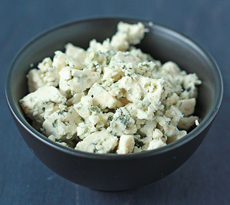
    [2] Blue cheese crumbles (photo © Good Eggs).


    [3] Litehouse Blue Cheese Crumbles.


    April 12th is National Grilled Cheese Sandwich Day, a day to try something new.

    Actually, the entire month of April is National Grilled Cheese Month, so you’ve got an additional 17 days.

    This sweet and savory sandwich recipe is from Litehouse Foods, which used its Blue Cheese Crumbles.
     
     
    RECIPE: GRILLED RASPBERRY & MOZZARELLA SANDWICH WITH BLUE CHEESE & BASIL

    Ingredients For 2 Sandwiches

  • 4 slices sourdough bread
  • 2 tablespoons butter at room temperature
  • 1 cup shredded mozzarella cheese
  • ½ cup crumbled blue cheese
  • 1/2 cup fresh raspberries, smashed
  • 3-4 fresh basil leaves, torn
  •  
    Preparation

    1. DIVIDE the butter evenly among the four slices of bread, spreading it on one side of each slice.

    2. HEAT a grill pan over medium-high heat and place two slices of bread, butter side down, in the pan. Top each slice with ¼ of the mozzarella cheese and half of the blue cheese, raspberries and basil. Divide the remaining mozzarella cheese between the two sandwiches.

    3. TOP each sandwich with the remaining slices of bread, butter side up. Grill each side for 3-4 minutes, until golden brown. Slice in half and serve immediately.
     
     
    MORE GRILLED CHEESE RECIPES

  • How To Make The Best Grilled Cheese Sandwich
  • Four Pages Of Grilled Cheese Recipes
  • Dessert Grilled Cheese Recipes
  • Gourmet Grilled Cheese
  • Grilled Cheese Benedict
  •  
     
    BLUE CHEESE CRUMBLES

    Many people buy blue cheese crumbles for the convenience. But we love blue cheese so much, we buy one of our favorites and crumble it with a knife. Just dice it in your size of choice.

    We also buy extra for table cheese, and to make this delicious blue cheese dip from PopArtichoke.com.

    Our favorite blues from America’s artisan cheesemakers: Anything from Point Reyes Farmstead Cheese, anything from Rogue Creamery, and Bayley Hazen from Jasper Hill Farm.

    Here’s more about blue cheese.


    Comments off

    Garlic Bread, Old School & New School & A Garlic Crostini Recipe

    American-style garlic bread is a descendant of Italian bruschetta and crostini. The first recipe we found was published in 1940 in Edith Barber’s Cook Book, written by the editor of the New York Sun food column. [Source]

    The Americanized version used a baguette or narrow loaf of Italian bread, substituted butter for oil, mixed with garlic powder/salt instead of rubbed with cut fresh garlic cloves, and topped with dried oregano. It might also include grated Parmesan or other cheese.

    The loaf is sliced vertically or horizontally, topped with the butter spread and heated in a hot oven (400°F). Often, the loaf was sliced vertically and buttered between the slices before heating. Our Mom first lightly toasted the bread slices crostini-style, though she didn’t hear the word “crostini” for decades.
     
     
    THE HISTORY OF GARLIC BREAD

    American garlic bread began life as bruschetta, a peasant food. Some sources say it was made in ancient times, others cite medieval times as the origin. It was common for Italian peasants, who lacked costly ceramic plates, to eat their meals on slices of grilled bread. Charred, bread, rubbed with garlic and topped with olive oil, was grilled over the fire.

    In medieval cuisine, “sops” were common across Europe: stale bread soaked in broth, soup, or wine and topped with other foods.

       
    Garlic Bread Recipe
    [1] Classic American garlic bread (photo © La Panineria | Facebook).
     
    Over time, the recipe was refined into an antipasto (appetizer), on more easily handled small toasts. It became a popular bread basket freebie in Italian-American restaurants. By the 1990s, visitors to trendy restaurants were paying for bruschetta (grilled from a thinner loaf) or crostini (toasted from a wider loaf), with different toppings and the original olive oil and minced fresh garlic.

    These days, garlic bread is old school, and bruschetta and crostini are the rage. Here’s the old-school recipe, followed by an example of the new school.
     
     
    RECIPE #1: CLASSIC GARLIC BREAD (OLD SCHOOL)

    This recipe first slices the entire loaf in half, horizontally.

  • 1/2 cup butter, melted
  • 3 to 4 garlic cloves, minced
  • 1 baguette (1 pound), halved lengthwise
  • 2 tablespoons minced fresh flat)-leaf parsley
  •  
    Preparation

    1. COMBINE butter and garlic in a small bowl. Brush the mixture over the top of the slices and sprinkle with parsley (you can also blend the parsley into the butter).

    2. PLACE on a baking sheet and bake at 350° for 8 minutes. Broil for an additional 2 minutes or until golden brown, 4-6 inches. from the heat.

    3. CUT into 2-inch slices. Serve warm.


    Spring Pea Crostini
    [2] Creative crostini (photos #3 and #4 © Good Eggs).

    Spring Peas
    [3] Spring peas: a delicious complement. No need to cook them; just shell them.


    RECIPE #2: GARLIC CROSTINI WITH SPRING PEAS & BURRATA (NEW SCHOOL)

    Ingredients For 3-4 Servings

  • 3 thick slices of country bread or sourdough
  • 1 eight-ounce burrata
  • ½ pound English Peas, shelled
  • 1 clove garlic, peeled and cut in half
  • 12-14 castelvetrano olives, pitted and roughly chopped (substitute other green olives)
  • ¼ cup parsley or mint, roughly chopped
  • Olive oil
  • Salt and pepper
  •  
    Preparation

    1. DRAIN the whey from the burrata in a colander lined with a paper towel. Don’t pierce the skin of the burrata.

    2. TOAST the bread until golden brown—even with a bit of char around the edges. Rub the tops with the cut side of the garlic and drizzle with olive oil.

    3. USE clean hands (instead of slicing) to carefully divide the burrata among the three pieces of toast, including all the creamy drippings. Divide the peas, olives and herbs among the slices.

    4. FINISH with a hearty drizzle of olive oil, salt and pepper. Cut in half or allow each dinner to do so.
     
     
    DIFFERENT TYPES OF BREAD

    Check them out in our Bread Glossary.

    Also: The history of bread.


    CHECK OUT WHAT’S HAPPENING ON OUR HOME PAGE, THENIBBLE.COM.


    Comments off

    TIP OF THE DAY: Chess Pie

    Chess Pie

    /home/content/p3pnexwpnas01 data02/07/2891007/html/wp content/uploads/lemon chess pie goodeggsSF 230r

    Pumpkin Chess Pie

    Tangerine Chess Pie

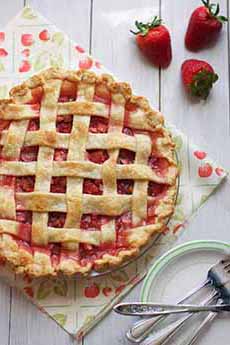
    Top: Classic Chess Pie from Zulka Sugar. Second: Lemon Chess Pie from Good Eggs | SF. Third: Pumpkin Chess Pie from Midwest Living (recipe). Bottom: Tangerine Chess Pie from Southern Living (recipe).


    Chess Pie is a venerable Southern recipe that likely has nothing to do with the game of chess.

    It’s a one-crust, sweet, rich custard pie made with basic ingredients found in every kitchen: butter, eggs, flour, milk, sugar and vanilla—plus two distinctive ingredients, cornmeal and vinegar. A one-bowl recipe, simply stirred, Chess Pie, which dates back to Colonial times, has remained popular over the generations.
     
    THE HISTORY OF CHESS PIE

    An early version appears in Martha Washington’s Booke Of Cookery, comprising recipes handed down from her first husband’s mother, Frances Parke Custis, possibly at her marriage in 1750. The first known recipe called Chess Pie appears in the 1877, in Buckeye Cookery and Practical Housekeeping by Estelle Woods Wilcox.

    We will probably never know how Chess Pie got its name, but here are the four prevailing theories:

  • Gentlemen were served the pie as they retreated to a room to play chess.
  • It’s Southern dialect: for “jes’ pie” (It’s just pie).
  • Its “chest pie”—“chess pie” when drawled. Because the pie is so high in sugar, it kept well at room temperature in the pie chest.
  • Perhaps the most academic theory, a Lemon Chess Pie was so similar to the English Lemon Curd Pie. The latter, often called “cheese” pie, evolved to “chess” in the U.S.
  • Add your theory in the comments section.
  •  
    Early variations added lemon juice or pie spices: cinnamon, ginger, nutmeg. Some added flaked coconut or toasted pecans. Some substituted part of the milk with buttermilk (buttermilk or lemon juice provides acid that can substitute for the vinegar). When cocoa powder became available, it was whisked right in to make Chocolate Chess Pie.
     
    RECIPE: CLASSIC CHESS PIE

    You can save time with refrigerated pie crusts, or make your own. This classic recipe from Southern Living saves time with a refrigerated crust.

    Other Southern Living recipes include Chocolate-Pecan Chess Pie, Grapefruit Chess Pie, Lemon Chess Pie, Orange Chess Pie and Tangerine Chess Pie. Some use a traditional flaky pie crust, some use a shortbread crust.

    We also found a lovely Pumpkin Chess Pie, a Cookie Chess Pie with Oreos and numerous other variations. Have a favorite flavor? Incorporate it into a Chess Pie!
     
    Ingredients

  • 1/2 package (15-ounce) refrigerated pie crusts
  • 2 cups sugar
  • 2 tablespoons cornmeal
  • 1 tablespoon all-purpose flour
  • 1/4 teaspoon salt
  • 1/2 cup butter, melted
  • 1/4 cup milk
  • 1 tablespoon white vinegar
  • 1/2 teaspoon vanilla extract
  • 4 large eggs, lightly beaten
  •  
    For A Cocoonut Chess Pie

  • 1 cup toasted flaked coconut
  •  
    Preparation

    1. FIT the pie crust into a 9-inch pie plate, according to package directions. Fold the edges under and crimp.

    2. LINE the crust with aluminum foil, and fill with pie weights or dried beans. Bake at 425° for 4 to 5 minutes. Remove the weights and foil; bake 2 more minutes or until golden. Cool.

    3. STIR together the sugar and the other ingredients except the eggs, until blended. Then add the eggs one at a time, stirring well, followed by the optional coconut.

    4. POUR the mixture into the pie crust. Bake at 350° for 50 to 55 minutes. After 10 minutes, to prevent excessive browning, shield the crust edges with aluminum foil or a pie crust shield—very useful if you make a lot of pies. Cool completely on a wire rack.
     
    WANT MORE PIE?

    Check out our Pie & Pastry Glossary and pick something new.
      

    Comments off

    RECIPE: Chervil Sour

    Here’s something different: A cocktail based on muddled herbs. The Chervil Sour was created by Jeff Bareilles, Wine and Beverage Director at Manresa Restaurant in Los Gatos, California.

     
    RECIPE: CHERVIL SOUR

    Ingredients Per Drink

  • 15–20 chervil leaves
  • 2 ounces pisco
  • 3/4 ounce simple syrup
  • 3/4 ounce lime juice
  • 1 egg white
  • Ice
  • 3 dashes Angostura bitters
  •  
    Preparation

    1. MUDDLE the chervil and simple syrup in a cocktail shaker or pint glass. Add all other ingredients and ice. Shake vigorously until egg white is frothy.

    2. STRAIN into a coupe glass and top with 3 dashes of Angostura bitters and garnish with a small chervil leaf.
     
     
    WHAT IS CHERVIL?

    Chervil, sometimes called garden chervil or French parsley, is an annual herb related to parsley, but more delicate in both appearance and flavor. It has a faint taste of licorice or anise seed.

    Chervil is a popular French seasoning for poultry, seafood and vegetable dishes (the word in French is cerfeuil, sir-FOEY).

  • It is one of the four ingredients of the French herb mixture fines herbes (feen-erb): chervil, chives, parsley and tarragon, used to season poultry, seafood, young spring vegetables, soups and sauces.
  • These herbs are called fine (delicate) as opposed to the stronger flavors of the bouquet garni (garnished bouquet). These “hardy” herbs—more pungent and/or resinous—are used to flavor soups, stocks and stews.
  • Bouquets garni can also include some fines herbes. Popular ingredients are basil, bay leaf; burnet, chervil, parsley, rosemary, savory and tarragon and thyme. They are tied in a bunch with a string, or in a piece of cheesecloth, so they can be easily removed from the pot.
  •   /home/content/p3pnexwpnas01_data02/07/2891007/html/wp content/uploads/chervil sour manresa 230
    [1] The Chervil Sour served at Manresa Restaurant in Los Gatos, California (photo © Manresa Restaurant).

    /home/content/p3pnexwpnas01_data02/07/2891007/html/wp content/uploads/chervil bunch www.herbtable.com 230
    [2] A bunch of fresh chervil (photo © Herb Table).

     
    How To Handle Chervil

    Hardy herbs—bay leaf, marjoram, oregano, rosemary, sage, savory, tarragon, thyme—will stay green for a week or two in the fridge (keep them dry in the produce drawer).

    Delicate herbs—basil, chervil, chives, cilantro, dill, mint, parsley, tarragon—wilt and turn yellow faster, and need special attention. 

  • Remove any ties or rubber bands and trim off the root ends and the leafless part of the stem (you can save the roots to flavor soups and stocks).
  • Place the herbs in a glass with a couple inches of water, cover with a plastic bag (we use a bag from the produce apartment) and secure the bag, as needed, with an elastic band.
  •   

    Comments off

    The Nibble Webzine Of Food Adventures
    RSS
    Follow by Email


    © Copyright 2005-2026 Lifestyle Direct, Inc. All rights reserved. All images are copyrighted to their respective owners.