THE NIBBLE BLOG: Products, Recipes & Trends In Specialty Foods


Also visit our main website, TheNibble.com.

TIP OF THE DAY: Make Your Own Flavored Salt

Gourmet Flavored Salts

Flavored Salts

Szechuan Peppercorn Flavored Salt
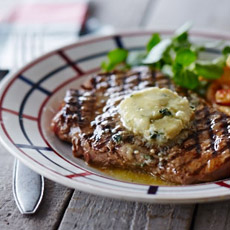
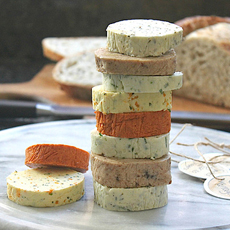
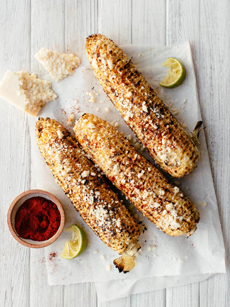
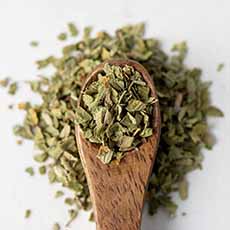
TOP: Flavored salts from Saltopia. Center: Trio of homemade flavored salts from Chef Eric LeVine | Steamy Kitchen. Bottom: Close-up of Szechuan Pepper Salt.

  Do you use flavored salt? Is your spice cabinet as packed with different flavors as ours is?

We have 10 jars of artisan* flavored salts, of which we often use just our three favorites (rosemary, saffron and truffle). The other seven take up a lot of space. It’s not that we don’t like them; it’s similar to shoes and clothing. We own a lot but wear the same three most of the time.

It’s tempting to reach for yet another exciting artisan salt. Here’s some of what we see when we visit a specialty salt website like Saltopia or US Saltworks:

  • Fruit-flavored salt: caper, coconut, habanero, jalapeño, lemon, lime, orange, peach, pineapple, pomegranate, strawberry, tomato
  • Herb-flavored salt: basil, cilantro, dill, fennel, garlic, lavender, lemongrass, mint, peppermint, rosemary, saffron, thyme, wasabi
  • Spice-flavored salt: Aleppo pepper, anise, black pepper, cardamom, cinnamon, clove, curry, ginger, mustard, sumac, vanilla
  • Smoked salt: applewood, alderwood
  • Sweet-flavored salt: brown sugar, honey, maple
  • Vegetable-flavored salt: mushroom, onion, truffle
  • And beyond: balsamic vinegar, Cabernet Sauvignon, chocolate, rose
  •  
    WHAT DO YOU DO WITH FLAVORED SALTS?

    Says Chef Eric LeVine: “One of the easiest ways to elevate your cooking to another level is to use flavored salts, or finishing salts. I call these ‘finishing salts’ because most of the time, its exactly what I use them for. No recipe is needed, really: Flavor + Salt = Flavored Salt.

    “I like to use these salts in place of regular salt. The flavor I use is dependent on either the type of dish I’m cooking, the ethnic cuisine or a flavor I would like to infuse into the dish.

    “Sometimes a dish just needs a little color after plating. A finishing salt is the perfect complement, flavor-wise and eye-candy-deliciousness-wise.

    Learn from professional cooks—who often serve food on white dinnerware—and sprinkle a bit of finishing salt directly on the food and the plate. The vibrant colors are shown off against the white and your dinner guests can dab as much as or as little of the salt [on their food] as they wish. You can make a batch for less than $1….or you could go to a gourmet shop and spend $12 for an itty bitty jar.”

    Spring and summer grilling are another reason to bring out the flavored salt instead of reaching for Morton’s Little Salt Girl or Diamond Crystal Kosher Salt.

    “You can also use it as a finishing salt. And you can use it to add a bit of color to all those beige and brown foods.”

    At THE NIBBLE, we use them as in ingredient or a garnish:

  • Baking, especially with lemon salt (lemon muffins, shortbread, garnish a lemon tart)
  • Bread dipper with olive oil and herbs
  • Confections: salted caramels and salted chocolate
  • Cottage cheese, soft cheeses, yogurt
  • Dessert: cobblers, puddings
  • Finishing salt: beef lamb, pork, poultry, seafood, smoked fish
  • Food garnish
  • Fruit salad or grilled fruit (a bit of salt brings out the sweetness)
  • Glass rimmer for sweet or savory salts: Blueberry Mojito, lemonade, Margarita, Bloody Mary, etc.
  • Ice cream or sorbet
  • Pasta, rice and other grains
  • Plate garnish (sprinkle bits on the plate for splashes of color)
  • Popcorn seasoning
  • Potatoes: baked, boiled, fried, mashed
  • Salted nuts
  • Salads and cooked vegetables
  • Any pale-colored food
  •  
    ___________________________
    *Artisan salts are flavored sea salts; as opposed to supermarket garlic salt, onion salt, etc., which are flavored table salts.

     
    SOLUTION: SAVE SPACE & MONEY—BLEND YOUR OWN

    It takes just five minutes to blend salt, herbs and spices in a spice grinder. You can make them on an as-needed basis, or make larger batches for your spice rack.

    At $13 and up retail for a 3.5-ounce jar, you can make your own for perhaps $1 a batch.

    Pick A Base Salt

    If you don’t have sea salt on hand, start with kosher salt or table salt. After you get the hang of blending, you can try more exotic salts, such as:

  • Fleur de sel or sel gris from France
  • Black lava or red alaea salts from Hawaii
  • Pink Himalayan or kala namak salts from India
  • Smoked salt
  •  
    FLAVORED SALT RECIPES

    Here are four recipes, two savory and two sweet. The first three are from Chef Eric; the Blueberry Salt is from THE NIBBLE archives.
     
    Recipe: Szechuan (Sichuan) Peppercorn Salt

    Dry-roasted Szechuan or Sichuan Peppercorn + food processor to grind the peppercorn + sea salt. Chef Eric roasted peppercorns in a hot, dry skillet until they were smoking but not burnt. Let it cool and add to a food processor or piece mill to grind to your preferred granule size. Then add the salt and pulse a couple of times to fully blend the flavors.

    Says Chef Eric: “I like my Szechuan pepper salt a little chunky and not like a fine powder, so I use equal amts of peppercorns and sea salt. You can adjust the proportions based on your tastes. If you are using a very fine sea salt or just regular table salt, decrease the amount of salt.

    “In addition to Asian-accent dishes or for a touch of heat, I also love seasoning my steaks with this salt prior to grilling, instead of the standard salt and pepper. It can also be served as a dipping salt for fried shrimp.”


    Recipe: Matcha Salt

    Matcha is Japanese green tea powder made from the highest quality of green tea leaves. It’s very different from simply grinding green tea leaves. It’s a stunning mossy green color, which makes such a pretty finishing salt. Matcha powder + sea salt + couple pulses in food processor if you are using coarse sea salt.

    Chef Eric likes to use it on a chocolate truffle or mousse; you can dip a plain chocolate bar dip in Matcha Salt. Use it with eggs and tofu, and with dishes that are light in texture and flavor, since this salt’s flavor is more delicate and subtle. “Don’t get the super-premium stuff,” says Chef Eric, “It would be a waste to use the expensive powder for the salts.”
     
    Recipe: Citrus Salt

    Peel any citrus and let the peels dry a little bit on a paper towel. Citrus salt is bright, cheery and light, says Chef Eric.

    “Finish your shrimp skewers, any vegetables, grilled chicken breasts or grilled salmon with Citrus Salt. Lighten your risotto or steamed rice.”

     
    Recipe: Blueberry Salt

    For summer, make Blueberry Salt. Start with a small batch (this recipe makes one cup). This recipe takes longer, because you’re drying fresh fruit. Prep time is 35 minutes, cook time is 1 hour to 1 day, depending on whether you choose to oven dry (1 hour) or let dry naturally (24 hours or more).

    After you make this recipe, you can customize it with other ingredients: balsamic vinegar, citrus peel, thyme, rosemary or any of the ideas above. The recipe is courtesy of the U.S. Highbush Blueberry Council.
     
    Ingredients For 1 Cup

  • 1 cup fresh blueberries
  • 1/2 cup water
  •  

    Blueberry Salt

    /home/content/p3pnexwpnas01 data02/07/2891007/html/wp content/uploads/blueberry salt saltopia 230sq
    Blueberry salt: You can buy a jar or make your own. Photos courtesy Saltopia.

  • 1 cup coarse sea salt (substitute kosher salt, or for a beautiful flake salt, use Maldon salt, with unique, pyramid-shaped crystals)
  •  
    Preparation

    1. LINE two baking sheets with parchment paper; set aside.

    2. SIMMER the berries and water in a saucepan over medium heat until the berries pop and release their juices, about 5 minutes. Remove from the heat.

    3. PRESS the blueberries with a potato masher or the back of a large spoon, reserving the juice. Further strain the berries with a fine wire sieve, pressing out as much liquid as possible; discard the solids. Line the sieve with cheesecloth and strain out the finer particles.

    4. RETURN the juice to the saucepan. Bring to a boil and reduce to a simmer. Simmer (watching closely so the juice doesn’t burn) until the juice is reduced to a syrup thick enough to coat a spoon. You should have 2 to 3 tablespoons of juice.

    5. REMOVE from the heat. Stir in the salt until the crystals are evenly coated, then spread the salt onto baking sheets. Let it air dry, stirring occasionally, until dry. This will take 4-24 hours, depending on the humidity. Alternatively, bake the salt in a 150° convection oven, stirring frequently until dry, about 1 hour.

    TIP: For a deeper purple salt, add food color to the blueberry juice in Step 4.

     
    HOW MANY TYPES OF SALT HAVE YOU HAD?

    Check out the different types of salt in our Salt Glossary.
      

    Comments off

    TOP PICK OF THE WEEK: Tony Roma’s Heat & Eat Barbecue

    Tony Roma's Ribs

    /home/content/p3pnexwpnas01 data02/07/2891007/html/wp content/uploads/boneless pork ribs tony romas 230

    Spare Ribs
    Top: We love these meaty boneless ribs. Center: Look for this package in your supermarket. Bottom: Baby back ribs. All photos courtesy Tony Roma’s.


    We try to avoid barbecue joints because way beyond the barbecue, we fill up on cornbread, buttermilk biscuits, cole slaw, mac and cheese and banana pudding. We feel overstuffed now, just by thinking of it.

    That’s why it was our lucky day when we accepted Tony Roma’s offer of heat-and-eat pork ribs to consider for THE NIBBLE. They’re available at supermarkets nationwide, and we’re thankful for that! (Here’s a store locator.)

    They’re as good or better than what we get in restaurants…and we don’t face a menu of tempting, high-carb, high-sugar, high-fat choices. And we don’t have to make anyone’s brother’s award-winning recipe.
     
    ABOUT THE RIBS

    The ribs and barbecue are marinated and slow-cooked. Fully cooked and nicely sauced, we microwaved them and they were ready in minutes. We tried:

  • Tony Roma’s Baby Back Pork Ribs
  • Tony Roma’s Boneless Pork Ribs
  • Tony Roma’s BBQ Pulled Pork
  •  
    There are other choices we didn’t taste—but look forward to:

  • Pulled Chicken
  • St. Louis Style Pork Spare Ribs
  •  
    All are available in with either Sweet & Spicy or Sweet Hickory barbecue sauces, and all made us happy. But the boneless ribs are by far our favorite: thick slices of tender meat with no bones to contend with.

    We were in hog heaven, and the boneless ribs have joined our “addiction list”—Top Picks that we continue to buy regularly at the grocer’s.

    Now, we can enjoy delicious ribs without all the empty carb sides and without sticky fingers: We eat them with a knife and fork. We…

  • Ate them with a big, crunchy salad and homemade cole slaw (purchased a package of shredded cabbage and tossed with a light vinaigrette—and sometimes blue cheese dressing).
  • Rolled them in lettuce leaves with shredded carrots, shredded daikon and watercress.
  • Served them with sides of sweet potatoes and sautéed apples* or caramelized onions.
  • Made burritos and tacos.
  • Served three slices atop a bed of [variously] sautéed vegetables, mashed potatoes, sweet potatoes, grits and San Gennaro polenta.
  •  
    ___________________________
    *We bought a jar of Grandma Hoerner’s Big Slice, delectable and time-saving.
     
    A QUICK PORK RIBS TUTORIAL

    There are two types of barbecue preparation: dry and wet. Dry ribs are rubbed with a mixture of herbs and spices. The rubs don’t require advance preparation; they can be applied just before barbecuing. Wet ribs are basted with sauce prior to and during the barbecuing process.

  • Baby Back Ribs are sourced from the loin area. These ribs tend to be smaller in size than spare ribs, but are considered to be more tender than other rib cuts. Think of them as tender and tasty.
  • Spare Ribs, also called side ribs, are from the belly area. They are longer and fatter than baby back ribs, but less meaty. The mix of meat and fat add to their tenderness and make slow-cooking a great way to enjoy these pork ribs. They’re what you want if you love to chew on the bones.
  • Boneless Ribs are sourced from the shoulder-area of the hog. They are slow cooked at low heat until tender and then portioned into various size boneless rib pieces. Most often, boneless ribs are marinated and seasoned for tenderness.
  • St. Louis-Style Ribs are a particular cut of the pork rib. The shape is almost rectangular and bone has been removed. These are meaty and tasty ribs, typically marinated for tenderness.
  • Pulled Pork is made with meat sourced from the shoulder area. It is slow cooked at low heat until it becomes tender enough to be “pulled” apart. Most often, pulled pork is marinated and seasoned for tenderness and tastiness.
  • Types Of Pork Ribs Chart

     
    Glossary information and chart courtesy Rupari Foods, maker of Tony Roma’s retail barbecue products.
     
    LOVE PORK?

    Check our the different cuts of pork in our Pork Glossary.


    Comments off

    FOOD FUN: Mac & Cheese Grilled Cheese Sandwich

    We’re so glad that B and S are in the kitchen! Brother (B) and sister (S) Bob and Carlene Deutscher of Saskatchewan are authors of the food blog BsInTheKitchen.com.

    They’ve inspired us to whip up some mac & cheese—to turn into a special grilled cheese sandwich for National Grilled Cheese Month.
     
     
    RECIPE: MAC & CHEESE GRILLED CHEESE SANDWICH

    Prep time is 15 minutes, cook time is 10 minutes.

    Ingredients Per Sandwich

  • 2 slices rustic bread
  • 1 cup leftover macaroni & cheese
  • 2 tablespoons panko bread crumbs
  • Generous ½ cup shredded cheddar cheese
  • Option: bacon or pulled pork (we bought Tony Roma’s Pulled Pork)
  • Butter, softened or bacon grease
  • Salt and pepper
  • Garnish: ketchup
  •  
    Preparation

    1. GRILL the bacon or heat the pulled pork.

      Mac & Cheese Grilled
    Sandwich mashup: Grilled Cheese with Mac & Cheese. Bacon optional. Photo © Bs In The Kitchen.
     
    2. MELT some butter in a skillet over medium heat. While the pan is heating/butter is melting…

    3. MIX the macaroni & cheese, 2 tablespoons of panko crumbs, a couple pinches of cheese in a bowl, with salt and pepper to taste. Form into patties and place in heated pan.
    Cook until golden brown on each side. While the patties cook…

    4. BUTTER the outside of each slice, place the panko on a plate and press the buttered side of each slice into the panko to crust the sandwich.

    5. PLACE about half of the cheese onto the bottom slice. Once the patties are cooked, add them on top of cheese, then top with more cheese. Add the other slice of bread and fry until golden brown on each side.

     
    Photo and recipe © copyright BSInTheKitchen.com.
      

    Comments off

    Homemade Spring Rolls Recipe & What Are Spring Rolls

    Spring Rolls
    [1] Vegetarian spring rolls with shredded daikon, carrots, cucumber trips and peanuts (photo © iStock Photo).

    Vietnamese Summer Rolls
    [2] Vietnamese summer rolls, with the beauty of colored vegetables showing through the translucent rice paper wrapper (photo © Elegant Affairs Caterers).

    Shrimp Summer Rolls
    [3] Shrimp spring rolls. Vietnamese and Thai spring rolls are pretty much identical. The rice paper is used uncooked (photo © Three Ladies Rice Paper).

    Fried Spring Rolls
    [4] Chinese-style fried spring rolls (photo © Davio’s | Boston).

    Egg Rolls
    [5] Egg rolls are fried, but wider (photo © National Pork Board).

      Spring rolls are one of our favorite appetizers at Chinese, Thai and Vietnamese restaurants. Even if we buy them at the take-out sushi counter at Whole Foods, they’re still $6 for two vegetarian rolls.

    So why don’t we make them at home?

    Yesterday, a lazy Sunday, we held a Spring Roll Brunch in our home, along with wine pairings.

    You can create a do-it-yourself spring roll buffet, but given the crowd, we enlisted one dexterous friend to help us with the wrap-and-roll.

    That said, they are easy to make and have a very high prep time-to-delicious factor ratio.

    The recipe for chicken and avocado spring rolls is below.

    But first: What’s a spring roll?
     
     
    THE DIFFERENCE BETWEEN EGG ROLLS, SPRING ROLLS & SUMMER ROLLS?

    Identifying spring rolls can be confusing, and here’s why:

    While some countries, including China, make fried spring rolls, Thailand and Vietnam use uncooked wrappers.

    The term “spring roll” is not synonymous with “egg roll,” which is always fried. An egg roll has a heavier pastry wrapper that can be sliced into sections; a fried spring roll is very fragile and can shatter like phyllo.

  • Egg rolls are deep-fried; the wrappers are thicker, making egg rolls more of a filled pastry (photo #5). Egg roll skins are made from wheat flour and egg. Most egg rolls have vegetable, egg and/or meat or seafood filling. Spring roll wrappers are thinner, the shape is narrower, and when fried the rolls are more finger-like. If you want to make egg rolls, here’s how.
  • Spring rolls are an Asian appetizer, eaten either Vietnamese-style, in an uncooked* rice noodle wrapper (photo #1) or fried Chinese-style (photo #4). They are traditionally eaten during the Spring Festival in China, hence the name; but also are popular in Cambodia and Indonesia.
  • Vietnamese and Thai spring rolls use rice paper wrappers, which can be found in Asian markets. They are made from tapioca starch, rice flour, salt, and water. They are gluten-free and vegan.
  • The dry hard wrappers are moistened into pliancy and translucency with water, and are then easy to roll. They are filled with seafood; red lettuce or Boston lettuce leaves; fresh mint, basil, cilantro leaves, and shredded carrot. They are served with a chili dipping sauce.
  • Summer rolls are made in the style of spring rolls, but with more seasonal ingredients. Like spring rolls (photo #1 and #3), they are not fried.
     
    Vietnamese spring and summer rolls are like eating a fresh salad roll, more complex in flavor (thanks to the fresh herbs) than fried Chinese spring rolls. They are served with a spicy dipping sauce known as nuoc cham, of which there are many variations.
     
    The ingredients show through the translucent wrapper and create lovely eye appeal (photos #2 and #3).
     
    Customize Your Spring & Summer Rolls

    Vietnamese spring rolls generally contain seafood such as cooked shrimp, accompanied by any combination of rice sticks, carrot, cucumber, daikon, shiitake mushrooms, and fresh, leafy herbs: basil, cilantro, and mint. Iceberg lettuce or green cabbage can be added for crunch.

    We also like adding toasted chopped peanuts (salty or honey-roasted) to half the batch, to our rolls.
     
     
    How did spring rolls get their name?

    Originally, they were special snacks served to visitors with tea at the Chinese New Year, which is the beginning of lunar spring.

    Both spring rolls and egg rolls date back to ancient China, and both are traditionally served with hot Chinese mustard or a dipping sauce.
     
    _______________________

    *Vietnamese spring rolls, or cha gio, are not fried—although some Vietnamese and Thai restaurants in the U.S. have taken to serving Chinese-style spring rolls as well, catering to the American taste for fried food.
     

  •  

    RECIPE: CHICKEN & AVOCADO SPRING ROLLS

    Ingredients For 4 Rolls

  • 4 spring roll skins
  • 1 ripe Hass avocado†, sliced lengthwise
  • 1 chicken breast (4 ounces), pre-grilled or baked and sliced thin
  • 1 cup romaine lettuce, shredded
  • 1/2 cup shredded carrots
  • 1/2 cup soy ginger sauce, peanut sauce or other dipping sauce (recipe below)
  •  
    Preparation

    1. SEED, peel and slice the avocado.

    2. SOFTEN the spring roll skin in cold water for 5 seconds then place flat on cutting board. Place the sliced avocado and chicken breast, romaine, and shredded carrots in the center of the spring roll skin. Gently fold over one side of the spring roll skin, fold in the edges and gently roll to the other end of the spring roll skin as though you are wrapping a burrito.

    3. SERVE on a platter with dipping sauce.

     
    RECIPE: DIPPING SAUCE

    Ingredients

  • 1/2 cup rice vinegar‡
  • 1/2 cup water
  • 1/2 cup sugar
  • 1/3 cup fish sauce, nam pla (you can substitute soy sauce**)
  • 1 garlic clove minced)
  • 1 tablespoon fresh lime juice
  • 1 teaspoon dried crushed chilies (you can use red pepper flakes)
  •   avocado-spring-rolls-hassavo-230
    [5] Avocado spring rolls (photo © Chiquita Brands).

    Rice Spring Roll Wrappers
    [6] Spring roll wrappers, made from tapioca and rice flour (photo © Rose Brand Rice Paper).

     
    Preparation

    1. HEAT the vinegar, water, and sugar until the sugar dissolves. Add the fish sauce, garlic, lime juice and chilies.

    2. COOL and serve, or else refrigerate.
     
    _____________________

    †Large avocados are recommended for this recipe. A large avocado averages about 8 ounces. If using smaller or larger size avocados adjust the quantity accordingly.

    ‡Depending on your personal palate, you can reverse the quantities of rice vinegar and lime juice. One good-size lime will yield 1/2 cup of juice.

    **Soy sauce will obviously taste different from fish sauce, but it still works as an Asian dipping sauce.


    Comments off

    What Is Malbec? Check It Out For Malbec World Day

    Glass Of Malbec In Riedel Malbec Glass
    [1] A glass of Malbec in the specially designed Riedel Malbec glass. Photo courtesy Riedel.


    [2] Malbec often has notes of blackberries, blueberries and plums (photo © Alex 9500 | Panther Media).

    Los Altos Malbecs
    [3] Look for Altos Las Hormigas Malbecs, a favorite of our wine editor (photo © Altos Las Hormigas).

    Malbec Label
    [4] The quirky label of another favorite Malbec, Tinto Negro (photo © Tinto Negro).


    [5] Go casual, with a burger, pizza or sandwich (photo © Michael Mina).

    Rack Of Lamb With Pesto & Red Wine
    [6] Go fancy, with a rack of lamb or a good steak (photo © DeLallo).


    Celebrated on April 17th, Malbec World Day (not World Malbec Day) is the perfect opportunity to open up a bottle of the wine that is Argentina’s claim to varietal fame.

    Malbec is a purple grape that produces red wine that’s a deep purple-red in color and nearly opaque, similar to Syrah and Mourvedre.

    The original Malbec rootstock came from France, where it was widely planted in the Cahors region in the Midi-Pyrénées region of south-central France.

    The first records of the varietal date to the 16th century. when it was known as Auxerrois. The name Malbec was introduced at some point in the 1780s, likely because a Monsieur Malbeck planted it in Bordeaux [source].

    It was also planted in the Loire Valley of central France, and in California. But Argentina now has 75% of the world’s Malbec acreage.

    Here’s more on the history of Malbec.
     
     
    ARGENTINE MALBEC

    Argentine Malbec is very different from its French parent. As is true among all wine grapes (and some other crops), planting the same vines in different terroirs* yield different results.

  • Argentine Malbec is fruit forward, with notes of black cherry, black plum and currant. They have lower acidity, more tannins, and fuller body than French Malbec.
  • French Malbec has moderate tannin, higher acidity and flavor notes of black pepper and spice. Because of their moderate tannin and acidity with lower alcohol, French Malbec wines tend to age longer.
  •  
    Malbec World Day commemorates April 17, 1853, when President Domingo Faustino Sarmiento of Argentina launched a mission to transform Argentina’s wine industry. To start that endeavor, a French soil expert bought grape varietals from France, one of which was Malbec.

    During the experiment period, which planted different wines in different terroirs*, Malbec proved to be a star. It flourished in the Mendoza region of Argentina, in the northwest part of the country at the foothills of the Andes Mountains.
     
     
    MALBEC IS A WELL-PRICED RED WINE

    As a result of the volume produced and the economics of wine production in Argentina, Malbec also proved to be a bargain. It’s a well-priced alternative to Cabernet Sauvignon. You can find many good Malbecs for $10 a bottle or less.

    You can also find bottles at twice that price, and even pricier—for example, $95 for a bottle of Cheval des Andes, a joint venture between Bordeaux’s great Chateau Cheval Blanc and Argentina’s Terrazas de los Andes.

  • Some Argentine Malbecs, like the latter, are blended with some Cabernet Franc, Cabernet Sauvignon, Merlot and/or Petit Verdot—classic grapes of Bordeaux, to give some Bordeaux style to the wines.
  • But there’s a fifth Bordeaux grape: Malbec is also grown there as a blending grape. Because the varietal has poor resistance bad weather and pests, it never became a top French varietal like Merlot and Caber.
  • Some vintners blend in a bit of Petit Syrah instead. Petit Syrah, now grown largely in Australia and California, is a cross that originated in the Auvergne-Rhône-Alpes region of France.
  •  
    Three Favorite Malbecs From Argentina

    Our wine editor, Kris Prasad, has a fondness for Altos Las Hormigas and Alamos (photo #3—one of the wines can have some Syrah added, depending on the vintage).

    Both can be found for $10 or less, although special bottlings (e.g., certain vineyards) cost more.

    He also likes Tinto Negro “Limestock Block,” pricier at around $15. He calls it an “interesting wine”; it is two-thirds Malbec.

    We haven’t had it, but we do love the label, with part of the name spelled backwards (photo #4).

    And $10? Can’t beat that for a good wine.
     
     
    PAIRING MALBEC WITH FOOD

    Steak—of which Argentina has a bounty—is a classic pairing (give us a T-bone, please!).

    But Malbec is much more flexible than a pairing with beef. Try it with:

  • Any grilled red meat or pork (serve with some Argentine chimichurri sauce—photo #6).
  • Duck and other dark-meat poultry like game birds.
  • Full-flavored fish such as salmon and tuna.
  • Braised short ribs.
  • Burgers and barbecue (photo #5).
  • Pasta and pizza.
  • Blue cheese, washed rind and other strong cheeses.
  • Mushrooms.
  • Dishes with earthy or smoky flavors.
  • Dishes spiced with clove, cumin, garlic, juniper berry, smoked paprika or sumac.
  •  
    Serve it instead of Cabernet Sauvignon, Merlot, Petit Syrah and other full-bodied reds.

    For an even bigger celebration, put on some tango music—which developed in Argentina—and dance!
     
    ___________________________

    *ABOUT TERROIR: The same rootstock that is grown in different locations produces different flavors; for example, depending on where it is grown, Sauvignon Blanc can have grass or grapefruit notes—or neither. Terroir, pronounced tur-WAH, is a French agricultural term referring to the unique set of environmental factors in a specific habitat that affect a crop’s qualities. It includes climate, elevation, proximity to a body of water, slant of the land, soil type and amount of sun. These environmental characteristics gives the wine its character. Terroir is the basis of the French A.O.C. (appellation d’origine contrôlée) system.


    Comments off

    The Nibble Webzine Of Food Adventures
    RSS
    Follow by Email


    © Copyright 2005-2026 Lifestyle Direct, Inc. All rights reserved. All images are copyrighted to their respective owners.