THE NIBBLE BLOG: Products, Recipes & Trends In Specialty Foods


Also visit our main website, TheNibble.com.

TIP OF THE DAY: Have A Barbecue Party For National Barbecue Month

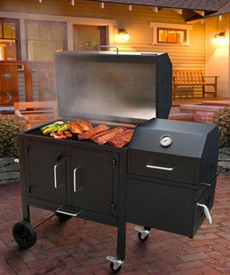
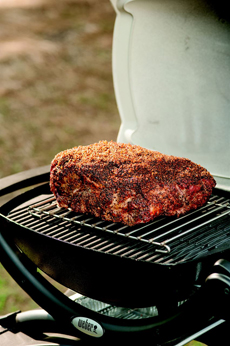
Backyard Grill

Grilled Brisket
Top: Deluxe grill from Landmann. Bottom: Weber’s Q series fits almost anywhere.


Did you fire up the grill for Mother’s Day? It’s one of the biggest barbecue days of the year, with 34% 0f grill owners cooking celebrate Mom. It following the Fourth of July (76%), Labor Day (62%), Memorial Day (62%) and Father’s Day (49%) in popularity.

More than 75% of Americans own a grill or smoker. May is National Barbecue Month: A survey from the Hearth, Patio & Barbecue Association (HPBA) names grilling as America’s favorite patio pastime.

Our Tip Of The Day: Have a BYO Favorite Dish barbecue party. Whether it’s a venerable family recipe or something more recent like grilled poppers, everyone should bring a favorite food: sides, punch, desserts, etc. (In our family, it’s homemade baked beans with molasses and a topping of crisp bacon.)

It can be quite a feast: Beyond proteins and veggies, people grill everything from bread, pizza and quesadillas to fruit and other desserts.
 
2016 BBQ TRENDS

Whether for easy weeknight dinners, weekend feasts or even breakfast, here’s the scoop from HPBA’s most recent State of the Barbecue Industry Report, from a survey conducted in July and August, 2015.

  • Who has a grill? 75% of U.S. adults own a grill or smoker.
  • Gas, charcoal or electric? 62% of households have gas grill, 53% have a charcoal grill and 12% have an electric grill. Two percent own a wood pellet grill and 8% are thinking of purchasing one this year.
  • Why so much grilling? 71% say it’s to improve flavor, 54% simply enjoy grilling and 42% like it for entertaining family and friends.
  • Seasonal or year-round? 63% of grill owners use their grill or smoker year-round; 43% cook at least once a month during winter.
  • Grill accessories. Half of all grill owners have the most basic grilling accessories: cleaning brush, tongs, and gloves/mitts (hmm…what does the other half use?). The most popular new accessories owners plan to buy include pizza stones, broiling baskets and cooking planks.
  • Outdoor kitchens: 10% of grill owners have a full “backyard kitchen,” including premium furniture and lighting.
  • Barbecued breakfast: 11% of grill owners prepared breakfast on a grill in the past year.
  • Beyond the backyard: Nearly one third of grill owners (31%) grilled someplace other than their homes in the past year, including 24% who grilled while camping.
  • Barbecue plans: Nearly half of U.S. adults (45%) plan to purchase a new grill or smoker in 2016, while nearly a third of current owners (30%) plan to grill with greater frequency.
  •  
    WHAT’S A BARBEQUE?

    Barbecue is a noun and a verb. It’s a meal cooked outdoors—for millennia over an open fire until the development of modern gas and electric grills. “Barbecue” also refers to:

  • A grill or open hearth/fireplace—used to barbecue food.
  • The meat, poultry or fish that is barbecued.
  • Meat or poultry that is basted in a sweetened “barbecue sauce” during cooking.
  • An outdoor party or picnic at which barbecued food is served.
  •  
    BARBECUE, BARBEQUE OR BBQ?

    Barbecue and barbeque are alternative spellings, along with the short form BBQ.

    To quote chef Anthony Bourdain, “Barbecue may not be the road to world peace, but it’s a start.”


    Comments off

    TIP OF THE DAY: Fruit Pancakes & Maple Syrup Substitutes

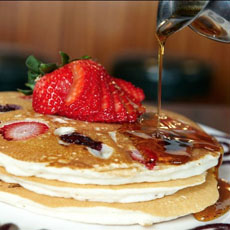
    Some people like to serve pancakes with a garnish of berries. But at The Mission restaurant in San Diego, a creative cook embedded the fruit in the pancake itself.

    You can do it easily:

  • SLICE fresh berries in 1/4-inch pieces.
  • SPOON the pancake batter onto the griddle or pan.
  • ADD the sliced fruit while the batter sets. If you work quickly, you can add them in a circle; but random scatters are just as tasty.
  •  
    No berries? Use dried fruit (dried cherries, cranberries, raisins, etc) or dice any other fruit you have on hand (apples, bananas, pears, etc.).

    While the The Mission serves the pancakes with conventional maple syrup, consider these…
     
    ALTERNATIVES TO MAPLE SYRUP

  • Apple butter, bourbon butter, maple butter, strawberry butter or other compound butter
  • Fruit yogurt (you can mix jam or preserves into plain yogurt)
  • Honey
  • Jam, marmalade, preserves
  • Other syrup (berry syrup, brown rice syrup, cinnamon syrup [recipe below], molasses)
  • More fresh fruit
  • Plain yogurt, sour cream or mascarpone
  • Whipped cream or heavy cream
  •  
     
    For plain pancakes consider:

  • Applesauce or other puréed fruit
  • Dessert sauce (caramel, chocolate)
  • Fruit compote or sautéed fruit
  • Peanut butter or other nut butter
  •  
    You can also mix up a creative syrup; for example, honey with raisins, diced apples and/or chopped nuts.
     
     
    RECIPE: CINNAMON SYRUP

    This is delicious on French toast, pancakes and waffles; along with fruit salad, ice cream, un-iced cakes, etc.

    Ingredients

  • 1 cup light brown sugar
  • 1 cup water
  • 1/4-1/2 teaspoon cinnamon
  • Splash of lemon juice
  •  
    Preparation

      Pancakes Embedded Fruit

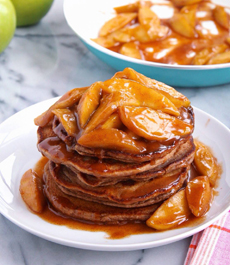
    Sautéed Apple Pancakes

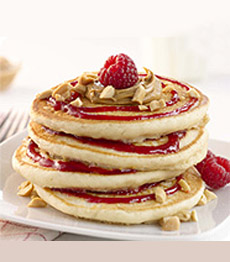
    Peanut Butter & Jelly Pancakes
    Fun with fruit, in and on your pancakes. Top: Embedded berries (photo courtesy The Mission restaurant | San Diego). Center: “Apple Pie Pancakes,” topped with sautéed apples (photo courtesy PotsAndPans.com). Bottom: Topped with peanut butter and jelly or preserves (photo courtesy Krusteaz).

     
    1. HEAT the water and the sugar in a small saucepan over medium heat until the liquid begins to boil. Reduce the heat and simmer for five minutes, stirring occasionally until the sugar dissolves.

    2. ADD the cinnamon and lemon juice, stir thoroughly, and let cool or serve warm.


    Comments off

    Green Salad With Roasted Rhubarb & More Savory Rhubarb Recipes

    We’ve only ever published sweet rhubarb recipes: in compote, pie, preserves, even ice cream. Today’s tip is: Try a savory rhubarb preparation before the end of rhubarb season, typically the end of May in the U.S.

    > Below is a delicious recipe for Green Salad With Roasted Rhubarb.

    > Also below are links to savory recipes from sides to soups.
     
     
    RHUBARB HISTORY

    According to FoodTimeline.org, rhubarb is an ancient plant with different species originating in China, Siberia, and southwestern Russia. The name comes from the Latin Rhabarbarum, meaning “Rha of the barbarians.”

    Rha is the Scythian name for the Volga River in Russia, the longest river in Europe. Rhubarb was cultivated by the Tatars there (“Tartars” is a misspelling), called barbarians—which referred to foreign people who were neither Christian, Greek nor Roman.

    Rhubarb has been grown for millennia. Chinese rhubarb (Rheum officinale) was grown for its roots, which were ground up and used medicinally as far back as 206 B.C.E. Garden rhubarb (Rheum rhabarbarum) was grown for its edible stalks (the leaves are toxic).

    It was cultivated in Britain in the 17th century and added to stews; with the advent of affordable* sugar in the 18th century, it became a sweetened filling for tarts. (Sugar, originally from India and Southeast Asia, was cultivated in the Middle East in the 12th century, then in other areas of the Mediterranean. European Crusaders brought sugar home with them. It created a stir but was a pricey import, analogous to other Eastern spices. The first printed record of sugar in English is in the late 13th century.)

    Rhubarb seeds were imported to America shortly after the American Revolution. The term “pie plant” originated in the U.S. sometime during the 19th century. Rhubarb was a popular pie filling and early American cookbooks show rhubarb recipes for cobblers, conserves, sweet pies, and tarts.
     
     
    RECIPE: GREEN SALAD WITH ROASTED RHUBARB

    We adapted this recipe from CilantroCooks.com and added a number of optional ingredients, so you can customize it to your ideal.

    Ingredients

  • 1 pound rhubarb
  • 1 head romaine lettuce
  • 1 cup seedless green, purple or red grapes
  • 1 cup of Granny Smith apples, diced
  • 2 medium cucumbers (ideally seedless)
  • 1/2 cup of blue, feta or goat cheese, crumbled
  •    
    Beef With Roast Rhubarb
    [1] Beef tenderloin with roasted rhubarb (photos #1 and #2 © Bon Appetit).

    Chicken With Rhubarb Salsa
    [2] Chicken with rhubarb salsa.

    Savory Rhubarb Soup
    [3] Rhubarb soup (photo © La Cucina Italiana).

     
    Optional Ingredients

  • Beets: halved baby beets or diced regular beets (canned)
  • Fresh dill
  • Peppery greens: arugula or watercress
  • Red onion or sweet onion
  • Toasted pecans or walnuts
  •  
    For A Dinner Salad

  • Grilled chicken breast, sliced
  • Grilled salmon fillet
  •  

    Fresh Rhubarb
    [4] Slicing fresh rhubarb (photo © Cilantro Cooks).

    Rhubarb Salad Recipe
    [5] A recipe variation from Sumptuous Spoonfuls. Their recipe roasts the rhubarb with honey and dresses the salad with a Honey Lemon Ginger Vinaigrette.


    For The Roasted Rhubarb Vinaigrette

  • 1/2 the roasted rhubarb
  • 2 tablespoon honey
  • 2 tablespoon apple cider vinegar
  • 2 tablespoon olive oil
  • 1/4 teaspoon salt
  • 1/4 teaspoon ground black pepper
  • Optional: 1 teaspoon poppy seeds or chili flakes
  •  
    Preparation

    1. TRIM the tips (including all the leaves) and root ends from the rhubarb. Cut the stalks into 1-inch slices. Place in a greased (spray is fine) baking or roasting pan and roast in the oven at 375°F for 20 to 25 minutes. Remove from oven and cool (in the fridge, if necessary); half will be used for the salad, and half for the dressing.

    2. PREPARE the dressing: Place half the rhubarb and all other dressing ingredients in a blender or food processor; blend until completely smooth. Adjust the honey if you need more sweetness.

    3. TOAST the walnuts: Spray a small baking sheet with cooking spray. Set the nuts on the tray in a single layer and toast on the bottom rack of the oven at 400°F for about 5 minutes, or until they are fragrant and slightly browned. Watch them carefully so they don’t burn.

    4. PLACE the vegetables in a large bowl; then add the completely cooled rhubarb and the cheese and toss with the dressing. Garnish with the toasted nuts and serve.


    MORE SAVORY RHUBARB RECIPES

  • Beef Tenderloin With Rhubarb & Red Wine
  • Rhubarb Potato Gratin
  • Rhubarb Butter For Basting Chicken
  • Rhubarb & Radish Salad
  • Rhubarb Salsa
  • Roast Salmon With Rhubarb & Red Cabbage
  • Vietnamese Sour Rhubarb Soup With Rhubarb
  •  
    _____________

    *Sugar originated in Southeast Asia. The people of New Guinea were probably the first to domesticate sugarcane, possibly as early as 8,000 B.C.E. The cane juice from the stalks was used as a sweetener. However, the extraction and purifying technology techniques were developed by people living in India, around 350 C.E.


    CHECK OUT WHAT’S HAPPENING ON OUR HOME PAGE, THENIBBLE.COM.


    Comments off

    TIP OF THE DAY: Bouquet Of Crudités

    At every party and dinner, we have a basket of crudités as a better-for- you option and for those with dietary constraints. For Mother’s Day, we’re adding some flower power with this Bouquet Of Crudités from Hidden Valley,

    Hidden Valley serves them with their Original Ranch Dressing; we’re making a nonfat yogurt dip.

    RECIPE #1: BOUQUET OF CRUDITÉS

    Prep time is 15 minutes.

    Ingredients For 6 Servings

  • 2 orange bell peppers
  • 2 red bell peppers
  • 2 yellow bell peppers
  • 2 mini orange, red or yellow bell peppers (or substitute 2 more conventional size)
  • Cherry or grape tomatoes (substitute radishes)
  • 6 snap peas
  • 6 six-inch bamboo skewers
  • Yogurt dip (recipe below)
  •   Crudites Bouquet
    Take an artistic approach to crudités with this vegetable bouquet (photo courtesy Hidden Valley).
     
    Preparation

    1. MAKE the dip (recipe below) and chill in the refrigerator until ready to serve.

    2. WASH and seed the peppers. Cut jagged edges into the tops.

    3. STICK the snap peas on the skewers to create the leaves. Insert the skewers through the bottoms of each pepper and put the tomato in the center as shown. Arrange in a flower pot, vase or on a plate.

     
    RECIPE #2: GARLIC-LIME-HERB YOGURT DIP & SAUCE

    This recipe can be served as a dip with crudités, pretzels and other snacks, or as a topping/sauce for grilled fish, meat, poultry, even burgers. You can also mix it with boiled potatoes, macaroni or shredded cabbage for a fat-free potato salad, macaroni salad or cole slaw.

    Or sweeten it and use it as a fruit dip.

    The recipe makes a small bowl of dip, or 4 sauce servings for a main course. You can use your creativity to mix and match the seasonings to your main.

    Ingredients

  • 1 cup plain nonfat Greek yogurt (you can substitute other plain yogurt, but Greek style is the thickest and creamiest)
  • 1 clove garlic, minced
  • 1/4 cup fresh lime juice
  • 1 tablespoon fresh ginger, basil, chives or other favorite herb, minced
  •  
    Preparation

    1. BLEND the yogurt, garlic, lime juice and ginger in small bowl. Cover and refrigerate at least 30 minutes or up to 2 days.

     
    VARIATION: YOGURT DIP FOR FRUIT

    1. REPLACE the garlic with one teaspoon agave, honey or sweetener of choice. (Only lightly sweeten the dip: You want to appreciate the sweetness of the fruit, not overwhelm it.)

    2. REPLACE the herb with grated lime zest or other citrus zest (lemon, grapefruit).
     
    ___________________________
    *The Hidden Valley recipe combines 1/2 cup Original Ranch Light Dressing and 8 ounces softened fat-free cream cheese, chilled until ready to serve.


    Comments off

    TIP OF THE DAY: Serve A Guacamole Trio

    Guacamole Recipes
    [1] Serve three different guacamole “flavors” at once (photo © Avocados From Mexico).

    Chunky Guacamole
    [2] How about chunky guacamole? Make different textures and let guests decide (photo © Calvo Growers).

    Stuffed Cherry Tomatoes
    [3] Chunky guacamole (photo © Calvo Growers).


    [4] Guacamole “bites” in cherry tomatoes (photo © FronteraFiesta.com).

    Tuna Guacamole Hors d'Oeuvre
    [5] Fusion food: guacamole with tuna sashimi cubes (photo © Ippudo Restaurant | NYC).


    So many guacamole recipes, so little time!

    The solution: Make guacamole trios, three different recipes at a time. Here are some favorites of ours:

  • Bacon Cheddar Guacamole Recipe
  • BLT Guacamole Crostini Recipe and Deconstructed Guacamole Crostini
  • Roasted Corn Guacamole Recipe
  • Sour Cream Guacamole Recipe
  • Tomatillo Guacamole Recipe
  •  
    And then, there’s Crocamole, a crocodile-shaped presentation for kids.
     
     
    A DIY GUACAMOLE PARTY BAR

    You can also go for the Do-It-Yourself option: a Guacamole Party Bar. With the mashed avocado, lime juice and salt, provide some of the following:

  • Tomato group: tomato, tomatillo, salsa, sundried tomatoes
  • Onion group: chives, onion, green onion/scallion, pickled onions, red onion, shallots
  • Heat: chili flakes, minced chiles, hot sauce
  • Cheese: blue cheese, cotija, queso fresco, grated cheddar (try jalapeño cheddar) or jack
  • Creamy: crème fraîche, sour cream, yogurt
  • Fruit: dried fruits, mango, melon, papaya, pomegranate arils, strawberry
  • Herbs: basil, bell pepper, cayenne, cilantro, garlic cloves, mint, parsley, sage, tarragon
  • Vegetables: asparagus, corn, jicama, radish/daikon
  • Wild card: bacon, crab meat, minced pork or ham, olives, toasted nuts
  •  
    Serve a trio of chips, too: perhaps yellow tortilla chips, blue tortilla chips and pita chips.
     
    Also check out this fusion recipes from California Avocado Growers for Cajun Guacamole, French Guacamole, Greek Guacamole, Italian guacamole, Japanese guacamole.

    There are 21 pages of guacamole recipes on the website, including a Cranberry Guacamole recipe for the holidays.
     

    THE HISTORY OF GUACAMOLE

    Mesoamericans cultivated the wild avocado, a tree fruit that had grown in the region for millions of years.

    Dating back to Mayan times (pre-Aztec), guacamole was made from avocado, onion, chiles, fresh tomato, and salt, a recipe that is still made today.

    The conquering Aztecs called the avocado ahuacatl. The “tl” is pronounced “tay” in Nahuatl, the Aztec language, hence, ah-hwa-CAH-tay.

    AhuacamOlli (ah-waka-MOLE-ee) is a compound of ahuacatl [avocado] + mOlli [sauce]. The chocolate-based mole sauce comes from that same word, mOlli.

    When the Spanish conquistadors under Hernán Cortés arrived in 1519, they heard ah-hwah-cah-tay as “aguacate,” the spelling and pronunciation they used. In Spanish, ahuacamOlli became guacamole (huac-ah-MOE-lay).

    Guacamole ingredients were mashed in a molcajete (mol-cah-HET-tay), a Mexican pestle carved from volcanic stone (today granite is an easier-to-clean option). Over time, different regions of Mexico mixed in local ingredients, creating countless variations.

    Ahuacatl, avocado, first meant “testicle” in Nahuatl. The Aztecs saw the avocado hanging from the tree branches as resembling testicles, and ate them as a sex stimulant.

    According to Linda Stradley on the website WhatsCookingInAmerica.com, for centuries after Europeans came into contact with the avocado, it carried its reputation for inducing sexual prowess.

    It wasn’t purchased or consumed by any genteel person concerned with his or her reputation.

    American avocado growers had to sponsor a public relations campaign to dispel the myth before avocados could become popular. After then, their dark green, pebbly flesh also earned avocados the polite name, “alligator pear.”


    Comments off

    The Nibble Webzine Of Food Adventures
    RSS
    Follow by Email


    © Copyright 2005-2026 Lifestyle Direct, Inc. All rights reserved. All images are copyrighted to their respective owners.