THE NIBBLE BLOG: Products, Recipes & Trends In Specialty Foods


Also visit our main website, TheNibble.com.

TIP OF THE DAY: Bouquet Of Crudités

At every party and dinner, we have a basket of crudités as a better-for- you option and for those with dietary constraints. For Mother’s Day, we’re adding some flower power with this Bouquet Of Crudités from Hidden Valley,

Hidden Valley serves them with their Original Ranch Dressing; we’re making a nonfat yogurt dip.

RECIPE #1: BOUQUET OF CRUDITÉS

Prep time is 15 minutes.

Ingredients For 6 Servings

  • 2 orange bell peppers
  • 2 red bell peppers
  • 2 yellow bell peppers
  • 2 mini orange, red or yellow bell peppers (or substitute 2 more conventional size)
  • Cherry or grape tomatoes (substitute radishes)
  • 6 snap peas
  • 6 six-inch bamboo skewers
  • Yogurt dip (recipe below)
  •   Crudites Bouquet
    Take an artistic approach to crudités with this vegetable bouquet (photo courtesy Hidden Valley).
     
    Preparation

    1. MAKE the dip (recipe below) and chill in the refrigerator until ready to serve.

    2. WASH and seed the peppers. Cut jagged edges into the tops.

    3. STICK the snap peas on the skewers to create the leaves. Insert the skewers through the bottoms of each pepper and put the tomato in the center as shown. Arrange in a flower pot, vase or on a plate.

     
    RECIPE #2: GARLIC-LIME-HERB YOGURT DIP & SAUCE

    This recipe can be served as a dip with crudités, pretzels and other snacks, or as a topping/sauce for grilled fish, meat, poultry, even burgers. You can also mix it with boiled potatoes, macaroni or shredded cabbage for a fat-free potato salad, macaroni salad or cole slaw.

    Or sweeten it and use it as a fruit dip.

    The recipe makes a small bowl of dip, or 4 sauce servings for a main course. You can use your creativity to mix and match the seasonings to your main.

    Ingredients

  • 1 cup plain nonfat Greek yogurt (you can substitute other plain yogurt, but Greek style is the thickest and creamiest)
  • 1 clove garlic, minced
  • 1/4 cup fresh lime juice
  • 1 tablespoon fresh ginger, basil, chives or other favorite herb, minced
  •  
    Preparation

    1. BLEND the yogurt, garlic, lime juice and ginger in small bowl. Cover and refrigerate at least 30 minutes or up to 2 days.

     
    VARIATION: YOGURT DIP FOR FRUIT

    1. REPLACE the garlic with one teaspoon agave, honey or sweetener of choice. (Only lightly sweeten the dip: You want to appreciate the sweetness of the fruit, not overwhelm it.)

    2. REPLACE the herb with grated lime zest or other citrus zest (lemon, grapefruit).
     
    ___________________________
    *The Hidden Valley recipe combines 1/2 cup Original Ranch Light Dressing and 8 ounces softened fat-free cream cheese, chilled until ready to serve.


    Comments off

    TIP OF THE DAY: Serve A Guacamole Trio

    Guacamole Recipes
    [1] Serve three different guacamole “flavors” at once (photo © Avocados From Mexico).

    Chunky Guacamole
    [2] How about chunky guacamole? Make different textures and let guests decide (photo © Calvo Growers).

    Stuffed Cherry Tomatoes
    [3] Chunky guacamole (photo © Calvo Growers).


    [4] Guacamole “bites” in cherry tomatoes (photo © FronteraFiesta.com).

    Tuna Guacamole Hors d'Oeuvre
    [5] Fusion food: guacamole with tuna sashimi cubes (photo © Ippudo Restaurant | NYC).


    So many guacamole recipes, so little time!

    The solution: Make guacamole trios, three different recipes at a time. Here are some favorites of ours:

  • Bacon Cheddar Guacamole Recipe
  • BLT Guacamole Crostini Recipe and Deconstructed Guacamole Crostini
  • Roasted Corn Guacamole Recipe
  • Sour Cream Guacamole Recipe
  • Tomatillo Guacamole Recipe
  •  
    And then, there’s Crocamole, a crocodile-shaped presentation for kids.
     
     
    A DIY GUACAMOLE PARTY BAR

    You can also go for the Do-It-Yourself option: a Guacamole Party Bar. With the mashed avocado, lime juice and salt, provide some of the following:

  • Tomato group: tomato, tomatillo, salsa, sundried tomatoes
  • Onion group: chives, onion, green onion/scallion, pickled onions, red onion, shallots
  • Heat: chili flakes, minced chiles, hot sauce
  • Cheese: blue cheese, cotija, queso fresco, grated cheddar (try jalapeño cheddar) or jack
  • Creamy: crème fraîche, sour cream, yogurt
  • Fruit: dried fruits, mango, melon, papaya, pomegranate arils, strawberry
  • Herbs: basil, bell pepper, cayenne, cilantro, garlic cloves, mint, parsley, sage, tarragon
  • Vegetables: asparagus, corn, jicama, radish/daikon
  • Wild card: bacon, crab meat, minced pork or ham, olives, toasted nuts
  •  
    Serve a trio of chips, too: perhaps yellow tortilla chips, blue tortilla chips and pita chips.
     
    Also check out this fusion recipes from California Avocado Growers for Cajun Guacamole, French Guacamole, Greek Guacamole, Italian guacamole, Japanese guacamole.

    There are 21 pages of guacamole recipes on the website, including a Cranberry Guacamole recipe for the holidays.
     

    THE HISTORY OF GUACAMOLE

    Mesoamericans cultivated the wild avocado, a tree fruit that had grown in the region for millions of years.

    Dating back to Mayan times (pre-Aztec), guacamole was made from avocado, onion, chiles, fresh tomato, and salt, a recipe that is still made today.

    The conquering Aztecs called the avocado ahuacatl. The “tl” is pronounced “tay” in Nahuatl, the Aztec language, hence, ah-hwa-CAH-tay.

    AhuacamOlli (ah-waka-MOLE-ee) is a compound of ahuacatl [avocado] + mOlli [sauce]. The chocolate-based mole sauce comes from that same word, mOlli.

    When the Spanish conquistadors under Hernán Cortés arrived in 1519, they heard ah-hwah-cah-tay as “aguacate,” the spelling and pronunciation they used. In Spanish, ahuacamOlli became guacamole (huac-ah-MOE-lay).

    Guacamole ingredients were mashed in a molcajete (mol-cah-HET-tay), a Mexican pestle carved from volcanic stone (today granite is an easier-to-clean option). Over time, different regions of Mexico mixed in local ingredients, creating countless variations.

    Ahuacatl, avocado, first meant “testicle” in Nahuatl. The Aztecs saw the avocado hanging from the tree branches as resembling testicles, and ate them as a sex stimulant.

    According to Linda Stradley on the website WhatsCookingInAmerica.com, for centuries after Europeans came into contact with the avocado, it carried its reputation for inducing sexual prowess.

    It wasn’t purchased or consumed by any genteel person concerned with his or her reputation.

    American avocado growers had to sponsor a public relations campaign to dispel the myth before avocados could become popular. After then, their dark green, pebbly flesh also earned avocados the polite name, “alligator pear.”


    Comments off

    TIP OF THE DAY: Hispanic-Style Cheeses & How To Use Them

    In the past, Hispanic-style cheeses could be difficult to find in the U.S., often requiring a trip to a Mexican specialty food store.

    But as with Mexican food in general, Hispanic-style cheeses continue to grow in popularity, with many varieties now available in mainstream supermarkets across the country.

    California is the country’s leading producer of Hispanic-style cheeses, followed by Wisconsin. You don’t need to wait for Cinco De Mayo to try them, but they’ll make the celebration more authentic.

    Thanks to the California Milk Advisory Board for this guide to domestic-made, Hispanic-style cheeses.

    Note that the names given here are the most common names for these cheeses. However, it is not uncommon for a Hispanic-style cheese to be called by more than one name. Also, some cheese makers sell their cheeses under a proprietary name. In most cases the names given here will be on the package.

    > The history of cheese.

    > The different types of cheese: a photo glossary.
     
     
    FRESH HISPANIC-STYLE CHEESES

    Fresh (unripened) cheeses are very young cheeses that have not been allowed to age. Typically, fresh cheeses are soft and moist, white or off-white in color. They have a shorter shelf life than aged cheeses and must be kept in the refrigerator.

    Many Hispanic-style cheeses soften but do not melt when cooked. Because they hold their shape when heated, they are often used as fillings or toppings in recipes.

    They also tend to have mild to pronounced saltiness, so require less salt added to recipes. You can find them in whole-milk or low-fat varieties.

  • Oaxaca (wa-HA-ka) is a mild, firm white cheese with a sweet milk flavor and slight saltiness. Its texture is similar to mozzarella and string cheese, and it is used the same way. The cheese is made either in a rolled ball or braided, the latter said to represent the braided silver crafted in the town of Oaxaca, Mexico, where the cheese originated. The cheese melts well and is often shredded into main dishes prior to cooking.
  • Panela (pah-NAY-la) is mild and moist with a sweet, fresh milk flavor and a firm texture similar to mozzarella. It doesn’t melt, but softens and holds its shape. It can be fried and is also used in sandwiches, salads and with fruit. Pamela has a distinctive basket weave texture from the round basket in which the cheese is drained.
  •    
    Braided Oaxaca Cheese
    [1] Braided Oaxaca cheese (photo © Cheese.com .

    Queso Fresca With Salsa
    [2] Queso fresco with mango salsa (photo courtesy EatWisconsinCheese.com).

    Two sliced triangles of Queso Blanco cheese
    [3] Queso blanco (photo © Wisconsin Cheese).

  • Queso Blanco (KAY-so BLAN-co) is a white, mild, creamy cheese similar to a mild Cheddar or Jack. It is used in much the same way.
  • Queso Blanco Fresco (KAY-so BLAN-co FRES-co) is also called Queso Para Freir (KAY-so PA-ra fray-EER), cheese for frying. It is a firm, moist cheese that is used in cooked dishes. As its name implies, it is often fried because it holds its shape under heat. It is also crumbled onto fruit, salads, beans and other dishes.
  • Queso Fresco (KAY-so FRES-co) is the most popular Hispanic-style cheese, soft and moist with a mild saltiness and slight acidity similar to farmers cheese. It crumbles easily and softens but does not melt. Queso Fresco is often used in enchiladas, and as a topping or filling in cooked dishes.
  • Requesón (ray-keh-SOHN) is similar to ricotta: It is made from whey and has a soft, grainy texture and fresh milk taste. It is used much the same as ricotta: in salads, spreads, fillings, in cooked foods and desserts.
  •  


    Crumbled Cotija
    [4] Crumbly Cotija cheese (the name means young or fresh) can be used like feta (photo © Bakeoff Flunkie).

    Enchilado Anejo Cheese
    [5] Anejo Enchilado is a firm, aged Mexican cheese, rubbed with mild red chili or paprika for added flavor. It is typically used as a garnish, crumbled or grated over a variety of dishes (photo © SpecialtyProduce.com).


    AGED HISPANIC-STYLE CHEESES

    Aged Hispanic cheeses are made in semi-firm and firm styles. Some will soften but not melt when heated; others are excellent melting cheeses that add richness and creaminess to cooked foods.

    Aged cheeses have a longer shelf life than fresh cheeses. Store them in the fridge and handle them as you would Cheddar or Jack.

    Most are available in whole-milk or low-fat varieties.

    Note that “añejo” (aged) means something different in Hispanic-style cheeses: It is not analogous to American and European aged cheeses.

    Hispanic-style cheeses are aged to some degree, but their dry texture and pungent, sharp flavor come from being salted, pressed and dried rather than being aged for a long time.

  • Asadero (ah-sah-DARE-oh) is a mild, firm cheese molded into a log and sold sliced. It is similar to Provolone in its slightly tangy taste and firm texture. It melts well and is used in such dishes as nachos and quesadillas, as well as on hamburgers and sandwiches. Note that Asadero comes in processed versions as well as natural cheese versions. Go for the natural.
  • Cotija (ko-TEE-hah) is named after the town of Cotija, Mexico, where it originated. This firm, very salty cheese is similar to a dry feta in many respects, and is used similarly in cooked foods. It is often crumbled and sprinkled as a garnish over soups, salads and bean dishes. The moisture content will vary by manufacturer, ranging from semi-firm to very firm, although all versions are quite crumbly. Cotija is also sold in grated form.
  • Cotija Añejo (ko-TEE-hah on-YAY-ho) is a version of Cotija that has been aged longer; it is typically made from low-fat milk. Some manufacturers call it Queso Añejo, or simply, Añejo. It is fairly hard and dry and is a mainstay of Mexican cooking, often crumbled over dishes. It has a salty flavor and can be grated or crumbled and used like Parmesan or Dry Jack on salads and cooked foods.
  • Enchilado (en-chee-LA-do), also called Enchilado Añejo, is a dry, crumbly white cheese similar to Cotija añejo. It is distinguished by its colorful reddish appearance, the result of a coating of mild red chili or paprika, which adds a slightly spicy flavor. Crumble or slice it onto Mexican foods, soups and salads. In cooked dishes, it softens but does not melt.
  • Manchego (mon-CHAY-go) is based on the famous Manchego cheese of La Mancha, Spain, where it is traditionally made from sheep’s milk. Here, it is made from low-fat cow’s milk, which gives it a different personality. This firm golden cheese has a mellow flavor similar to a slightly aged Jack, but more nutty. It is used as a snacking and sandwich cheese, and as a cheese course or snack with fruit and wine. It also melts well in cooking.
  • Menonita (meh-no-NEE-ta) is a mild, smooth white cheese that originated in the Mennonite community of Chihuahua, Mexico. Menonita is a good table cheese: Similar in flavor to Gouda, it can be used just like Gouda in recipes.
  •  
     
    IN SUM…

    Latin cuisine can be spicy, but the cheeses are usually mild, providing a pleasant contrast. Dairy products also lessen the heat of fiery chile peppers*.

    When choosing a Hispanic-style cheese for cooking, keep these three categories in mind:

  • Fresh cheeses like Panela, Queso Blanco and Queso Fresco soften when heated but don’t melt. You can use them to make dishes with a soft, creamy filling that won’t run out onto the plate (like Chiles Rellenos).
  • Melting cheeses like Asadero, Oaxaca and Queso Quesadilla are creamy and mild: excellent for eating as a snack or on a cheese plate. They’re the preferred cheeses for quesadillas, queso fundido and tacos, but they’re also great for topping burgers and pizza. Sprinkle some pickled jalapeños and chopped cilantro on top for even more authentic Latin flavor.
  • Hard cheeses like Cotija can be crumbled or grated for a garnish, or mixed into a casserole or sauce for added flavor.
  •  
    Delicioso!
     
    _________________

    *The casein (a protein) in dairy binds with the capsaicin (the heat component of chiles) to help wash it out of your mouth.
      

    Comments off

    RECIPE: Blood Orange Margarita

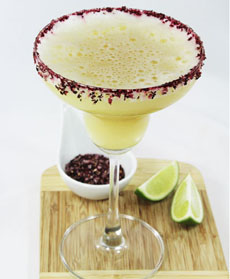
    Depending on which survey you read, the Margarita may be the most popular cocktail in the U.S. There are scores of variations, from Ginger Margarita and Melon Margarita to Frozen Grape Margarita to a Frozen Kiwi Cilantro Margarita.

    For Cinco de Mayo, we’re adding a new Margarita recipe to our repertoire: the Blood Orange Margarita.

    The original Margarita was made with tequila, Cointreau and lime juice. Here’s the story and more Margarita trivia.

    The recipe was developed by Chef Billy at Prepara.com. If you can’t find fresh blood oranges for the purée, look for frozen purée or substitute refrigerated blood orange juice.

    RECIPE #1: BLOOD ORANGE MARGARITA

    Ingredients Per Drink

  • .75 ounce Cointreau
  • .5 ounce tequila
  • 1 ounce blood orange purée (recipe below)
  • .5 ounce lime juice
  • Optional: splash simple syrup
  • Ice cubes
  • Optional: coarse salt or salt-orange zest combination for rim*
  • Garnish: Blood orange wheel or lime wheel
  •   Blood Orange Margarita Recipe
    Toast Cinco de Mayo with a Blood Orange Margarita. Photo courtesy Betty Crocker.
     
    Preparation

    1. PREPARE the optional salt rim. We like to mix 1/3 orange zest with 2/3 salt (zest the orange before squeezing the juice). Dip the rim of the glass into 1/4 inch of water, then twist in a dish of the salt or salt mix to create the rim.

    2. COMBINE all of the ingredients in a shaker. Shake well and strain into a glass with more ice. Garnish as desired and serve.
     
    RECIPE #2: BLOOD ORANGE PURÉE

    Ingredients

  • 4 blood oranges, peeled, segmented and seeded
  • 2 tablespoon simple syrup
  • 1 teaspoon fresh lemon juice
  •  
    Preparation

    1. ADD all ingredients to a blender or food processor and purée. Taste and add more simple syrup and.or lemon juice as desired.
     
    MORE MARGARITA RECIPES


    Comments off

    Dulce De Leche Rice Pudding With Homemade Dulce De Leche


    [1] A ramekin of Dulce De Leche Rice Pudding (photo and recipe © IMUSA USA).


    [2] It’s easy to toast almonds. The instructions are below (photo © Murray’s Cheese).

    Cassia Cinnamon Sticks & Ground
    [3] Garnish the pudding with an optional sprinkle of cinnamon (photo © American Heritage Chocolate).

    A Jar Of Homemade Dulce de Leche
    [4] Dulce de leche can be lighter or darker, based on the length of cooking (photo © Karolina Kolodziejczak | Unsplash).

    dulce-de-leche- audinou-wiki-230
    [5] It may look like chocolate pudding in this photo, but in person, dulce de leche is a deep caramel color (photo Audinou | Wikipedia).


    [6] The longer you cook dulce de leche, the darker it turns and the deeper the flavor (photo © The Heart Of Food [now closed]).

    Dulce De Leche Rice Pudding Recipe
    [7] Use ‘em if you got ‘em—serve pudding in cocktail glasses or wine goblets (photo © Taste Of Home).

    Dulce De Leche Cheesecake
    [8] Make Rice Pudding Cheesecake With Dulce De Leche, with this recipe from Kraft.


    Rice is not native* to Mexico; dulce de leche caramel sauce is.

    Combine them to make a most delicious fusion food: Dulce De Leche Rice Pudding (photo #1).

    It’s a treat for Cinco De Mayo or for any day of the year when your palate calls out for rice pudding. (October 11th is World Dule De Leche Day.)

    And if this sounds good to you, check out photo #8: a rice pudding cheesecake with dulce de leche (the recipe link is in the photo caption).
     
     
    WHAT IS DULCE DE LECHE?

    Dulce de leche (DOOL-say day LETCH-ay) is a sweet, thick milk caramel sauce, prepared by slowly heating a can of sweetened milk until it caramelizes.

    The result is a confection that can be used as a filling or sauce—or eaten from the jar (see photos #4, #5 and #6).

    You can buy dulce de leche in a jar, but it’s easy to make—simply by heating sweetened condensed milk until it caramelizes, as in the recipe below.

    Before the invention of sweetened condensed milk (it was patented by Gail Borden in 1856), dulce de leche was made by more laboriously reducing milk (cow’s or goat’s) with sugar.

    Now it’s easy, so let’s start by making a batch.

    Cajeta is the Mexican word for dulce de leche, and is made with goat’s milk.

    Other Spanish -speaking countries use “dulce de leche.”

    World Dulce de Leche Day is October 11th.
     
     
    RECIPE: HOMEMADE DULCE DE LECHE

    Ingredients For 1-1/4 Cups

  • 1 14-ounce can sweetened condensed milk
  •  
    Preparation

    1. PREHEAT the oven to 425°F with the rack in middle. Pour the sweetened condensed milk into a 9-inch, deep-dish pie plate and cover tightly with foil. Set the pie plate in a roasting pan and add enough hot water to reach halfway up the pie plate.

    2. BAKE for 45 minutes, then check the water level. Add additional water as necessary, and bake another 45 minutes, or until the milk is thickened and brown. Remove the plate from the water bath and cool, uncovered.

    3. REFRIGERATE, tightly covered, until ready to use. It will keep without loss of flavors for up to 2 weeks.
     
    You can also make dulce de leche by boiling the unopened can of sweetened condensed milk in a pot on the stovetop, simmering for 2-3 hours. The oven technique is faster.
     
     
    RECIPE: DULCE DE LECHE RICE PUDDING

    Ingredients

  • 1 cup uncooked rice
  • 4 cups whole milk, divided
  • 2 egg yolks
  • ½ teaspoon vanilla
  • ¼ teaspoon salt
  • 1½ cups dulce de leche
  • Optional garnish: powdered cinnamon
  • Optional garnish: slivered almonds, toasted (instructions below)
  •  
    Preparation

    1. BRING 3 cups of milk to simmer in a small pot over medium heat. Add rice and reduce the heat to a simmer. Cook for 30 minutes, stirring with a wooden spatula every ten minutes.

    2. WHISK the egg yolks, vanilla and salt with the remaining cup of milk and set aside.

    3. SLOWLY MIX the egg yolk mixture into the rice and add the dulce de leche. Continue mixing until the contents come to a simmer and the rice pudding starts to thicken. Remove from heat and pour into individual bowls or ramekins. When ready to serve…
     
    4. GARNISH with cinnamon and almonds.
     
     
    MORE DULCE DE LECHE RECIPES

  • Dulce De Leche Cheesecake
  • Brioche French Toast With Dulce De Leche
  • Dessert Grilled Cheese
  • Dulce De Leche Crêpe Cake
  • Homemade Dulce De Leche
  • Mascarpone Grilled Cheese With Dulce De Leche
  • Noche Bueno Sandwich Cookies
  • Triple Caramel Popcorn Fudge With Dulce De Leche
  •  
     
    HOW TO TOAST ALMONDS

    You can toast slivered or whole almonds in just five minutes, in a regular or toaster oven.

    Toasting gives all nuts a deeper, smoother flavor. Toast 1/2 cup to 1 cup as a garnish.

    If you have leftovers, store them for up to 2 weeks in an airtight container. Use them cereal, on salads and soups, on vegetables, in muffin batter, on frosting, etc.
     
    Preparation

    1. PREHEAT the oven to 350°F. Spread the almonds in a single layer on a cookie sheet or in a roasting pan. Bake for 3-4 minutes; then shake pan to for even browning.watching closely so that they don’t get over-toasted or burn.

    2. RETURN to the oven, checking every minute until the almonds are the desired color. Don’t let them get too dark; they’ll acquire a burnt taste.

    3. REMOVE from oven and immediately pour transfer to a large plate to cool in a single layer (otherwise, the almonds will continue to brown from the carryover heat.

    4. STORE, completely cooled, in an airtight container for up to two weeks.
     
     
    MORE DULCE DE LECHE RECIPES


    > THE HISTORY OF DULCE DE LECHE
     
     
    > THE HISTORY OF RICE PUDDING
     
     
    _______________________

    *Rice has been consumed in China for some 5,000 years. The first documented account of cultivation appears in 2,800 B.C.E. The grain then traveled west: to ancient Greece, from Persia to the Nile Delta, wherever there was the warmth and aquaculture it required. It came to the Western Hemisphere, landing in Charleston, South Carolina, in 1685. [Source]


    Comments off

    The Nibble Webzine Of Food Adventures
    RSS
    Follow by Email


    © Copyright 2005-2026 Lifestyle Direct, Inc. All rights reserved. All images are copyrighted to their respective owners.