THE NIBBLE BLOG: Products, Recipes & Trends In Specialty Foods


Also visit our main website, TheNibble.com.

Drink Pairings For National Clams On The Half Shell Day

Clams On The Half Shell With Chardonnay
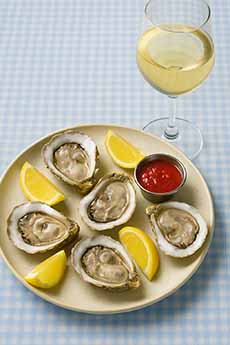
[1] Cherrystone clams on the half shell with a glass of Chardonnay (photo by Chat GPT 2025-03-31).

Clams On The Half Shell
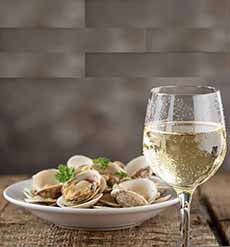
[2] Topneck clams with a glass of sparkling wine (photos #2 and #3 by FLUX 1.1 2025-03-31).

Clams On The Half Shell
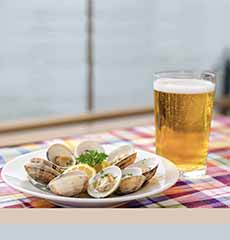
[3] Littleneck clams with a beer.

3 Sizes Of Hardshell Clams
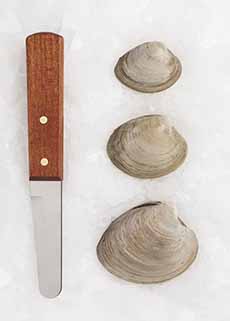
[4] A comparison of some quahog sizes, from the top: littleneck, topneck, and cherrystone. Here’s more about these and other sizes of hard-shell clams (photo © Atlantic Aqua Farms).

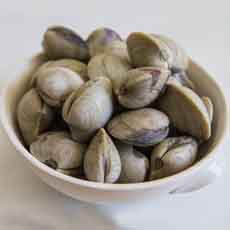
A Bowl Of Littleneck Clams
[5] A bowl of littleneck clams (photos #5 and #8 © Good Eggs).

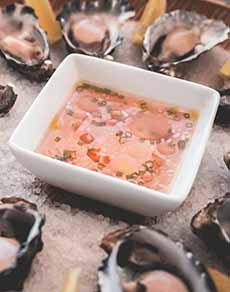
Mignonette Sauce
[6] Mignonette sauce. The recipe is at the right (photo © Lachlan Ross | Pexels).

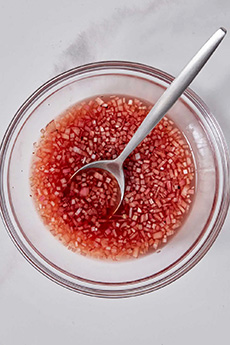
A Glass Dish of  Mignotte Sauce
[7] Here’s another Mignonette sauce recipe, with advice on swapping out the vinegar and the allium (photo © New York Times | Joel Goldberg photographer | Barrett Washburn food stylist).

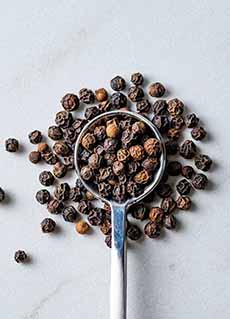
Black Peppercorns
[8] Cracked pepper is an essential ingredient in Mignonette Sauce. If you don’t have a peppermill that can grind them coarsley, see other techniques in the footnote† below (photo © Savory Spice Shop).


We know what we’re having after work today: clams on the half. It’s National Clams On The Half Shell Day, celebrating a plate of raw clams with a squeeze of lemon, mignonette sauce, or cocktail sauce.

We’ve invited neighbors, tasking one with the shucking. The next question coming up: What to drink?

The recommendations that follow also work with oysters on the half shell.

> Below: What types of clams are served on the half shell?

> The different types of clams.

> The history of clams.

> A recipe for Mignonette Sauce (photo #6) is below.

> So are the year’s 60+ fish and seafood holidays.
 
 
1. CLAMS ON THE HALF SHELL WITH WINE

Clams on the half shell pair best with crisp, dry, minerally wines, which complement their brininess.

We’re using the opportunity to have a wine pairing with bottles of:

  • Albariño, a Spanish white with high acidity and stone fruit notes that match the delicate sweetness of clams.
  • Chablis, a mineral-forward, unoaked Chardonnay from Burgundy that enhances the clams’ natural flavors.
  • Champagne or other sparkling wine—the effervescence and acidity pair beautifully with the salinity of the clams (photo #2).
  • Muscadet, a light, dry white from the Loire Valley, with bright acidity and salinity.
  • Sancerre, a crisp Sauvignon Blanc from the Loire Valley with citrus and herbal notes.
  •  
    If you want to keep your dollars in the U.S., try:

  • Albariño from Oregon’s Columbia Valley.
  • Chenin Blanc from Washington.
  • Pinot Gris from Oregon.
  • Riesling from Oregon’s Willamette Valley or New York’s Finger Lakes.
  • Sauvignon Blanc from Napa or Sonoma.
  • Sparkling wines from California, New York Finger Lakes, Oregon Willamette Valley, or Washington State.
  • Unoaked Chardonnay from California’s Santa Barbara or Sonoma Coast areas or from Long Island (photo #1).
  •  
     
    2. CLAMS ON THE HALF SHELL WITH BEER

    If your crowd prefers beer, this is not the time to bring out the a IPA. Instead, choose:

  • Pilsner, crisp and clean, won’t overpower the delicate taste of the clams (photo #3).
  • Saison, a farmhouse ale with a hint of spice and citrus that complements the shellfish.
  • Witbier, the Belgian wheat beer with light citrus and coriander notes that also play well with the clams.
  •  
    > Here’s more about these types of beer.
     
     
    3. CLAMS ON THE HALF SHELL WITH COCKTAILS

    For the cocktail crowd, serve

  • Dry Gin Martini, but not a Dirty Martini—the olive juice can overwhelm the fresh shellfish.
  • Gin & Tonic, refreshing and herbal, a good match for raw seafood.
  • Straight Spirits: aquavit or vodka (including cucumber-infused vodka), chilled or on the rocks—clean and crisp flavors that don’t compete with the clams.
  •  
     
    4. CLAMS ON THE HALF SHELL WITH NON-ALCOHOLIC DRINKS

  • Sparkling water with a big squeeze of fresh lemon or lime.
  • Infused water with cucumbers and/or fresh herbs.
  •  
    Recipes:

  • Cucumber Water
  • Lemon-Cucumber Water
  • Herbal Water
  •  
     
    WHAT TYPE OF CLAMS ARE SERVED ON THE HALF SHELL?

  • Littleneck clams, a small variety of quahog clams (hard-shelled clams, Mercenaria mercenaria), are by far the most common clam served on the half shell in the U.S. They’re small, tender, and sweet with a briny flavor.
  • Cherrystone clams are also quahogs, slightly larger than littlenecks.
  • Topneck clams are a size in-between littlenecks and cherrystones.
  • Manila clams, more available on the West Coast, can be served raw although are more commonly cooked in soups and noodle dishes.
  •  
     
    RECIPE: MIGNONETTE SAUCE FOR CLAMS & OYSTERS

    Ideally make this the day before; or allow two hours for the flavors to blend and the shallots to soften. It will keep in the fridge for months.

    (Of course, if you need to use it ASAP, go right ahead.)

    If you don’t have red wine vinegar, use another fine vinegar: Champagne vinegar, white wine vinegar, even sherry vinegar. You can even use white balsamic vinegar, but steer clear of regular balsamic.

    While we usually don’t use the “optional” ingredients which can mask the delicate bivalve flavors, we include them
     
    Ingredients

  • ½ cup red wine vinegar
  • 2 tablespoons minced shallots
  • ½ teaspoon freshly cracked** (or coarsely ground) black pepper
  • Pinch of salt
  • Optional: pinch of sugar
  • Optional: minced jalapeño or other chili, squeezer of lemon or lime, fine dice of apple (with skin) or cucumber (peeled)
  •  
    Variation

    As an alternative to mignonette, make what we call “Asian chimichurri sauce” with white wine or rice vinegar, minced shallots, minced garlic, and grated ginger, lightly seasoned with salt and pepper.
     
    Preparation

    1. COMBINE all ingredients in a small bowl and whisk to combine.

    2. SET aside at room temperature for 2 hours for the flavors to meld. Then, use or refrigerate.
     
     
    The History Of Mignonette Sauce

    Historically, vinegar-based sauces have been used for centuries to complement seafood. Mignonette sauce originated in France as a condiment for oysters on the half shell, and gained popularity in the 19th century.

    The original was a simple blend of shallots, vinegar, and cracked black pepper. Its sharp, tangy, and slightly spicy flavors was designed compliment the brininess of the oysters.

    Today, variations include additions like citrus juice, herbs, or even a touch of sugar to balance the acidity. Cooks have enhanced the sauce with diced apples, cucumbers, and other fruits.

    The word mignonette comes from the French word mignon, meaning small or delicate.

    In old French cooking, poivre mignonette referred to the cracked or coarsely ground black pepper, which is an essential ingredient in the sauce.
     
    ________________

    **How to crack peppercorns without a coarse grinding setting on your peppermill: Grind them with a mortar and pestle. Or put the peppercorns in a sealed plastic bag and use a rolling pin, heavy pan, meat mallet, or knife blade to crack them. You can also pulse the peppercorns briefly in a coffee grinder or spice grinder.


    THE YEAR’S 60+ FISH & SEAFOOD HOLIDAYS
    January

  • January 10: National Oysters Rockefeller Day
  • January 24: National Lobster Thermidor Day
  • January 25: National Fish Taco Day
  •  
    February

  • February 18: National Crab Stuffed Flounder Day
  •  
    March

  • March 3: Global Omega-3 Day
  • March 7: Friday Fish Fry Day
  • March 8: National Mackerel Day**
  • March 9: National American Paddlefish Day
  • March 12: National Baked Scallops Day
  • March 20: Crawfish Cravers Awareness Day
  • March 25: National Lobster Newburg Day
  • March 31: National Clams On The Half Shell Day
  • Friday after Lent: National Tartar Sauce Day
  •  
    April

  • April 3: Fish Fingers and Custard Day
  • April, 2nd Saturday: National Catch and Release Day
  • April 17: National Crawfish Day
  • April 21: Tuna Rights Day
  •  
    May

  • May 2: World Tuna Day
  • May 10: National Shrimp Day
  • May 16: National Coquilles Saint Jacques Day
  • May 21: World Fish Migration Day
  • May 31: National Fisherfolks Day
  •  
    June

  • June, 1st Friday: National Fish & Chips Day (UK)
  • June, 1st Full Week: National Fishing and Boating Week
  • June 5: International Day for the Fight against Illegal, Unreported and Unregulated Fishing
  • June 15: National Lobster Day
  • June 18: International Sushi Day
  • June 18: National Fishing Day/Go Fishing Day
  • June 25: National Catfish Day
  • June 27: National Women’s Fly Fishing Day
  • June, Last Week: Fish Are Friends, Not Food Week
  • June 29: International Fisherman Day
  • July

  • July, 2nd Friday: National Kebab (Kabob) Day
  • July 18: National Caviar Day
  • July 24: National Fishing Month Begins
  •  
    August

  • August: National Catfish Month
  • August 5: National Oyster Day
  • August 27: Crab Soup Day†
  •  
    September

  • September 25: National Lobster Day
  • September, 4th Saturday: Fish Amnesty Day
  • September, 4th Saturday: National Hunting & Fishing Day
  • September 25: National Lobster Day*
  • September 28: International Poke Day
  •  
    October

  • October: National Pescatarian Month
  • October: National Seafood Month
  • October, 1st Sunday: International Blessings of The Fishing Fleet Day
  • October 2: National Fried Scallops Day
  • October 8: National Salmon Day
  • October 10: Squid and Cuttlefish Day
  • October 12: National Gumbo Day
  • October 15: National Dashi Day
  • October 19: National Seafood Bisque Day
  • October, 3rd Wednesday: National Hagfish Day
  •  
    November

  • November: Virginia Oyster Month
  • November 3: World Jellyfish Day
  • November 21: World Fisheries Day
  • November 24: National Sardines Day
  •  
    December

  • December 14: National Bouillabaisse Day
  • December 21: National French Fried Shrimp Day
  • December 24: Feast Of The Seven Fishes
  •  
    Plus:

  • October 5: National Rocky Mountain Oyster Day
  • ________________
     
    *There are two National Lobster Days. September 25th was designated as National Lobster Day by the United States Senate, recognizing the cultural, economic, and environmental importance of the lobster industry, particularly in Maine. The June 15th date was a pre-existing celebration. Here’s more about it.

    **National Mackerel Day is celebrated on March 8th. In Japan it’s called Saba Day, and focuses on pairing sake with mackerel (saba). Another prominent, celebration is the Berdel Eguna (Mackerel Day) held on April 6th in Mutriku, Spain, a town located on the Bay of Biscay in the Basque Country of northern Spain, to promote the local fishing industry.

    †Crab Soup Day originated in Nicaragua and is also recognized in the U.S. as National Crab Soup Day. In Nicaragua, the day is part of a festival to mark the end of slavery with food, music, and parades. In the U.S., it’s a food-focused holiday for enjoying various types of crab soup, from creamy bisques or hearty chowders.

    ‡Rocky Mountain oysters are a delicacy made from the deep-fried testicles of young bulls (or sometimes other animals like lambs or bison). Popular in the American West and Canada, they often served as an appetizer: skinned, sliced into discs, coated in flour or batter, and fried. The crispy exterior, tender interior and flavor are sometimes compared to chicken nuggets. The name comes from their resemblance to actual fried oysters.


    CHECK OUT WHAT’S HAPPENING ON OUR HOME PAGE, THENIBBLE.COM.


    Comments off

    Bell’s Cookies, Worth Sending For, Plus How To Store Cookies

    One of the great things about Bell’s Cookies, a baker of artisan cookies in Seattle, is that no one will mind if their gift is late.

    The monthly mix of all-natural flavors offer upgrades on the classics plus new flavor combinations. And the whole line is our Top Pick of The Week.

    While there are numerous artisan bakers who make a great chocolate chip, oatmeal, red velvet or snickerdoodle cookie—and yes, Bell’s sells those flavors—we really go out of our way for the flavors with a twist:

  • Chocolate Sesame Halva, eye-opening.
  • Colombian Corn, a personal favorite of both ours and the owners, made with three different types of corn flour (they call it a sweet take on the arepa).
  • The Bell’s, a chocolate chip pecan cookie with toffee and potato chips.
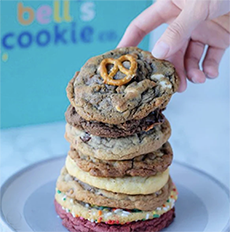
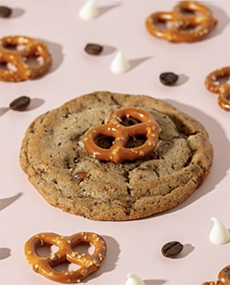
  • The Pantry, white chocolate chunks, toffee, pretzels, and espresso.
  •  
    With our first order in December, we tried the whole shebang: Black Cocoa Crinkle, Chocolate Chunk (sprinkled with Maldon salt), Chocolate Sesame Halva, Christmas Confetti, Colombian Corn, Cookie Butter, Eggnog Snickerdoodle, Ginger Molasses, Peppermint & Cornflake, Pistachio Citrus, Pumpkin Cinnamon Roll, Red Velvet, S’mores, and Vegan Chocolate (which is also gluten-free, made with almond flour).

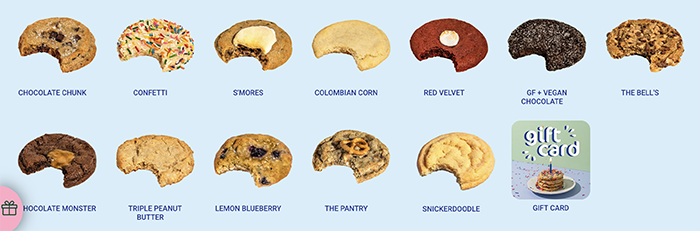
    You can see the current website selection in photo #9 and here: Chocolate Chunk, Chocolate Monster, Columbian Corn, Confetti, Gluten Free & Vegan Chocolate, Lemon Blueberry, Red Velvet, Snickerdoodle, The Bell’s, The Pantry, and Triple Peanut Butter.

    We’re waiting to see what next month will bring. We think we’ll be seeing a special Easter cookie.

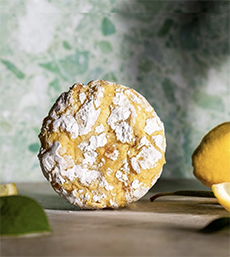
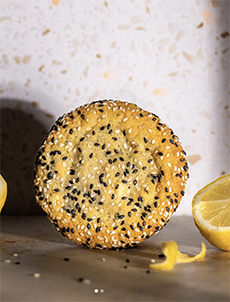
    And we’ve only seen photos of Lemon Crinkle, Sesame Yuzu, and Chocolate-Covered Strawberry on social media. And we want them.

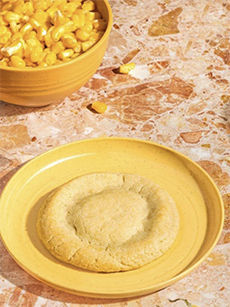
    The most popular flavor is, of course, the Chocolate Chunk, followed, not surprisingly, by Red Velvet. The Colombian Corn (photo #4) takes the bronze. That is a surprise, and you should require no arm-twisting to order some.

    But if you’re a real foodie, skip the familiar and customize a box that includes the more unusual. Our Christmas box contained Chocolate Halva, Colombian Corn, Eggnog Snickerdooddle, Peppermint Cornflake, and Pumpkin Cinnamon Roll, and we fill out the box with other flavors.

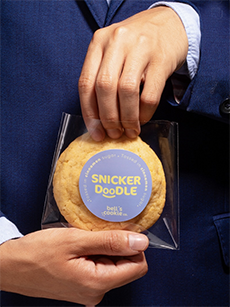
    Each cookie is individually wrapped for freshness (photo #2) and has an ingredients label.

    Bell’s also sells their cookie dough by the pint—but personally, we’d be afraid that the dough would never get to our oven.

    Before we continue, check out:

    > The history of cookies.

    > The 11 basic cookie styles.

    > The different types of cookies: a photo glossary.

    > The year’s 44 cookie holidays.

    > How to keep cookies fresher for longer (below).
     
     
    A BRIEF HISTORY

    Bell’s Cookie Co. was founded in 2020 by husband and wife team Tomas and Brooke Perez, after their catering business was interrupted by the pandemic.

    While adapting to the times, they remembered how much their catering customers loved their cookies.

    They pivoted to focus on those cookies—a treat that always brings a smile to people’s faces, in hard times and good.

    The brand was named after their daughter Isabella, and was a success from the get-go.

  • Seattle Yelp named the bakery the best in the state for cookies, calling them “delicious and gooey.”
  • Numerous other broadcast and online media have named it the city’s top cookie spot.
  • Delta Airlines has selected the cookies to serve on its domestic flights.
  •  
    Our hope is that, while going from producing 20,000 cookies a month to 500,000 cookies to accommodate Delta, there’s still enough love to bake into each bite.

    And a second hope—not in the least way self-serving—that they open a Bell’s Cookies near us.
     
     
    GET YOUR BELL’S COOKIES

    Bell’s has done the hard work by packaging five different assortments of 12 cookies.

    Or, you can customize your own assortment.

    There are subscriptions and gift cards.

    > Head to the Bell’s Cookies website.
     
     
    TIP: HOW TO KEEP YOUR COOKIES FRESHER FOR LONGER

    Let’s say you only like to eat a little at a time. Or that you baked the cookies (or cakes, pies, or breads) more than two days ago.

    Here’s how to extend the life of fresh baked goods, made without preservatives, keeping everything good to the last bite.

    Cookies can go bad due to:

  • Moisture loss (staleness) due to air exposure, which causes the starches to crystallize.
  • Absorbing moisture (sogginess), from humidity in the air.
  • Spoilage from ingredients like dairy (butter, eggs, milk/cream) or fresh (like fruit) that can develop mold or bacteria if left out too long.
  • Oxidation (rancidity) of fats (butter, chocolate, nuts, oil) that go rancid over time.
  •  
    The fridge is not always the solution.

    While keeping cookies in the fridge will forestall bacteria and mold for longer, it also can dry them out (make them stale) much faster.

    In fact, the cold temperature in the fridge accelerates the crystallization of the starch molecules in the flour, which draws moisture out of all baked goods.

    While recipes with custard, cream cheese, or whipped cream should be refrigerated (cheesecake can be frozen), consume them sooner rather than later. But as they have less flour than other cakes, they’ll keep longer.
     
     
    HOW GIVE BAKED GOODS A LONGER SHELF LIFE

    If they’re home baked, let them cool completely before putting them in a container or wrapping. This will stop condensation from building up inside the container, which can make the stored goods soggy.

    Then make them airtight. As soon as they have cooled, store your baked goods in airtight containers. This minimizes their exposure to air, which dries them out.

    Use parchment or wax paper between the layers to absorb the moisture from each layer and prevent sogginess.

    While cookies can be stored in a high quality airtight container at room temperature for several days, cake and cheesecake should be refrigerated.
     
     
    What About Pies?


    Stack Of Bell's Cookies
    [1] Yes, please! The cookie on top is The Pantry, a favorite (all photos © Bell’s Cookies).

    Snickerdoodle Cookie
    [2] Each cookie is individually wrapped with an ingredients label. Pop them right into a gift bag.

    Chocolate Chip & Pretzel Cookie
    [3] We love The Pantry, a white chocolate chunk cookie with toffee, espresso, and a pretzel on top.

    Colombian Corn Cookie
    [4] Don’t overlook Colombian Corn—it may not look glam but it’s the #3 best-seller.

    Lemon Crinkle Cookie
    [5] We’re keeping an eye out for Lemon Crinkle to return.

    Sesame Yuzu Cookies
    [6] Ditto for Sesame Yuzu.

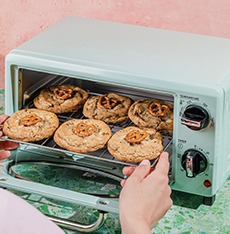
    Cookies Warming In A Toaster Oven
    [7] Bell’s tip: Microwave the cookies 5-15 seconds for gooey, or 3-5 minutes in the toaster oven for chewy. Store leftovers (as if!) in an airtight container for up to 5 days.

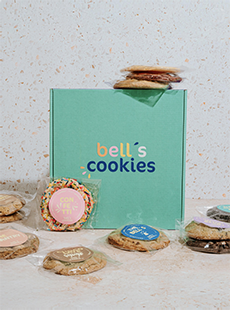
    Box Of Bell's Cookies
    [8] Who wouldn’t love to receive a box of Bell’s Cookies?

  • Fruit pies can be stored at room temperature for up to two days, loosely covered. After that, refrigerate or possibly freeze them*.
  • Custard, cream, and pumpkin pies should always be stored in the fridge, as they contain dairy and eggs that can spoil. (Food trivia: Pumpkin pie is a pumpkin-flavored custard pie.)
  • Pecan pie should also be refrigerated due to its egg content.
  • Store-bought pies should be stored as they were sold: either at room temperature or refrigerated.
  •  
    Thanks to Coupon Mister for some of these tips.
     
     
    Bell's Cookie Flavors
    [9] These flavors were available on the publication date of this article. Whatever is available when you get there, you can’t go wrong with any one of them.
     
    ________________
     
    *Cream/whipped cream, custard, fresh fruit, and meringue pies shouldn’t be frozen. When thawed, the filling can separate or become watery.


    CHECK OUT WHAT’S HAPPENING ON OUR HOME PAGE, THENIBBLE.COM.


    Comments off

    Baked Gnocchi Recipe & The Differences Between Pasta & Noodles

    We love the 29th of the month—any month—because it’s National Gnocchi Day.

    While the U.S. celebrates 14 pasta holidays, gnocchi is not one of them.

    However, the 29th of every month is National Gnocchi Day in Argentina. We have no problem with that whatsoever!

    Our gnocchi recipe this month is Gnocchi alla Sorrentina, which hails from the charming coastal town of Sorrento in southwestern Italy, on the Bay of Naples.

    Below:

    > The recipe is below.

    > The difference between pasta and noodles.

    > Is gnocchi pasta or noodles?

    Elsewhere on The Nibble:

    > 14 more gnocchi recipes.

    > The history of gnocchi.

    > The origin of Gnocchi Day in Argentina.

    > The history of pasta.

    > The different types of pasta: a glossary.

    > The year’s 20 pasta holidays.
     
     
    WHAT IS “ALLA SORRENTINA”

    “Sorrentina” refers to the style of cuisine popular in the area around Sorrento, highlighting local fresh ingredients: tomatoes, basil, olive oil, and mozzarella, often with a simple yet bold flavorful preparation that makes Italian cooking so good.

    The best-known recipe may be Gnocchi alla Sorrentina, a classic dish of potato gnocchi baked in a rich tomato sauce with mozzarella and basil, baked until the top is golden and bubbly. It’s typically prepared in a terracotta dish.

    Terracotta cookware (pignatta or tegame di terracotta) has been used for centuries in southern Italian cooking. It’s more affordable than metal, but also retains and distributes heat evenly, allowing for slow, even baking and keeping the dish warm after it comes out of the oven.

    Other popular dishes from the area, topped with tomato sauce, mozzarella, and basil, and then baked, include:

  • Branzino alla Sorrentina, sea bass baked with cherry tomatoes, basil, olive oil, and sometimes mozzarella.
  • Melanzane alla Sorrentina, a variation of Eggplant Parmesan with tomato sauce, mozzarella, and basil but with fewer layers, and often garnished with roasted or fried eggplant.
  • Paccheri alla Sorrentina, large tube-shaped pasta (paccheri) that are sometimes baked with tomato sauce, mozzarella, and basil, and other times boiled conventionally and sauced on a plate.
  • Pollo alla Sorrentina, chicken breast or cutlets topped with tomato sauce, mozzarella, and basil (similar to Chicken Parmigiana but without breading).
  • Risotto alla Sorrentina, a creamy tomato-based risotto with melted mozzarella stirred in at the end for a rich, cheesy finish.
  •  
     
    ARE GNOCCHI PASTA?

    Good question! While gnocchi* are technically dumplings, they are listed on menus with the pasta because they are prepared in a similar way (boiled, baked) and served with similar sauces.

  • Traditional pasta is made from wheat flour, water, and sometimes eggs, while gnocchi are usually made from potatoes, flour, and sometimes eggs.
  • Pasta is often served al dente. The texture of gnocchi is also softer and more dumpling-like compared to traditional pasta.
  •  
    > See the difference between pasta and noodles below.
     
     
    RECIPE: GNOCCHI ALLA SORRENTINA

    Make this dish with store-bought gnocchi. You can even use store-bought sauce, but the sauce in this recipe takes just 5 minutes to prepare, and is so much tastier than anything store-bought.

    You can make the sauce ahead of time up to 3 days in advance and refrigerate; or make it as far in advnace as you like and freeze it. Heat it to a simmer before adding it to the baking dish.

    Prep time is 5 minutes and cook time is 40 minutes.

    You can use fresh gnocchi, which will cut the cooking time. Fresh gnocchi cook in 1 to 3 minutes. Dried gnocchi usually take 8 to 10 minutes. Either is ready when the gnocchi float to the surface.
     
    Ingredients For 4-6 Servings

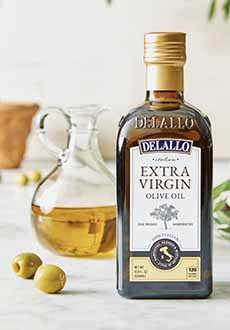
  • 2 tablespoons extra virgin olive oil, plus more for coating
  • 2 cloves garlic, minced
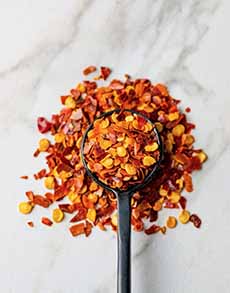
  • ¼ teaspoon dried red pepper flakes
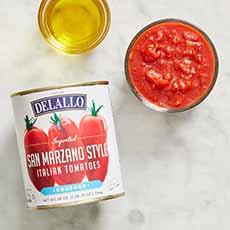
  • 1 can (28 ounces) San Marzano-style crushed tomatoes
  • Sea salt
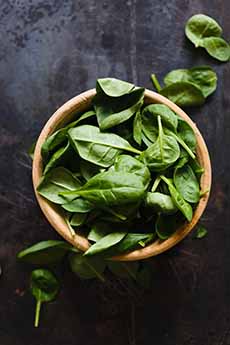
  • 2 sprigs basil
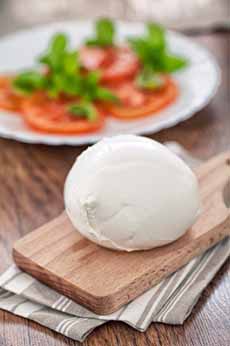
  • 1 ball (8 ounces) mozzarella, torn into pieces
  • 1 box (16 ounces) potato gnocchi (or any other gnocchi—ricotta, pumpkin, etc)
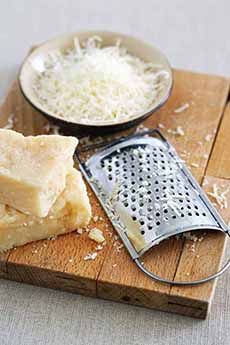
  • 1/2 to 1/3 cup freshly grated Parmigiano-Reggiano
  • Optional garnish: more red pepper flakes for heat, fresh herbs for brightness (basil, oregano, parsley, thyme)
  •  
    Preparation

    1. HEAT the EVOO in a sauté pan over medium heat. Add the garlic and cook until it begins to sizzle and release its fragrance. Stir in the red pepper flakes, then add the tomatoes and a pinch of salt.

    2. BRING the sauce to a boil, then lower the heat to medium-low. Let the sauce simmer gently until thickened and flavorful, 20 to 30 minutes.

    3. TEAR up 1/3 to 1/2 cup of basil leaves (we julienne them) and stir them into the sauce. Cover the pot to keep the sauce warm.

    4. PREHEAT the oven to 400°F. Coat a large oven-proof baking dish in a thin layer of olive oil. Spoon a ladle full of sauce into the dish.

    5. COOK the gnocchi. Bring a large pot of water to a rolling boil and season with salt. Once boiling, cook the gnocchi according to package instructions.

    6. DRAIN the gnocchi and transfer half to the baking dish. Spoon a layer of sauce on top and sprinkle with half of the mozzarella.

    7. ADD the remaining gnocchi to the baking dish. Spoon more sauce on top and scatter on the remaining mozzarella. Finish with a layer of sauce and sprinkle with 1/3 cup of grated Parmigiano cheese.

    8. BAKE for 5-8 minutes, until the sauce is just bubbly and the cheese is melted. If you want to brown the top, slide the baking dish under the broiler for 1-2 minutes.

    9. GARNISH as desired when the dish comes out of the oven, and serve hot. We prefer a little green color, via a few whole basil leaves.
     
    Variations

  • Add sausage or pancetta in layers in the baking dish.
  • Add color: a drizzle of pesto sauce on top of the layered dish.
  •  
     
    SINGING ABOUT SORRENTO

    Perched atop cliffs that separate the town from its busy marinas, Sorrento is a sun-soaked paradise known for dazzling water views and Mount Vesuvius in the distance. No wonder everyone who visits wants to return.

    So we couldn’t close without offering you a few of the many variations of the famous song, “Torna a Surriento”:

  • Andrea Boccelli
  • Jonas Kaufmann
  • Mario Lanza
  • Dean Martin
  • Luciano Pavarotti
  • Frank Sinatra
  •  
    We’ve love them all, but we’ve chosen our favorite artist for this particular song‡. Who’s yours?

    By the way: You may see the song title using “Surriento” instead of Sorrento. That’s because it’s written in the Neapolitan dialect, which differs from standard Italian.
     
     
    THE DIFFERENCE BETWEEN PASTA & NOODLES

    Pasta and noodles are similar foods with key differences in ingredients, preparation, and cultural origins. While there’s some overlap between the categories (some uncooked varieties Asian wheat noodles can look similar to pasta), they represent distinct culinary traditions with different preparation methods, serving styles, and flavor profiles.

    Here are some comparisons of Chinese noodles and pasta:

  • Mai fun uses thin, round rice noodles that are often labeled as rice vermicelli.
  • Hor fun rice noodles used for chow fun look similar to fettuccine.
  • In terms of wheat noodles, those used for lo mein and chow mein look like spaghetti and spaghettini. Udon is thicker Japanese noodle, like spaghettoni. These Asian noodles are made with wheat flour and egg, just like pasta.
  • However, Chinese noodles are stir-fried, whereas their pasta counterparts are boiled. Japanese udon are boiled.
  • Another difference is that while pasta is made by rolling and then slicing the dough, Asian wheat noodles are made by pulling and stretching the noodles. As a result they differ in their texture and consistency: springier and bouncier than their pasta counterparts.
  •  
     
    More Differences

  • Origin: Pasta originated in Italy and is associated with Italian cuisine. Noodles originated in China and Found in many Asian cuisines, such as Chinese (lo mein, chow mein), Japanese (ramen, soba, udon), and Thai (pad Thai).
  • Noodles are believed to have originated in China more than 4,000 years ago.
  • There are of course European noodles that are non-Italian. We’ll get to them in the next section.
  • Ingredients: Pasta is made from durum wheat semolina, water, and sometimes eggs and salt. Asian noodles are made from various flours (wheat, rice, buckwheat), or starches (potato, mung bean) and wheat noodles sometimes use salt. Rice and starch noodles do not use it. Ramen use a special alkalin salts (kansui) to increase the pH of dough and makes the noodles firm and chewy texture with a yellowish hue.
  • Shape: Pasta is made in hundreds of shapes (see some of them here in our Pasta Glossary), Asian noodles are usually long, flat, thin strands or ribbons
  • Cooking method: Pasta is usually boiled until al dente or baked. Asian noodles used in soup are boiled but other preparations are stir-fried or deep-fried.
  •  
     
    What About Pasta Vs. European Noodles?

  • Etymology: “Pasta” comes directly from the Latin pasta, which means dough or paste, itself derived from the Greek pástē, meaning barley porridge or dough mixed with sauce. In modern Italian, pasta specifically refers to the wheat-based dough.
  • “Noodle” derives from the German Nudel, a word which first appeared in the 18th century. The existence of of noodles, however, predates then: Noodles first appeared in German cuisine during the Middle Ages, likely around the 13th or 14th century, influenced by Italian pasta, which was introduced through trade routes. The noodles were called by different names in different dialects, for example, Knöpfle, Mus, Teigwaren, and Träsh.
  •  
    Some examples of non-Italian noodle dishes, all made from wheat flour and sometimes egg, with water or milk:

  • Finland’s Finska Makaronilåda, macaroni casserole, is made with elbow macaroni, ground meat, eggs, and milk, then baked. A dish from older times is klubbnudlar, Swedish dumpling noodles, which were small boiled wheat noodles or dumpling-like pasta served in soups and stews.
  • France, through influence of its western border with Germany, serves up buttered noodles (nouilles à l’Alsacienne), noodle soup (soupe aux nouilles), noodles in cream sauce (pâtes d’Alsace) or as a side with with choucroute, and gratin de nouilles, a noodle casserole of egg noodles baked with cheese, cream, and sometimes ham, especially in Alsace.
  • Germany’s famous noodle dish is Spätzle, as a side, a main dish, or in soups. Eiernudeln is the general term for egg-rich German noodles, often served with gravy-heavy meat dishes. There are also Bandnudeln, wide egg noodles, similar to tagliatelle; Fleckerl, small, square noodles; Hörnchen Nudeln, curved, tubular noodles similar to elbow macaroni; Knöpfle, a smaller and rounder version of Spätzle; Maultaschen, large, square-shaped stuffed noodles similar to ravioli; and Schupfnudeln, thick, long potato-flour noodles, among others. Each has their own traditional preparation. For example, Gaisburger Marsch is a hearty Swabian beef stew with Spätzle or other noodles, potatoes, and beef broth. For dessert there’s Dampfnudeln (sweet noodle dumplings) made from yeasted dough, steamed or baked, and often served with vanilla sauce.
  • Hungary has nokedli, similar to Spätzle.
  • Jewish egg noodles (lokshen) are used in both savory and sweet dishes.
  • Portugal’a cuisine includes noodle soup (sopa de massa), a seafood stew with noodles (massada de peixe), and aletria, a sweet vermicelli pudding.
  • Russia has lapsha soup noodles, buttered noodles served with meat, and pelmeni (which are technically dumplings like gnocchi). There’s also kotlety s lapshoy, a Soviet-era meal of fried meat patties with buttered egg noodles.
  • Spain has fideuà, a dish similar to paella but made with short, thin noodles instead of rice, as well as noodle soup and canelones—Catalan cannelloni.
  • The U.K. makes Victorian noodle soup, Lancashire buttered noodles, and vermicelli pudding.
  • The U.S. is a happy melting pot of everything.
  •  
     
    So, Is Gnocchi Pasta or Noodles?

    A rule of thumb:

  • If it’s Italian-style, durum wheat-based, and shaped into firm forms, call it pasta.
  • If it’s soft, egg-heavy, or made from other grains or starches, call it noodles.
  •  
     
    When Did “Noodles” & “Macaroni” Become “Pasta” In The U.S.?

    In the 18th century and beyond, the term “noodles” appeared with German immigrants, who arrived in the U.S. much earlier than Italians.

  • The first significant wave of German immigrants arrived in the 18th century, and peaked during 1840s to 1880s.
  • The wave of Italian immigrants began in the late 1800s, with a peak from the 1880s to the 1920s.
  •  
    In the early to mid-20th century, “noodles” was a catch-all term for most types of Italian pasta, including macaroni.

  • Kraft Macaroni & Cheese, introduced in 1937, established the term “macaroni” for elbow macaroni.
  • While “spaghetti” was a standard in Italian restaurants, those tended to be in cities with big Italian populations. But in the 1920s and 1930s companies like Franco-American began to market canned spaghetti, making the term familiar nationwide.
  • Everything else was still “noodles.”
  •  

    Baked Gnocchi
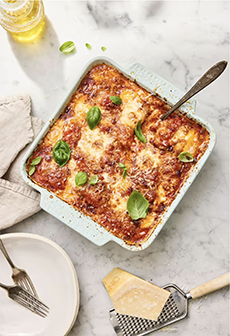
    [1] Gnocchi alla Sorrentina. The recipe is below (all photos © DeLallo except as noted).

    A Box Of Delallo Gnocchi
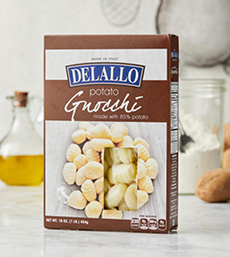
    [2] You can pick up gnocchi just about anywhere. These are potato gnocchi, the most common and traditional type, made with boiled potatoes, flour, and sometimes egg.

    Package Of Cheese Gnocchi
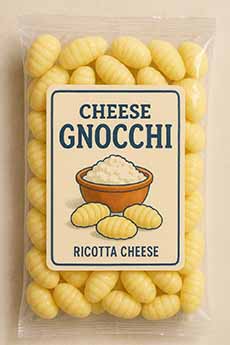
    [3] You can also use cheese gnoccchi, made with ricotta cheese instead of potatoes, giving it a lighter texture. You can also find (or make) beets, carrots, pumpkin, and spinach gnocchi, among others (photo by ChatGPT 2025-03-29).

    DeLallo Olive Oil Bottle
    [4] Start with sautéing the garlic in a pan with olive oil.

    A Spoon Of Crushed Red Pepper Flakes
    [5] Add some red pepper flakes for a light layer of flavor (photo © Savory Spice Shop).

    Can Of San Marzano Tomatoes
    [6] Next, open a can of San Marzano tomatoes and pop them into the pan.

    Fresh Basil Leaves In A Bowl
    [7] Tear up fresh basil leaves and add them to the pan (photo CC0 Public Domain).

    Ball Of Mozzarella
    [8] Combine the sauce and cooked gnocchi in a baking pan with mozzarella (photo © Svario Photo | Panther Media).

    Grated Parmesan Cheese
    [9] When the dish comes out of the oven, pass the wedge of Parmigiano and the grater so people can add as much (or as little) as they wish (photo © London Deposit | Panther Media).

    Sheet Pan Gnocchi
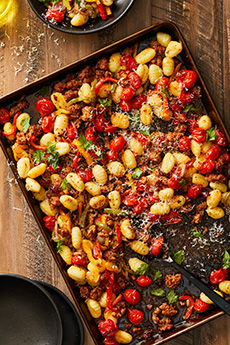
    [10] Sheet Pan Gnocchi With Sausage & Peppers. Here’s the recipe.

    Gnocchi Mac & Cheese For National Gnocchi Day
    [11] Mac & Cheese Gnocchi. Here’s the recipe.

    Chicken Parm With Gnocchi
    [12] Baked Chicken Parm With Gnocchi. Here’s the recipe.

    A Bowl Of Gnocchi Potato Salad
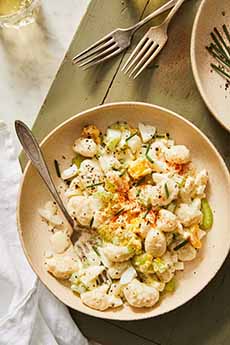
    [13] Gnocchi potato salad—no potatoes, just potato gnocchi. Here’s the recipe.

    Gnocchi With Kielbasa & Cabbage For National Gnocchi Day
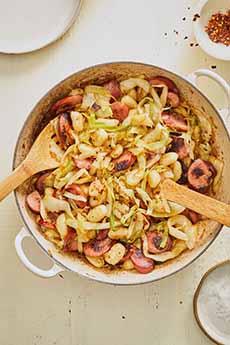
    [14] Italian-Polish fusion: Gnocchi With Kielbasa & Cabbage. Here’s the recipe.

     
    At the end of 1945, Americans returning home from soldiering in Italy brought back a taste for spaghetti. It became a popular, affordable, easy-to-prepare favorite with adults and children alike.

    In the 1960s, with jet travel, more Americans traveled abroad and partook of European cuisines. More imported foods became available and we discovered many cuts of pasta besides spaghetti and macaroni. Among the emergent foodies, “pasta” became the new word.

    From the 1980s to the present, food culture shifted toward a more globalized vocabulary. While macaroni and cheese may now be made with myriad shapes of pasta, it is still “macaroni,” with “pasta” the generic for Italian varieties.

    Thanks to Chat GPT for much of this background.
     
    ________________
     
    *The singular form of gnocchi in Italian is gnocco. In English, people rarely use the singular form—similar to spaghetti, the singular of which is spaghetto.

    †The Chinese word for noodles: During the Han Dynasty (206 B.C.E.-220 C.E.), references to noodle-like foods used the term “bing,” which referred broadly to wheat-based dough products, including flatbreads and early noodles.

    By the Tang Dynasty (618–907 C.E.), the term “mian” became more common for wheat-based foods, specifically referring to noodles. The modern word is miàn in Mandarin Chinese.

    The earliest direct reference to noodles in Chinese literature appears in the Eastern Han Dynasty (25–220 C.E.). They mention “soup cakes,” likely referring to boiled strands of dough resembling modern noodles [source: ChatGPT 2025-03-24].

    ‡Pavarotti.

    ‡‡Examples of deep fried noodle dishes:
    >Chinese: Crispy Chow Mein, Crispy Ee-Fu Noodles (Yee Mee), Hong Kong Style Crispy Noodles.
    >Japanese: Kakiage Soba/Udon, Sara Udon.
    >Malaysian/Singaporean: Crispy Hokkien Mee, Yee Mee Goreng Rangup.
    >Thai: Mee Krob, Pad Thai Krob.
    >Vietnamese: Bánh Hỏi Chiên Phồng, Mì Xào Giòn (Crispy Fried Noodles).
     

    CHECK OUT WHAT’S HAPPENING ON OUR HOME PAGE, THENIBBLE.COM.


    Comments off


    © Copyright 2005-2026 Lifestyle Direct, Inc. All rights reserved. All images are copyrighted to their respective owners.