THE NIBBLE BLOG: Products, Recipes & Trends In Specialty Foods


Also visit our main website, TheNibble.com.

Hooray Bacon: Vegan Bacon That’s A Delicious Substitute For Pork Bacon


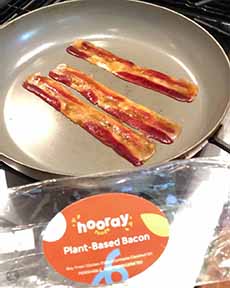
[1] Hooray plant-based bacon (all photos © Hooray Foods).


[2] Brussels sprouts with Hooray vegan bacon. Here’s the recipe.


[3] Hooray sizzles in the pan like conventional bacon.

Pigs In Blankets With Vegan Bacon
[4] Vegan pigs in blankets.


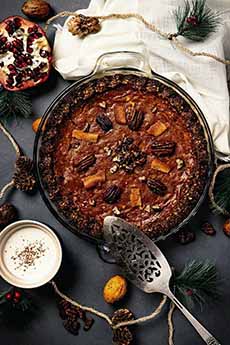
[5] For dessert: pecan pie with caramelized bacon. Here’s the recipe.


Bacon, and pork in general, have been very popular meats since the first wild pig was captured and cooked over a smoky fire.

Pigs were domesticated as early as 9000 B.C.E., although the modern bacon we know and love wouldn’t appear until the mid-1700s.

Check out the history of bacon.

Today, more than 70 million pigs are in the bacon production pipeline in the U.S. alone.

At the same time, plant-based alternatives to meat and dairy are growing full blast, with an estimated market value of $140 billion by 2029 [source].

Vegan bacon alone spiked 113% last year [source].

Many companies have been making plant-based ‘meats’ that mimic the real thing: vegan foods that cook like meat, smell like meat, and, most importantly, taste like meat.

Beyond Meat and Impossible Foods have introduced consumers to plant-based burgers that are as satisfying as meat-based burgers.

Now, there’s a delicious vegan bacon brand to put on a vegan bacon cheeseburger…and many more foods.
 
 
HOORAY FOODS VEGAN BACON

The goal at Hooray Foods was to mimic the cooking and eating experience of pork bacon.

Hooray Foods’ plant-based bacon is minimally processed and made with a mix of salty and smoky flavors with a hint of sweetness.

There are other plant-based bacon substitutes, each with somewhat different flavors and textures.

The one that Whole Foods selected for its refrigerator case is the vegan bacon from Hooray Foods.

The roll-out started with 300 stores in seven regions. If it’s not in your store, ask the manager to bring it in.

The magic mix of clean ingredients includes coconut oil, rice flour, tapioca starch, liquid smoke, umami seasoning (shiitake mushrooms, salt, mushroom extract, calcium carbonate), maple syrup, salt and beet juice concentrate.

That may sound simple enough, but it takes a whole lot of testing to come up with the right recipe.

After tons of experimenting, Hooray Foods’ vegan product looks a lot like bacon, sizzles in the pan like bacon, delivers the aroma of cooking bacon, and tastes like bacon.

And for those of us who don’t like dealing with the leftover bacon fat from pork bacon, Hooray leaves behind some coconut oil that is much more pleasant to deal with. It’s a nice bonus.
 
 
THE BENEFITS OF VEGAN BACON

Vegan bacon (and other vegan meat and dairy products) are better for:

  • Personal health and diet.
  • The environment.
  • Animal welfare.
  • A cleaner planet, reducing carbon emissions by more than 80%.
  •  
    Hooray Foods’ plant-based bacon is allergen-free (no soy or wheat), cholesterol-free, dairy-free, gluten-free, non-GMO, soy-free and of course, meat-free. (It is not currently certified kosher or halal.)

    It’s guilt-free bacon that makes you want to say…Hooray!
     
     
    HOW TO START ENJOYING PLANT-BASED BACON

    You can cook with it for every meal of the day, including dessert (photo #5) and sweet snacks like bacon donuts and candied bacon.

  • Breakfast eggs and avocado toast
  • Grain dishes
  • Loaded baked potatoes and other potato dishes
  • Pasta and pizza
  • Mac & cheese
  • Soup and salad garnish
  • Vegetable dishes like Brussels sprouts and the entire cruciferous* group
  • Veggieburgers and ‘cheese’ burgers
  • Your favorite sandwiches, including a BLT
  •  
     
    DISCOVER MORE AT HOORAYFOODS.COM.

     
    ________________

    *The botanical family Brassicaceae, includes what has become known as the “brassicas”: arugula, bok choy, broccoli, Brussels sprouts, cabbage, cauliflower, collard greens, kale, horseradish, mizuna, mustard greens, radishes, rutabaga, turnips, wasabi, watercress, and other vegetables. Beyond the nutrition they deliver, brassicas are superfoods: nutritional powerhouses packed with potent, cancer-fighting phytonutrients (antioxidants).


    CHECK OUT WHAT’S HAPPENING ON OUR HOME PAGE, THENIBBLE.COM.


    Comments off

    Bubble Tea Cocktail Recipe For National Bubble Tea Day

    We couldn’t make this bubble tea cocktail in time for National Bubble Tea Day, April 30th. But by the time this weekend rolled around, we managed to acquire the boba (the tapioca pearls that make bubble tea) and made the sake simple syrup to put together the cocktail. As a fan of bubble tea, we were excited to try an alcoholic version, so we thank the mixologists at Kikori Whiskey for the recipe.

    Kikori is a smooth rice whiskey made with locally grown rice, distilled, aged, blended and bottled in Kumamoto, Japan.

    The light, balanced notes of Kikori whiskey add a rich flavor to the creamy and fruity profile of this tasty cocktail, made fun with the addition of boba.

    Boba are tapioca pearls—the bubbles in bubble tea. They have a chewy, fun, gummy texture and can be used not just in bubble tea and related cocktails, but in iced coffee, milk, smoothies and other cold drinks; and as toppings for ice cream, pudding and other desserts; even as a topping for pancakes.
     
     
    RECIPE: STRAWBERRY BOBA FIZZ, A BUBBLE TEA COCKTAIL

    You’ll need to gather specialty ingredients for this cocktail (photo #1). You can get the boba (tapioca pearls) and the Calpico / Calpis soft drink online (see photo #5 and its caption), a Japanese non-carbonated soft drink that is light, somewhat milky.

    It’s similar to plain or vanilla-flavored yogurt or Yakult†, which you can substitute.

    It is available on Amazon; and here’s a recipe to make your own.

    We actually substituted Lifeway kefir.

    We also had an open bottle of nigori (cloudy) sake, and used it rather than purchase a bottle of the possibly more elegant sayuri nigori sake. Since it was being sweetened with sugar, we opined that the difference wouldn’t be noticeable.

    Note that when buying boba, look for the instant variety; otherwise, you’ll have to cook them for 12-15 minutes.

    It’s important that you properly store the boba, so they don’t lose their flavor and chewy texture. Here’s more about working with boba.

    Ingredients Per Drink

  • 1.5 ounce Kikori whiskey (photo #2—substitute Irish whiskey)
  • 1 ounce sayuri‡ nigori sake syrup (see below)
  • 1/4 ounce lemon juice
  • 1 ounce full fat coconut milk
  • 1 egg white
  • 2 strawberries plus 1 for garnish
  • Boba (tapioca pearls), reconstituted (1/4 cup or more)
  • Calpico Original Flavor soft drink, as needed depending on size of glass
  •  
    For The Sake Syrup

    Mix until dissolved:

  • 2 parts sayuri nigori sake (photo #3)
  • 1 part superfine sugar
  •  
    Preparation

    1. MAKE the sake syrup. If you are making several drinks, multiply the amount specified above.

    2. ADD the boba to the bottom of a tall glass.

    3. MUDDLE the strawberries thoroughly in the bottom of a shaker. Add the Kikori, sake syrup, lemon juice, coconut milk and egg white.

    4. ADD the ice to the shaker and shake vigorously.

    5. Strain through a double strainer, throw away the ice and then pour back the drink into the shaker. Vigorously re-shake without ice for another minute or two.

    6. POUR the contents into the glass over the boba and let them sit for ten seconds.

    7. SLOWLY POUR the Calpico soft drink into the center of the cocktail to create the foam on top.

    8. GARNISH the glass rim with a notched strawberry. Serve with wide boba straws or a long spoon to scoop up the boba.
     
     
    > THE HISTORY OF COCKTAILS

    > THE HISTORY OF BUBBLE TEA

    > THE HISTORY OF WHISKEY

    > THE HISTORY OF SAKE
     
     
    ABOUT KIKORI WHISKEY

    Kikori Whiskey is a smooth, 100% rice whiskey made in Japan with rice that’s grown in ancient rice paddies in Kumamoto Prefecture (the same region made famous in the U.S. for its Kumamoto oysters).

    Whiskey made from rice is as distinctive in its own way as whiskey made from corn (like Bourbon) to whiskey made from malted barley wheat blends (Scotch, Irish whiskey) or rye (such as Jack Daniels).

    Kikori is distilled to 82 proof and aged in American oak, French Limousin and sherry barrels, anywhere from three to ten years. It is blended and bottled, all in Kumamoto, Japan.

    As a result of its base of white rice, the whiskey is lighter in color than those made from other grains. But that doesn’t mean it lacks punch and flavor: There are plenty in this nuanced spirit.

    You can enjoy Kikori straight, in a classic cocktail or in an Asian fusion drink. You can even enjoy it with shellfish, in raw or cooked dishes.

    Kikora won a gold metal at the 2016 San Francisco World Spirits Competition. Its logo is a woodsman from a Japanese folktale that urges people to find balance in their lives.


    [1] Take your enjoyment of bubble tea one step further, with a bubble tea cocktail (photos #1 and #2 © Kikori Whiskey).


    [2] Kikori whiskey is distilled from rice grown in ancient paddies in Japan. Use rice whiskey the same way you would any whiskey.


    [3] Hakutsuru Sayuri Nigori is a brand of sayuri nigori‡ used in this recipe (photo © Takusan).


    [4] Instant boba. These and other brands and sizes are available on Amazon (photo © J Way Local Flavor Store).


    [5] Calpis, often seen in English as the brand Calpico noncarbonated soft drink tastes a bit tart and milky, like kefir. Developed in 1904, the brand is now owned by Asahi Breweries, which has developed flavored and carbonated varieties (photo © Calpis).

     
    ________________

    *Most boba are sold dehydrated, and need to be rehydrated.

    †Yakult is a probiotic, cultured dairy beverage, similar to kefir and other yogurt-based beverages but made with a different bacteria culture. It has a citrus flavor (it contains flavorings and sugar).

    ‡Nigormeans “cloudy sake” in Japanese. It is a style rather than a classification; there is a wide range of textures and sweetness among nigori sakes. The cloudiness comes from rice solids (the lees) suspended in the sake. Nigori is technically not unfiltered. Rather, it is coarsely pressed (sake undergoes both pressing and filtration). Sayuri, which means “little lily” in Japanese, is a style of soft, floral-note nigori with hints of white grape and cherry blossom. We like to pair nigori sake with spicy foods, sushi and raw seafood (clams, oysters, scallops, etc.), and chocolate desserts.


    Comments off

    Burnt Ends With BBQ Sauce, For National Barbecue Month


    [1] Maker’s Mark Burnt Ends barbecued brisket (photos #1, #2 and #3 © Sam’s Club).


    [2] A popular way to serve burnt ends.


    [3] A two-pound package is $19.98.

    Homemade White Cabbage and Carrot Coleslaw
    [4] Be sure to include a side of coleslaw (photo © Ildi | Panther Media)…

    Homemade Baked Beans
    [5] …and baked beans. Here’s the recipe (photo © Delallo).


    [6] Add the burnt ends to a salad (here’s the recipe from Cooking Chew).


    [7] A brisket from Double R Ranch. Brisket is a cut from the breast or lower chest of the steer. (photo © D’Artagnan).


    May is National Barbecue Month. Spell it barbecue, barbeque or the abbreviated BBQ‡, it’s a mandate to help yourself to some juicy grilled meat.

    As an apartment dweller with neither grill nor smoker (nor yard!), we’d love to enjoy an occasional barbecue dinner at home. Our only option instead was a BBQ restaurant. Until now.

    > Maker’s Mark Burnt Ends and how to enjoy them.

    > The history of barbecue.

    > The history of Kansas City barbecue.

    Elsewhere on The Nibble:

    > BBQ, barbecue, or barbeque?

    > Recipe: Pineapple Rum BBQ Sauce.

    > The different types of barbecue sauce.

    > More barbecue sauce recipes.

    > The different cuts of pork, a photo glossary.

    > The history of barbecue, which dates to prehistory.> The history of the pig.

    > The year’s 24 pork holidays.
     
     
    MAKER’S MARK BURNT ENDS

    Sam’s Club’s Member’s Mark brand has recently introduced Burnt Ends, a Kansas-City style barbecued pork ends. (There’s more about the style and history of Kansas City Barbecue below, preceded by barbecue since the dawn of mankind.)

    You need neither grill nor smoker to enjoy this tasty barbecue: fully cooked, ready to heat and eat.

    What are burnt ends? They’re pieces of the crusty outer edges of a smoked brisket: a fatty, flavorful meat cut that’s juicy and tender on the inside (nothing is actually burned).

    Burnt ends are a hot cut in Kansas City, and Sam’s Club jumped on the trend. For Maker’s Mark, seasoned morsels of bite-size beef brisket are slow-smoked for 10 hours with a brown sugar and coffee rub.

    A package of classic tomato based Kansas City-style barbecue sauce is included with the two-pound package of beef. It’s the easiest way to enjoy smoky, crispy, tender little nuggets of barbecue at home—for $19.98, just 62 cents per ounce.

    The Member’s Mark Burnt Ends were developed for Sam’s Club by a four-time world champion pitmaster, Todd Johns of Plowboys Barbeque in Kansas City.

    The result: the highest-quality, most delicious, Kansas City-authentic product for Sam’s Club Members to enjoy. (Here’s a video showing how).

    The development team did such a good job, that Burnt Ends earned a seal of approval from The Kansas City Barbeque Society (and a two-thumbs-up from THE NIBBLE).
     

    HOW TO ENJOY BURNT ENDS BARBECUE MORSELS

  • Appetizers: Serve them on a platter with picks.
  • Sandwiches: On burger or hero rolls, with baked beans and coleslaw (photo #2).
  • Nachos or Cheese Fries: With cheese sauce, sour cream and jalapeños.
  • Main Course: Serve plated with mashed potatoes or fries. Don’t forget the baked beans and coleslaw! (photo #1).
  • Potatoes: Top baked potatoes or mashed potatoes.
  • Salad: Add burnt ends atop or to the side of your favorite salad ingredients (consider ranch or blue cheese dressing—photo #6).
  • Your Creative Idea: Add the barbecued bites to anything from cooked greens (collards, kale, spinach) and other vegetables (Brussels sprouts, green beans) to mac and cheese, rice and pasta.
  •  
     
    THE HISTORY OF BARBECUE

    While drying meat in the sun is the oldest method of preserving it (it creates jerky), a smoky fire keeps insects away from the meat, further helping in the preservation.

    About about 1.8 million years ago, Homo erectus, an predecessor of Homo sapiens (that’s us!) discovered how to make fire and began cooking their meat over or on it. They dug a pit for the wood or other fuel, and cooked over the fire.

    Homo erectus emerged 1.5 to 1.9 million years ago. By the time Homo sapiens emerged some 315,000 years ago, man had been enjoying barbecue and jerky for thousands of centuries [source].

    Big leap forward: Prior to the relatively recent debut of home refrigeration in the 1930s (the first ice boxes arrived in 1915, affordable by few people), meat from slaughtered animals had to be either cooked and eaten promptly, or preserved by either salting or smoking.

    Over the centuries, in what are now the southern United States, smoking evolved into what we now call southern-style barbecue.

    There are many styles of barbecue around the world. American barbecue has evolved to use chicken, pork, or sometimes, beef, covered in a sweetened sauce and then grilled.
     
    The Word “Barbecue” & The Modern Barbecue

    Our word barbecue derives from the Spanish adaptation of barbacoa, from the language of a Caribbean tribe called the Taino. Their barbacoa was a raised wooden grate over a fire of wood or charcoal, where meat was grilled.

    Spanish explorers observed the technique, and the word first appeared in print in 1526, in an account of the West Indies [source].

    As the practice evolved, the wooden racks of the Taino were replaced with pits and smoke houses†. The modern backyard barbecue grill evolved for homemade barbecue.

    While the ancient pit barbecue is still a tradition†, most Americans barbecue over a backyard grill, with spices and basting sauces—not from the cooking traditions of ancient man, but from recipe origins in the Caribbean.


    THE HISTORY OF KANSAS CITY BARBECUE

    Kansas City barbecue is characterized by its use of a wide variety of meats: pork, beef, chicken, turkey, lamb, sausage, and sometimes even fish.

    The specific regional style of slowly smoked meat originated in 1908, in the pit barbecue restaurant of Henry Perry in Kansas City, Missouri. An African American from Tennesee, he operated his business out of a trolley barn in the legendary African-American neighborhood around 18th and Vine.

    The restaurant is still open in another location in the neighborhood. It is called Arthur Bryant’s, after the employee who took over the restaurant in 1946.

    Kansas City barbecue is rubbed with spices, slow-smoked over a variety of woods and served with a thick tomato-based barbecue sauce, most commonly sweetened with molasses (most local restaurants and sauce companies offer several varieties with sweet, spicy and tangy flavor profiles) [source].

    ________________

    *In the millennia before the invention of the mechanical ice box, people kept food cold with ice and snow, saved during the winter months or brought down from mountaintops. The first “refrigeration” consisted of a hole dug into the ground and lined with wood or straw. It was then packed with snow and ice. Ice boxes existed from the mid-19th century, a response to the ice harvesting industry in America. The devices had hollow walls that were lined with tin or zinc and packed with insulation (cork, sawdust, straw, e.g.). A large block of ice was placed in a compartment near the top of the box, enabling cold air to circulate down into the storage compartment(s) below. Fresh ice was delivered by an iceman. While commercial refrigeration was available by the late 1800s, the home electric refrigerator didn’t arrive until 1930.

    What Southerners consider “real barbecue” is still cooked in a traditional open pit, not in a smoker. A whole hog is cooked over direct heat from charcoal, sometimes with wood added.

    As of today’s publication date, BBQ has 603,000,000 in Google; barbecue has 176,000,000 and barbecue 48,500,000 searches.
     

    CHECK OUT WHAT’S HAPPENING ON OUR HOME PAGE, THENIBBLE.COM.


    Comments off


    © Copyright 2005-2026 Lifestyle Direct, Inc. All rights reserved. All images are copyrighted to their respective owners.