|

[1] A Ramos Gin Fizz elevates the standard Gin Fizz (next photo) into a frothy cloud (photo © Danjie Sorum | Unsplash).

[2] A standard Gin Fizz (photo © Pete And Gerry’s).
[3] Orange blossom water, also called orange flower water, is a distillate of blossoms of the bitter orange tree (photo © Nielsen-Massey).
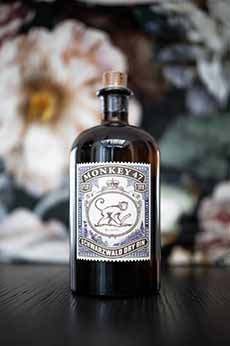
[4] Save the artisan gin for a less complicated cocktail. A big brand—Bombay Sapphire, Hendricks, Tanquery—is fine in a Ramos Gin Fizz (photo © Andreas Haslinger | Unsplash).
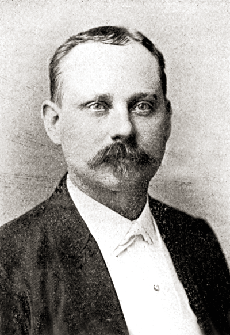
[5] Henry C. Ramos (1856-1928), known as Carl, created one of the signature drinks of New Orleans (photo © New Orleans Public Library).
|
|
For World Gin Day and National Dairy Month, how about a Ramos Gin Fizz recipe (also known as a Ramos Fizz)? It’s not your typical gin cocktail, as you can tell by photo #1.
It’s worth buying a bottle of orange blossom/orange flower water (photo #3), just to enjoy the heavenly melody when it combines with the fresh lemon and lime juices. You can add a drop to any gin cocktail.
(Orange blossom water, also known as the essential oil of neroli, can be used in baked goods, fruit salad, ice cream, puddings and nonalcoholic drinks, including smoothies and tea; as well as non-culinary uses. It’s produced by water distillation of the blossoms of the bitter orange tree.)
> March 31 is National Henry C. Ramos Day.
> The year’s 42 cocktail holidays.
>14 Gin Holidays
IT’S A MILK PUNCH
Ramos Gin Fizz is a milk punch, a category of cocktails made with a spirit plus milk or cream.
When cocktails were first being developed and spirits were not as refined-tasting (i.e., rougher) as many are today, sugar was added to cocktails to soften the taste of the alcohol. So was milk.
Other examples of milk punch include the Brandy Alexander, Eggnog, Grasshopper, Mudslide, Pink Squirrel and White Russian. An older version of Irish Coffee, Scáiltín, is made with equal parts whiskey and milk.
The “fizz” portion of the Ramos Gin Fizz (and any drink called a Fizz) refers to a cocktail that includes sugar, citrus juice and soda water. See the standard Gin Fizz in photo #2.
The Ramos Gin Fizz is made with gin, lemon juice, lime juice, egg white, sugar, cream, orange flower water and soda water.
It’s served in a large, non-tapered 12- to 14-ounce Collins glass (photo #1).
As you can see in the difference between photo #1 and photo #2, the orange flower water and egg white significantly affect the flavor and texture of a Ramos, compared to a regular gin fizz.
The key to achieving the texture is to dissolve the sugar before adding ice. The sugar acts as an emulsifier, and it and the alcohol “cook” the egg white to eliminate potentially harmful bacteria [source].
The history of the Ramos Gin Fizz is below, as are recipes for other versions of Gin Fizz.
Perhaps you’d like to host a Gin Fizz party on the next World Gin Day? (Tip: Serve portions of the different recipes in shot glasses.)
RECIPE: RAMOS GIN FIZZ COCKTAIL
Ingredients Per Drink
2 ounces gin
1 ounce simple syrup
1/2 ounce fresh lime juice
1/2 ounce fresh lemon juice
1 ounce heavy cream
1 egg white (if you are concerned about salmonella, use a pasteurized egg white)
3 dashes orange flower water
Optional: 1-2 drops vanilla extract
Small ice cubes
Soda water
Optional: straw
Optional [nontraditional] garnish: small sage or basil leaf, or edible flower
Preparation
1. COMBINE all ingredients except the ice and soda in a mixing glass (no ice) and shake for two minutes.
2. ADD the ice and shake hard for another two minutes, then again. To get the ideal texture, you want to shake until you can no longer hear the ice rattle. This is why small cubes are better.
3. STRAIN into a Collins glass without ice, and slowly top with soda water to develop a head. Some bartenders use a straw to guide the soda water and not damage the foam. Insert the straw into the drink and pouring the soda along it. The straw is optional for serving, but we prefer using one.
OTHER VERSIONS OF THE GIN FIZZ
A standard Gin Fizz consists of gin (2 ounces), fresh lemon juice (1 ounce), simple syrup (3/4 ounce), one egg white, and soda water to top.
We’ve seen different takes on the Gin Fizz, from a Blackberry Gin Fizz with muddled blackberries to a Yuzu Gin Fizz with yuzu replacing the lemon juice (a most excellent substitution).
Some other Gin Fizz recipes include:
Japanese Gin Fizz: a standard gin fizz with a shot of lychee liqueur.
Meyer Lemon Fizz: a standard gin fizz that substitutes Meyer lemon juice.
Sloe Gin Fizz: Sloe gin, grapefruit juice, simple syrup, soda water and optional egg white (also called a Purple Fizz, since sloe gin is purple).
Sour Melon Fizz: gin, lime juice, Midori melon liqueur, ginger ale.
Strawberry Gin Fizz: gin, lime juice*, strawberries, mint sprigs, soda water.
Violet Fizz: gin, Crème Yvette (a violet liqueur), lemon juice, simple syrup.
|
THE HISTORY OF THE RAMOS GIN FIZZ
The Ramos Gin Fizz was created in 1888 by the eponymous Henry Charles Ramos, known as Carl. It debuted at his New Orleans bar, the Imperial Cabinet Saloon, at the corner of Carondelet and Gravier Streets.
Originally called a New Orleans Fizz, the drink had exceptionally long 12-minute shaking time. The saloon kept more than 20 bartenders in a single shift, all dedicated to making the Ramos Gin Fizz. The end result was a pillowy drink, smooth as silk and delightfully citrusy.
How could one bartender shake a drink for 12 minutes? He couldn’t: The drink was made by long line of “shaker boys,” who would each shake the drink for 30 seconds, then pass it to the next man down the line. That’s what was needed to get the unique frothy texture [source].
Even with that crew, the bar struggled to keep up with demand for the popular drink. During the Carnival (Mardi Gras) of 1915, 35 shaker boys were on hand at once—and even they were unable to keep up with the demand [source]. People waited for nearly an hour to get their drink [source].
New Orleans was a Gin Fizz town. The standard Fizz recipe of the time combined gin, lemon and lime juices, superfine sugar and seltzer. A “Silver Fizz” variation that appeared in 1883 added an egg white.
Ramos added cream, which is very difficult to emulsify with the other ingredients—hence the excessive shaking—and orange flower water, which elevated the flavor of the fresh citrus juices [source].
In 1907, Ramos sold the Imperial Cabinet Saloon and purchased the Stag Saloon, also on Gravier Street. From there, the drink took on legendary proportions [source].
When Prohibition was passed in 1919 (effective January 17, 1920), Ramos famously announced, “I’ve sold my last Gin Fizz,” shut his establishment and pursued other ventures. He gave his secret recipe to the New Orleans Item-Tribune, for publication—a very generous thing to do, as others who created famous drinks took their proprietary recipes to the grave [source].
Prohibition was repealed on December 5, 1933, and the cocktail reemerged in the Roosevelt Hotel of New Orleans—which trademarked the name.
One of the drink’s big fans was Governor Huey P. Long, who would actually bring one of the Roosevelt’s bartenders, Sam Guarino, on business trips with him, just to ensure a perfectly-made supply. It was on a business trip to New York City in 1935 that Long had Guarino teach the bartenders at the New Yorker Hotel how to make the cocktail. He and called it his “gift to New York” [source].
A bit about the man: He was a family man, and closed the doors nightly at 8 p.m. so patrons would go home to their families. He was closed on the sabbath, until patrons pushed him to open—and he did, for just two hours.
He did not tolerate drunkenness or rowdiness in his establishment. Later, as a Freemason*, he became a teetotaler.
He was, by all accounts, a gentleman’s gentleman [source].
________________
*Freemasons or Masons comprise the oldest fraternal organization in the world, dating to the Middle Ages. The mission of Freemasonry is to make “better men out of good men”: better fathers, better husbands, better brothers and better sons; to strengthening a man’s character, improve his moral and spiritual outlook and broaden his mental horizons. A benevolent organization, many activities are of a charitable nature. George Washington was a member; Benjamin Franklin was a founding member of the first Masonic Lodge in America. Presidents Franklin D. Roosevelt and Gerald Ford were Masons, as was Prime Minister of Great Britain Winston Churchill. Here’s more about it.
CHECK OUT WHAT’S HAPPENING ON OUR HOME PAGE, THENIBBLE.COM.
|