THE NIBBLE BLOG: Products, Recipes & Trends In Specialty Foods


Also visit our main website, TheNibble.com.

TIP OF THE DAY: Have An Aperol Spritz (The Recipe)

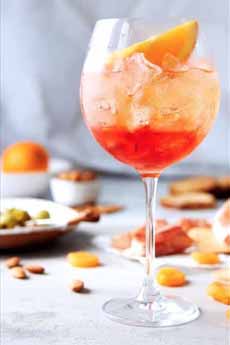
August 1st is National Spritz Day, and we’re going to have an Aperol Spritz. (August 13th is National Prosecco Day, when we’ll have another one.)

While we’d always perused the specialty cocktail menu at restaurants for some interesting combination of ingredients (the type of recipe you’d never thought to put together), our colleague Rowann has always ordered an Aperol Spritz, an apéritif created in northern Italy.

One day we tasted hers, and yum! We’ve now become an Aperol Spritz enthusiast.

So what’s an Aperol Spritz?

It’s an easy-to-make glass of deliciousness. Here’s the recipe.

There are different types of spritz drinks. So:
 
 
> What’s a spritz, and the history of the Aperol Spritz, are below.

> Beyond the Aperol Spritz: A Blood Orange Mimosa x Aperol Spritz Mashup.

> The year’s 49 cocktail holidays.

> The year’s 22+ white wine holidays.

> Trivia: Why is Prosecco capitalized? It’s the name of the village of Prosecco, in the province of Trieste, Italy, where the wine was first made.
 
 
RECIPE: APEROL SPRITZ

Ingredients

  • 3 parts Prosecco
  • 2 parts Aperol (see below)
  • 1 splash of soda water/club soda
  • Ice cubes
  • Garnish: orange slice*
  • Optional garnish†: chamomile, chervil, lavender, rosemary savory, tarragon, thyme
  •  
    Preparation

    With these instructions, you don’t even have to measure.

    1. FILL a wine glass (substitute a rocks glass, but a wine glass is traditional) with ice. Pour the Prosecco a tad more than halfway up the glass.

    2. POUR the Aperol halfway to halfway between the Prosecco and the rim of the glass. Pour it in this order so the Aperol won’t settle to the bottom.

    3. TOP off with a splash of soda water. Garnish with a slice of orange and serve. While an herb garnish is not traditional, if you have the right kind of herb—delicate without strong aromatics—feel free to add a sprig.

    (You can use this recipe to make a spritz with any apéritif you happen to have: Campari, Cynar, Dubonnet, Lillet, vermouth, etc.).

    Since Prosecco has an A.B.V. of 12%‡ (24 proof), the combination of the Prosecco and Aperol (11% A.B.V. – 22 proof) yields a low-alcohol drink.

    According to Drinks International 2019, in The World’s Best-Selling Classic Cocktails 2019, the Aperol Spritz ranks ninth on the list of the world’s best-selling cocktails.
     
     
    WHAT’S A SPRITZ?

    A spritz is a wine-based cocktail made with Prosecco, a bitter liqueur such as Aperol, Campari, or Cynar, and sparkling soda water.

    It is often called a spritzer in the U.S. (e.g., “I’ll have a wine spritzer”), but spritz is correct.
     
     
    THE HISTORY OF APEROL & THE APEROL SPRITZ

    Before the Aperol Spritz came the spritz, Here’s more about it.

    The apéritif Aperol was launched in 1919 in Padua, in the Veneto region of northern Italy. It was created by brothers Luigi and Silvio Barbieri, who had inherited a liqueur company from their father five years earlier.

    It is bitter as opposed to dry white wine, such as Lillet. A bitter, or bitters, is an alcoholic preparation flavored with botanicals (herbs, flowers, roots) to create a beverage characterized by a bitter, sour or bittersweet flavor.

    Aperol has:

  • A bright orange color, from the infusion of bitter and sweet oranges.
  • A proprietary mix of herbs and roots, including gentian, rhubarb, and cinchona, among others.
  • A low A.B.V.: 11% alcohol by volume, compared with 40% for spirits
  •  
    In the 1950s, the Aperol Spritz became a popular alternative to the wine spritzer, a mix of white wine and soda popularized in Venice.

    It remained known largely to Italians, however, until 2003, when Gruppo Campari bought the Aperol brand from the family business. That engendered a worldwide campaign promoting the Aperol Spritz.

    Although it tastes and smells similar to Campari, Aperol is less bitter and has half the alcohol contact. Campari has higher sugar content.

    For more information visit Aperol.com.
     

    WHAT IS AN APÉRITIF &

    THE HISTORY OF APÉRITIFS

    Derived from the Latin verb aperire, which means “to open,” an apéritif (ah-PAY-rih-TEEF) is an alcoholic drink consumed prior to a meal (i.e., the “opening act” for lunch or dinner).

    It was believed to whet the appetite and “prepare the taste buds” for the meal to come. (An alcoholic drink served after the meal, to aid digestion, is a digestif [dee-jes-TEEF].)

    The exact origin of the apéritíf is not known, but we do have a reference from the 5th century from a Christian ascetic, Diadochos of Photiki, who referred to them as “those artificial concoctions which are ‘apéritifs’—presumably because they open a way to the stomach for the vast meal which is to follow.”

    (Source).

    We know that a few centuries later, in medieval times, a concoction of bitter herbs and fruity wines was served prior to meals to improve digestion.

    For centuries in Spain, apéritifs have been a staple at tapas bars.


    Aperol Spritz
    [1] An Aperol Spritz is typically served in a wine glass, but any glass will do (photo © DeLallo).

    Aperol Spritz
    [2] This creative Aperol Spritz substitutes a salty olive for the sweet orange garnish (photo © Dante Restaurant | NYC).
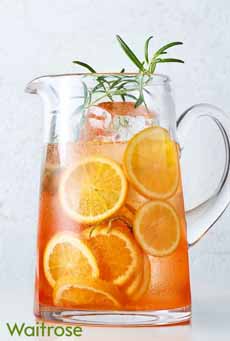
    Aperol Pitcher
    [3] A great idea from Waitrose: Make them by the pitcher (photo © WaitroseWaitrose).

    Aperol Spritz Ice Pop
    [4] How about an Aperol Spritz ice pop? Here’s the recipe from Palm Springs Style).
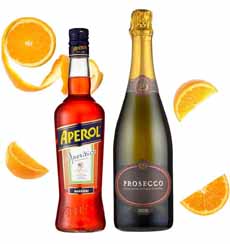
    Aperol And Prosecco
    [5] Send a
    DIY Aperol Spritzer gift to summer hosts, with this duo from Think Liquor (photo © Think Liquor).
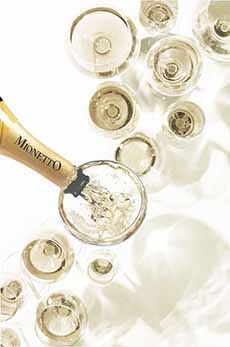
    Pouring Mionetto Prosecco
    [6] Prosecco is an affordable bubbly and a great mixer for cocktails. Here’s more about it. Also check out the different types of sparkling wine (photo © Mionetto)

     
    Apéritifs were already widespread in 19th century Italy, where they were being served in fashionable cafés in Turin (where the Aperol Spritz was born), Genoa, Florence, Milan, Rome and Venice.

    Apéritifs became very popular in Europe in the late 19th century. The popularity in Europe crossed the Atlantic and by 1900, they were also commonly served in the U.S.

    An “apéritif ritual” born in Venice in the 19th century, served traditional snacks called cicchetti (chih-KET-tee) with the drink. It continues to this day.

    Small dishes similar to tapas, cicchetti include tiny sandwiches, plates of olives, and tiny portions of local dishes (source).

    Apéritifs became very fashionable across Europe in the late 19th century, and by 1900, were also popular in the U.S.

    In the early 1970s in the U.S., the concept of “Happy Hour” emerged to encourage more people to stop by for a drink after work (although the term predates that).

    Happy Hour included complimentary appetizers—cheese, crostini, crudités, mini egg rolls, pigs in blankets, Swedish meatballs, and more—served buffet-style with the purchase of a drink. There were often reduced-price drinks such as beer on tap and certain well drinks.

    While apéritifs originated as light-bodied alcoholic beverages such as vermouth, these days, an “apéritif” can be anything that people want to drink, from wine to beer, or cocktails.

    The particulars vary by country and region: The Spanish and Italian favorite, vermouth, is the most popular apéritif wine in the world.

    Try it as a brunch drink, instead of a Bellini or a Mimosa.
     
     
    HOW ABOUT AN APEROL SPRITZ ICE POP?

    There are frozen drinks which are liquids, and then there are drinks that are frozen solid like these Aperol Spritz ice pops (photo #4).

    Here’s the recipe from Palm Springs Style.

    ________________

    *While a standard navel orange slice is typically used, if you can buy a blood orange, go for it. It’s more colorful, and (hopefully) more flavor.

    †These are sweet herbs with tiny leaves.

    ‡Alcohol By Volume.


    CHECK OUT WHAT’S HAPPENING ON OUR HOME PAGE, THENIBBLE.COM.


    Comments off

    RECIPE: Tuna Caprese Sandwich & More Caprese Sandwiches

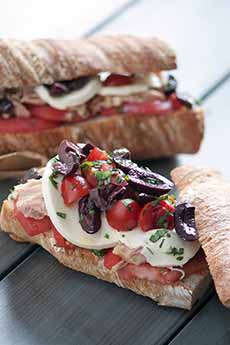
    Here’s a fusion of two favorites—a tuna sandwich and a Caprese salad—on our favorite sandwich bread, a baguette (photo #1).

    The tuna salad is Italian-style and tangy, seasoned with oil and vinegar instead of mayonnaise.

    Add to that creamy mozzarella, winey kalamata olives, and fresh basil and tomatoes, and you’ve got a winner.

    Returning from our local farmers market this weekend with juicy heirloom tomatoes. handmade mozzarella and a crusty baguette, we made lunch with this recipe from DeLallo.

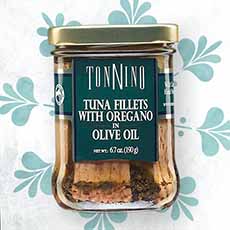
    With all due respect to America’s top tuna-in-a-can brands, we far prefer Italiana brands like Tonnino (photo #2). The tuna is so fresh-tasting, that it never needs mayonnaise before placing on a sandwich.

    Beyond the sandwich, there are more Caprese recipes below, including variations on the famous salad.
     
     
    RECIPE: TUNA CAPRESE SANDWICH

    Ingredients For 4 Sandwiches

    For The Tuna Salad

  • 3 cans or jars (6 ounces each) Italian tuna in oil, drained
  • 2 tablespoons extra virgin olive oil
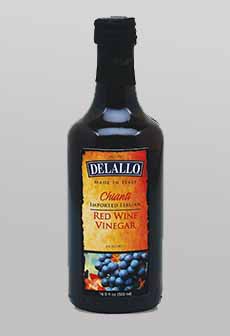
  • 2 tablespoons DeLallo chianti red wine vinegar (photo #3)
  • 1 tablespoon lemon juice
  • 1/4 teaspoon oregano
  • Sea Salt
  • Ground black pepper
  • Optional: finely-diced red onion
  •  
    For The Sandwich

  • 1 large baguette, or 4 baguette rolls
  • 1 large tomato, thinly sliced (substitute a jar of pimento/red pepper)
  • 1 pound fresh mozzarella, thinly sliced
  • 1 pint grape tomatoes, halved and sprinkled with balsamic vinegar
  • Optional: 8 ounces pitted kalamata olives
  • 1/4 cup fresh basil, chopped
  •  
    Preparation

    1. COMBINE the tuna in a bowl with olive oil, vinegar, and lemon juice. Season with salt and pepper to taste.

    2. CUT the baguette in half lengthwise, and then cut it into four even pieces (or, slice the four rolls in half).

    3. LAYER each sandwich as follows: tomato slices, tuna salad, mozzarella, drained balsamic tomatoes, and olives.

    4. TOP each with a generous sprinkling of chopped basil, add the top half of the baguette and serve.
     
     
    MORE CAPRESE RECIPES

  • Artistic Caprese Salads
  • Caprese Breakfast Sandwich
  • Caprese Casserole
  • Caprese Pasta Salad
  • Caprese Sandwich
  • Deconstructed Caprese Salad
  • Goat Cheese Caprese Salad
  • Grilled Cheese Caprese with Balsamic Syrup Drizzle
  • Mango Caprese Salad
  • “Martini” Caprese Salad
  • Mixed Heirloom Caprese Salad
  • Plum Caprese Salad
  • Spaghetti Caprese With Burrata
  • Summer Caprese Salad With Flowers
  • Tofu Caprese Salad
  • Tuna Caprese Sandwich
  • Watermelon Caprese Salad
  •  


    Tuna Caprese Sandwich
    [1] A delicious combination of textures and flavors (photo and recipe © DeLallo).

    Tonnino Tuna With Oregano
    [2] Tonnino, top-quality premium tuna fillets in olive oil, available with different seasonings. Here’s our review (photo © Tonnino).

    Chianti Red Wine Vinegar
    [3] Quality red wine vinegar makes a difference in a vinaigrette (photo © DeLallo).

    CHECK OUT WHAT’S HAPPENING ON OUR HOME PAGE, THENIBBLE.COM.


    Comments off

    Thai Iced Tea & Thai Iced Tea Bags

    Thai Iced Tea
    [1] Thai iced tea. In her version, Wife Mama Foodie uses coconut milk instead of evaporated milk. Here’s her recipe (photo © Wife Mama Foodie).

    Authentic Thai Iced Tea
    [2] The tea bags are available in boxes of 20 from Amazon and Walmart (photo © Wangderm).

    Thai Iced Tea
    [3] Add boba (chewy tapioca balls) to Thai iced tea. Here’s the recipe from Pineapple & Coconut (photo © Pineapple & Coconut).


    Thai iced tea, known as cha-yen (cha is the word for tea), is served in Thailand, Vietnam, elsewhere around the Pacific Rim and in Thai restaurants outside of Asia.

    It is made from strong-brewed black tea and sweetened condensed milk, which adds body and creamy mouthfeel.

    Brewed black tea is enhanced with spices, such as cardamom, clove, nutmeg, star anise and tamarind, or sometimes just with vanilla. If you like chai tea with milk and sweetener, you’ll likely enjoy Thai iced tea (although the Thai version is sweeter, less spicy, more creamy, and served cold).

    For visual appeal, the deep amber tea and bright-white sweetened condensed milk are swirled or layered (photo #1), but not blended into one uniform shade.

    While sweetened condensed milk is used in Thailand, the drink can be topped off evaporated milk, coconut milk, half and half or whole milk.

    These latter options have no sugar, so you can sweeten the drink as you wish (or not at all).

    Here’s the recipe to make Thai iced tea from scratch.
     
     
    THAI ICED TEA BAGS: ENJOY THAI ICED TEA MORE OFTEN

    We are fans of Thai iced tea, but because of the high calorie count, we don’t have it nearly as often as we’d like, although it always beckons to us from Thai restaurant menus.

    We could prepare it at home from scratch, but we never do.

    However, EUREKA:

    Recently, we discovered Thai iced tea bags, that make brewing Thai iced tea a cinch. They’re called Authentic Thai Iced Tea (photo #2), made by Wang Derm, a Thai food company.

    The bags are unsweetened, providing the opportunity to add your sweetener of choice.

    Just brew the tea, which has a touch of vanilla, which gives a hint of sweetness without sugar. (The tea does contain FD&C Yellow 6, a food colorant that is used in candy, desserts, preserved fruits, sauces and snacks. This colorant gives Thai iced tea its amber color.)

    Chill the tea. Then add something milky, from the traditional sweetened condensed milk to evaporated milk to skim milk (for calories-counters) or other cow’s milk/cream, to coconut milk or other non-dairy milk.

    We used our everyday 2% milk and no additional sweetener. The 2% milk made such a satisfying drink, that if we’d had whole milk it would have tasted close to the fully-loaded Thai version. (When your daily milk is lowfat or nonfat, whole milk tastes like half-and-half).

    You can order the tea bags on Amazon, or find them at select Walmart stores.
     
     
    MORE ABOUT THAI ICED TEA

  • “Diet” Version: Cut The Calories
  • From-Scratch Recipe For Thai Iced Tea
  • History Of Thai Iced Tea
  •  
     
    THE DIFFERENCE BETWEEN EVAPORATED MILK AND SWEETENED CONDENSED MILK

    The quickest explanation is in the names: sweetened condensed milk has added sugar and evaporated milk doesn’t. It is also much thicker: Evaporated milk pours like regular milk, but sweetened condensed milk pours like molasses. They are not interchangeable in recipes, but both can be used in coffee or tea.

  • Evaporated milk is fresh cow’s milk from which about 60% percent of the water has been removed by evaporation. It’s then homogenized, fortified with vitamins and stabilizers, canned and sterilized. The heat from the sterilization gives the milk a bit of a caramelized flavor, and makes the color slightly darker than fresh milk. Evaporated milk was originally called unsweetened condensed milk, although that term is no longer used.
  • Sweetened condensed milk also has about 60% percent of the water removed, then sugar is added as well as vitamin A. Condensed milk contains 40% to 45% sugar, but it means that no (or less) added sugar is required in the recipe. Condensed milk requires no sterilization, since sugar is a natural inhibitor of bacteria growth. It is darker and more yellow in color than evaporated milk.
  •   

    Comments off

    RECIPE: Zoodles (Zucchini Noodles) & Olives

    Zucchini is at its lowest price of the year: time to get out your spiralizer and make zoodles (zucchini noodles, a.k.a. zucchini spaghetti).

    If you don’t have a spiralizer and don’t want to buy one, you can find ready-to-cook zoodles in most supermarkets.

    DeLallo created this zoodles recipe using their passata rustica tomato puree, briny olives, and lots of fresh basil and parmesan (photo #2). Try this lighter take on spaghetti and tomato sauce for your next pasta night!
     
     
    RECIPE: ZUCCHINI NOODLES & OLIVES

    Ingredients For 4 Servings

  • 4 medium-size zucchinis
  • 2 tablespoons extra virgin olive oil, divided
  • ½ red onion, peeled
  • 4 garlic cloves
  • 1 jar (24-ounces) DeLallo Passata Rustica Rich Tomato Purée (or substitute)
  • ½ cup packed basil leaves
  • 1 cup DeLallo pitted kalamata olives, halved
  • Parmesan cheese, freshly grated
  • Fresh basil leaves, chopped
  •  
    Preparation

    1. HEAT 1 tablespoon of olive oil in a high-rimmed skillet over medium heat. Add the entire onion half and sauté on one side for 2 minutes. Flip and sauté on other side for 2 more minutes.

    2. ADD the garlic and sauté until fragrant, about 1 minute. Add the tomato purée and basil leaves, then cover and simmer on low heat for 30 minutes, stirring about every 5 minutes. Meanwhile…

    3. TRIM the zucchini ends and use a spiralizer to create noodles. If you don’t have a spiralizer, use a vegetable peeler to create long ribbons. Place noodles in a bowl and cover with cold water until ready to cook. When you’re ready to cook…

    4. DRAIN the noodles and pat them dry. Heat 1 tablespoon of olive oil in a skillet over medium heat. Add the zucchini and sauté while stirring for 2-3 minutes.


    Zoodles With Olives
    [1] Guilt-free “pasta”: It’s made with zucchini noodles (both photos © DeLallo).

    Zoodles Ingredients
    [2] Mix it up and enjoy a quick, flavorful dinner.

     
    5. REMOVE the onion, garlic and basil leaves from the sauce. Add the cooked zoodles and olives, and stir to coat. Place the zoodle mixture on plates, sprinkle with cheese and chopped basil, and serve.
     
     
    WHAT IS TOMATO PASSATA?

    How does passata differ from tomato paste and tomato sauce?

    Passata is the Italian term for an uncooked tomato purée that has been strained to remove seeds and skins. It is also spelled passato and referred to by its full name, passata di pomodoro, and it can also be labeled “strained tomatoes.”

    It has a thicker consistency and a deeper flavor than tomato sauce.

    If you need passata for a recipe but can’t find it, buy plain canned tomatoes and process them through a food mill or food processor.

    In the U.S. and elsewhere, tomato purée is usually cooked briefly to soften the tomatoes before processing (puréeing) them. Because it is minimally cooked, tomato purée has a mild, fresh tomato taste and a thinner consistency.

    Tomato paste is the thickest and most concentrated of the three. It is made by simmering tomatoes for several hours, cooking them down to a thick, rich paste that has a sweet, intense tomato flavor (some find it similar to sundried tomatoes).

    Tomato sauce is made with tomato paste, tomato purée, or both (it can also be made from scratch with fresh tomatoes). It often has other ingredients such as carrots, garlic, herbs and onions. You would not want to substitute either product if passata is called for in your recipe.


    Comments off

    TIP OF THE DAY: Measuring & Weighing Ingredients In The Metric System

    Kitchen Scale
    [1] Use a kitchen scale to weigh your ingredients (photo © GreaterGoods).

    Dish Of Almonds
    [2] Read the directions carefully before you chop nuts, for example (photo © Good Eggs).


    If you pay close attention to recipe ingredients, especially for baked goods, you’ve noted that some recipes give measurements in both ounces/teaspoons and grams/milliliters.

    While Americans have grown up with the former (and attempts to convert us to the metric system have failed), if you’re a baker, consider going metric.

    That’s because baking is a exact science: mixing reactive ingredients creates a chemical reaction. Hence, the cake rises—or doesn’t.

    If your butter is hard versus softened, or vice versa, don’t expect the cookies or pie crust to be perfect.

    Unlike stove top cooking, where some extra cream or tomato doesn’t matter much, in baking, the balance between fats, flour, leaveners and liquids is critical.
     
     
    GET A KITCHEN SCALE

    Over the last decade or so, American bakers have found that measurements by weight are more precise than measuring cups and spoons.

    The solution is simple: Get a kitchen scale (photo #1).

    They’re not expensive, and they don’t take up much room.

    If you don’t want a scale but still want to convert measurements, it’s easy to find a conversion app online. Just type your needs into the browser bar, e.g.

  • Ounces to grams – or be precise –
  • 3 teaspoons to grams
  •  
     
    A TIP ABOUT NUTS

    If you took high school chemistry lab, you know that the order in which ingredients are mixed is crucial.

    It’s the same in cooking: Pay careful attention to how ingredients are listed in a recipe.

     
    Take this simple example with chopped nuts:

  • “1 cup chopped nuts” means: first chop the nuts, then measure out a cup.
  • “1 cup nuts, chopped” means: first measure a cup of nuts, then chop them.
  •  
    You’ll get different measurements depending which sequence you use.

    While a bit more or fewer nuts won’t really impact your recipe, discipline yourself so that when it counts, your count will be correct.


    Comments off

    The Nibble Webzine Of Food Adventures
    RSS
    Follow by Email


    © Copyright 2005-2026 Lifestyle Direct, Inc. All rights reserved. All images are copyrighted to their respective owners.