THE NIBBLE BLOG: Products, Recipes & Trends In Specialty Foods


Also visit our main website, TheNibble.com.

All The Chicken & Turkey Holidays For National Poultry Day

Proceed with caution if you have alektorophobia: March 19th is National Poultry Day.

Alektorophobia is an intense fear of chickens, roosters or hens. Fortunately, it’s one of the more rare phobias. So our guess is that everyone reading this article can do so in comfort.

Evidently, many people give a cluck: There are 48 annual holidays celebrating chickens, turkeys, ducks, and other fowl. See them all below.

> The history of chickens.

> The history of turkeys.

> The history of ducks is below.

> The parts of a chicken: How many different cuts can you name?

> Chicken glossary: a compilation with photos of types of chicken, chicken parts, industry terms…everything chicken.

> The most popular poultry dishes in America (below).

> Poultry etymology (below).
 
 
WHAT DISTINGUISHES POULTRY FROM OTHER MEATS?

Poultry is distinguished from other types of meat in several ways:

  • Source: Poultry refers specifically to domesticated birds raised for meat, including chicken, turkey, duck, goose, quail, and guinea fowl, plus rabbit, a mammal. (The meat category includes beef, lamb, pork, and others; seafood is its own category).
  • Classification: Poultry is considered “white meat,” even though chickens and turkeys have both white and dark meat; and some, like duck and game birds, are entirely dark meat.
  • “Red meat,” which is darker due to higher amounts of myoglobin (the protein that makes meat red), includes beef, goat, lamb, veal, venison and other game meats (bison, elk, and numerous others below‡), and veal. Horse meat also falls into this category.
  • What about pork? The USDA classifies pork as red meat based on its myoglobin content and the fact that pigs are mammals, not birds. That the pork industry has marketed it as “the other white meat” since the 1980s (to position it as a healthier alternative to beef) does not make pork a white meat.
  • Fat: Poultry typically has lower fat content than red meat, with most of the fat concentrated in the skin (and easy to remove) rather than marbled throughout the meat.
  • Culinary: Poultry generally cooks more quickly than red meat. From a taste standpoint, it has a milder flavor profile.
  • Nutrition: Poultry (especially without skin) is generally lower in calories and saturated fat and higher in protein per ounce than most red meats.
  •  
     
    THE MOST POPULAR POULTRY DISHES IN THE U.S.

    Chicken is by far the most consumed poultry in the U.S., with turkey coming in second, followed by duck and other specialty birds‡ in much smaller quantities.

    These dishes should be no surprise (rankings may vary by region):

  • Fried chicken
  • Chicken wings
  • Roast turkey
  • Roast/rotisserie chicken
  • BBQ chicken
  • Chicken sandwich
  • Chicken Parm (Parmesan, Parmigiano)
  • Grilled chicken breast
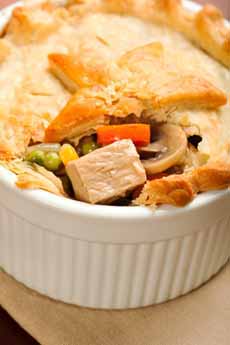
  • Chicken pot pie
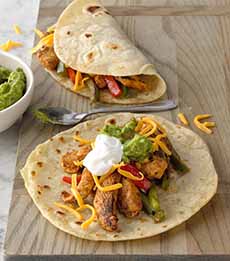
  • Chicken fajitas
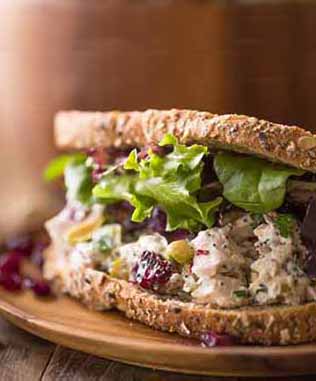
  • Chicken salad
  • Chicken and waffles
  •  

    48 ANNUAL CHICKEN, TURKEY & DUCK HOLIDAYS
  • January 12: National Curried Chicken Day
  • February, 2nd Sunday (Super Bowl Sunday)
  • March 13: National Chicken Noodle Soup Day
  • March 19: National Poultry Day
  • March 28: National Something On a Stick Day*
  • March 30: National Hot Chicken Day
  • April 4: National Chicken Cordon Bleu Day
  • May: International Respect for Chickens Month
  • May 4: International Respect for Chickens Day
  • May 29: National Coq Au Vin Day
  • June 2: National Rotisserie Chicken Day
  • June 18: International Picnic Day
  • July 1: International Chicken Wing Day
  • July 6: National Fried Chicken Day
  • July 15: Orange Chicken Day
  • July 27: National Chicken Finger Day
  • July 29: National Wing Day
  • August 26: National McChicken Day
  • September: National Chicken Month
  • September 10: National TV Dinner Day
  • September 23: Great American Pot Pie Day
  • October 15: National Chicken Cacciatore Day
  • October 20: National Chicken & Waffles Day
  • November: National Roasting Month
  • November 1: National Pâté Day
  • November 9: National Fried Chicken Sandwich Day
  • November 12: National Chicken Soup For The Soul Day
  • November 16: National Fast Food Day
  •  
    Plus:
     

  • January 8: National Snuggle A Chicken Day
  • February 27: National Protein Day (India)
  • April 9: National Chicken Little Awareness Day†
  • May 14: Dance Like A Chicken Day†
  • May, end of 3rd Week: International Heritage Breeds Day
  • September 9: Colonel Sanders Birthday
  • September 10: National TV Dinner Day
  • September, 3rd Week: National Farm Animals Awareness Week
  • October 15: National Roast Pheasant Day
  • October 26: National Chicken Fried Steak Day
  • November 21: National Stuffing Day
  •  
    TURKEY HOLIDAYS

  • March 30: National Turkey Neck Soup Day
  • June: Turkey Lovers Month
  • June, 3rd Sunday: National Turkey Lovers Day
  • September 23: Great American Pot Pie Day
  • November: Adopt a Turkey Month
  • November, 4th Thursday: Thanksgiving
  • November, 4th Thursday: Turkey-Free Thanksgiving
  •  
    DUCK HOLIDAYS

  • January 18: National Peking Duck Day
  • May: National Duckling Month
  •  
     
    POULTRY ETYMOLOGY

    How did these popular foods get their names?

    Fowl is a general term that refers to all poultry. It includes domesticated birds kept for their eggs, meat, or feathers. The word comes from Old English “fugol,” meaning bird.

    Fowl can also to refer to birds in general, especially game birds, although in modern usage it’s most commonly associated with domesticated poultry.

    Poultry derives from Old French pouleterie, which in turn comes from poulet meaning chicken or young fowl; and before then, from the Latin pullus, meaning young animal or young fowl.

    The “-try” suffix indicates a class of animals.

    Chicken comes from Old English ċicen or cycen, meaning young fowl; it evolved from Proto-Germanic *kiukīną, which referred to roosters and chickens. The word originally referred specifically to young chickens, but later expanded to include the species at any age.

    Turkey got its name based on a geographical misunderstanding. When European settlers encountered these birds in the Americas (where they originated), they mistakenly believed they were related to guinea fowl. The latter were sometimes called “Turkey fowl” because they were imported to Europe through Turkey

    In Turkish, the bird is called “hindi” (meaning “from India”), another geographical misunderstanding [source: Claude.ai 2025-03-16].
     
     
    THE HISTORY OF DUCKS

    Ducks evolved from ancient waterfowl ancestors, with fossil evidence suggesting their lineage dates back to the Cretaceous period, more than 65 million years ago.

    The earliest known modern duck ancestors appeared during the Oligocene epoch, around 30 million years ago.

    These early ancestors gradually developed the distinctive features we associate with ducks today, including webbed feet, water-resistant feathers, and broad bills.

    Wild ducks naturally inhabit every continent except Antarctica.

    Humans began domesticating ducks some 4,000-5,000 years ago, with evidence suggesting that the mallard (Anas platyrhynchos) was first domesticated in China.

    Archaeological findings indicate duck domestication also occurred independently in several regions, including Southeast Asia and possibly parts of Europe.

    Early domestication focused on selecting ducks for meat and egg production, as well as for their feathers. As humans migrated across the globe, they often brought domesticated ducks with them.

    The mallard (photo #12) is considered the ancestor of most of the domestic duck breeds we know today.

    Today, there are approximately 120 different species of ducks found worldwide, each adapted to a specific ecological niche.

    The mallard remains the most widespread and recognizable duck species globally, and has been introduced to regions well beyond its native range [source: Claude.ai 2025-03-19].


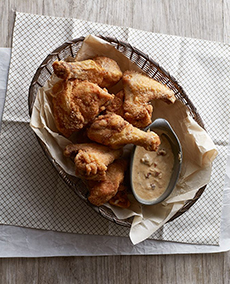
    Fried chicken in a basket
    [1] Fried chicken is America’s favorite chicken dish (photo © Volpi Foods).

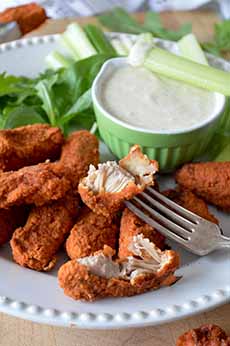
    Chicken Wings
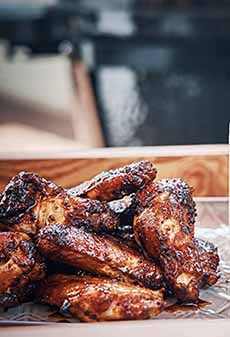
    [2] The runner up is chicken wings, here shown Buffalo-style (photo © Nadine Primeau | Unsplash).

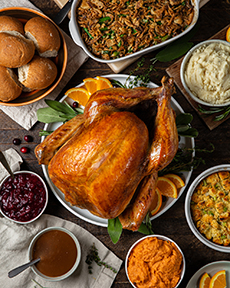
    Turkey Dinner
    [3] You don’t have to wait for the holidays to enjoy roast turkey (photo © Gelson’s Markets).

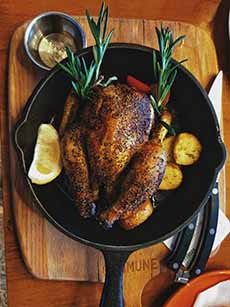
    Roast Chicken
    [4] Roast chicken (photo © Cisco Lin | Unsplash).

    BBQ Chicken
    [5] Perhaps the messiest to eat: barbecue chicken (photo © Mike’s Hot Honey).

    Chicken Sandwich
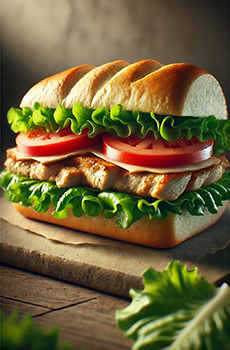
    [6] A grilled chicken sandwich. Many chicken sandwiches use a fried breast (photo © The Nibble | DALL-E 2025-03-16).

    Chicken Parmesan
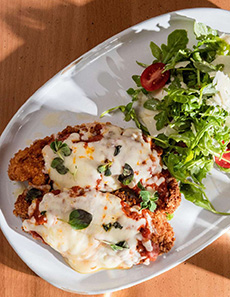
    [7] Chicken Parm, a.k.a. Parmesan, a.k.a. Parmigiana (photo © Osteria Accadamia NYC).

    Grilled Chicken Breast
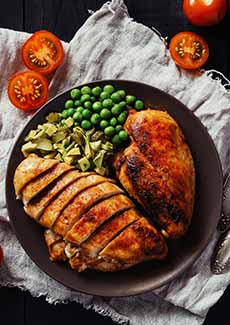
    [8] Grilled chicken breast (photo © Elena Leya | Unsplash).

    Chicken Pot Pie
    [9] Chicken pot pie, a true comfort food (photo © M. Sheldrake | Dreamstime).

    Chicken Fajitas
    [10] Chicken fajitas. Don’t forget the guacamole (photo © Taste Of Home)!

    Chicken Salad Sandwich
    [11] Most chicken salad is pretty boring: just chicken, mayo, and celery. But this recipe rocks, with dried cranberries and pistachios (photo © Lovely Little Kitchen).

    Mallard Duck
    [12] The mallard, ancestor of most of today’s duck breeds (photo © Christian Papaux | Unsplash).

    ________________
     
    *Think chicken skewers, including yakitori (Japanese), shish taouk (chicken kabobs—Middle Eastern), tandoori and tikka (India).

    National Chicken Little Awareness Day is an annual celebration of a folk tale about the chicken constantly thinks the world is coming to an end because acorns keep falling on his head.

    National Dance Like A Chicken Day is meant to encourage the Chicken Dance without waiting for a prom, wedding, or other occasion.

    ‡‡What is game meat? Game meats refer to the flesh of wild animals that are hunted for food rather than raised on farms. Some game meats are domesticated (raised on farms) and are indicated with an asterisk*. Common game meats include:

    Large Game: antelope*, bison, caribou/reindeer*, deer (venison)*, elk*, emu*, moose, wild boar*, yak*.

    Small Game: hare, rabbit*, squirrel.

    Game Birds: duck*, goose, grouse, guinea fowl*, ostrich*, partridge*, pheasant*, quail*, wild turkey*, woodcock.

    >Exotic Game: alligator: bear, beaver, kangaroo*, ostrich.


    CHECK OUT WHAT’S HAPPENING ON OUR HOME PAGE, THENIBBLE.COM.


    Comments off

    Two Stacks Irish Whiskey: Our Pick For St. Patrick’s Day

    Each year on St. Patrick’s Day we like to try a brand we haven’t had before. This year, it’s a newcomer to the scene: Two Stacks, an eco-friendly distillery of creative distillers turning out some must-try bottles.

    We loved it, and our happy feelings for the brand follow the history of Irish whiskey. Why?

    We thought that an overview of how Irish whiskey fell from being the world’s biggest spirit category to almost disappearing from the face of Ireland after World War II, and its rebirth decades later, is a good story.

    But you can jump to to the tasting notes if you wish, to discovering not only the complex flavor profile of their flagship expression (photo #1) but their innovative Two Stacks Dram in a Can—the world’s first Irish whiskey in a 100ml can (photo #2).

    And there’s more than a dram in that can: Each Dram in a Can contains 3.4 ounces of whiskey—more than double a standard shot, which is 1.5 ounces.

    (A dram refers to a small serving of whiskey, but its exact measurement varies. It’s usually close to an ounce. The whiskey dram is not related to the dram of the Apothecaries’ System, an old system of measurement that was used by pharmacists and doctors to measure medicinal ingredients, before the metric system became standard.)

    > A recipe for Two Stacks’ Cold Brew Cocktail is below, made with their Double Irish Cream Cream Liqueur (photo #11).

    > The overall history of whiskey.

    > The different styles of whiskey (straight, blended, single malt) and whiskey types around the world.

    > The different types of whiskey, from A (American whiskey) to V (vatted malt Scotch): a photo glossary.
     
     
    THE HISTORY OF IRISH WHISKEY

    The history of Irish whiskey is a dramatic tale of meteoric rise followed by a steep decline and eventual rebirth.

    Distillation was discovered in the late eighth century by a scholar in what is now Iran. The distillate was originally used as medicine and remained a secret process, ultimately shared with the monks in Spain for medicinal purposes.

    Around 1300, a French professor of medicine translated a number of medical texts from Arabic, including instructions for distillation.

    > Here’s a brief history of whiskey, including why the Irish spell it with an “e” and the Scots don’t, preferring “whisky.”
     
     
    The Rise Of The Irish Whiskey Industry

    Whiskey production in Ireland dates back to at least the 12th century, with monks first producing the distillates.

  • Irish whiskey was considered more refined than Scotch. By the 1700s, commercial distilleries were established across Ireland.
  • These were small family businesses who sold their stock to bonders, independent merchants who buy from distilleries, age it, blend it, and bottle it under their own label.
  • The late 18th century saw the emergence of major distilleries like Bushmills, Jameson, and Powers.
  • By the 19th century, Irish whiskey was the most popular spirit in the world. It was the golden age of the spirit, with more than 88 licensed distilleries by the 1830s. Dublin became a major whiskey production center.
  •  
     
    The Decline

    Beginning in the late 19th century, multiple factors contributed to the industry’s collapse:

  • Irish Independence and Trade War: After Ireland gained independence in 1922, the U.K. imposed heavy tariffs on Irish exports, cutting off the British Empire market.
  • Prohibition in the U.S. (1920-1933) closed off another major market.
  • Blended Scotch was created, using the column still with blending techniques to create a consistent, more affordable product. Many Irish distillers refused to adopt the column still, clinging to traditional pot still.
  • War distruption: The Irish Civil War (1922-1923) impeded production, as did both World Wars, which obstructed global trade and grain supplies.
  •  
    By the 1960s, only a handful of distilleries remained.

  • In 1966, the remaining major Irish distilleries merged to form Irish Distillers Ltd.
  • By the 1970s, only two distilleries remained in operation in Ireland: New Midleton (owned by the Irish Distillers Group) and Bushmills.
  •  
     
    Revival Of The Industry

    The 1980s marked the beginning of a slow revival. Annual sales grew from under 1 million cases in the 1980s to more than 14 million cases in 2022.

  • John Teeling established Cooley Distillery in 1987, the first new Irish whiskey distillery in over a century.
  • Pernod Ricard acquired Irish Distillers in 1988, providing investment and global distribution.
  •  
    The 2000s saw growing global interest in premium and craft spirits. Small, independent distilleries began to emerge across Ireland.

  • In the early 2010s, Irish whiskey became the fastest-growing spirits category globally [source: Claude.ai-2025-03-17].
  • As of 2023, there were more 40 operational distilleries in Ireland, with many more planned.
  •  
    One of the new craft distilleries was Two Stacks, founded in 2020 by two veterans of the global spirits world. Opening one of Ireland’s only independent bonding (warehousing) and blending facilities in 2022, their goal is to combine these worlds together.

    In addition to operational and business efficiencies, uniting both phases under one roof achieves:

  • Consistency: Better control over the entire process leads to more consistent products.
  • Flexibility: the ability to quickly select and blend specific barrels as needed.
  • Experimentation: the ability to create small test batches since the barrels are on-site.
  • Finishing: a simplified process for transferring whiskey from vats to finishing casks.
  •  
    And the name “Two Stacks?”

    It pays homage to a traditional method of whiskey production, when pot stills and column stills were frequently “stacked” together to craft various styles of whiskey.
     
     
    TASTING TWO STACKS IRISH WHISKEY

    Two Stacks has several expressions. We tasted a bottle of The First Cut Signature Blend, the flagship whiskey in the portfolio. The distiller describes it as “a rather intriguing recipe” and comments:

    It’s made with a combination of grain whiskey aged in virgin oak and bourbon oak (i.e., used bourbon barrels), as well as pot still whiskey aged in oloroso sherry casks, bourbon cask matured double-distilled malt, and a smidge of peated malt aged in bourbon casks.

    It’s an inventive expression, complex and delicious.

  • In the glass, there’s a rich amber hue with golden highlights with the ideal viscosity of slow legs.
  • The nose begins with honeyed orchard fruits*—ripe apples and pears—followed by notes of vanilla custard and shortbread from the oak. There’s a subtle undertone of malted barley and toasted cereals‡. Sensitive noses will find that, as the whiskey opens up in the glass, hints of citrus zest and white pepper emerge, alongside delicate floral notes reminiscent of heather and fresh hay. (And if your nose can find all that, bravo!)
  • The palate delivers the smooth, almost creamy mouthfeel that signifies fine Irish whiskey. The initial taste is sweet malt and toffee notes, followed by layers of green apple, poached pear, and a touch of cinnamon. The mid-palate reveals toasted almonds and hazelnuts, along with subtle spices from the oak.
  • The finish: The finish is medium to long, warm without burning harshness. The vanilla and caramel notes linger, accompanied by oak spices and a hint of dried fruit. The aftertaste leaves a pleasant combination of malt sweetness and subtle clove, with just enough dryness to invite another sip [source: Claude.ai 2025-03-17].
  •  
    What’s the difference between finish and aftertaste? See below‡.
     
     
    The Two Stacks Expressions

    The Two Stacks lineup offers several expressions, both blends and single malts.

  • The First Cut Signature Blend, distilled from malt and grain, aged in bourbon, sherry, and virgin oak casks.
  • Dram in a Can, their innovative canned Irish whiskey, a blend of grain, malt, and pot still whiskeys.
  • Smoke & Mirrors, a peated single malt Irish whiskey—common in Scotch but innovative in Irish whiskey production.
  • Blenders Cut Cask Strength, a higher proof offering of The First Cut, with an A.B.V. of 63.5%, 127 proof. It’s bottled directly from the cask without dilution.
  • Single Malts, of which there are five currently on the website in addition to Smoke & Mirrors.
  • Limited Editions and special finishes, like aging in Port or rum casks.
  •  
     
    RECIPE: TWO STACKS IRISH COLD BREW COCKTAIL

    This variation of Irish Coffee is a treat any day of the year. Can you have it for breakfast? Only on St. Patrick’s Day and your birthday.

    If you have an Irish coffee mug (a glass mug with a handle and pedestal—photo #9), use it. Otherwise, any cup or glass will do.
     
    Ingredients Per Drink

  • 1 ounce Two Stacks First Cut Signature Blend Irish Whiskey
  • 4.5 ounces cold brew coffee
  • .5 ounce Demerara† simple syrup
  • Top layer: Two Stacks Double Irish Cream Liqueur (photo #8)
  • Ice
  •  
    Preparation

    1. COMBINE the ice, whiskey, coffee, and simple syrup in an Irish coffee mug and gently stir.

    2. ADD the Irish cream liqueur. If you have an iSi charger, aerate the liqueur before adding to the top of the drink.

    If not, just top the drink off with a splash from the bottle.
     
    ________________
     
    *There are other orchard fruits, of course; but when the term is used with whiskey, it denotes apples and/or pears.

    The Demerara simple syrup flavor difference is one of depth and complexity. Conventional simple syrup made with white sugar produces a neutral, clean, sweetness without any additional flavors. It doesn’t alter the taste of the drink.

    Demerara sugar, a minimally processed cane sugar with a light golden-brown color, has subtle caramel, toffee, or molasses-like notes. Thus Demerara simple syrup adds a richer, more complex sweetness. Savvy bartenders use it for cocktails that benefit from a touch of depth: coffee-based cocktails, Demerara Daiquiri Old Fashioneds, Queens Park Swizzle, and some tiki drinks, for example.
     
    Simple syrup recipe: It’s easy to make, whether with white or Demerara sugar. Just stir water and sugar over heat. Here’s the recipe.

    Check out the different types of sugar.

    The terms aftertaste and finish are closely related in the context of wine and spirits, but slightly different in connotation and use:

    Finish refers to the overall final impression a drink leaves in the mouth after swallowing—the lingering flavors, textures, and sensations (such as warmth, bitterness, sweetness, or acidity) that remain in your mouth. A finish can be short, medium, or long, and the flavors may evolve as the minutes pass.

    Aftertaste is a specific aspect of the finish—the flavors that linger on the palate once the liquid is gone. Some aftertastes are pleasant (like lingering fruit, spice, or oak) and invite the imbiber to ponder them before taking another sip. Others can be undesirable (like excessive bitterness or a burning sensation, called a “hot finish”).
     
    Fermentation Vats
    [12] Fermentation vats. If you look closely, you can also see copper stills in the background.


    Irish Whiskey Straight Up
    [1] The flagship, The First Cut Signature Blend (all photos © Two Stacks Whiskey).

    Dram In A Can Irish Whiskey
    [2] Dram In A Can, a great party favor and a convenient “travel supply.” Most expressions are made in the Dram In A Can format. It’s also a convenient way to get a first taste of the different expressions.

    Peated Irish Whiskey Bottle
    [3] Who knew that the creative minds at Two Stacks would create peated Irish whiskey? We love peated Scotch, so this bottle, a single-malt called Smoke & Mirrors, is next on our list—a combination of 10% double malt and 30% triple peated malt, each matured in bourbon cask, plus 60% triple distilled malt aged in ex-bourbon. The final product is finished in imperial stout casks. Whew…and wow!

    Irish Whiskey Straight Up
    [4] Enjoy different expressions of Two Stacks. This is the Blenders Cut, bottled at cask strength, straight up.

    Irish Whiskey Bottle
    [5] Or mix yourself a drink…

    Old Fashioned Cocktail
    [6] …like this Old Fashioned cocktail.

    Whiskey Aging In Barrels
    [7] The whiskeys aging in oak barrels.

    Irish Cream Liqueur
    [8] The featured recipe is made with the whiskey plus Two Stacks Double Irish Cream Liqueur. It’s called “double” but it actually uses eight times more Irish Whiskey than the market standard. It should correctly be called Octuple Double Irish Cream—but who would know what that means?

    Irish Coffee
    [9] If you have Irish coffee mugs, use them for the Cold Brew recipe. It not, any glass is fine. (photo © Libbey).

    Irish Cold Brew Cocktail
    [10] The finished cocktail.

    Two Stacks Distillery
    [11] If you’re in the area, book a custom tour of the distillery that includes blending your own whiskey.

    Blending Whiskey
    [12] If you’re in the area, book a custom tour of the distillery that includes blending your own whiskey.


    CHECK OUT WHAT’S HAPPENING ON OUR HOME PAGE, THENIBBLE.COM.


    Comments off

    Drizzle Honey: Delicious Flavored Honey From Sweet To Hot

    Drizzle Honey Jars
    [1] Jars of Drizzle Honey’s most excellent flavors (all photos © Drizzle Honey).

    Ginger Honey
    [2] A cup of tea will shine when sweetened with Ginger Shine honey.

    Roasted Squash
    [3] Glaze squash, ham, or just about anything with Hot Honey. Cinnamon Honey also works with roasted squash. This dish sits on a dish of za’atar-seasoned whipped ricotta and garnished with fresh thyme. Here’s the recipe.

    Honey & Lemon Water
    [4] Start the day with a glass of hot or tepid honey-lemon water. It’s an energy-boosting variation of the time-honored lemon water, which hydrates, aids digestion, and potentially boosts the immune system.

    Pumpkin Spice Latte
    [5] A PSL sweetened with Ginger Shine Honey. Here’s the recipe.

    Honey Roasted Pumpkin Seeds
    [6] Roast squash seeds (including pumpkin seeds) with Cinnamon Spiced Honey. Here’s the recipe.

    Buffalo Wings
    [7] Buffalo wings, chicken fingers, any fried, grilled or roasted chicken will love Hot Honey.

    Hot Honey Travel Packets
    [8] You can also purchase Hot Honey single serve pouches for on-the-go.

      Oh, what a delightful buzz on the tongue are the two Drizzle Honey flavors we tasted. It was all we could do not to polish off the jars as we could a pint of ice cream—digging in with a spoon.

    In fact, Drizzle is great on ice cream, as well as on just about any food we paired with it.

    The Drizzle Honey line of raw, unpasteurized, plain and flavored artisan honeys from Canada is as the bees produced it: unheated, unfiltered, and unpasteurized. All of the honeys’ natural nutrients*, natural enzymes, pollen, and flavors are preserved.

    It’s sustainably sourced and bee friendly. The honey fields are not sprayed, sparing you (and the bees) the toxic by-products .

    And while there’s a lot of fine honey out there, these flavors are spectacular!

    Bonus Energy: Honey is an energy food, a natural source of simple carbohydrates (sugars like fructose and glucose) that are readily absorbed and used by the body for quick energy. And, without caffeine!

    Head here to get yours:

    > DrizzleHoney.com.

    > Here’s a store locator.

    With Easter forthcoming, we’d much rather receive a jar of rosy Berry Bliss Honey, golden Cinnamon Spiced or Golden Honey, or orange Hot Honey than a nutrition-free chocolate bunny. (And we say this as a reformed chocoholic.)

    > The history of honey.

    > The different types of honey.

    > World Honey Bee Day is celebrated the third Saturday of August.

    > National Honey Month is September.
     
     
    WAYS TO USE DRIZZLE HONEY

  • Breakfast: on cereal/porridge, French toast/pancakes/waffles, toast, or blended into plain yogurt.
  • Beverages: cocktails, honey water (see photo #6), lemonade, tea (hot and iced), smoothies.
  • Lunch and Dinner: dressing, glazing meats and vegetables.
  • Dessert: ice cream, un-iced cakes (carrot cake! zucchini bread!) and plain cookies.
  • Snack: bread spread, spooned from the jar.
  •  
     
    MEET THE FLAVORED HONEYS

    Drizzle Honey sells honeys without added flavor: Pure White Honey, the mildest of honeys, and Golden Raw Honey, with deeper flavor.

    But we’d like to focus on our personal favorites: the flavored honeys. They bring more to the table (as it were): extra layers of flavor on top of honey’s sweetness and varietal notes.
     
     
    Berry Bliss Honey: cocktails, berry vinaigrette, blended into fruit ice pops and yogurt pops, even drizzled over raw energy bars.
     
     
    Cacao Luxe Honey: sweeten beverages: banana smoothies, chocolate milk, coffee beverages, hot chocolate (recipe.) Drizzle over ice cream and other desserts, and have a spoonful for an energy-boosting snack, and one of our favorites, turn plain yogurt into chocolate yogurt.

    Bonus: You get not only energy, but cacao is a mood and brain booster. It contains active compounds and nutrients that stimulate the brain’s production of neurotransmitters and neuromodulators.

    This results in the release of feel-good hormones like dopamine, endorphins, and serotonin, which are responsible for our improved mood after drinking or eating cacao.
     
     
    Cinnamon Spiced Honey: Delicious anywhere you’d like a touch of cinnamon: glazing, pancakes, toast or stirred into oatmeal (in fact, in or on much of the breakfast repertoire—cinnamon is a great sweetener for coffee, hot chocolate, milk, and tea).

    Substitute Cinnamon Spiced Honey for regular honey in your recipes, from savory to sweet. Check out the Cinnamon Spice pumpkin seeds in photo #6.

    We love this flavor for snacking: a spoonful or two is a guilt-free treat.
     
     
    Ginger Shine Honey: Infused with ginger and elderflower, this flavor alternates with Cinnamon Spiced as a favorite to sweeten a Pumpkin Spice Latte (photo #5—here’s the recipe).

    Also enjoy it in tea, hot toddies, and as spoonfuls down-the-hatch for a sore throat. Ginger is a boost to the immune system.
     
     
    Hot Honey: A brilliant touch anywhere you want sweet heat. It’s great on pizza, fried chicken (or any chicken), and roasted or grilled vegetables (see the roasted squash in photo #3, made with this recipe).

    Here’s something a bit different (but differently delicious): avocado deviled eggs with Hot Honey. Here’s the recipe.

    Not to mention these ot Honey Fries, with feta and scallions. No ketchup need apply!

    Editor’s Note: We’ve long used Mike’s Hot Honey, but Drizzle’s is a cut above.
     
     
    Turmeric Gold Honey: Need an afternoon brain booster? Simply to add Turmeric GOld Honey to warm milk for a turmeric latte, a.k.a. golden latte (photo #9). There’s a recipe below in the footnote*.

    The polyphenols from raw honey have been shown to support the hippocampus, the part of the brain involved in memory. Turmeric also counters inflammation among many other health benefits, including arthritis, cholesterol, muscle soreness…even anxiety!

    You can also drizzle Turmeric Gold Honey over roasted veggies, mix into smoothies, and add to a curry.

    We end this product review with some etymology: the origin of the word “honey.”

    It derives from Old English hunig, which referred to the sweet, viscous substance produced by bees. There are similar words in other early Germanic languages.

    Over time, the word expanded in meaning, leading to its modern figurative uses, such as a term of endearment and in honeymoon (which originally referred to the tradition of drinking honey-based mead after marriage).

    You just may end up thinking of everything you enjoy with these honeys as a mini-honeymoon.

    Turmeric Latte
    [9] A golden latte. See the recipe below.

     
    ________________
     
    *Golden Latte is a warm, spiced beverage made with turmeric, milk, and other warming spices like black pepper, cinnamon, and ginger. It’s also known as turmeric latte or golden milk and is often sweetened with honey or maple syrup.

    Turmeric is the key ingredient, giving the drink its golden-yellow color and potential health benefits. The latter are due to its active compound, curcumin, which is known for its anti-inflammatory and antioxidant properties.

    Golden lattes are popular in Ayurvedic and holistic wellness circles and have origins in the traditional Indian haldi doodh, turmeric milk, which has been used for centuries as a natural remedy.

    Golden Latte Recipe: Whisk together 1 cup milk of choice, 1/2 teaspoon ground turmeric (or fresh grated turmeric), 1/4 teaspoon ground cinnamon, 1/4 teaspoon ground ginger (or fresh grated ginger), and 1 pinch black pepper. Optional ingredients include 1 teaspoon honey or maple syrup for sweetness, 1/2 teaspoon coconut oil or ghee, for creaminess, and 1/2 teaspoon vanilla extract for extra flavor.

    Heat the milk in a small saucepan over medium heat until warm but not boiling. Whisk in all ingredients. Simmer for 3–5 minutes, stirring occasionally. Remove from the heat and strain if using fresh turmeric or ginger. Optionally, froth the milk (optional) using a whisk, blender, or milk frother for a creamier texture. Pour into a mug, and add honey or maple syrup to taste.


    CHECK OUT WHAT’S HAPPENING ON OUR HOME PAGE, THENIBBLE.COM.


    Comments off

    A Savory & Fun Spaghetti Pie Recipe For National Pie Day

    Those in the know know that Pi Day is the second day of the year to celebrate pie (National Pie Day is January 23rd, and The Great American Pie Month is February).

    The actual of Pi Day, which celebrates the mathematical constant equal to 3.14159 (the ratio of a circle’s circumference to its diameter) is a thing of beauty.

    So is a great pie, and the year has 31 pie holidays—opportunities for you to taste your way through piedom.

    There are savory pies too. Some are familiar, some not (see them here). And we have a fun one for you today:

    You can use leftover cooked spaghetti to make this yummy Sausage & Peppers Spaghetti Pie. You can save up to a third of the prep time:

    To cook spaghetti al dente, from heating the water to a rolling boil to achieving the desired texture, generally takes around 8 to 10 minutes.

    > The history of pie.

    > The different types of pie: a photo glossary.
     
     
    RECIPE: SAUSAGE & SPAGHETTI PIE
     
    Unlike a pot pie, spaghetti pie needs no crust. The spaghetti itself, when cooked and mixed with other ingredients, forms the base and structure of the dish, acting as the crust.

    Prep time is 10 minutes prep time, 30 minutes cook time…but if you have leftover spaghetti, you can cut the cook time as noted above.

    Thanks to McCormick for the recipe!
     
    Ingredients For 8 Servings

    The recipe says eight servings, but these are what we would call appetizer servings, or a lunch portion served with a large salad.

  • 8 ounces spaghetti (or 3-1/2 cups cooked spaghetti)
  • 1 tablespoon olive oil
  • 1/2 pound Italian sausage, casing removed
  • 1 cup thinly sliced green bell pepper
  • 1 cup thinly sliced onion wedges
  • 1 can (14-1/2 ounces) diced tomatoes, undrained
  • 2 teaspoons McCormick® Whole Rosemary Leaves
  • 1 teaspoon McCormick® Garlic Powder
  • 1 teaspoon McCormick® Oregano Leaves
  • 1 teaspoon McCormick® Whole Thyme Leaves
  • 1/2 teaspoon salt
  • 1 package (8 ounces) shredded mozzarella cheese (2 cups), divided
  • 8 eggs
  • Optional garnish: hard Italian cheese for grating
  •  
    Note: If you want to substitute fresh herbs for dried herbs, use a 3:1 ratio of fresh to dried. In other words, for every 1 teaspoon of dried herbs, use 3 teaspoons of fresh herbs. The amount of fresh herbs is tripled because drying concentrates the flavor of the herbs.

    Preparation

    1. PREHEAT the oven to 350°F. Cook the spaghetti as directed on the package. Drain well. Meanwhile…

    2. HEAT the oil in large ovenproof skillet on medium-high heat. Break up the sausage in the skillet. Add the bell pepper and onion; cook and stir for 5 minutes or until the sausage is browned.

    3. ADD the tomatoes, rosemary, garlic powder, oregano, thyme and salt. Cook and stir for 10 minutes until most of the liquid has evaporated.

    4. BEAT the eggs in large bowl. Add the cooked spaghetti and 1 cup of the mozzarella; mix well. Stir into the mixture in the skillet.

    5. COOK on medium-low heat for 5 minutes or until the bottom is set. Sprinkle with the remaining 1 cup cheese.

    6. BAKE for 8 to 10 minutes or until the center is just set and cheese is melted. Cut into 8 wedges to serve.

    We traditionally pass a wedge of cheese and a hand grater so people can grate as much cheese on their pie as they wish.


    Spaghetti Pie
    [1] Spaghetti pie with sausage and peppers (photos #1, #3, and #4 © McCormick).

    Cooked Spaghetti In A Colander
    [2] If you have leftover unsauced pasta, great! You’ll save up to 10 minutes of cooking time (photo © Paoli | Amazon).

    McCormick Rosemary
    [3] Dried rosemary leaves. When stored properly in airtight containers in a cool, dry, dark place, dried herbs can retain their flavor and quality for 1-3 years.


    [4] Dried thyme leaves. The way to check if your dried herbs are still potent: first sniff. If you don’t inhale a strong aroma, then taste. If they pass your taste test, great. Otherwise, you need a fresh jar.

     
    Parmesan Grater
    [5] Grated Parmigiano-Reggiano (photo © Microplane).


    CHECK OUT WHAT’S HAPPENING ON OUR HOME PAGE, THENIBBLE.COM.


    Comments off

    31 Pie Holidays & Pi Celebrity Birthdays For National Pi Day

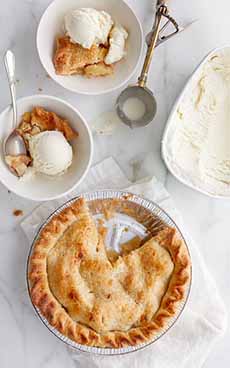
    Apple Pie A La Mode
    [1] No wonders it’s number one: It’s as American as apple pie (photo © Good Eggs).

    Pumpkin Pie
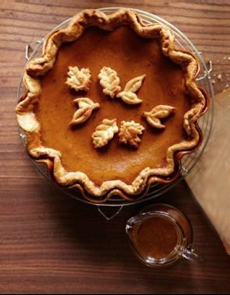
    [2] Pumpkin pie is delicious anytime, but gets a big boost from holiday sales (photo © Williams Sonoma).

    A pecan pie with a slice removed.
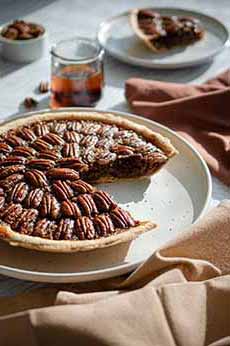
    [3] Pecan pie usually needs some whipped cream or vanilla ice cream to cut the sweetness (photo © Sara Cervera | Wesual | Unsplash).

    Cherry Pie
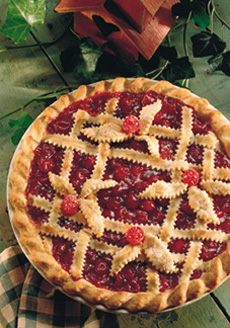
    [4] Cherry pie with a lattice crust. We love a lattice crust on any pie (photo © Cherry Marketing Institute).

    Lemon Meringue Pie
    [5] Lemon meringue’s appeal is slight tartness and fluffy meringue (photo © The Nibble | DALL-E 2025-03-14).

    Chocolate Pie
    [7] Chocolate pie can be easily made with chocolate pudding, but we prefer a from-scratch recipe (photo © DeLallo).

    A slice of Key Lime pie topped with whipped cream and a slice of lime
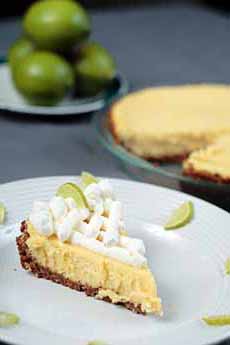
    [8] Key lime pie is our personal favorite (photo © David Hsu | Dreamstime).

    Peach Pie
    [9] Peach pie with an appealing polka-dot top. Here’s the recipe (photo © The Baker Chick).

    Sweet Potato Pie
    [9] Sweet potato pie (photo © The Nibble | FLUX 1.1 2025-03-14).

    Archimedes Statue
    [10] Archimedes of Syracuse envisioned in bronze in 1978 by Gerhard Thieme. It is located in Treptower Park in Berlin (photo Public Domain).


    It’s Pi Day—the second day of the year to celebrate pie (the actual National Pie Day is January 23rd, and February is Great American Pie Month).

    Pi Day riffs on the actual purpose of Pi Day, to celebrate the mathematical constant, approximately equal to 3.14159, that is the ratio of a circle’s circumference to its diameter.

    The first accurate approximation of pi was calculated by the ancient Greek mathematician Archimedes of Syracuse around 250 B.C.E. See a statue of him in photo #10.

    But hey, you can’t eat math, so let’s head to pie, the pastry.

    Pie is a pastry dough casing that contains a filling of sweet or savory ingredients; but in the U.S., most of the pie consumed is sweet. (See below for examples of savory pies.)
     
    > The history of pie.

    > The different types of pie: a photo glossary.

    > The difference between a pie and a tart.

    > The year’s 31 pie holidays are below.
     
     
    THE MOST POPULAR PIES IN AMERICA

    Different surveys deliver different results, but this list based on sales: the pies ordered in 2024 from Instacart.

  • 1: Apple pie, 29%
  • 2: Pumpkin Pie, 23%
  • 3: Pecan Pie, 9%
  • 4: Cherry Pie, 8 %
  • 5: Lemon Meringue Pie, 6%
  • 6: Blueberry Pie, 5%
  • 7: Chocolate Pie, 4%
  • 8: Key Lime Pie, 4%
  • 9: Peach Pie, 2%
  • 10: Sweet Potato Pie and All Other Varieties, 3%
  •  
     
    FAMOUS PEOPLE BORN ON PI DAY

    And as long as we’re celebrating Pi Day, check out the famous people born today (below). Alas, we could not easily discover their favorite pies.

  • Albert Einstein (1879), Nobel Prize-winning physicist.
  • Billy Crystal (1948), actor, comedian, and filmmaker.
  • Quincy Jones (1933), music producer, composer, and arranger.
  • Michael Caine (1933), Academy Award-winning British actor.
  • Steph Curry (1988), NBA superstar.
  • Jamie Bell (1986), British actor.
  • Simone Biles (1997), Olympic gold medal gymnast.
  •  
     

    THE YEAR’S 31 PIE HOLIDAYS
    January

  • January 23: National Pie Day
  • January 23: National Rhubarb Pie Day
  •  
    February

  • February: Great American Pies Month
  • February 9: Pizza Pie Day
  • February 20: National Cherry Pie Day
  •  
    March

  • March, 1st Full Week: British Pie Week (the first Monday)
  • March 2: National Banana Cream Pie Day
  • March 14: Bake a Pie in Solidarity Day
  •  
    April

  • April 28: National Blueberry Pie Day
  •  
    May

  • May 8: National Coconut Cream Pie Day
  • May 13: National Apple Pie Day
  •  
    June

  • June 9: National Strawberry Rhubarb Pie Day
  •  
    July

  • July 12: National Pecan Pie Day
  •  
    August

  • August, 1st Friday: Braham Pie Day*
  • August 1: Homemade Pie Day
  • August 1: National Raspberry Cream Pie Day
  • August 15: National Lemon Meringue Pie Day
  • August 18: National Ice Cream Pie Day
  • August 20: National Chocolate Pecan Pie day
  • August 24: National Peach Pie Day
  •  
    September

  • September 15: Butterscotch Cinnamon Pie Day
  • September 23: Great American Pot Pie Day
  • September 26: National Key Lime Pie Day
  • September 28: National Strawberry Cream Pie Day
  •  
    October

  • October 14 to 20: National Baking Week happens every October 14 to 20 in the U.K.
  • October 23: National Boston Cream Pie Day (but it’s really a cake)
  • October 26: National Mincemeat Day
  •  
    November

  • November 27: National Bavarian Cream Pie Day
  • November 29: National Lemon Cream Pie Day
  •  
    December

  • December 1: National Fried Pie Day
  • December 25: National Pumpkin Pie Day
  •  
    Blueberry Slab Pie
    [6] Blueberry slab pie. Here’s more about slab pie (photo © Pillsbury).
     
     
    TYPES OF SAVORY PIES

    Savory pies exist in cuisines around the world. In fact, they were far more abundant than dessert pies due to first, the availability of sugar, and second, the high cost of it.

    Some savory examples:
     
    Meat-Based Pies

  • Australian Meat Pie: Small, hand-sized pies filled with minced meat and gravy (Australia/New Zealand).
  • Cottage Pie: Like shepherd’s pie, but with beef instead of lamb (UK).
  • Empanadas: Turnover-style pies with various meat fillings, popular in Latin America and Spain.
  • Pasty (Cornish Pasty): A hand pie filled with beef, potato, turnip, and onion (UK, Cornwall).
  • Shepherd’s Pie: Ground lamb with vegetables, topped with mashed potatoes (UK).

  • Sfiha (Lahmacun): Middle Eastern/Levantine open-faced meat pies with spiced ground beef or lamb.
  • Steak and Kidney Pie: Diced steak, kidney (usually beef or lamb), and gravy in a pastry crust (UK).
  • Tourtière: A spiced meat pie, traditionally made with pork (Canada, Quebec).
  •  
    There are also meat pot pies variations of chicken pot pie, made with beef, ham, game, lamb, pork, and sausage.

    Poultry and Seafood Pies

  • Chicken Pot Pie: Chicken, vegetables, and a creamy sauce in a flaky pastry crust (USA).
  • Fish Pie: A creamy, mashed potato-topped pie with fish and seafood (UK).
  • Seafood Pot Pie: clam, lobster, salmon, and shrimp are variations of chicken pot pie.
  • Turkey and Cranberry Pie: A post-Thanksgiving favorite using leftover turkey (USA).
  •  
    Vegetable/Vegetarian Pot Pies

  • Broccoli and Cheese Pot Pie: A “comfort food” mix of broccoli, cheddar, and creamy sauce.
  • Curried Lentil and Vegetable Pot Pie: A spiced, hearty vegan option with coconut milk.
  • Quiche: A French savory tart with eggs, cream, cheese, and fillings like spinach, mushrooms, or bacon. Note that quiche is not a pie but a tart.
  • Root Vegetable Pot Pie: Features carrots, parsnips, sweet potatoes, and turnips in a rich broth.
  • Mushroom Pie: Also mushroom and spinach, or other combination.
  • Pumpkin and Sage Pot Pie: A fall-inspired dish with roasted pumpkin and aromatic sage.
  • Spaghetti Pie: A pie filled with—you guessed it—pasta and your favorite add-on ingredients.
  • Spanakopita: A Greek phyllo pastry pie filled with spinach and feta cheese.
  • Tiropita: A Greek cheese pie, usually made with feta and phyllo dough.
  •  
    Regional Specialties

  • Burek: A Balkan savory pie made with flaky dough and filled with meat, cheese, or spinach.
  • Pastel de Choclo: A Chilean corn pie with a savory-sweet corn topping over meat or seafood.
  • Kulebyaka: A Russian stuffed pie with layers of fish, rice, mushrooms, and eggs.
  • Torta Pasqualina: An Italian Easter pie with spinach, ricotta, and whole eggs baked inside.
  •  
     
    ________________
     
    *The history of Braham Pie Day: This celebration was founded in 1990 by Phyllis Londgren of Braham, a city in east-central Minnesota about 60 miles north of Minneapolis-St. Paul. That same year, Braham was named the “Homemade Pie Capital of Minnesota” by Governor Rudy Perpich. Londgren (d. 2019) sought to honor the pie-and-coffee heritage of the park and town. The town’s pie fame dates back to the 1930s and 1940s when travelers taking the “shortcut to Duluth through Braham” would stop at Braham’s Park Cafe for pie and coffee.

    The first Braham Pie Day was a pie and ice cream social. It has since grown to include craft shows, performances, pie-baking and pie-eating contests, and more. Here’s more about it.

    Yes, there is still a café located in Braham Park. The Park Café is situated at 124 Main Street South in Braham. It serves breakfast and lunch daily, including the tradition of homemade pies and fresh-brewed coffee.

    Surprisingly, there is no “Braham pie.” Seems to us that a pie-recipe contest is in order.


    CHECK OUT WHAT’S HAPPENING ON OUR HOME PAGE, THENIBBLE.COM.


    Comments off

    The Nibble Webzine Of Food Adventures
    RSS
    Follow by Email


    © Copyright 2005-2025 Lifestyle Direct, Inc. All rights reserved. All images are copyrighted to their respective owners.