THE NIBBLE BLOG: Products, Recipes & Trends In Specialty Foods


Also visit our main website, TheNibble.com.

Gift Of The Day: Dar Baklava & Other Middle Eastern Treats

Dar Baklava Gift Box
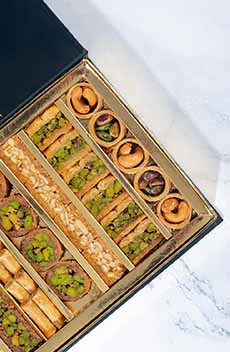
[1] Who wouldn’t want a 40-piece box of miniature Middle Eastern pastries (photos #1, #5, #6, and #7 © Dar Baklava).

Middle Eastern Pastry Plate
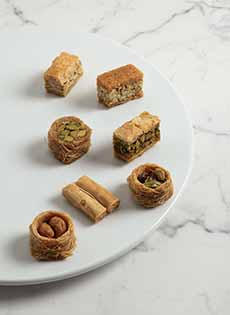
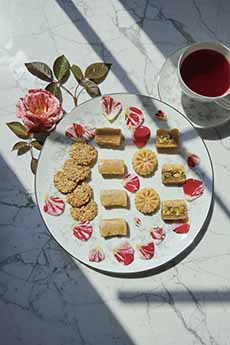
[2] A beautiful plate of miniature Middle Eastern pastries, ready to serve with coffee (Abacus Photo).

A Sheet Of Phyllo Dough
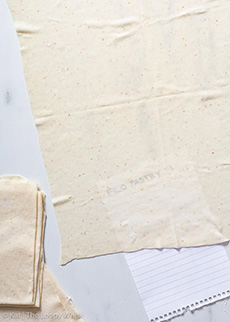
[3] Phyllo dough is as thin as a sheet of paper! This photo shows a gluten-free sheet that is part of a GF baklava recipe (photo © The Loopy Whisk).

Bird's Nest Pastry
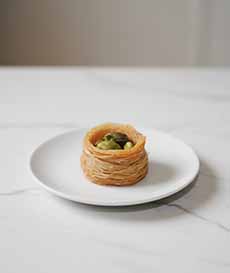
[4] A bite-sized Bird’s nest pastry: a phyllo nest with honey and pistachio “bird’s eggs” inside (Abacus Photo).

Middle Eastern Pastry Tray
[5] Another miniature pastry plate, ready for tea, hot or iced.

Dar Baklava Gift Boxes
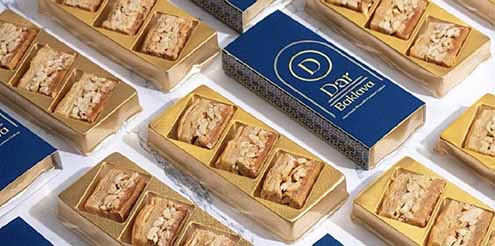
[6] Handsome gift boxes.


November 17th is National Baklava Day, the perfect day to present our Gift Of The Day: Dar Baklava.

This Middle Eastern dessert is made of layers of phyllo pastry filled with a mixture of ground nuts and sugar. The pastry is brushed with a honey syrup flavored with lemon or rosewater, baked, and sliced.

The earliest form of baklava was made in the 8th century B.C.E. in northern Mesopotamia. The Assyrians layered very thin pieces of dough with nuts and honey, then baked them in wood-burning ovens.

It recipe through the Levant*, and Greek seamen brought the concept back to Hellas.

Fast forward eight centuries or so.

Dar Baklava has created mini versions of baklava and other favorite treats. These miniature pastries are great for snacking, for a small dessert with coffee, or on a pastry tray presentation (photos #2 and #5).

We’ll take a big bite out of Dar Baklava in a minute, but first, for your consideration:

> The history of baklava.

> The different types of pastry: a photo glossary.

> The year’s 15+ pastry holidays.
 
> The year’s 16 Greek food holidays.
 
 
INTRODUCING DAR BAKLAVA & OTHER PHYLLO CONFECTIONS

Dar Baklava is a Chicago-based business founded by a local pediatrician, Sherif Badawy. Why would a physician start a pastry business?

A fitness enthusiast as well as a doctor, Dr. Badawy noticed that the U.S. market lacked a snackable, healthier version of his favorite treat.

  • He spent years of research perfecting a recipe that preserved baklava’s flavors and textures while reducing the sugar (plus, there are up to four times more nuts than dough).
  • He wanted them to be a snack, as well as kid-friendly, so he engineered convenience and portability.
  •  
    The result: bite-sized baklava, formulated with 80% nuts, 20% phyllo dough (photo #3—some spell it filo), and less sugar than a traditional recipe. It’s finger food, but there are no sticky fingers!

    The baklava is made in in three varieties featuring different nuts*: cashew, pistachio, and walnut.

    Dr. Badawy went on to recreate other Middle Eastern favorites in miniature, so that you can have everything from:

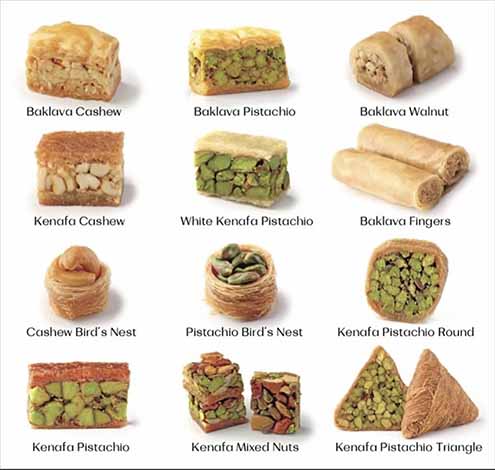
  • Set of 40 handcrafted baklava pieces with 8 different varieties (photos #1, #6, and #8), including pistachio baklava, pistachio kunafa, pistachio kunafa round, pistachio bird’s nest, cashew baklava, cashew kunafa, cashew baklava fingers, and cashew bird’s nest.
  • Individual packages of three pieces, good for grab-and-go, lunch boxes, and stocking stuffers.
  •  
    The pastries are handmade in Jordan.
     
     
    Packages Of Cashew Baklava
    [7] Three-piece grab and go packages are great stocking stuffers.
     
    GET YOUR PASTRIES HERE

    > Head to DarBaklava.com.

    > You can also find them on Amazon.
     
     
    ARE THESE PASTRIES…OR ARE THEY COOKIES?

    The culinarian in us raises the question: Dar Baklava may be miniature pastries, but they’re also finger food and shelf-stable, like cookies.

    We pondered this and decided: Dar’s pastry bites are still pastries.

    Why not a cookie?

  • Baklava’s fundamental structure defines it as a pastry: layers of phyllo dough with nuts and syrup/honey. Its laminated, flaky phyllo construction is the hallmark of pastry work, not cookie baking.
  • Cookies are typically made from a dough (often with flour, butter, sugar, eggs) that’s scooped, rolled, or cut, then baked into a single cohesive texture (see the 10 basic types of cookies).
  • The preparation differentiates them as well. Baklava is assembled in layers and baked, then soaked with syrup: a distinct pastry technique. Cookies go into the oven as dough and come out finished.
  •  
    Size doesn’t change category: Miniature éclairs and cream puffs are still pastries. Just because they’re finger-food-sized doesn’t change anything.
     
    A Chart Of MIddle Eastern Pastry Types
    [8] The different miniature pastries from Dar Baklava.

     
    ________________

    *The Levant is an English term that first appeared in 1497. It originally referred to the “Mediterranean lands east of Italy.” The historical area comprises modern-day Iraq, Israel, Jordan, Lebanon, Palestine and Syria. Among other popular foods, Levantine cuisine gave birth to baklava, falafel, kebabs, mezze (including tabbouleh, hummus and baba ghanoush), pita and za’atar, among other dishes that are enjoyed in the U.S. and around the world.

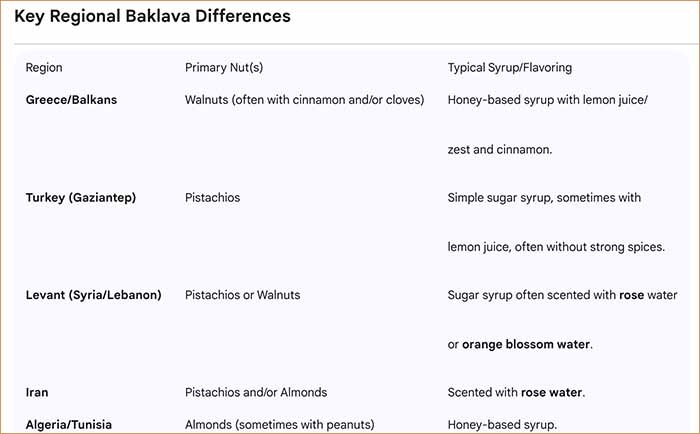
    †There isn’t a single, “traditional” nut used in baklava, as the pastry is made in multiple countries and regions, each with its own abundant supply and palate preference. Walnut is the classic choice in many regional recipes, including Greek, Balkan, and some Levantine (like Lebanese and Syrian) recipes. They tend to offer a more robust, slightly earthy flavor that balances the sweetness of the syrup.

    Pistachio is the nut used in Turkish and Iranian baklava, and is also very popular in Syrian baklava. Pistachios provide a brighter green color and a richer, slightly sweeter, buttery flavor. In Turkey the famous Azep variety Gaziantep variety from south-central Turkey, has been granted Protected Geographical Indication (PGI) status by the EU, recognizing their unique regional characteristics and quality standards. Here’s more about them.

    Check out the chart for regional preferences.

    Comparison Chart Of Different Nuts Used In Baklava
    Gemini Chart.


    CHECK OUT WHAT’S HAPPENING ON OUR HOME PAGE, THENIBBLE.COM.


    Comments off

    Gift Of The Day: Drizzle Honey In Flavors Galore

    It’s easy for many people to find holiday gifts that they know the recipient wants. But what if you have no idea?

    Our recommendation: artisan foods. They don’t require much space (most people we know are space challenged), you eat them, and you get the space back pretty quickly.

    Thus, our Gift Of The Day: Drizzle Honey.

    Drizzle Honey is delicious, affordable, healthful, and useful in everyday meals. It checks all the boxes of an affordable premium gift that can be enjoyed immediately (just stick a spoon in the jar and revel in the flavor).

    Drizzle Honey strikes the perfect balance between wellness and indulgence. As a natural sweetener, it’s a better alternative to refined sugar while still satisfying that sweet tooth we have.

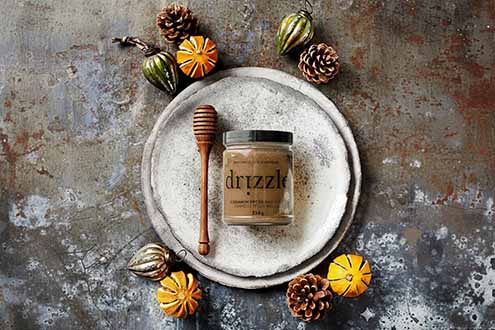
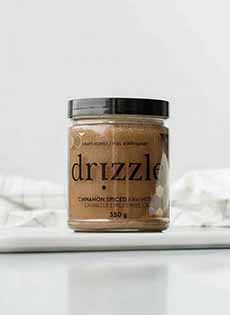
    Truth to tell, we eat a spoonful of our favorite flavor—Cinnamon Spice (photo #1)—from the jar every day to satisfy our sweet tooth, and then incorporate into the meals we eat, from stirring into salad dressing to glazing anything about to go into the air fryer.

    Drizzle Honey isn’t just another jar on the pantry shelf. It’s a top-quality raw honey.

  • Raw honey is unprocessed honey that retains its natural enzymes, antioxidants, vitamins, and minerals because it is not heated (pasteurized) or heavily filtered like “supermarket honey.”
  • It’s better for you than “regular” honey because these beneficial compounds remain intact, providing potential health advantages like improved digestion, antibacterial properties, and antioxidant effects that are diminished in pasteurized honey.
  •  
    The company is based in Calgary, Alberta, Canada, and the honey is sourced from apiaries across Canada. The company works with local Canadian farms and beekeepers who maintain hives in remote locations away from pesticides, or near diverse floral sources.
     
     
    ENJOYING DRIZZLE HONEY

    Whether your giftees drizzle it over morning yogurt, stir it into tea, glaze roasted vegetables, or uses it as a natural sweetener in baking, they’ll enjoy your gift with every golden drop.

    At breakfast alone, we swirl it into our tea, oatmeal, and yogurt, spread it on toast, and drizzle it over berries that aren’t as sweet as they could be. Check the first link below to see how we use it for lunch, dinner, and dessert.

    > 30 tasty uses for honey.

    > The history of honey.

    > The different types of honey: a photo glossary.

    > The year’s 2 honey holidays.

    > Honey varietals: the different types of honey.

    > The different forms of honey (liquid, crystallized, creamed, etc.).

    > How bees produce the honey.

    > Pairing honey with foods and beverages.

    > Storing and using honey.
     
     
    HONEY WITH PERSONALITY

    One of the most delightful aspects of gifting Drizzle Honey is the variety of flavors available. From classic raw honey to inventive infusions, there’s a jar to match every taste preference.

    If you don’t know what the giftee might like, we’d default to Cinnamon Spice, a crowd pleaser and our personal favorite.

    The warm, aromatic notes of cinnamon paired with pure, top-quality honey is a cozy flavor that’s perfect for the winter season.

    The plain Golden Raw Honey and White Raw Honey are good choices if you don’t know what flavor the giftee might like.

    We particularly like the flavored honeys, each with its own charm—the spice of the Cinnamon Spice, the heat of Hot Honey, the zing of Ginger Shine, and so on.

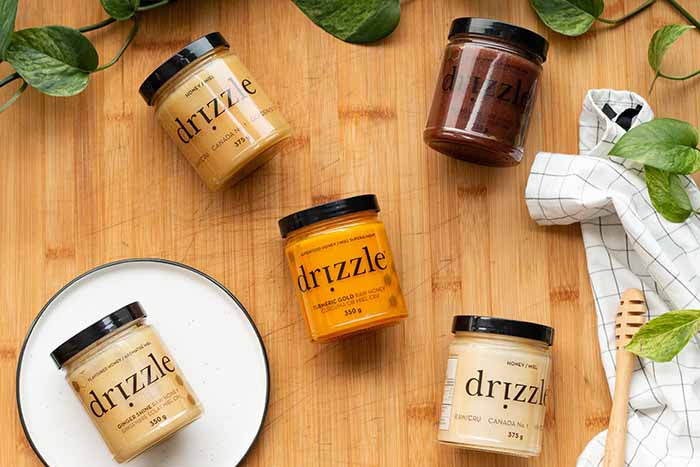
    Additional flavors include Berry Bliss, Cacao Luxe, and Turmeric Gold.
     
     
    AN AFFORDABLE DELIGHT

    The nicely designed jars of Drizzle Honey look and feel like a premium gift without the premium price tag. Individual jars are $15 or less: a great price for co-workers, teacher gifts, stocking stuffers, neighbors.

    There are also multiple-flavor gifts, attractively packaged.

    The jars are attractive enough to give as-is, but if you want to add more, consider pairing the jar with:

  • A wooden honey dipper tied with festive ribbon (photo #7, below).
  • A handwritten recipe card with a favorite way to use that particular flavor.
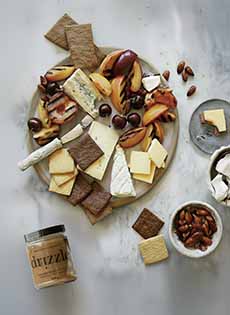
  • A small cheese board or tea sampler for a themed gift basket.
  • Artisanal crackers to pair with cheese. we recommend Effie’s Biscuits (which also make delectable, affordable gifts).
  •  
    This holiday season, skip the forgettable trinkets. Give something that will be savored, enjoyed, and remembered.

    After all, the best gifts are those that become part of someone’s daily life. Drizzle honey will be there, creating small moments of joy long after the wrapping paper has been recycled. That’s exactly what Drizzle Honey delivers, one delicious drizzle at a time.

    A Jar Of Drizzle Honey With A Honey Dipper
    [8] Honey can be messy, which is why the honey dipper (a.k.a. honey wand, honey stick, honey drizzle, honey spoon) was invented. These are from The London Honey Company (photo © The London Honey Company).
     
     
    GET YOUR DRIZZLE HONEY GIFTS

    > Head to the Drizzle Honey website for a cornucopia of options.

    > You can find retailers and e-tailers here.


    A Jar Of Cinnamon Spice Drizzle Honey
    [1] If one could be in love with a jar of honey, Cinnamon Spice Raw Honey is my guy (photos #1, #3, #4, and #8 © Drizzle Honey.

    Cheese Board With Drizzle Honey
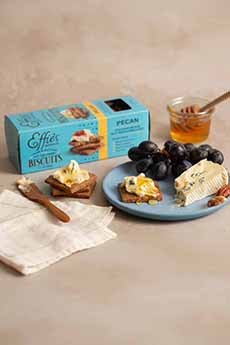
    [2] We always have honey with our cheese and charcuterie (photos #2 and #5 © Effie’s Homemade).
     
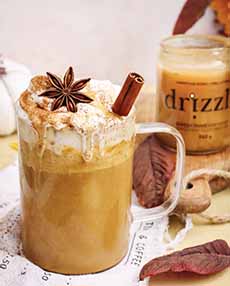
    Christmas Latte With Honey
    [3] Turn your latte, hot chocolate, or anything warm into a festive holiday drink. Here’s the recipe.

    A Plate Of Honey-Glazed Squash
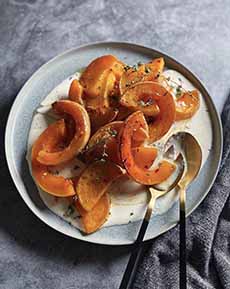
    [4] Honey-Glazed Squash. Here’s a recipe.

    Effie's Biscuits & Cheese Plate
    [5] One of our favorite snacks or light lunch: great cheese, great crackers, great honey.
     
    Honeybee taking pollen from a flower
    [6] Give thanks to the bees whose hard work creates the honey (photo © National Honey Board).

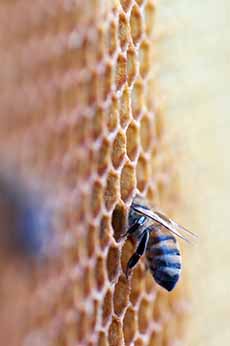
    Honeybee in honeycomb making honey
    [7] Give thanks to the bees whose hard work creates the honey (photo © Wolfgang Hasselmann | Unsplash).

     
    Jars Of Drizzle Honey Flavors
    [9] Pretty as a picture and ready to party—er…—drizzle.


    CHECK OUT WHAT’S HAPPENING ON OUR HOME PAGE, THENIBBLE.COM.


    Comments off

    The Truth About The Pilgrims’ First Pumpkin Pie: It Was Different

    Pumpkin Custard Baked In Pumpkin
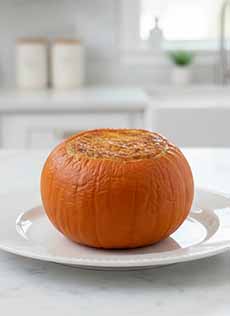
    [1] Pumpkin custard, a.k.a. pumpkin pie filling, baked in a pumpkin. The recipe is below (Gemini Photo).

    Historical Pompion Pie
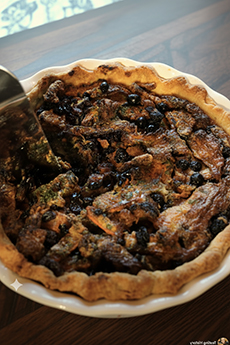
    [2] According to Tasting History, the first pumpkin pie—called pumpion pie—looked more like this. Here’s a recipe from 1670, interpreted for the modern table by Tasting History With Max Miller (photo © Tasting History | You Tube).

    Pumpkin Custard With Raisins
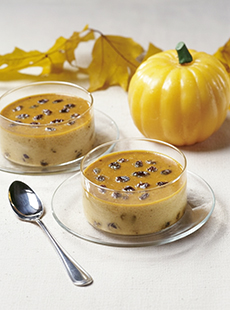
    [3] This is pumpkin custard—with raisins. You could use it to fill a pie. Here’s the recipe (photo © American Egg Board).

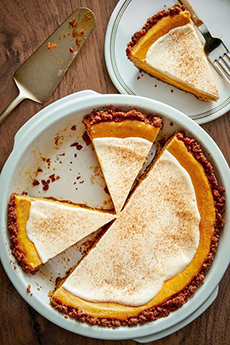
    No Crust Pumpkin Pie
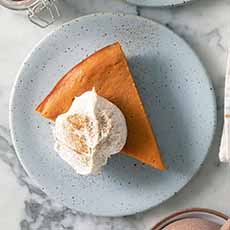
    [4] Here’s the pumpkin pie filling without the crust, i.e., a no-crust pumpkin pie. The recipe (photos #4, #5, #6, and #7 © Taste Of Home).

    Now, some “different” takes on the modern classic:

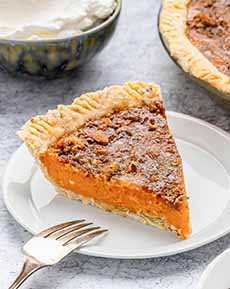
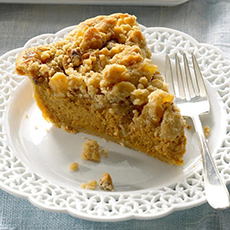
    Streusel Top Pumpkin Pie
    [5] Streusel-top pumpkin pie. Here’s the recipe.

    Ginger Streusel Top Pumpkin Pie
    [6] Ginger-streusel-top pumpkin pie. Here’s the recipe.

    Pumpkin Cheesecake Pie
    [7] Pumpkin cheesecake pie. Here’s the recipe.


    Some time ago we found an article featuring a photo similar to photo #1, claiming to be a facsimile of “the first pumpkin pie.” It was published in a regarded news source.

    However, don’t believe everything you read. No known recipes from the 1600s say “bake custard in a whole pumpkin.”

    In fact, surviving English and early American cookbooks from the 17th century don’t have any recipe that features a hollowed-out pumpkin, filled with custard, and baked).

    Pilgrims did cook pumpkin in ways that resemble the idea. Accounts from the period mention:

  • Hollowed pumpkins filled with milk and spices, then baked or roasted near the fire.
  • Pumpkins and other squash varieties used as cooking vessels.
  •  
    But if you want to try what they did make, see the recipe link in photo #2.

    To make the custard-filled pumpkin in photo #1, the recipe is below.
     
     
    IT’S A FALSE NARRATIVE. HERE’S THE TRUTH.

    Early “pumpkin pie” was not like modern pie. The early colonists’ “pompion pie” was pumpkin stewed with apples, spices, sometimes meat, and baked in a pastry crust.

    When historical sources say that “the Pilgrims baked pumpkin with milk and spices in the shell,” usually refer to:

  • Hollowing the pumpkin.
  • Adding some combination of pumpkin flesh, liquid (water, milk, or beer), sometimes sweetener, and spices.
  • Cooking it in or near the fire.
  •  
    This would yield a stewed or baked pumpkin dish with a flavored liquid—more like a rustic pumpkin stew/porridge than a set custard or modern pumpkin pie.

  • Historically, the egg-thickened custard inside a pumpkin is almost certainly an anachronism when applied strictly to the Pilgrims.
  • Pumpkin-as-vessel with dairy and spices is plausible, but it yields something closer to a sweet stewed pumpkin dish or spicy milk/pumpkin soup, unless eggs were added.
  •  
    The smooth custard filling in the modern pumpkin pie evolved in the 18th–19th centuries, after better ovens and pastry traditions spread in America.

    > The history of pumpkin pie.

    > The history of pumpkins.

    > The year’s 8 pumpkin holidays.
     
    So why does the “Pilgrims baked pumpkin pie in a pumpkin shell” story persist?

  • It has narrative appeal: a vivid, simple image.
  • Writers in the 19th–20th centuries loved romantic colonial imagery and often reimagined older dishes using more modern techniques (e.g. baked custard).
  • The flavor profile (pumpkin + dairy + warming spices + sweetener) bridges a gap between early colonial pumpkin dishes and modern pumpkin pie.
  •  
     
    RECIPE: PUMPKIN CUSTARD BAKED IN A PUMPKIN

    The filling of a pumpkin pie is essentially a pumpkin custard: eggs, cream, pumpkin, sugar, and spices.

    Avoid big carving pumpkins; they’re stringy and bland.
     
    Ingredients For 4-6 Servings

  • 1 small sugar pumpkin (about 2½–3 pounds / 1–1.4 kg)
  • Pinch salt
  • 1–2 tsp sugar
  •  
    For The Custard Filling

  • 3 large eggs
  • 2 cups (480 ml) half-and-half or 1 cup whole milk + 1 cup heavy cream
  • ½–⅔ cup (100–135 g) sugar (adjust to taste)
  • 1 teaspoon pure vanilla extract
  • 1–1½ teaspoons ground cinnamon
  • ¼ teaspoon ground nutmeg
  • ¼ teaspoon ground ginger
  • Optional: pinch of ground cloves or allspice
  • Pinch of salt
  • Garnish(es) (optional): chopped candied pecans (recipe), drizzle of maple syrup, ice cream, whipped cream
  •  
    Preparation

    1. PREHEAT the oven to 350°F / 175°C. Wash and dry the pumpkin. Carefully slice off the top (like a lid), about 2–3 inches across. Scoop out seeds and stringy pulp, leaving the flesh intact. (You can roast the seeds.)

    2. LIGHTLY SPRINKLE the inside with a pinch of salt and the sugar. Place the pumpkin in a shallow baking dish that fits it snugly so it doesn’t tip.

    3. PREPARE the custard. In a bowl, whisk the eggs until well blended. Add the sugar, salt, and all spices; whisk until smooth. Whisk in the half‑and‑half (or milk + cream) and vanilla until evenly combined. The mixture should be pourable and smooth, like pumpkin-pie custard without the pumpkin.

    4. POUR into the hollow pumpkin, leaving at least ½ inch (1–1.5 cm) of headroom so it doesn’t overflow when baking. Note: If the pumpkin is very wobbly, you can wedge crumpled foil around it in the baking dish to stabilize it.

    5. POUR hot water into the baking dish around the pumpkin to come about 1 inch (2–3 cm) up the sides (a water bath helps the custard cook gently).

    6. BAKE for 60–90 minutes. Start checking at 60 minutes: The custard should be set around the edges but still slightly jiggly in the very center. A knife or skewer inserted near the center should come out mostly clean, with perhaps a bit of silky custard but not any liquid.

    Timing will vary with pumpkin thickness and how full it is; a deeper custard can take closer to 90 minutes.

    TIP: If the pumpkin skin browns too quickly, tent loosely with foil.

    4. COOL. Carefully remove the baking dish from the oven and lift out the pumpkin (use big spatulas or thick oven mitts; it’s fragile when hot). Let cool on a rack at least 20–30 minutes. The custard will finish setting as it cools.

    5. SERVE warm or at room temperature. Scoop down through the custard and include some baked pumpkin flesh in each serving. Garnish as desired.
     
    Variations

  • Maple: Replace half of the sugar with maple syrup and reduce the liquid by 2–3 tablespoons.
  • Boozy: Add 1–2 tablespoons dark rum or bourbon to the custard.
  • Less sweet (for a side): Cut the sugar back to ⅓–½ cup and increase the spices and salt a touch.
  •  
     

    CHECK OUT WHAT’S HAPPENING ON OUR HOME PAGE, THENIBBLE.COM.


    Comments off


    © Copyright 2005-2026 Lifestyle Direct, Inc. All rights reserved. All images are copyrighted to their respective owners.