THE NIBBLE BLOG: Products, Recipes & Trends In Specialty Foods


Also visit our main website, TheNibble.com.

Paktli Puffed Ancient Grains Snacks

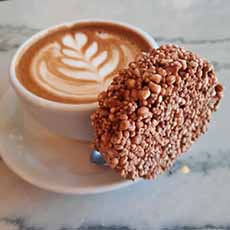
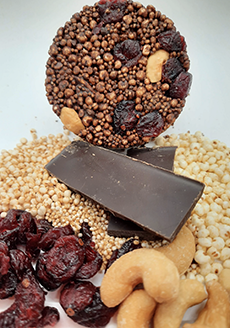
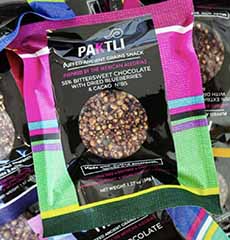
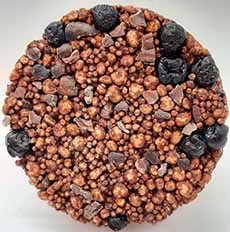
One of the rewards of walking up and down long aisles at food trade shows is that you sometimes come across something totally unexpected. That was the case with Paktli Snacks, made from puffed ancient grains that are gluten-free (photos #1 through #4). Our review is below, but first, some background.

The Aztec culture revered amaranth, a grain that thrives in hot temperatures and is largely resistant to drought. It was thus both tasty and reliable; crops were less likely to fail. It was a staple food along with beans, corn, and squash [source].

The Aztec name for amaranth was paktli, which means joy in the Nahuatl language. In prehispanic times, in addition to being a diet staple, amaranth was also used as currency and for ceremonial purposes.
 
 
THE AZTECS & AMARANTH

In the Aztec diet, amaranth, a native Mexican cereal grain, was second only to corn (another native cereal grain) in importance.

Every part of the plant is edible, but the Aztecs most valued the tiny seeds, which are even smaller than quinoa seeds. Like quinoa, amaranth is packed with essential amino acids. It also has twice the iron content of wheat.

As with corn, amaranth grains were toasted and eaten whole, boiled into porridge, or ground into flour to make tortillas and tamales.

During the holy month of Panquetzaliztli (analogous to December), toasted amaranth grains were mixed with honey into a dough called tzoalli, which in turn was shaped into idols of Huitzilopochtli, the sun and war god, and other deities.

The idols were paraded through the streets and displayed in the temple before being “sacrificed”; priests broke the candy statues into tiny pieces and distributed them among the crowd.
 
 
FROM IDOLS TO ALEGRÍAS

In Spanish, alegría is the word for joy—i.e., the Spanish word for paktli.

In Mexico, puffed amaranth is mixed with honey or sugar and served like a Rice Krispie treat. It’s a specialty of the town of Santiago Tulyehualco in the Xochimilco borough of Mexico City. It’s been known as alegría since the 16th century [source].

In September 2016, the treats from Santiago Tulyehualco were officially declared Patrimonio Cultural Intangible de la Ciudad de México (an intangible part of the cultural heritage of Mexico City).

Alegrías have become the most popular way of consuming amaranth. The amaranth grains are puffed in a hot pan without oil, then mixed with honey or sugar syrup. Pepitas (pumpkin seeds), nuts, and dried fruits are popular additions.

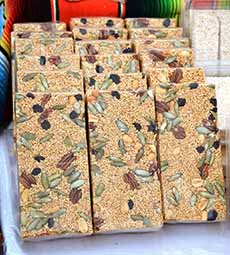
Rectangular bars and rounds are typical shapes (photo #5).
 
 
PAKTLI PUFFED ANCIENT GRAIN SNACKS

Paktli Foods’ puffed grain snacks are inspired by Mexican alegrías. In addition to amaranth, millet and quinoa are added to the snacks.

The grains are mixed with high-quality organic ingredients including chocolate, dried fruits, and nuts. The result is an all-natural, tasty, gluten-free, and may we add fun, snack.

The use of sugar is sparing; i.e., the snacks are not particularly sweet (just sweet enough), with 8g added sugars. They have 4g of protein. They are a delicious, healthier accompaniment to coffee, tea, and cola, instead of that cookie or candy bar.

Disks of 2-1/2 inches in diameter are made in:

  • Milk Chocolate
  • White Chocolate
  • 55% Cacao Bittersweet Chocolate with Dried Blueberries & Cacao Nibs
  • 70% Cacao Extra Dark Chocolate with Dried Cranberries and Cashews
  •  
    In addition to the disks, there are bags of smaller, bite-size snacks.

    Are you ready to take a bite of the modern version of an ancient snack?

    Head to PaktliFoods.com.
     
     
    > Check out the different types of grains.


    Paktli Snacks Puffed Ancient Grains
    [1] Milk chocolate puffed grain snack (photos #1, #2, #3, and #4 © Paktli Foods).

    Paktli Snacks Puffed Ancient Grains
    [2] Dark chocolate snack with dried cranberries and cashews.

    Paktli Snacks Puffed Ancient Grains
    [3] The puffed grain snacks are individually wrapped.

    Paktli Puffed Amaranth Snack
    [4] The 55% cacao snack with dried blueberries and cacao nibs (in our book, 55% cacao is “dark milk chocolate”).

    Mexican Puffed Amaranth Snacks
    [5] Mexican alegrias (photo Alejandro Linares Garcia | Wikipedia).


    CHECK OUT WHAT’S HAPPENING ON OUR HOME PAGE, THENIBBLE.COM.


    Comments off

    HOLIDAY GIFT: Tea Advent Calendar From Adagio

    Adagio Tea Advent Calendar
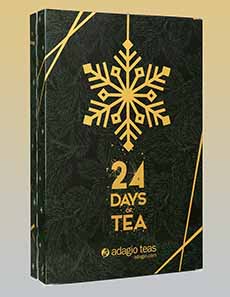
    [1] Tea excitement: 24 different varieties (both photos © Adagio Teas).


    [2] Inside the book-style gift box are windows holding the different teas, one for each day from December 1st through December 24th.


    We typically don’t begin to write about holiday gifts until November 1st, just after Halloween. But this tea advent calendar from Adagio can sell out. So if you know a tea lover who’d like one, you may want to order one now.

    The advent calendars are available with tea bags or loose tea. They are given before December 1st so the recipient can count down the days to Christmas with a treat each day.

    The teas selected for the 2022 calendar are a combination of popular favorites as well as limited-edition holiday blends.

  • The teabag version contains Adagio’s classic and best-selling teas—from single-origin white tea to candy cane-flavored black tea.
  • The loose tea version has single-serve portions of Adagio’s festive teas, including a few exclusive blends not sold elsewhere.
  •  
    Each calendar contains 24 individual servings, with enough tea to make an eight-ounce pot each day.

    The teas contain no added sugar and are gluten-free, dairy-free, nut-free, and vegan-friendly.

    At $34, Adagio Teas’ Advent Calendar is an affordable and festive way to mark the Days of Advent with a delicious daily cup.

    Get your advent calendar(s) at Adagio.com.
     
     
    > The history of the Advent calendar.

    > The history of tea.

    > The history of tea bags.

    > The different types of tea: a tea glossary.


    CHECK OUT WHAT’S HAPPENING ON OUR HOME PAGE, THENIBBLE.COM.


    Comments off

    FOOD FUN: Purple Potato Pizza Recipes

    Ready for some food fun? How about purple potato pizza? We have two recipes, one a grandma pizza with bacon and pesto, the second a Sicilian-style pizza with prosciutto.

    September is National Potato Month, August 19th is National Potato Day, and February 22nd is National Cook A Sweet Potato Day.

    There are 11 pizza holidays! Here’s the full list.

    > The history of pizza.

    > Forty different types of pizza.
     
     
    RECIPE #1: PURPLE POTATO GRANDMA PIZZA

    If you don’t have garlic oil, it’s easy to make. Since the potatoes need to soak for two hours, use the time to infuse regular olive oil; the instructions are below.
     
    Ingredients

  • 22-24 thinly-sliced purple potatoes
  • 16-18 ounces / 453-510 grams dough ball
  • 9 slices whole milk mozzarella (approx. 1 ounce / 28 grams each)
  • 3 ounces / 85 grams fresh pesto in a squirt bottle
  • 3 ounces / 85 grams sliced partially cooked smoked pancetta or bacon
  • 2 ounces / 57 grams feta cheese
  • 1/8 ounces / 3.5 grams chopped rosemary
  • Garlic olive oil drizzle
  • Grated romano cheese (substitute parmesan)
  • Extra virgin olive oil
  • Equipment: 12″ x 12″ inch pan
  •  
    Preparation

    1. SOAK the potatoes in a bowl of cold water for 2 hours.

    2. PREHEAT the oven to 500°-550°F. Lightly coat the pan with olive oil. Push the dough out to the corners of the pan. Carefully dimple the dough using your fingertips.

    3. ALLOW the dough to rise for approximately one hour. Dimple the dough again, degassing it, and place the pan into your oven. Par bake the crust until it’s slightly golden brown, approximately 5-7 minutes.

    4. REMOVE the crust from the oven and carefully spread 2 tablespoons of extra virgin olive oil on the bottom of the crust. Top the pizza with sliced mozzarella leaving a 1/4 inch border.

    5. PLACE the sliced potatoes evenly atop the pizza then add the bacon.

    6. RETURN the pan to the oven. Cook until golden brown; the total bake time ranges between 10-18 minutes.

    7. REMOVE the pizza from the oven and cut it into nine squares. Add the pesto, feta cheese, rosemary, romano cheese, and garlic oil drizzle. Serve and enjoy!

    To Make Garlic-Infused Olive Oil

    Add 1 cup of everyday olive oil to a saucepan, along with two peeled garlic cloves. Simmer for 15 minutes.

    If you like roasted garlic flavor, cook another 5 minutes or until the garlic is gold3en brown.

    Keep the infused oil for up to 2 weeks in the fridge, no longer per food safety guidelines.
     
     
    RECIPE #2: SICILIAN PURPLE POTATO PIZZA

    A Sicilian pizza is a deep dish pie. This recipe, from Colavita, uses a focaccia recipe for the dough.

    But even though it’s a thick crust, says Colavita, the dough is light and airy—and delicious.

    Colavita also notes: “A digital scale is imperative for bread and pizza making. It’s a small investment, and we highly recommend it.”
     
    Ingredients For The Dough

  • 1½ teaspoons active dry yeast
  • 300 grams warm water (80°F)
  • 450 grams bread flour
  • 50 grams semolina flour or polenta
  • 2 teaspoons white sugar
  • 10 grams kosher salt
  • 3 tbsp Colavita Extra Virgin Olive Oil, plus more for oiling pans
  •  
    Ingredients For The Pizza

  • 2 tablespoons olive oil
  • 1 pound small, purple potatoes, very thinly sliced
  • 4 ounces prosciutto, cut into small pieces
  • 2 tablespoon fresh rosemary, chopped
  • Large flake sea salt and freshly ground black pepper to taste
  • Equipment: a Sicilian pizza pan or an 11″ x 14″ rimmed baking sheet
  •  
    Preparation

    1. MAKE the dough. Pour the water into a medium bowl. Add the active dry yeast (and poolish—see the note below or starter, if using) to the water and stir vigorously. Allow it to rest for 5 minutes. The mixture will become foamy.

    2. ADD the flour, semolina, sugar, and salt to the bowl of a stand mixer. Mix to blend all the ingredients. Pour in the yeast mixture and the 3 tablespoons of olive oil.

    3. MIX on low speed for 8-10 minutes, scraping down the sides of the bowl if necessary.

    4. OIL a large bowl with a little olive oil. Place the dough into the bowl, cover with plastic wrap and allow to rise at room temperature for 1.5-2 hours.

    5. BRUSH the pan with olive oil. After 2 hours, punch the dough down (this is called degassing) and place the dough in the prepared pan, stretching it gently with your fingertips to take the shape of the pan. Drizzle 1 tablespoon of olive oil over the top of the dough, smoothing it over the surface with your hands. Cover with plastic wrap and allow it to rest for 30 minutes.
    Assemble and bake the pizza

    6. PREHEAT the oven to 450°F. Remove the plastic wrap from the dough. Scatter the potatoes over the top of the dough. It’s best if you place them in a single layer so they cook completely.

    7. PLACE the prosciutto on top of the potatoes, distributing the pieces evenly. Drizzle another tablespoon of olive oil over the top and sprinkle with the rosemary, sea salt, and freshly ground black pepper.

    8. PLACE the pizza in the oven and bake for 20 minutes, rotating the pan halfway through the baking process. Remove from the oven, slice, and serve.
     
    Making A Poolish

    Poolish, also called biga, is a pre-ferment that makes baked goods soft, fragrant and aromatic.


    Purple Potato Pizza Recipe
    [1] Recipe #1: A purple potato pizza, grandma-style (photo © Potato Goodness).

    Purple potatoes on a cutting board
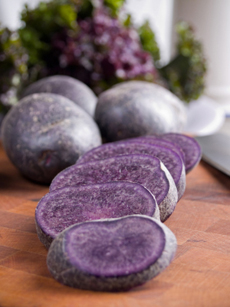
    [2] Purple potatoes, originally from Peru, are now grown in the U.S. There are different varieties, some more purple than others (photo © Mona Makela | iStock Photo).

    Cooked Bacon Strips
    [3] Bacon is always a welcome ingredient (photo © iGourmet).

    A Bowl Of Basil Pesto
    [4] Basil pesto provides a flavorful garnish for purple potato pizzas (photo © Looby | iStock Photo).

    Purple Potato Pizza Recipe
    [5] Recipe #2: Sicilian-style purple potato pizza on a focaccia crust (photo © Colavita Recipes).

    Prosciutto Slices
    [6] Instead of bacon (in recipe #1), recipe #2 uses prosciutto.

    Bunch Of Fresh Rosemary
    [7] Fresh herbs are a delicious layer of flavor. Like the basil on a Margherita pizza, add them when the pizza comes out of the oven (photo © Burpee).

     
    If you’d like to make this recipe with sourdough or poolish, use 100g of either and remove 50g each of the water and bread flour. Simply add the 100g of starter/poolish to the water along with the active dry yeast in the first step. Poolish adds flavor to the crust.

    To make a poolish: In a medium glass or plastic container, combine 50g warm (80°F) water, 50g flour, and 1/8 teaspoon active dry yeast. Stir until the mixture resembles a batter. Cover loosely and allow to rest for 12 hours. After 12 hours, the mixture should be bubbly and ready to use.

    Food Trivia: “Poolish” comes from the old English “polish.” It’s a type of leavening process that originated in Poland, where it initially was used in pastry production; its first mention dates to 1840. As its use spread throughout Europe it became common in bread and became prevalent in French making. Today it is used worldwide. Here’s more about it and other pre-fermentation techniques.


    CHECK OUT WHAT’S HAPPENING ON OUR HOME PAGE, THENIBBLE.COM.


    Comments off


    © Copyright 2005-2026 Lifestyle Direct, Inc. All rights reserved. All images are copyrighted to their respective owners.