THE NIBBLE BLOG: Products, Recipes & Trends In Specialty Foods


Also visit our main website, TheNibble.com.

Cara Cara Oranges, The “Red Navel” Orange

We’d read about Cara Cara oranges, we’d seen photos; but we hadn’t tasted one until this week. It was exquisite: sweet and “old school,” when all fruit was grown to be perfectly sweet and lush.

(Today, too much fruit is grown to look great on the shelf, to be durable for transport, to eliminate bothersome seeds, and just about every reason other than natural sweetness and deep taste.)

Cara Cara oranges are a variety of navel orange, distinguished by their rosy pink, juicy, sweet flesh and low acidity.

The rosy flesh has a berry-flavored zing with a touch of spice. Depending on where the oranges are grown, the undertones can be cherry, cranberry, raspberry, strawberry or a combination.

Cara Caras are not unlike like blood oranges, which are grown in the U.S. but hail from Italy, where they also were a natural mutation. As with blood oranges, some have a pink blush outside on the peel, as well as in the flesh.

Cara Caras are also called “pink navel” or “red navel” oranges.
 
 
CARA CARA ORANGE HISTORY

The Cara Cara variety was first discovered in 1976 on a Washington navel orange tree growing at the Hacienda Cara Cara, a private home in Valencia, Venezuela. It is believed to have been a mutation.

The delightful “new” orange was propagated. It has since been crossed with the Bahia navel orange and bred to remove the seeds, which increases consumer appeal.

The variety was first planted in Florida groves. Twelve years ago, commercial growing began in California, where the variety thrived in the climate of the San Joaquin Valley.

The trees bear fruit from December through April.

Cara Caras did not enter the national consumer market until the late 1980s.

For years, they were carried only by specialty markets.

The fruit was finally distributed nationally about 10 years ago by produce companies like Melissa’s Produce and Sunkist.

They are now available at a broader range of grocers nationwide.


[1] No, they’re not Ruby Red or Red Star grapefruit, but pink navel oranges, called Cara Caras (photo © Good Eggs).


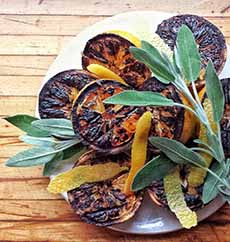
[2] The oranges are torched, or bruleed, to caramelize their sugars at The Pines in Brooklyn (photo © The Pines [alas, now closed]).


A delicious halibut dish with Cara Cara
oranges and beets (recipe). Photo courtesy
Tasty-Trials.com
 

CARA CARA ORANGES ARE MORE NUTRITIOUS

As a bonus, Cara Caras deliver more vitamin power. The Sunkist Nutrition Bureau found a wealth of nutritional advantages in Cara Cara oranges: higher in vitamin C, A and fiber than other navels. Sunkist calls its Cara Cara “The Power Orange,” and has trademarked the term.

Like other oranges, Cara Caras are a good source of folate and potassium, and the rosy flesh provides Lycopene, the disease-fighting antioxidant found in red-fleshed fruits from papaya to tomato to watermelon.
 
 
HOW TO ENJOY CARA CARA ORANGES

First and foremost, Cara Caras are a wonderful hand fruit:* very juicy and sweet. You can enjoy them at breakfast, snack time or on the run.

 
Look for Cara Cara oranges that are firm and heavy for their size. The juiciest, sweetest fruit will have a sweet, clean fragrance rising from the peel.

If you won’t eat all of them immediately, store the oranges in a cool spot for up to one week or refrigerate for up to two weeks.
 
 
RECIPES: COOKING WITH CARA CARA ORANGES

Cara Caras are popular with chefs for use in vinaigrettes and cooked sauces. They pair beautifully with white-fleshed fish such as halibut, and also make a terrific orange sorbet.

Here’s a delicious recipe for Halibut with Cara Cara Orange Miso Cream Sauce and Roasted Beets

Check out these recipes from Sunkist:

  • Grilled Salmon With Sauteed Sunkist® Cara Cara Oranges Recipe
  • Fresh Cara Cara Pico De Gallo Recipe
  • Cara Cara Citrus Mint Salad with Ginger Lime Dressing Recipe
  • Grilled Halibut with Cara Cara Navel Orange and Walnut Romesco Recipe
  •  
     
    WHAT ARE NAVEL ORANGES

    There are two major species of eating oranges: Navel and Valencia (bitter orange varieties, such as the Seville, are used in marmalade and other recipes but not as hand fruit.) There are also “minor” varieties in limited supply, such as blood oranges.

  • Navel oranges are easy to identify: They have a belly button-type formation opposite the stem end. Considered the world’s finest orange for eating, navels are seedless and they peel and segment easily. Domestic Navel oranges are available from November through May—a long growing season, which adds to their popularity. Subspecies include the Bahianinha or Bahia navel, Cara Cara, Dream Navel, Late Navel and Washington or California Navel.
  • Valencia oranges, often called summer oranges, are the main juicing orange. They are small to medium sized, usually thin-skinned, and may have seeds. They are available in the U.S. from February through October.
  •  
    _______________

    *The term “hand fruit” refers to a piece of fruit that is eaten from the hand, whether or not it needs to be peeled: apples, bananas, stone fruit (apricots, peaches, pears, plums) and so forth. Even though they can be eaten with the fingers, berries are not hand fruits.


    Comments off

    TIP OF THE DAY: Chilean Blueberries & A Fresh Blueberry Tart Recipe

    Ordinarily we don’t eat out-of-season foods; for one thing, our sustainable self would feel wasteful of the fuel miles consumed by transporting produce from below the equator.

    Secondly, weeks in transport mean that what arrives isn’t necessarily the freshest produce; and often the flavor suffers.

    But a few weeks ago, on one of the coldest days of winter, we received a gift of a generous amount of Chilean blueberries—firm, plump and bursting with flavor. They brought sunshine into our kitchen; we relished every berry.

    With organic-, antioxidant- and mental acuity*- focused Americans snatching up blueberries year-round, imports continue to grow. All through our winter, these summer fruits are available nationwide. Shipments, which began in mid-December, will continue through April (the U.S. harvest begins in May).


    Plump, sweet blueberries from Chile. Photo courtesy FreshFruitPortal.com.


    If you’ll be in baking mode this weekend, consider the delicious blueberry tart recipe below, courtesy of the Chilean Blueberry Committee. You can find more recipes for fresh blueberries at FruitsFromChile.com.

    Tart versus pie:
    What’s the difference? There are quite a few, actually. Here’s the scoop on the differences between pies and tarts. We far prefer the thicker, buttery, cookie-like tart crust to a thin, soft pie crust. It’s a personal choice.


    There’s no need to wait until June for a
    luscious blueberry tart or pie. Photo courtesy
    Chilean Blueberry Committee.
      DELICIOUS BLUEBERRY TART RECIPE

    PREP TIME: 22 minutes active preparation, 3.5 hours refrigeration

    Ingredients For Crust

  • 1¼ cups all-purpose flour
  • ¼ cup granulated sugar
  • ¼ teaspoon salt
  • 8 tablespoon cold unsalted butter (cut into
    1/2-inch bits)
  • 1 large egg yolk
  • 1 teaspoon vanilla extract
  • 1 tablespoon water
  •  
    Ingredients For Filling

  • 8 cups fresh Chilean blueberries, rinsed
  • 2 tablespoon lemon juice
  • 3 tablespoon orange juice
  • 4 tablespoon cornstarch
  • ¾ cup granulated sugar
  • Pinch of cloves
  • 1 teaspoon vanilla
  • Optional garnish: whipped cream vanilla ice cream
  • Preparation For Crust

    1. PREHEAT the oven to 375°F.

    2. WHISK the dry ingredients together in a medium-size mixing bowl. Then cut in the cold butter, using a pastry cutter or two forks.

    3. WHISK together in a small bowl the egg yolk, vanilla and water; then stir into the dry mixture. The dough should be crumbly and hold together when squeezed.

    4. ROLL out the dough; press it into the bottom and up the sides of a 10-inch round tart pan, preferably with a removable bottom. Prick it all over with a fork and refrigerate for 30 minutes or longer.

    5. PRE-BAKE (blind-bake†) the crust: Weigh down the crust with pie weights or a nesting pie pan, or top it with foil or parchment and fill with rice or dried beans. Bake for 10 to 12 minutes, until the crust is set. Remove weights, pan or foil/parchment and return crust to the oven to bake for another 6 to 8 minutes, until golden brown. Remove from the oven and cool completely before filling.

    Preparation For Filling

    1. BLEND: In a medium sauce pan over low heat, whisk juices with cornstarch until cornstarch is dissolved. Add 4 cups of the blueberries. Increase the heat and bring mixture to a boil until juices are clear and bright in color. Let mixture cool one minute.

    2. STIR in vanilla and remaining blueberries.

    3. POUR into pre-baked pie tart shell. Refrigerate for three hours prior to serving.

    NUTRIENTS PER SERVING: 227 calories, 2 g protein, 8 g fat, 5 g saturated fat/72 calories from fat, 20 mg cholesterol, 3 g dietary fiber, 51 g sodium.

    *Blueberries are one of the highest anti-oxidant foods. And according to the USDA Human Nutrition Research Center on Aging, research “firmly establishes blueberries as a memory-protecting food” that can improve brain function.

    †Blind-baking, also called pre-baking, is the process of baking a crust or other pastry without the filling. Blind baking a pie crust is helps prevent the pie crust from becoming soggy from its filling, among other benefits.


    Comments off

    TOP PICK OF THE WEEK: Effie’s Semolina Crackers

    Forget the saltines, the Triscuits, the wheat thins and the Ritz.

    Go artisan with Effie’s new semolina crackers.

    An artisan cracker, handmade in small batches with superior ingredients, is a little thing that makes a big difference. Whether for snacking, garnishing or turning into canapés, people who know good food appreciate the nuances of flavor.

    Of the three flavors—Roasted Garlic & Coriander, Sea Salt & Lavender and Sunflower Seed & Sesame Seed, we favor the Lavender—but we favor anything with lavender. All three flavors are equally delicious with cheese, dips, salads and soups.

    Read the full review, which also answers the question: What is semolina?

    SEE ALL OF OUR FAVORITE GOURMET CRACKERS IN OUR BREADS & CRACKERS SECTION.

     
    Effie’s Lavender & Sea Salt semolina crackers. Photo by Elvira Kalviste | THE NIBBLE.


    Comments off


    © Copyright 2005-2026 Lifestyle Direct, Inc. All rights reserved. All images are copyrighted to their respective owners.