|

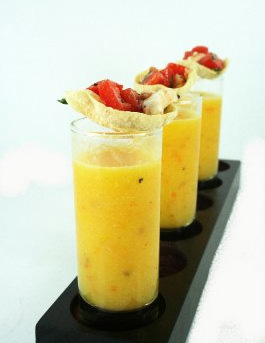
[1] Gazpacho made with yellow bell peppers (photo © Chicken Fried Gourmet [alas, now closed]).
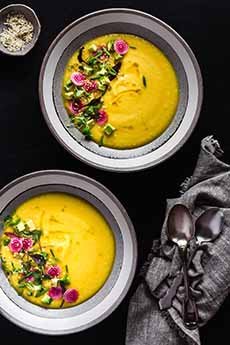
[2] This gazpacho recipe is made from yellow beets (photo © Le Petite Eats).
[3] Use garnishes to turn your gazpacho into a work of art (photos #3 and #4 © Botanica Restaurant | Los Angeles).
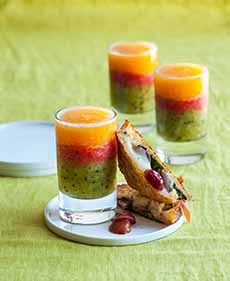
[4] Another artistic approach: tricolor layered gazpacho. Here’s the recipe (photo © Fruits From Chile).
[5] Beyond bowls, serve gazpacho in teacups, wine glasses, and smaller portions in liqueur or even shot glasses. Here’s the recipe for this pineapple gazpacho (photo © Urban Accents [now Stonewall Kitchen]).
|
|
Gazpacho is a soup served chilled or at room temperature and is usually associated with summer, when few people desire hot soup.
So why is National Gazpacho Day on December 6th?‡ At least National Gazpacho Aficionado Month is in May, when warmer weather makes chilled soup welcome.
We’re big fans of gazpacho, so we’d gladly have a bowl year-round. Gazpacho is a low-calorie, high-nutrition dish, a boon for dieters and people who don’t eat enough veggies.
And it’s so easy to make—just toss the ingredients in a blender.
Gazpacho is one of those recipes that affords maximum customization: Each cook can do his or her thing, and even a favorite recipe can be tweaked each time it’s made. The combination of vegetables, herbs, types of vinegar and flavored olive oil, and garnishes is endless.
Our favorite idea for “winter gazpacho” is from Chef Michael O’Boyle of ChickenFriedGourmet.com (photo #1).
He serves a yellow bell pepper gazpacho as a shooter, which can be served from trays at a party or as a first course at a seated dinner.
The garnish on top of the shooter is a tortilla chip cup filled with salsa.
Below:
> Gazpacho garnishes to elevate your soup.
> The history of gazpacho.
Elsewhere on The Nibble:
> 18 more gazpacho recipes.
> The history of soup.
> The different types of soup: a photo glossary.
> Garnishes for 21 favorite soups.
> The year’s 18 soup and stew holidays.
RECIPE: BELL PEPPER GAZPACHO
This bell pepper-based gazpacho is an ideal recipe for spring, fall, and winter, when tomatoes are not in season.
The recipe was adapted from TheLunaCafe, which also has an e-book for the iPad, 12 Days Of Christmas Cookies.
Following the recipe, you’ll find gazpacho garnishes that work for any gazpacho recipe.
Ingredients
6 red or yellow bell peppers, roasted, cored, seeded, de-ribbed and chopped (1½ pounds roasted yields 3 cups chopped, roasted, peeled bell peppers)
5 ounces red or yellow grape tomatoes (match to color of peppers)
1/4 red onion, peeled, and roughly chopped
1-2 serrano* chiles, halved lengthwise, cored, seeded, and de-ribbed
2 cloves peeled garlic
¾ cup chicken or vegetable stock
¼ cup olive oil
2 tablespoons excellent sherry vinegar
2 tablespoons fresh lemon juice
2 teaspoons smoked hot paprika
1 teaspoon salt
¼ teaspoon freshly ground white pepper
______________
*For milder heat, use an ancho, cascabel or poblano chile. The heat levels of different chile peppers.
Preparation
1. COMBINE the bell peppers, tomatoes, onion, chiles, and garlic in a blender. Cover and liquefy.
NOTE: Use disposable gloves when handling hot chiles to avoid accidental irritation from the capsaicin in the seeds and ribs.
2. ADD the stock, orange juice, olive oil, orange zest, vinegar, lemon juice, paprika, salt, and pepper. Cover and liquefy. Taste and adjust seasonings as necessary. If you want a thinner soup, add more stock.
3. CHILL, covered, for at least 4 hours. Garnish and serve.
[6] Tomato gazpacho with feta crema. Here’s the recipe (photo © California Olive Ranch).
|
GAZPACHO GARNISHES
Dairy Garnishes
Greek yogurt, plain or herbed (mix in finely chopped fresh herbs)
Large crouton/crostini with fresh goat cheese
Crème fraîche
Sour cream
Non-Dairy Garnishes
Baby beets or diced whole beets
Boiled potato, half or whole
Crab meat or other seafood, chilled
Diced avocado, cucumber or tomato
Croutons (small) or one large garlic crouton/crostini
Fresh herbs
Steamed vegetables (broccoli or cauliflower florets, carrots, etc.)
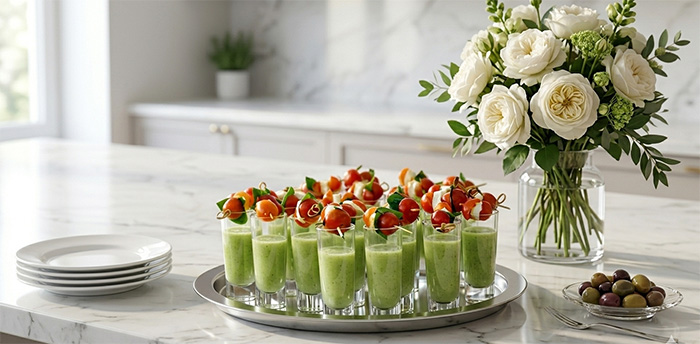
[7] Gazpacho “shooters” are sophisticated fun as a home-style amuse-bouche† at dinner parties or family dinners.
THE HISTORY OF GAZPACHO
Gazpacho is a cold raw vegetable soup that originated in Andalusia, the southernmost region of Spain. The name is of Arabic origin, and literally means “soaked bread,” an ingredient of early recipes that made use of the prior day’s stale bread. The term has become generic for “cold vegetable soup.”
The original recipe came from the Arabs who occupied much of Spain from the 8th through the 13th centuries.
Early on, gazpacho was a way for field workers to make lunch from the vegetables at hand. The recipe typically included stale bread, bell pepper, garlic, olive oil, onion, tomato, wine vinegar and salt—which remains the Andalusian style.
Since the tomato is a New World fruit that was not eaten in Europe until the 1800s*, the earliest gazpacho was made without it.
There are many variations of gazpacho, depending on local ingredients and preferences. The familiar red tomato-based gazpacho is just one of many possibilities. American recipes tend to leave out the bread, although some garnish the soup with a garlic crouton. White gazpacho is made with olive oil, sherry vinegar, bread, garlic, and salt, and substitutes green grapes and almonds for the vegetables.
________________
†An amuse-bouche (pronounced ah-mooz-BOOSH) is a tiny, one-or-two-bite appetizer served at the start of a meal in fine-dining restaurants. Gazpacho shooters are an easy way to port the concept to meals at home.
‡Gazpacho in December? Our guess is that whoever requested the establishment of National Gazpacho Day was from a warm Southern state.
CHECK OUT WHAT’S HAPPENING ON OUR HOME PAGE, THENIBBLE.COM.
|