THE NIBBLE BLOG: Products, Recipes & Trends In Specialty Foods


Also visit our main website, TheNibble.com.

TIP OF THE DAY: Make Wilted Greens

If you’re looking for more ways to enjoy green vegetables, have you tried wilting?

Wilted vegetables are served at some of the finest restaurants in the country, often with a filet of fish or a boned chicken breast on top.
 
Wilting is a quick cooking technique that involves placing the greens in a hot butter or oil, until they’re barely cooked (i.e., wilted). We actually use a low-calorie technique, blanching the vegetables in simmering broth or stock.

The Wilting List: Simply add delicate, leafy vegetables—arugula, beet greens, bok choy, chard, collards, dandelion greens, kale, mustard greens or turnip greens—to a pan of simmering liquid (broth or water) and they wilt in a minute. barely cook or just “wilt.” As you can see, wilting is also a great way to discover the joys of greens you never eat.

You can also wilt a medley of three different greens, such as chard, mustard greens and spinach. See the recipe below.


crispy-salmon-wilted-greens-2-SLT-230

Crispy salmon atop wilted greens. Photo courtesy Sur La Table.

 
Dark leafy greens are some of the most nutrient-dense foods on the planet, and wilting preserves nutrients and flavor. So why isn’t everybody wilting greens?

To begin your journey here’s a recipe developed in the Sur La Table test kitchen; more wilting techniques follow.
RECIPE: CRISPY SALMON ON LEMON-CAPER WILTED GREENS

You can substitute another vegetable for the spinach and halibut or other firm-fleshed filet for the salmon.

Ingredients For 4 Sservings

  • 2 tablespoons extra-virgin olive oil
  • 4 (5-ounce) salmon fillets with skin
  • 1 tablespoon unsalted butter
  • 1 shallot, minced
  • 1 clove garlic, minced
  • 2 zucchini, thinly sliced
  • ½ pound spinach, washed and patted dry
  • 2 teaspoons capers, drained
  • 2 teaspoons lemon zest
  • 2 tablespoons flat-leaf parsley leaves
  • ¼ cup heavy whipping cream
  • Kosher salt or sea salt, plus and freshly ground black pepper
  •  

    mustard-tendergreens-beauty-goodeggs-230
    Wilt me! Have you had these greens before? They’re mustard greens. Photo courtesy GoodEggs.com.
      Preparation

    1. PREHEAT oven to 400°F and position the oven rack in the middle.

    2. PLACE a large oven-proof skillet on the stove over a medium-high heat, and add olive oil. When the oil is just starting to shimmer, add the salmon, presentation side first. Sear to a light-golden brown color, about 2 minutes. Turn the salmon over to the skin-side and transfer to the oven. Bake until the salmon is flaky and slightly pink inside, about 5 minutes. Transfer the salmon to a plate; reserving the skillet and set aside.

    3. PLACE the skillet back on the stove over a medium heat and add the butter. Once the butter begins to foam, add the shallot and garlic and sauté until soft, about 2 minutes. Add the zucchini, spinach, capers, lemon zest, parsley and cream. Cook until the spinach is wilted, about 2 minutes. Taste and season with salt and pepper.

    4. SERVE: Spoon the wilted greens mixture onto warmed dinner plates, and place the salmon on top. Serve immediately.


    BASIC WILTED GREENS

    Don’t worry if it seems like you have too many greens. Big bunches of leafy greens wilt down to flatness.

    Ingredients

  • 2 large bunches chard, kale, mustard greens or others (see list at top), rinsed
  • 1/4 cup olive oil
  • 1 medium yellow onion, thinly sliced
  • 1-1/2 teaspoons kosher salt or sea salt
  •  
    Preparation

    1. TEAR the greens into pieces; discard stems. (Note: We actually enjoy the stems, and keep them on. We also like to keep the leaves whole—we don’t mind cutting them on our plate with a knife and fork. Try it to see which you prefer.)

    2. HEAT the oil in a pot over medium heat. Add the onion and cook for 7 minutes. Add the greens and toss to coat. Cover and cook, stirring once, until wilted, about 2 minutes. Add the salt and serve.

    3. SEASON as you like with balsamic vinegar, chiles, honey, garlic, nutmeg or other favorites. As an option, garnish with toasted pecans or walnuts.
     
    Variations
     
    For breakfast, brunch or lunch, top with poached eggs.

    You can also add ham or bacon, Southern-style, as in this recipe.
     
    STOVE TOP WILTING

    This recipe uses a medley of greens, although you can use only one type or a different combination.

    Ingredients

  • 3 tablespoons butter or olive oil
  • 1 large bunch chard, stems removed*, leaves torn
  • 1 large bunch mustard greens, stems trimmed, leaves torn
  • 1 10-ounce bag spinach leaves
  • 1/3 cup chicken stock or canned low-salt chicken broth
  •  
    Preparation

    1. MELT butter in heavy large pot over medium-high heat. Add all greens and stock.

    2. COVER and cook until greens wilt, stirring occasionally, about 3 minutes. Uncover; cook until juices thicken slightly, about 4 minutes.

    3. SEASON with salt and pepper and any other seasonings you like (balsamic vinegar, chiles, garlic, nutmeg, etc.).
     

    SIMPLE MICROWAVE WILTING

    1. WASH the greens in cool water and place in a microwave-safe bowl.

    2. COVER with plastic wrap and punch several holes in the wrap to vent. Microwave on High until wilted, 2 to 3 minutes.

    3. SQUEEZE out any excess moisture from the greens before seasoning and serving, or adding to a recipe.


    Comments off

    PRODUCT: Pukka Organic Herbal Teas For Health & Gifting

    There’s lots of herbal tea on the market, but some companies, like Pukka, an organic herbal tea specialist, focus on it.

    The company employs a team of skilled herbalists that pays meticulous attention to the quality of ingredients, ensuring that only the most potent, vibrant herbs are used in their blends.

    In fact, the company is first and foremost a purveyor of top-quality organic herbs.

    While Pukka teas are made according to the healing and wellness philosophies of Ayurvedic medicine, that doesn’t have to be your primary motivation. They also taste great, and are soothing, caffeine-free brews.

    In addition to drinking an infusion of herbs known to aid in digestion, immunity, weight management and so forth, you can drink flowers as well—and perhaps give a box of floral tea as a Mother’s Day party favor—or in an Easter basket for dieters, sugar-avoiders and the health-focused.

  • Elderflower, from the elder tree, has long been used as a sweet tonic.
  • Hibiscus helps rejuvenate and balance.
  • Limeflower is renowned for its relaxing qualities.
  •   pukka-herbal-teas-elvirakalviste-230
    An assortment of Pukka teas, ready for the Easter basket or Mother’s Day gifts. Photo by Elvira Kalviste | THE NIBBLE.
  • Oat flower is known to calm, nourish and sooth the body and help settle the mind.
  • Rose is known to soothe and has a calming effect on the mind.
  •  
    And these are just a few of Pukka’s 35 varieties. Pukka offers a both unusual and popular herbal blends, including Lemongrass and Ginger, Peppermint and Licorice, Golden Chamomile, Night Time and Lemon Green Tea—all very pleasing to the taste buds. Iced tea can be made from these blends as well.

    See all the varieties at PukkaHerbs.com.

    Each flavor comes in a box with its own charming design, looking like fine wrapping paper.

    A box of 20 sachets retails for $6.95 at Vitamin Shoppe locations nationwide and iherb.com.


    Comments off

    TIP OF THE DAY: Vegetable Medley With Color

    asparagus-carrots-lecreuset-SLT-230
    Asparagus and carrots in a Le Creuset dutch
    oven. Photo courtesy Sur La Table.
      The English word “asparagus” derives from the Latin sparagus, derived from the Greek asparagos, which itself derived from the Persian asparag, meaning sprout or shoot. The stalks shoot up from the crown of the plant and, if not harvested, the precious tips grow into fern-like leaves.

    That little tidbit is an introduction to asparagus season. If you’re an asparagus lover, it’s a great time: prices are lower and the flavor is better, since domestic asparagus get to market faster (Peruvian imports, for example, travel weeks by ship).

    Whether you’re looking for different ways to serve asparagus, or a way to cut down on the cost per portion, serve a medley—asparagus with one or two other vegetables.

    We were especially attracted to this handsome combination of asparagus and carrots from Sur La Table, with the carrots cut in lengths to match the shape of asparagus.

    But a memorable spring medley is the “big four” of spring: asparagus, garlic scapes, morel mushrooms and ramps (wild leeks).

    Otherwise, take a look at our list of vegetables by color, and pick your own medley.

    WHAT’S A MEDLEY?

    A medley is a mixture of different things: music, sports, vegetables, whatever. The word comes from the French medler to mix, which entered Middle English.

    A vegetable medley provides the opportunity to create more interest through blending flavors, colors and textures.

    You can grill, roast, sauté or steam your veggies—or enjoy them raw, as crudités with a dip.

    Most people believe that the finest texture and the taste come from the asparagus tips. They are called points d’amour (“love tips”) in French.

    But we enjoy the whole asparagus, including the texture of the stems. Just trim the white stem ends, which are tough.
     
    Asparagus Recipes

  • Asparagus Crostini With Pancetta & A Parmesan Crisp (recipe)
  • Asparagus & Grapefruit Salad (recipe)
  • Asparagus With Linguine & Parma Ham (recipe)
  • 12 More Easy Asparagus Recipes—including frittata, grilled, risotto, sautéed, scramble, sides and spring rolls
  •  

    A BRIEF HISTORY OF ASPARAGUS

    Asparagus has been enjoyed as a vegetable since ancient times. The earliest image is as an offering on an Egyptian frieze dating to 3000 B.C.E. It was also enjoyed in ancient Greece, Rome, Spain and Syria.

    Greeks and Romans ate asparagus fresh in season and dried in winter. The Romans would even freeze it high in the Alps: Emperor Augustus created the “Asparagus Fleet” for transporting the vegetable, and coined the expression “faster than cooking asparagus” to indicate a quick action. [Source: Wikipedia]

    There’s a recipe for cooking asparagus is in the world’s oldest surviving cookbook, Apicius’s “De Re Coquinaria” (“On Cookery”), Book III. It is attributed to a first-century Roman epicurian named Marcus Gavius Apicius, but compiled sometime between the third and fifth centuries.


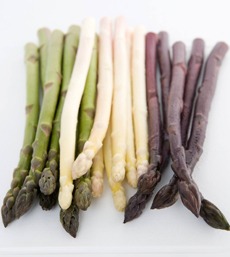
    3-colors-dark-bkgd-australianasparagusgrowners-230b
    The three colors of asparagus. Photo courtesy Australian Asparagus Growers.


    And it’s still in print—in the original Latin! There’s an English translation for $10.95, and a translated Kindle edition is free!

    After the fall of the Roman Empire, asparagus seems to have fallen out of favor, reappearing in France in the 15th century and in England and in Germany in the 16th century. It arrived in the U.S. around 1850, and has resumed its position as a sought-after vegetable.

    So don’t let the season escape you: Pick up asparagus on your next trip to the market. It has just three calories per spear, so you don’t need to worry about portion control.
      

    Comments off

    The Nibble Webzine Of Food Adventures


    © Copyright 2005-2026 Lifestyle Direct, Inc. All rights reserved. All images are copyrighted to their respective owners.