THE NIBBLE BLOG: Products, Recipes & Trends In Specialty Foods


Also visit our main website, TheNibble.com.

The History Of Carrots & The Invention Of Baby Carrots

What’s up, doc? Here’s a little history of one of our most popular veggies: carrots. According to the USDA, Americans consume 11.8 pounds a person per year. (Beyond raw carrots, this figure includes carrot cake, carrots in soups and stews, and so forth.)

In the beginning, all plants and animals were wild. Over thousands of years of cultivation/domestication, many took on different forms, as farmers bred them for the most desirable characteristics.

The domesticated carrot, botanical name Daucus carota subspecies sativus, started life about 10,000 years ago as a bitter white root vegetable. Over thousands of years, it has been bred into a fleshy, juicy, sweet edible root.

Its name originated in the Indo-European root ker-, for horn (due to its horn-like shape). That evolved to the Greek karoton, the Late Latin carota and the Middle French carotte.

Cultivated carrots originated in present day Afghanistan some 5000 years ago, most likely as purple or yellow roots. Mutants and natural hybrids occurred naturally, that crossed the purple and yellow carrots with both wild and cultivated varieties and produced other colors, including the now-ubiquitous orange.

For a long time, purple carrots were the norm, with occasional mutations producing yellow and white varieties, which lacked the purple pigment anthocyanin. You can still find these heirloom breeds in farmers markets.

It was Dutch farmers in the late 16th century who took mutated strains of yellow and white carrot and, over time, bred them into the orange carrots that are standard today.

Some believe that the reason the orange carrot became so popular in the Netherlands was in tribute to the emblem of the House of Orange and the struggle for Dutch independence. This could be, but it also might just be that the orange carrots that the Dutch developed were sweeter and plumper than their purple forebears.

> The year’s carrot holidays.

> 20+ yummy carrot recipes.
 
 
THE ”INVENTION” OF BABY CARROTS

Fast-forward 200-plus years to the next carrot innovation:

In 1986, a California carrot grower named Mike Yurosek sought a use for carrots with flaws and imperfections that could not be sold whole.

These “reject carrots” accounted for up to 70% of the carrots headed down the bagging conveyer belt! Yurosek made lemons out of lemonade and invented the baby carrot.

He took the broken and dwarfed carrots and sold them as “baby carrots,” which have become the fastest growing segment in carrot industry.

But if you want to save money and slice your own from conventional carrots, we highly recommend a crinkle cutter. It makes veggies as fun as…baby carrots.


CHECK OUT WHAT’S HAPPENING ON OUR HOME PAGE, THENIBBLE.COM.

 
[1] The colors of carrots. The original wild carrot was white, followed by domesticated carrots in purple and yellow (photo by Stephen Ausmus | Wikimedia).

Rainbow Baby Carrots
[2] Rainbow baby carrots quickly followed the introduction the all-orange carrots (photo Elvira Kalviste | © The Nibble).

A Bunch Of Baby Carrots
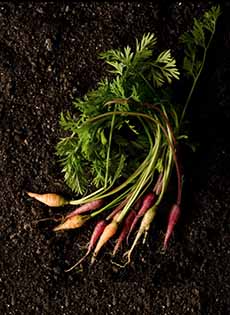
[3] After baby carrots became the craze, specialty growers grew “real” baby carrots for fine restaurants (photo © The Chef’s Garden).


Comments off

TIP OF THE DAY: Dry Aged Beef

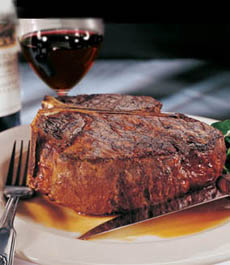
For the best steak experience, splurge for
dry-aged. Porterhouse steak from Morton’s
The Steakhouse.

If you’re looking for a great piece of beef, experts and connoisseurs will tell you that the best is dry aged for 30 days or longer.

Aging the beef allows a steer’s natural enzymes to break down its tough connective tissues. The result is deeper flavor and better texture.

Supermarket beef is wet aged, a less expensive process that takes 5 to 7 days. The beef is sealed in its own juices in plastic bags, producing a milder, less meaty-flavored beef. The process is known as Cryovac, a system developed in France in 1937 (originally using latex bags).

Dry aging, a more time- and labor-intensive process, takes place for 11- to 30-plus days. The longer the aging, the “meatier” and more buttery the beef. The side of beef is hung in a special room, where the temperature is controlled. It loses 15% to 30% of its weight due to water evaporation, concentrating the flavor.

When you’re looking for that special piece of beef, head to the best butcher in town for dry aged. Or shop online at Allen Brothers, a NIBBLE Top Pick Of The Week.


Comments off

COOKING VIDEO: How To Make Gourmet Macaroni And Cheese


Macaroni and cheese is one of America’s favorite comfort foods. Adults and kids both love to reach for a box of mac and cheese mix.

But there’s no need to purchase a boxed mix or prepared mac and cheese when it’s so enjoyable to prepare it from scratch. One of our favorite culinarians, Chef Terrance Brennan of Picholine and Artisanal restaurants in New York City, shows you how easy it is in this week’s cooking video.

More ways to enjoy mac and cheese:

  • Try a different spin on the cheese: goat’s milk butter (look for Meyenberg goat butter, a NIBBLE Top Pick Of The Week) and goat cheese, blue cheese or other favorite from the cheese board.
  • Or try a dessert pasta dish like sweet kugel, made with ricotta or farmer cheese.
  • Using a different pasta shape other than elbows can lead to a more fun or a more elegant presentation. Find out which shapes will work best in macaroni and cheese and many more dishes by visiting our Pasta Glossary. It’s one of our most popular articles.
  • You’ll find many more how-tos in our Cooking Video Section.

    Comments off

    The Best-Selling Cookbooks For National Cookbook Month

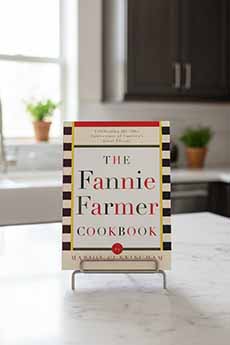
    Fanny Farmer Cookbook
    [1] Our first cookbook, Fannie Farmer, was not surprisingly our mother’s favorite. It was originally published in 1896.

    Better Homes & Gardens Cookbook
    [2] Better Homes & Gardens Cookbook, America’s best-selling cookbook, originally published 1930. It doesn’t look mouth-watering, but that hasn’t hindered sales (all photos Abacus).
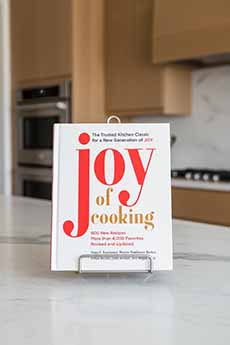
    Joy Of Cooking Cookbook
    [3] The Joy Of Cooking, originally published 1930.
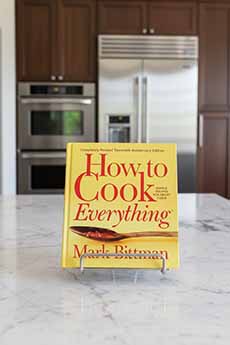
    How To Cook Everything Cookbook
    [4] How to Cook Everything, originally published in 1998.


    National Cookbook Month is celebrated during the month of October to honor the tradition of physical cookbooks, encourage culinary exploration, and preserve family recipes. October 12th is often cited as Cookbook Launch Day in the publishing world.

    It’s the perfect time to dusting off old cookbooks (and donate what you won’t be using again), try new recipes, and ask relatives to recommend family favorites.

    The American cookbook has evolved dramatically from its earliest days, when recipes were guarded family secrets passed down through generations, to today’s era of instant online recipes and celebrity chef influencers.

    Yet despite having millions of free recipes at our fingertips online, cookbooks continue to thrive—although they’ve had to adapt to compete in the digital age.

    Today’s bestselling cookbooks aren’t just recipe collections; they’re beautifully photographed works of art, memoirs, cultural explorations, and lifestyle guides rolled into one. They offer something the internet can’t quite replicate: a curated, cohesive vision from a trusted voice, along with the tactile pleasure of flipping through gorgeous pages (preferably without getting them too splattered).

    While home cooks may turn to AllRecipes.com for Tuesday night’s chicken dinner, they still buy cookbooks for inspiration, weekend projects, and the joy of cooking as a hobby rather than just a chore.

    The classics remain classics—Better Homes & Gardens, Betty Crocker, and Joy of Cooking have sold millions of copies over decades and continue to anchor many kitchen shelves.

    But today’s market has expanded to celebrate diverse cuisines, innovative techniques, and personalities from across the culinary spectrum, from Michelin-starred chefs to food bloggers, from haute cuisine to any international fare you desire.
     
     
    MOST INFLUENTIAL AMERICAN COOKBOOKS OF ALL TIME

    While your Top 3 (Better Homes & Gardens, Betty Crocker, Joy of Cooking) remain hugely influential, here are some other landmark American cookbooks that shaped how we cook, followed by today’s best-sellers.

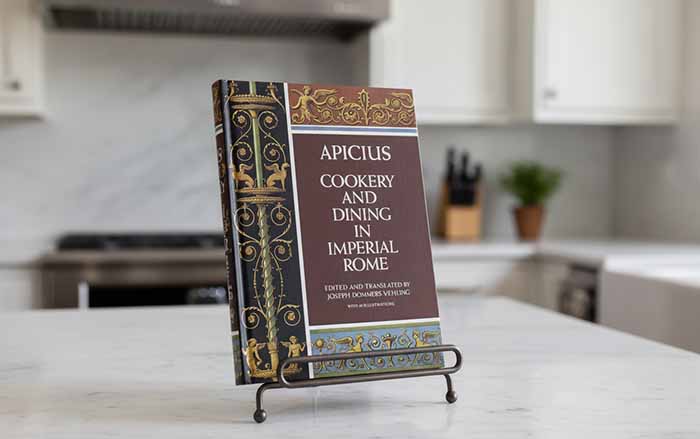
    But for the real “starter,” the world’s oldest surviving cookbook is De Re Coquinaria, “On Cookery,” compiled in the 4th or 5th century and named for a legendary first-century Roman epicurian named Marcus Gavius Apicius.

    And it’s still in print—in the original Latin as well as English, and a Kindle version for just 99¢.

    Beyond ancient Europe to the U.S., here are the cookbooks in order of publication date:

  • Fannie Farmer’s Boston Cooking-School Cook Book (1896): Revolutionary for introducing standardized measurements (a level teaspoon, not a “teaspoonful”)(photo #1).
  • Better Homes and Gardens New Cook Book (1930): The iconic red plaid “Big Red” that became a wedding gift staple (photo #2).
  • Joy of Cooking by Irma Rombauer (1931): Intentionally accessible for middle-class home cooks; one of the most published cookbooks in U.S. history (photo #3).
  • Betty Crocker’s Picture Cook Book (1950): The first Betty Crocker cookbook; became a bestseller with its step-by-step photos.
  • Mastering the Art of French Cooking by Julia Child (1961): Brought French technique to American home kitchens.
  • The Taste of Country Cooking by Edna Lewis (1976): Among the first by an African-American woman to reach nationwide audience; elevated Southern cooking.
  • The Silver Palate Cookbook by Julee Rosso and Sheila Lukins (1982): – Introduced Americans to gourmet home cooking.
  • The Art of Mexican Cooking by Diana Kennedy (1989): Brought authentic Mexican cuisine to American kitchens.
  • Essentials of Classic Italian Cooking by Marcella Hazan (1992): The Italian cooking bible for American home cooks.
  • How to Cook Everything by Mark Bittman (1998): The minimalist approach that became the kitchen bible for beginners (photo #4).
  •  
    Of course, the cookbooks have been updated over the years—pizza, tacos and wraps weren’t on the menu in 1930, for example. A number of the older versions are still in print as well.

    Our mother relied on Fanny Farmer and Julia Child. How about yours?
     
     
    Below: the first-known surviving cookbook of Western civilization. It’s still in print!

    Apicius, The First Cookbook
    [5] The world’s first extant cookbook, from the 4th-5th century C.E. You can get this “reprint” on Amazon, and if you’re a scholar, the original Latin version is available (Abacus Photo).


    CHECK OUT WHAT’S HAPPENING ON OUR HOME PAGE, THENIBBLE.COM.


    Comments off

    TIP OF THE DAY: Juicy Steaks

    Contrary to popular belief, says Chef Louis Eguaras, searing a steak at a high temperature does not lock in natural juices.

    The juiciness comes from cooking meat quickly at a high temperature, as opposed to grilling or sautéing, which cooks the meat for a longer time at a lower temperature.

    Searing creates a crisp and flavorful crust by caramelizing the natural sugars an amino acids in the beef (known as a Maillard Reaction). The ideal temperature for caramelizing is 350°F to 500°F.

    Be careful not to exceed 500°F when cooking. Very high temperatures can char the beef, producing a burned flavor as well as carcinogens.

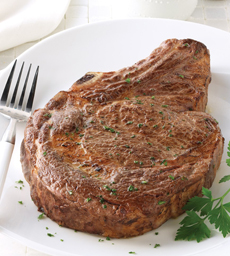
    Keep it juicy! Ribeye steak from
    RedMarbleSteaks.com.

    • What‘s the difference between a ribeye and a porterhouse? A hanger steak and a cowboy steak? Learn your cuts of beef in our Beef Glossary.


    Comments off

    The Nibble Webzine Of Food Adventures


    © Copyright 2005-2026 Lifestyle Direct, Inc. All rights reserved. All images are copyrighted to their respective owners.