|
Victoria Amory is a cook and food writer born and raised in Spain. She now lives in the U.S., and has her own line of specialty sauces.
One of the signature sauces from the Catalonia region of Spain is romesco. Learn more about it below.
Victoria’s sells an Almond & Garlic Romesco Sauce, but you can make your own from scratch, using almonds, other nuts, or a blend.
Crafted with red chile peppers, pimentón (paprika), nuts, and extra virgin olive oil, romesco is a perfect sauce to use with meats, roasted vegetables, shellfish, and fish. “It elevates your everyday meals to everyday feasts,” says Chef Victoria.
If you have leftover sauce, it is delicious as a dip or bread spread.
For an everyday feast, try her Cauliflower And Bacon Salad With Romesco Sauce. (What’s romesco sauce? See below.)
RECIPE #1: WARM CAULIFLOWER & BACON SALAD WITH
ROMESCO SAUCE
Ingredients
1 head cauliflower, trimmed and chopped into florets
½ pound bacon, diced
2 tablespoons olive oil
2 tablespoons sherry vinegar
3 large slices country white or wheat bread, torn into pieces
2 cloves garlic, minced
3 tablespoons extra virgin olive oil
1 can (8 ounces) garbanzo beans, canned, rinsed
¼ pound baby spinach leaves, rinsed & dried
1 cup romesco sauce, to serve
Preparation
1. PREHEAT the oven to 400°F. In a bowl, toss together the cauliflower, bacon, olive oil, and vinegar. Spread on a cookie sheet and bake in the oven for 20 minutes.
2. TOSS the bread with the garlic and extra virgin olive oil and add the cauliflower. Roast for an additional 10 minutes or until the bread is toasted and the cauliflower is golden.
3. MIX the cauliflower with the chickpeas and toss with the spinach leaves. Add a drizzle of olive oil if needed. Serve warm with romesco sauce on the side.
RECIPE #2: ROMESCO SAUCE & DIP
As with most recipes, there is considerable variation in the proportion of ingredients. This version is adapted from one by Chef Aida Mollenkamp.
Ingredients
1 jar (15 ounces) roasted bell peppers (pimento)
3 garlic cloves
6 ounces blanched almonds (about 3/4 cup)
1/2 cup roughly chopped fresh flat-leaf (Italian) parsley
1 tablespoon sherry vinegar or red wine vinegar
3/4 teaspoon smoked paprika
Optional heat: 1/2 teaspoon cayenne pepper
4 to 5 tablespoons extra-virgin olive oil
Sea salt and freshly ground black pepper
|
|

[1] Colored cauliflower makes the dish more exciting (photo © Nourish The Roots).
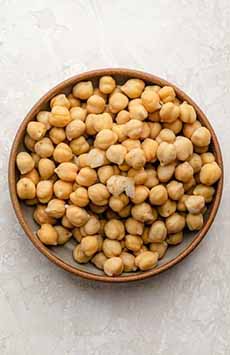
[2] Chickpeas add protein to the salad. Here are 30 recipes you can make with a can of chickpeas, from Feel Good Foodie (photo © Feel Good Foodie).
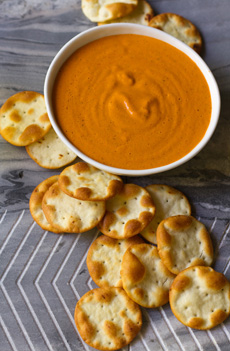
[3] Romesco sauce and dip (photo © Chef Aida Mollenkamp).
|
Preparation
1. COMBINE all ingredients in a food processor or blender and process until smooth. Season to taste with salt and freshly ground black pepper.
2. SERVE with crudites, crusty sliced bread, or your favorite crackers.
WHAT IS ROMESCO SAUCE?
First, it isn’t romanesco sauce. There is no romanesco sauce. Romanesco is a language; the sauce is romesco.
Romesco is a pungent, smooth, rich red sauce made from red peppers, tomatoes, ground almonds or other nuts, olive oil, garlic, and cayenne pepper. It originated in Tarragona, a port city on the Mediterranean Sea in the province of Catalonia in northeast Spain. Though the exact origin is unclear (as is the meaning of the name), it is believed that the local fishermen made it to eat with their catch.
It has become a popular sauce beyond seafood, enjoyed with meat, poultry, and vegetables as well as for a dip and a bread spread.
The nuts can be any mixture of roasted or raw almonds, pine nuts, and/or hazelnuts or walnuts, plus roasted garlic, olive oil, mild bitxo chiles (red chiles similar to Anaheim/New Mexico chiles), and/or nyora peppers (a sun-dried, small, round variety of red bell pepper).
Flour or ground stale bread is sometimes used as a thickener or to provide texture. Other common ingredients employed in different recipe variations include roasted tomatoes, red wine vinegar, and onions. Leaves of fennel or mint are added when the sauce is served with fish and other seafood.
Here’s more about romesco sauce.
CHECK OUT WHAT’S HAPPENING ON OUR HOME PAGE, THENIBBLE.COM.
|