THE NIBBLE BLOG: Products, Recipes & Trends In Specialty Foods
Also visit our main website, TheNibble.com.
|
April 13, 2011 at 7:59 am
· Filed under Easter, Meat & Poultry, Videos
|
| |
Are you cooking a ham for Easter?
Watch Chef Tyler Florence prepare a smoked ham with a sage rub and tangerine sauce:
|
| |
|
| |
Enjoy the recipe with a glass of Gewürtztraminer, Riesling, rosé or a Pinot Noir. For a special splurge, try a rosé Champagne.
Bone in/bone out, wet cured/dry cured, smoked/brined, butt ham/shank ham: so much to learn about ham! Start here: the types of ham and ham cuts.
|
|
|
Permalink
|
|
April 13, 2011 at 7:54 am
· Filed under Chocolate, Top Pick Of The Week
|
|
Just in time for Easter and Mother’s Day, we have seven artisan chocolatiers for you to meet.
Producing gourmet chocolates by hand, these dedicated artists make their chocolate into literal eye candy, as each creates distinctive looks and shapes for their bonbons.
Filled with creamy chocolate ganache in many flavors—plus some salted caramels—these chocolates will solve your gift-giving needs and give you an excuse to look through some delectable photos.
Read the full review.
Find more of our favorite products and a world of chocolate information in our Gourmet Chocolate Section.
|
|

Eye candy: Check out the wares of seven
artisan chocolatiers. Photo courtesy
Cadeaux Chocolates. |
|
|
|
|
Permalink
|
|
April 13, 2011 at 7:39 am
· Filed under Fruits, Nuts & Seeds, Snacks, Tip Of The Day
|
|
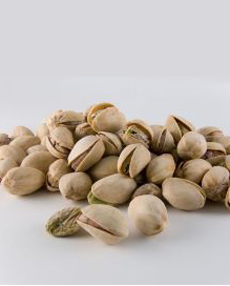
[1] Snack and garnish away: Pistachios may have fewer calories than previously thought (photo © Paolo Zanin | SXC).
|
|
If you enjoy snacking on nuts, you may wish to focus on pistachio nuts. New research shows that they are a weight-wise snack.
A USDA study presented on Monday shows that pistachio nuts, already one of the lowest-calorie nuts, may contain fewer calories per serving than originally thought.
Why? Scientific research indicates that fat from nuts is poorly absorbed through the gastrointestinal tract.
The study confirmed that the fat from pistachio nuts, specifically, is not completely digested or absorbed, resulting in a lower energy value. Energy value translates into calories. (The exact calorie savings has yet to be calculated.)
Fats make up the largest component of nuts. Here’s the nutritional breakdown for pistachios.
The study also confirmed the heart-health benefits of pistachios among individuals who included 1.5 to 3 ounces of pistachio nuts in their daily diets.
|
Dubbed the “skinny nut” by nutrition experts, about 30 pistachio kernels make a satisfying, 100-calorie snack. Another research finding: In-shell snackers eat 41% fewer calories than those who snack on shelled nuts. Not only does it slow down the eating process, but researchers also found that in-shell pistachios offer a visual cue to help reduce intake.
Pistachio nuts are also nutrient-dense and are an excellent source of copper and manganese vitamin B6 and a good source of dietary fiber, phosphorus, protein and thiamine.
February 26th is National Pistachio Day.
Find more information on the healthy attributes of pistachios.
Find our favorite nut products in our Fruits & Nuts Section.
CHECK OUT WHAT’S HAPPENING ON OUR HOME PAGE, THENIBBLE.COM.
|
|
|
Permalink
|
|
April 12, 2011 at 7:59 am
· Filed under Easter
|
|
After years of requests from readers, THE NIBBLE Gourmet Market is now open.
The almost 100 products—and more added weekly—are our favorites for gift-giving. Most have been NIBBLE Top Picks Of The Week.
Take a closer look at these cute chocolate chicks. Each is filled with a different flavor of creamy chocolate ganache.
If you’re looking for something more sophisticated, Choclatique fills Easter-colored bonbons with a selection of ganache, creams and caramels.
We welcome your feedback on The Nibble Gourmet Market and hope to become a go-to resource for gift-giving.
|
|
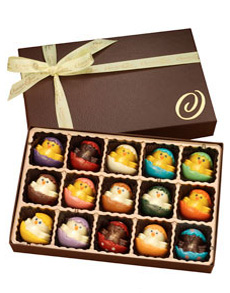
Instead of chocolate bunnies, delight
with chocolate chicks. Photo courtesy
Choclatique. |
|
|
|
|
Permalink
|
|
April 12, 2011 at 7:39 am
· Filed under Easter, Tip Of The Day
|
|
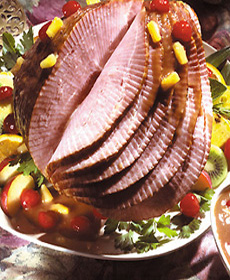
Ham spiral-sliced for a buffet. Photo courtesy
Cherry Marketing Institute.
|
|
If you typically have a sit-down Easter dinner, think about having a buffet this year.
Setting everything out at once and letting people serve themselves gives you more time to spend with your guests. It also enables you to accommodate more guests than your dining table allows–and it’s better for mingling.
You can place the food on a sideboard and seat guests at the dining table, or set the food on the dining table and let guests gather around the sofa or wherever they want to group and talk.
If you have outdoor space and the weather cooperates, some people may enjoy dining alfresco. |
|
|
Permalink
|
The Nibble Webzine Of Food Adventures
© Copyright 2005-2026 Lifestyle Direct, Inc. All rights reserved. All images are copyrighted to their respective owners.



