THE NIBBLE BLOG: Products, Recipes & Trends In Specialty Foods


Also visit our main website, TheNibble.com.

It’s National Carignan Day – Do You Know Carignan Red Wine

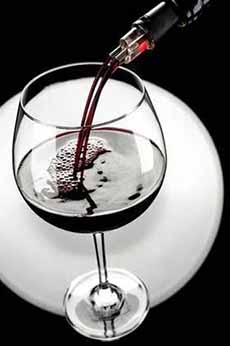
Pouring a glass of red wine.
[1] Carignan wine has a dark red color (photo © Tribella Wine).

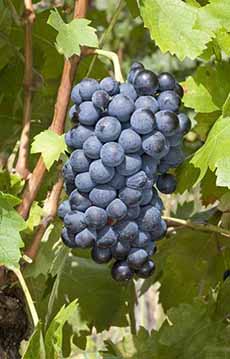
A cluster of Carignan grapes on the vine
[2] A cluster of Carignan grapes (photo © Vins Rhone).

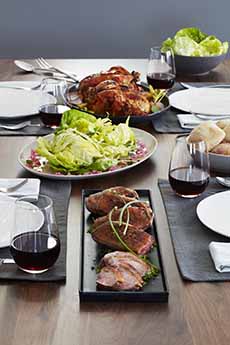
Beautiful roast ducks, 1 whole, 1 carved.
[3] Carignan is a great pairing with poultry. In the photo, it’s roast duck; but it can also be the Thanksgiving turkey (photo © Dean & DeLuca).

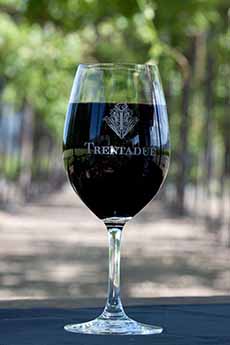
A glass of Carignan red wine.
[4] A glass of Carignan from award-winning Trentadue Winery (photo © Trentadue).

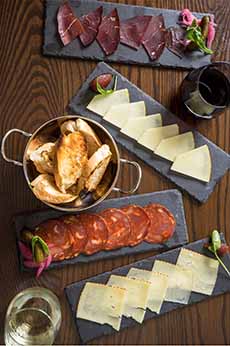
A board of Italian Charcuterie with glasses of wine.
[5] Serve Carignan with salumi, the Italian term for charcuterie (photo © Oz Restaurant & Bar | Arlington, Virginia [permanently closed]).


October 26th is National Carignan Day. What’s Carignan, you may ask?

Carignan (CARE-in-yen), a medium-bodied, medium-tannin red wine from southern France, has long been known as a value wine—i.e., a low-quality wine grape used for bulk wines.

The high-yielding grape has long been a major blending grape, adding its fruitiness and color to other wines.

But in recent years, Carignan has become known for its ability to make quality wines. A new generation of winemakers is reinvigorating old vineyards and making tremendously rich, red fruit-driven wines.

Take a moment to learn about today’s Carignan, a great food wine.

If you’re a fan of lighter-style Zinfandels, Merlot, or Côtes du Rhône, then pick up a bottle of Carignan.

Ideally, it should be a wine made from old vines (vieilles vignes), where the productivity of the grape clusters is low and the concentration of flavors is high. The wines will burst with fruit and will be smooth on the palate thanks to lighter tannins.

> The history of Carignan is below.

> The history of wine.

> The year’s 45+ red wine holidays.

> The year’s 22+ white wine holidays.
 
 
MAJOR CARIGNAN PRODUCING REGIONS

Outside of widespread planting in the French Midi† (southern France, including Languedoc-Roussillon), Carignan is grown in:

  • Northern Spain, where it’s called Cariñena or Mazuelo
  • Sardinia, Italy, where it’s called Carignano del Sulcis
  • Africa: Algeria, Tunisia, Morocco
  • The U.S., particularly in California and Texas, where it’s spelled Carignan or Carignane
  • Plus: Algeria, Chile, Croatia, Cyprus, Israel, Malta, Mexico, Portugal, Turkey
  •  
    Below, we have 10 award-winning Carignan wines from the U.S.
     
     
    PAIRING CARIGNAN WINE & FOOD

    Why is Carignan a great food wine? Because of its medium body, it pairs with bold-flavored dishes as well as lighter ones. And the flavor is balanced without bitter tannins.

    Its fruit-forward, with red fruit and baking spice flavors that pair with the spices in almost any cooked dish.

    On the palate, with its bold red fruit, pronounced acidity, and earthy-meaty notes, Carignan is an excellent match with:

  • Beef: from burgers and brisket to roasts and steaks.
  • Herbs/Spices: allspice, cinnamon, Chinese five-spice, clove, coriander, cumin, dill, juniper berry, Madras curry, oregano, ras el hanout, red pepper flakes, rosemary, soy sauce, thyme, za’atar.
  • Cheese/Dairy: Basque cheese, farmer’s cheese, Gouda and aged Gouda, Parmigiano-Reggiano, yogurt, young Manchego.
  • Cured Meats: bacon, bresaola, coppa, soppressata.
  • Roasted lamb or pork, including the shoulder.
  • Poultry: chicken, duck, squab, turkey (especially dark meat and smoked turkey), quail.
  • Spicy dishes in general.
  • Spicy meat dishes, from lamb meatballs to sausages.
  • Vegetables: butternut squash/kabocha squash/pumpkin, eggplant, grilled onions/shallots/garlic, roasted leek, roasted red pepper, shiitake and other mushrooms, tomato.
  • Plus: dishes with dried cranberries, wild rice.
  •  
    And since we’re approaching the holiday season as of this writing and anticipating that roast turkey, Carignan is a wine that can join the traditional Thanksgiving wine lineup of Beaujolais (Gamay), Châteauneuf-du-Pape, Grenache*, Pinot Noir, and Zinfandel.
     
     
    WHICH CARIGNAN SHOULD YOU BUY?

    Your wine store clerk can show you what’s available in the store. But for the best American Carignans, here are the winners in the 2023 San Francisco Chronicle Wine Competition:

  • Jessie’s Grove Winery 2019, Lodi AVA, Best of Class Medal, $45.
  • Favalora Vineyards Winery 2020, Contra Costa County AVA, Double Gold Medal, $34./li>
  • Goldschmidt Vineyard 2019 Gracepoint Vineyard, Dry Creek Valley AVA, Double Gold Medal, $50.
  • Favalora Vineyards Winery 2020, Contra Costa County AVA, Double Gold Medal, $38./li>
  • El Vaquero 2019 One-Eyed Charlie, Sandy Lane Vineyard, Contra Costa County AVA, Double Gold Medal, $36.
  • Saini Vineyards 2021, Dry Creek Valley AVA, Old Vine, Gold Medal, $50.
  • Indivisible 2018, Mendocino AVA, Gold, $28.
  • Favalora Vineyards Winery 2017 Old Vine, Contra Costa County AVA, Silver Medal, $35.
  • Trentadue 2020 Estate Old Vines, Alexander Valley AVA, Silver Medal, $28.
  • Carol Shelton Wines 2018 Oat Valley Vineyard, Alexander Valley AVA, Silver Medal, $30.
  • Pedernales Cellars 2019, Texas High Plains AVA, Silver Medal, $40.
  • La Vie Dansante Wines 2019, Santa Clara Valley AVA, Bronze Medal, $42.
  •  
    Of course, you can find affordable bottles for as little as $15.

    A tip from Wine Folly: Carignan can smell oddly meaty upon first opening a bottle. If yours has a meaty aroma, decant it for at least an hour.


    THE HISTORY OF CARIGNAN

    The Carignan grape has a long and storied history within the Mediterranean region, particularly in Spain and France.
     
    Ampelographers‡ believe that the grape likely originated in Cariñena, Aragon, northern Spain, as the grape is called Cariñena.

    They believe that Carignan is likely a very old variety due to its widespread plantings and the proliferation of numerous different names that give testament to the grape’s long history in different wine regions [source].

    Carignan was introduced to France, specifically the Languedoc-Roussillon region in the southern part of the country, in the 12th century [source].

    It reached Sardinia sometime between 1323 and 1720 when the island was under the Spanish influence of the Crown of Aragon [source].

    During the late 19th and early 20th centuries, Carignan saw widespread planting in the Languedoc-Roussillon region. It was a prolific vine that produced high yields and was a reliable source of red wine, especially during challenging growing conditions.

    For much of the 20th century, Carignan was used to produce inexpensive bulk wines. This mass production often resulted in low-quality, diluted wines.

    Carignan was historically a component of the Rioja red wine blend. The grape’s prominence in France hit a high point in 1988 when it accounted for 167,000 hectares (410,000 acres) and was France’s most widely planted grape variety (used for blending and bulk wines).

    By the late 20th century, Carignan had gained a reputation for producing wines lacking complexity and finesse. Carignan’s popularity declined, and many vineyards were uprooted or replaced with other grape varieties.

    In more recent years, there has been a revival of interest in Carignan, particularly in old-vine Carignan vineyards. Winemakers have recognized the potential of old, low-yielding Carignan vines to produce high-quality wines with depth and character.

    When carefully tended and harvested from older vines, Carignan can yield wines with flavors of dark fruit, spice, and good acidity. Beyond serving as a blending or bulk-wine grape, Carignan is also standing on its own merit, with single varietal bottlings of 100% Carignan.

    In France, regulations have been put in place to limit the planting of new Carignan vines in an effort to focus on quality over quantity. Old-vine Carignan, especially in the Languedoc region, is highly prized.

    In the U.S., there’s plenty of Carignan for blending, but with the changing dynamics of the wine industry, the grape is also producing high-quality wines like those mentioned above.

    Carignan as a fine varietal wine is on a growth trajectory in the U.S. and elsewhere. It can make interesting and distinctive wines, and just as important, it’s hardy and prolific.
     
     
    __________________

    *Carignan vs. Grenache: Carignan is a medium-body wine while Grenache is medium-full bodied wine. Both are fruit wines but have different flavors. The Carignan flavor profile is known for baking spices, with a hint of licorice and cured meat. The Grenache flavor profile is red fruit—black cherries, raspberries, and strawberries, with hints of cinnamon and anise.

    Southern France, also known as the south of France or colloquially in French as le Midi, is a defined geographical area consisting of the regions of France that border the Atlantic Ocean south of the Marais Poitevin, Spain, the Mediterranean Sea, and Italy.

    Ampelography is the field of botany concerned with the identification and classification of grapevines.


    CHECK OUT WHAT’S HAPPENING ON OUR HOME PAGE, THENIBBLE.COM.


    Comments off

    Mozart Chocolate Pumpkin Spice, A Treat For The Season

    Why give a box of chocolates to your foodie friends for Halloween and Thanksgiving, when you can introduce them to a “spirited” treat: Mozart Pumpkin Spice Chocolate Liqueur.

    For more than 60 years, the Mozart Distillerie has been making cream liqueur in Salzburg, Austria, the birthplace of Wolfgang Amadeus Mozart (hence the brand name).

    The line of cream liqueurs is made with special heavy cream from the Netherlands, Belgian chocolate, and the finest flavorings one might desire.

    The ingredients are all-natural. The line is gluten-free.

    And, says the distillery, it’s “handcrafted with love.”

    The liqueurs are made in seven flavors: Cream (milk chocolate), Dark Chocolate, and White chocolate, plus Coffee, Coconut, and Strawberry cream liqueurs.

    And then, there’s Pumpkin Spice, a creamy, light orange chocolate pumpkin spice liqueur, a well-balanced symphony of milk chocolate, caramel, natural pumpkin juice, cinnamon, clove, and a hint of vanilla.

    In addition to love, the products have won major awards at the world’s most prestigious spirits competitions.

    > The history of cream liqueur is below.
     
     
    PUMPKIN SPICE CHOCOLATE LIQUEUR, A CREAM LIQUEUR WITH BELGIAN CHOCOLATE

    Classic pumpkin spice flavor meets creamy, milk chocolate liqueur. What could be more seasonal: a treat for Halloween, Thanksgiving, and in-between.

    It’s a lovely indulgence:

  • As a shot or on the rocks for sipping
  • In or alongside coffee, hot or iced
  • In hot chocolate
  • In a milkshake
  • Poured over ice cream or other dessert
  • Crafted into a cocktail
  •  
    Here are some cocktail—or rather, choc-tail—recipes:

  • Pumpkin Chocolate Cheesecake (photo #5)
  • Pumpkin Spice Eggnog (photo #3)
  • Chocolate Golden Harvest (a boozy ice cream float)
  • Hot Chocolate Punch (photo #4)
  •  
     
    GET YOUR MOZART CREAM LIQUEUR

    Here’s a store locator.
     
     
    THE HISTORY OF CREAM LIQUEUR

    Cream liqueur is an alcoholic drink (liquor/spirit) that combines a distilled spirit with heavy cream, and is sweetened and flavored with other ingredients.

    The ingredients can include coffee, fruits, herbs, nuts, spices, and whatever else a distiller might choose.

    The history of cream liqueurs begins in 1974 with the launch of the first cream liqueur, Baileys Irish Cream.

    Initially, the concept of dairy cream in a bottle of liqueur sounded strange to people.

    Dairy cream and an alcohol base (the “neutral spirit” used to make a liqueur) do not make a natural emulsion—i.e., they will separate rather than stay blended.

    The breakthrough of Baileys was to figure out how to create an emulsion that held together over a long shelf life.

    After one taste, it seduced the palate of the doubters and engendered many imitator brands, creating the category of cream liqueur.
     
     
    Cream Liqueur Vs. Crème Liqueur

    These two products may seem the same—English and French spelling—but they are different.

  • Cream liqueurs contain cream.
  • Crème liqueurs, identified as “crème de” (e.g. crème de banane, cacao, cerise, menthe, etc.) contain no cream.
  • “Creme de [the flavor]” describes a liqueur with a higher sugar content and thicker texture than regular (non-cream) liqueurs.
  •  
    The correct spelling is cream liqueur, although a Google search shows that the misspelled cream liquor is a runner-up.


    A Bottle Of Mozart Pumpkin Spice Liqueur
    [1] What could be a better seasonal gift: delicious pumpkin spice cream liqueur in a beautiful bottle (all photos © Mozart Distillerie).

    Two Glasses Of Mozart Pumpkin Spice Liqueur
    [2] Enjoy it on the rocks or straight up.

    A Glass Of Egg Nog With Mozart Pumpkin Spice Liqueur
    [3] Make pumpkin spice eggnog. Here’s the recipe.

    Two stemmed, handled glasses of Mozart Pumpkin Spice Hot Chocolate Punch
    [4] Pumpkin Spice Hot Chocolate Punch. Here’s the recipe.

    Pumpkin Cocktail With Mozart Pumpkin Spice Liqueur
    [5] Pumpkin Chocolate Cheesecake Cocktail. Here’s the recipe.


    CHECK OUT WHAT’S HAPPENING ON OUR HOME PAGE, THENIBBLE.COM.


    Comments off

    Pumpkin Sage Mashed Potatoes Recipe For National Pumpkin Day

    A bowl of Pumpkin Sage Mashed Potatoes
    [1] Mashed potatoes x pumpkin puree (photo © Potato Goodness).

    Canned Pumpkin Puree Can & Bowl
    [2] Pumpkin puree (photo © Jessica Gavin | Libby’s).

    A Bunch Of Fresh Sage
    [3] Fresh sage, fragrant and herbal, with a flavor that is earthy and slightly peppery, with hints of mint, eucalyptus, and lemon (photo © Good Eggs).

    A heaping spoonful of ground cinnamon.
    [4] A bit of cinnamon gives a fall touch to the recipe (photo © Savory Spice | Facebook).


    We enjoyed this fusion food recipe from Valentina Wein of Cooking On The Weekends. It’s perfect for National Pumpkin Day, October 26th.

    > The history of pumpkins.

    > The history of potatoes.

    > Here’s another pumpkin-potato recipe: Pumpkin Cheddar Mashed Potatoes.

    > More mashed potato recipes.

    > National Potato Day is August 19th.
     
     
    RECIPE: PUMPKIN SAGE MASHED POTATOES
     
    Ingredients For 8 Servings

  • 2½ pounds Idaho® Russet potatoes, washed and peeled
  • ¼ cup plus 2 tablespoons butter
  • 1 cup onion, finely diced
  • ¼ cup fresh sage leaves, finely chopped
  • ¼ cup half and half
  • 1¼ cup pumpkin purée
  • 1 teaspoon ground cinnamon
  • 1½ teaspoons sea salt
  • Freshly ground black pepper, to taste
  •  
    Preparation

    1. COOK the potatoes. Fill a large pot about halfway with water. Cut the peeled potatoes into sixths, adding them directly to the water as you go. (If the water isn’t completely covering the potatoes, add more until it covers by at least one inch.)

    2. COVER the pot and bring to a boil. Keeping the lid on, turn the heat to low and gently simmer the potatoes until they’re tender—when you can easily pierce them with a fork—about 20 minutes. While the potatoes are cooking…

    3. ADD the butter to a large sauté pan and place it over low heat. Add the onions once the butter has melted and cook until they’re soft about 5 minutes. Stir in the sage and cook until it’s aromatic about 30 seconds. Turn off the heat and set aside.

    4. WHISK the half and half in a medium-sized mixing bowl with the pumpkin, cinnamon, salt, and a few turns of pepper. Add the onion mixture and stir to blend. Set aside.

    5. DRAIN the potatoes and place them in a large mixing bowl. Mash them with a large fork or a potato masher, leaving a few chunks here and there for texture.

    6. FOLD in the pumpkin mixture until it’s evenly blended. Serve warm or hot.
     
     
    MORE PUMPKIN RECIPES

    Savory Recipes

  • Chicken & Pumpkin Tacos
  • Pumpkin Pasta Sauce
  •  
    Sweet Recipes

  • Cinnamon Swirl Pumpkin Spice Coffee Cake
  • Frozen Pumpkin Tiramisu
  • Ginger Pumpkin Pie With Pumpkin Seed Crust
  • Mocha Pumpkin Cheesecake Perfectly Pumpkin Cheesecake With A Mocha Glaze
  • No Bake Pumpkin Cheesecake (photo #2)
  • Pumpkin Cheesecake Brownies
  • Pumpkin Cheesecake Ice Cream
  • Pumpkin Cheesecake Pie (photo #3)
  • Pumpkin Cheesecake With A Gingersnap & Nut Crust
  • Pumpkin Cheesecake With A Pecan Crust (Chef Terrance Brennan)
  • Pumpkin Cupcakes With Pumpkin Cheesecake Frosting
  • Pumpkin Mousse Cheesecake With A Gingersnap Crust
  •  
    Plus:

  • Cranberry Cheesecake
  • Pumpkin Cream Cheese Danish
  • Sweet Potato Cheesecake
  •  


    CHECK OUT WHAT’S HAPPENING ON OUR HOME PAGE, THENIBBLE.COM.


    Comments off


    © Copyright 2005-2026 Lifestyle Direct, Inc. All rights reserved. All images are copyrighted to their respective owners.