THE NIBBLE BLOG: Products, Recipes & Trends In Specialty Foods


Also visit our main website, TheNibble.com.

TIP OF THE DAY: Debunking Myths About Bacteria & Food Safety


Are you using enough microwave heat to kill
all harmful bacteria? Photo © Barry Schwartz
| Flickr.

  Whether you heat, nuke, zap or other favorite word, using a microwave oven to cook or reheat foods is fast and convenient.

But it’s not effective at killing harmful bacteria if the food isn’t heated to a safe internal temperature, according to the Partnership for Food Safety Education, a non-profit group. The misconception that the microwaved kill bacteria is one of their four featured food safety myths for 2012.

September is National Food Safety Education Month. The Partnership, in cooperation with the U.S. Department of Agriculture, the U.S. Food and Drug Administration and a network of retailers across the U.S., has launched its annual Home Food Safety Mythbusters. See how many of the four safety myths you believe.


About one in six Americans—48 million people—will get a foodborne illness this year, according to Centers for Disease Control and Prevention estimates. The Partnership launched Mythbusters in 2009 to address common food safety myths and to give consumers actionable steps they can follow to protect themselves and their families from food poisoning.

The last mythbuster was the that was news for us, and good news at that!

MYTH: “If I microwave food, the microwaves kill the bacteria, so the food is safe.”

FACT: Microwaving itself isn’t what kills bacteria in food: It’s the amount of heat generated by the microwaves. Microwaved foods can cook unevenly because they may be shaped irregularly or vary in thickness. Even microwave ovens with a turntable can cook unevenly and leave cold spots in food, where harmful bacteria can survive.

WHAT TO DO: Be sure to follow package instructions and rotate and stir foods during the cooking process, if the instructions call for it. Observe any standing times specified in the directions: the heat from standing time may be needed to kill the bacteria. For foods that can harbor harmful bacteria, such as meat and poultry, check the temperature of microwaved foods with a food thermometer in several spots.


MYTH: “I wash all bagged lettuce and greens because it might make me sick if I don’t.”

FACT: While it is important to thoroughly wash most fresh fruits and vegetables, if packaged greens are labeled “ready-to-eat,” “washed” or “triple washed,” then the product does NOT need to be washed again at home. Pre-washed greens have been through a cleaning process immediately before going into the bag. Re-washing and handling the greens at home actually creates opportunities for contamination.

WHAT TO DO: Don’t rewash greens that have been washed already, and always handle pre-washed greens with clean hands. Make sure that cutting boards, utensils and counter tops are clean.

MYTH: “I don’t need to use a food thermometer. I can tell when my food is cooked by looking at it or checking the temperature with my finger.”

FACT: The only sure way to know food is safely cooked is to check the temperature with a food thermometer and confirm it has reached a safe internal temperature.

 
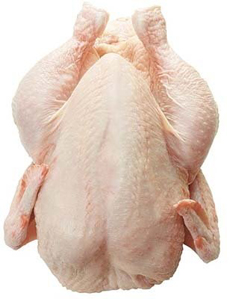
You can refreeze chicken and other proteins if they have been thawed in the fridge. Photo courtesy 21Food.com.
 

Color, texture and steam are not indicators that a food is safe to eat. The surface of a food might be steaming hot, but there may be cold spots inside.

WHAT TO DO: Keep a food thermometer on top of the microwave; this slender thermometer is unobtrusive. Clean the food thermometer with soap and water after each use.

MYTH: “I can’t re-freeze foods after I have thawed them: I have to cook them or throw them away.”

FACT: If raw proteins such as meat, poultry, egg products and seafood have been thawed in the refrigerator, then they can be safely re-frozen without cooking. Never thaw raw foods by letting them sit on the kitchen counter; the warmth of the room enables harmful bacteria to multiply quickly.

WHAT TO DO: Only re-freeze raw or partially cooked foods that have been thawed in the fridge. If raw foods are thawed outside of the refrigerator—for example, in the microwave or in cool water—they need to be cooked immediately.

Mythbusters educational materials, including a PowerPoint Presentation, a teachers’ kit, games for children and more, are all available as free downloads at Fightbac.org. You’ll also find the four tips from 2009 through 2011.
  

Comments off

RECIPE: Espresso Ice Cream Shooters

In no more than five minutes, you can make a drinkable dessert for grown-ups: espresso ice cream shooters.

It’s like a mini affogato.

This recipe comes from Starbucks, which has easy recipe ideas on its ice cream website.

Serves 4.
 
 
ESPRESSO SHOOTERS RECIPE

Ingredients

  • 1 cup Starbucks VIA Italian Roast or Decaf Italian Roast, prepared according to package directions and chilled (or brew and chill espresso/Italian roast coffee from scratch)
  • 1 small scoop (4 tablespoons) coffee ice cream
  • Optional: 1 teaspoon coffee liqueur per shot glass
  • Optional: cinnamon or chocolate-covered espresso bean for garnish
  •  
    Ready in five minutes (photo © Starbucks).
     
    Preparation

    1. Add four teaspoons of liqueur to espresso. Pour chilled espresso into 4 chilled shot glasses.

    2. If you are not using the liqueur, no sweetener is necessary. But if your preference is for sweet coffee, pre-sweeten the cup of coffee before pouring into shot glasses.

    3. Top with a cookie scoop’s worth of coffee ice cream. Garnish, if desired, with cinnamon and serve with cut straws and/or espresso spoons.
     
     
    > Find more of our favorite ice cream desserts.
      

    Comments off

    TIP OF THE DAY: Make Mini Ice Cream Bombes


    An easy ice cream mini bombe. Photo
    courtesy Starbucks.

      The earliest known recipe for a frozen dessert bombe comes from the great Italian confectioner, G.A. Jarrin. In the first Italian cookbook published in English—The Italian Confectioner or Complete Economy of Desserts according to the Most Modern and Approved Practices (London: 1820—today, you can get the Kindle edition). It was a success: At the time in England, the finest cuisine was considered to be prepared by a French cook and an Italian confectioner (pastry chef).

    Jarrin’s “Bomba Ice” was molded in a sorbetière, an ice cream/sorbet mold, with a maraschino- or almond-liqueur-flavored ice. The ice could be hollowed out to fill the cavity with a second flavor.

    Sometime after 1840, French recipes appear for the bombe glacée (ice cream bomb), using copper ice cream molds. The molds could be domes or half-rounds; the half-rounds could be joined to create a round (bomb-shaped) dessert. Recipes show that spun sugar was sometimes used as a wick, and brandy was poured onto the plate and lit to create a flaming bombe.


    Different flavors could be layered and frozen, one at a time; sorbet layers could be alternated with ice cream. The bombe’s center could be filled with dried and/or fresh fruits, depending on season: berries and grapes, raisins and sultanas. A ladyfinger or thin cake layer could be added. When unmolded, the bombe could be iced and decorated.

    Today’s basic bombes are less elaborate so they’re accessible to the home cook. They look like this, a combination of three or four flavors.

    We have an even easier variation for you: a one-layer individual bombe. The recipe is courtesy of Starbucks and is made with their new Mocha Cookie Crumble Frappuccino Ice Cream. The mascarpone frosting provides a tiramisu effect when used with coffee ice cream, but complements any flavor of ice cream.

    Since this recipe is made in individual portions, you don’t even have to worry about neatly slicing a conventional bombe. Serves 4.

    RECIPE FOR INDIVIDUAL ICE CREAM BOMBES

  • 1 pint Starbucks Mocha Cookie Crumble Frappuccino Ice Cream, slightly softened
  • 8 soft lady finger cookies, cut in half crosswise
  • 1/2 cup heavy or whipping cream
  • 1/2 cup mascarpone
  • 1 tablespoon confectioners’ sugar
  • 1 teaspoon cocoa powder
  •  
    Preparation

    1. Line 4 six-ounce ramekins or custard cups with plastic wrap. (Custard cups provide a more bombe-like slope.) Evenly divide ice cream into ramekins, pressing firmly.

    2. Arrange 4 lady finger halves onto the top of each ramekin, which will become the bottom layer when the bombe is unmolded. Wrap tightly in plastic wrap. Freeze at least 2 hours.

    3. Meanwhile, beat the heavy cream, mascarpone and confectioners’ sugar with an electric mixer in medium bowl until soft peaks form. Place in refrigerator until ready to serve.

    4. Remove ice cream bombes from freezer and unwrap. Invert onto dessert plates. Frost top and sides with mascarpone mixture, making decorative peaks. Dust with cocoa powder.

     
    Find more of our favorite ice cream and sorbet recipes.

    Check out all the different ice cream desserts in our Ice Cream Glossary.
      

    Comments off

    TIP OF THE DAY: Hatch Chiles From New Mexico

    This tip is for chile lovers: The window is briefly open for Hatch chiles, the most prized chile of New Mexico, with a meaty flesh and mild-medium heat.

    The season is August through early September, but depending on weather conditions, the harvest can begin as early as July and finish in early October.

    If you can’t find Hatch chiles locally, head to Melissas.com.
     
    ABOUT HATCH CHILES

    Authentic New Mexican Hatch chiles are named after the original growing area of Hatch, New Mexico in the Mesilla Valley, just north of Las Cruces. The valley, which stretches along the Rio Grande’s southernmost bend before crossing into Texas and Mexico, is covered with row after row of green, leafy Hatch chile plants for most of the summer.

    Every September, after the harvest, there are formal and informal Hatch chile festivals. In towns throughout New Mexico, the aroma of roasted chiles fills the air, along with the sounds of the Hatch chiles popping and crackling as they roast in propane-powered roasters. They’re roasted in grocery store parking lots, on street corners and seemingly everywhere and just about everyone enjoys the seasonal treat.

    Chefs say that the intense sunlight, hot days and cool nights in the valley result in a uniquely flavored chile. Favorite recipes include chile con queso, chiles rellenos, and chile verde.


    Hatch Chiles
    Hatch chiles from New Mexico. Photo courtesy Melissas.com.


    But it doesn’t stop there: The roasted chiles are used in salads, soups, stews, dips and sandwiches. Roasting instructions are below, and recipes are available at Melissas.com. Click on the recipe tab towards the bottom of the page to see dozens of yummy Hatch chile recipes. (Consider the Hatch chile chocolate chip cookies.)

    Check out the different types of chiles.
      
    HOW TO ROAST HATCH CHILES
    All chiles can be roasted over an open flame—on a grill or a gas stove—or under the broiler.

    1. To roast chiles over an open flame on the grill or stovetop, hold the pepper with tongs over a medium flame, turning occasionally until evenly charred. To roast chiles under a broiler, arrange chiles in a single layer in a baking pan or sheet and place under a hot broiler. Turn occasionally to char evenly.

    2. When the skin is blackened and blistered, place chiles in a paper or plastic bag, or in a pan with a tight fitting cover. Seal or cover and allow to cool. The chiles will deflate and shrivel, but their skin will easily lift off, revealing a silky flesh underneath.

    3. Remove seeds and stems (if not using the stems for chiles rellenos) and use as directed in your recipe.

    WHAT’S THE DIFFERENCE BETWEEN CHILES & PEPPERS OR CHILE PEPPERS?

    The original name, chile, comes from the Aztec language of the New World (chilli). When Columbus’ crew first tasted chiles, in the Caribbean, the heat and pungency reminded them of black pepper. They referred to the chiles as peppers or chile peppers.

    Pepper is a completely unrelated species; the fruits (yes chiles are fruits) should be called chiles (the Spanish transcription) or chiles. But after 500 years, it’s tough to change the record.


    Comments off

    COOKING VIDEO: Grilled Clams & Mussels


    While the coals are hot, make grilled clams and mussels as a healthful and low-calorie Labor Day treat.

    This video shows how easy it is:


    Find more of our favorite seafood recipes.

    Comments off

    The Nibble Webzine Of Food Adventures
    RSS
    Follow by Email


    © Copyright 2005-2026 Lifestyle Direct, Inc. All rights reserved. All images are copyrighted to their respective owners.