THE NIBBLE BLOG: Products, Recipes & Trends In Specialty Foods


Also visit our main website, TheNibble.com.

Harbison, The World Cheese Awards’ Super Gold Medal Winner

Bark-Wrapped Harbison Cheese From Jasper Hill Farm
[1] This beauty is spoonable, and when super-ripe, it becomes pourable (all photos © Jasper Hill Farm).

Harbison Cheese From Jasper Hill Farm In Vermont
[2] When on the younger side, the bark can be peeled away for sliced portioning. If the paste is gooey and the bark has fused with it, then leave the bark intact, cut away a portion of the top or all of it (save it for eating), and spoon out cheese from the top.

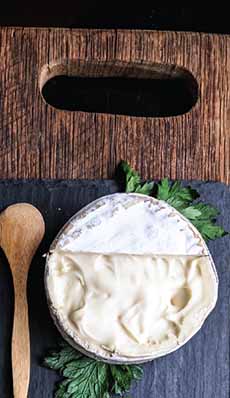
Harbison Cheese From Jasper Hill Farm, With A Spoon For Scooping Out The Soft Cheese
[4] The top neatly cut away for scooping.

A wheel of Harbison Cheese wrapped in spruce bark
[5] Cheeses aging in the vault.

A gift box with five of Jasper Hill Farm's great cheeses.
[6] For you or for gifting: five of Jasper Hill Farm’s memorable cheeses.


One of our favorite fine cheeses has just taken home the coveted Super Gold medal at last week’s World Cheese Awards, held in Trondheim, Norway.

It also won the trophy for Best American Cheese.

This is a magnificent cheese for a cheese connoisseur or for someone who wants to become one.

Harbison is a soft-ripened cheese with a rustic, bloomy rind. The pasteurized cow’s milk cheese has a bloomy rind (like Brie) and is bark-wrapped.

Young cheeses are wrapped in strips of spruce cambium, the tree’s inner bark layer, harvested from the woodlands of Jasper Hill in Greensboro, Vermont.

The spoonable texture begins to develop in Jasper Hill Farm’s vaults, and the paste (the interior) continues to soften on the way to market.

The texture is voluptuous, the aroma scintillating. On the palate, the oh-so-creamy cheese yields notes of button mushroom, mustard, raspberry, sweet cream, and a woodsy flavor from the bloomy rind.
 
 
PAIRING HARBISON WITH OTHER FOODS

Harbison is a great excuse to gather a few friends and scoop into a special treat.

For drinking, pair it with an oaky white wine like Chardonnay, or barrel-aged sour beer.

Serve it with crusty bread or plain crostini and for a cheese condiment, a fruit mostarda.

One cheese writer suggests serving it with French fries sprinkled with fresh thyme, which complements the woodsy flavors.

> Check out our guide to cheese condiments.
 
 
GET YOUR HARBISON CHEESE

Blue cheese lovers: Jasper Hill Farm’s Bayley Hazen Blue also took home a gold medal in the blue cheese category, and Willoughby picked up a gold medal in the washed rind cheese category.

In a field of more than 4,000 entries from around the world, Jasper Hill Farms won five medals. Great work, team!

In addition to Harbison, Bayley Hazen Blue, and Willoughby, there are gift boxes of simply splendid cheeses. Everything from Jasper Hill Farm is special.

> Head to JasperHillFarm.com.

> The history of cheese.

> The different types of cheese: a glossary.


THE HISTORY OF HARBISON & BARK-WRAPPED CHEESE

The cheese is named for Anne Harbison, affectionately known as the grandmother of Greensboro, Vermont. She contributed to the creation of this divine cheese in 2011.

Harbison was a mistake—like chimichangas, chocolate chip cookies, Coca-Cola, corn flakes, fudge, ganache, ice cream cones, Nashville hot chicken, Popsicles, potato chips, Tarte, Worcestershire sauce, and even yogurt, among other necessities.

The team was making Moses Sleeper, a straightforward Brie-style cheese, and was adjusting the moisture on a batch.

They added too much moisture and could tell early on that the cheeses would ooze. Cheesemaker Mateo Kehler, Jasper Farms’ co-owner with his brother Andy, wrapped the rounds of cheese in bark to salvage the batch.

There was a bonus benefit:

In addition to girdling the oozing cheese, the bark imparted a “magical cacophony” of resinous, piney, smokey, and meaty flavors to the cheese [source].
 
 
The History Of Bark-Wrapped Cheese

Legend has it that the first bark-wrapped cheeses were made in the French and Swiss Alps during the winter months—out of necessity.

These regions are known for their large format (big wheels) cow’s milk cheeses: Comté on the French side and Gruyére on the Swiss side.

In the summer, the cows grazed high up in the Alpine meadows, where their milk was collected. The curds were formed and pressed into large wheels.

But in the autumn, when the cows returned to their villages in the valleys, the change in diet (dry hay and a bit of grain versus grazing on the pasture’s bounty) and the lack of exercise (staying warm in the barn versus free range in the Alpine pastures) meant that the composition and character of the milk changed dramatically.

This “winter milk,” made from cows who are indoors eating sweet hay and grain, is richer and more full of fat. It’s perfect for crafting soft, gooey cheese

In a centuries-old tradition of making cheese that fits the season, local cheesemakers began to make small, soft cheeses wrapped in spruce bark for their families and to sell at local markets.

These delicate wheels ripened to the point of being custardy and as they aged, scoopable. They were a hit, and bark-wrapped cheeses entered the history books [source].


CHECK OUT WHAT’S HAPPENING ON OUR HOME PAGE, THENIBBLE.COM.


Comments off

Rovagnati Salumi For Every Day Plus Easy Entertaining

Rovagnati, a venerable Italian producer of salume, has brought its premium cold cuts to the U.S.—and they’re nitrate-free.

Rovagnati uses an innovative and exclusive technology that removes nitrates and nitrites, providing a healthier option. That makes the brand better for you, worthy of your family and your guests.

Rovagnati, which remains a family business, was begun in 1943 in Milan, Italy. Paolo Rovagnati’s vision was to create inventive meat products that raised the quality of salume in Italy.

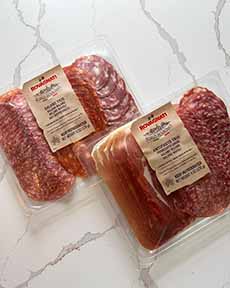
His vision has certainly come to pass! We’re so pleased with the two different trios we purchased for entertaining:

  • Salami Trio: Salame Milano, Salame Napoli, Hot Sopressata
  • Antipasto Trio: Prosciutto Crudo, Salame Milano, Salame Napoli
  •  
    Plus, there are individual packages of:

  • Finocchiona
  • Genoa Salami (Salame Milano)
  • Soppressata (Salame Napoli)
  • Hot Soppressata
  •  
    There’s more about these below, but suffice it to say that our guests have not been shy about devouring them to the last slice.

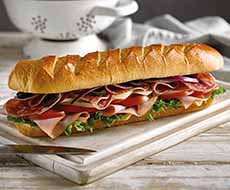
    We’ve come to love them so much that we now regularly enjoy them for lunch on homemade hero sandwiches.

    Check in your local market for the products, or head to the company website for more information.
     
     
    THE DIFFERENCE BETWEEN CURED & UNCURED MEATS

    A word about nitrates and nitrates:

    Cured meats (bacon, ham, hot dogs, sausage, etc.) contain the chemical preservatives sodium nitrate and/or sodium nitrite. Sodium nitrate is added to preserve and enhance a meat’s flavors and shelf life (it protects against the growth of bacteria).

    When nitrates break down through cooking, digestion, or other means, they form nitrites, which are potential carcinogens.

    Manufacturers and the USDA claim that the level of nitrates/nitrites is too low to cause problems. But there is enough of a controversy that it makes some people wary of ingesting nitrates and nitrates. They’ve given up hot dogs and other cured meats.

    Some brands have created products that are free of nitrates and nitrates. We’re fans of Berkshire ham, for example.

    Rovagnati has you covered in the salume department, with Genoa salami, prosciutto, and soppressata that are hormone-free.
     
     
    SALUME, SALUMI, & SALAMI: THE DIFFERENCE

    Salume refers to artisan craft meats. It’s a broad category similar to the French term, charcuterie.

    Salumi refers specifically to cured or preserved pork products.

    Salami, the word most familiar to Americans, is a cured meat product that is made up of ground pork and shaped in a casing.

    There are many different types of salami, but they all start out the same way:

    The meat is minced, seasoned to the salumiere’s (the salami maker’s) style, and packed into a casing. It is then cured over time to develop and mature its flavors.

    Salami is produced with different flavor profiles, depending on the seasonings that are mixed in before curing. There are numerous regional varieties. Just a few:

  • Genoa, from the Genoa region of Italy, is a medium grind, garlic-heavy salami that’s easily found in the U.S.
  • Felino, from a commune in the province of Parma in the Emilia-Romagna region. It’s rich with peppercorns and wine but minimally spiced and slow-aged to bring out a sweet flavor.
  • Finnochiona, from the Tuscany region, spiced with fennel (finocchio in Italian) instead of pepper.
  • Milano, from Milan, is finely ground and seasoned with garlic, wine, and black pepper.
  • Napoli, from Naples, is a fine to medium grind, with a mild flavor.
  • Soppressata is made in different regions, and the styles vary from sweet to salty to spicy, with seasonings that vary from basil to fennel to garlic to oregano. Rovagnati makes a hot soppressata seasoned with red pepper flakes.
  •  


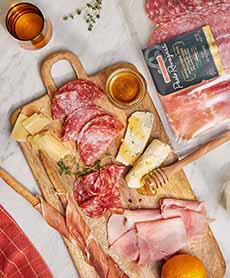
    Packages Of Rovagnati Italian Salume (Charcuterie)
    [1] One package makes a nice board for four, and two packages serve eight people (photos #1 through #4 © Rovagnati S.p.A).

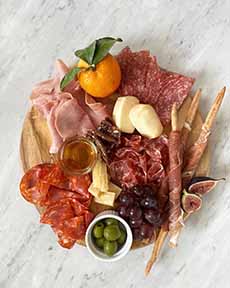
    Italian Charcuterie Platter
    [2] Ready for guests!

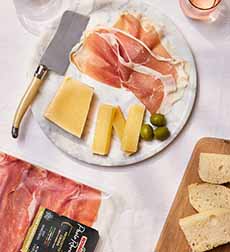
    A plate of prosciutto and cheese with bread and green olives.
    [3] A light lunch.

    A wood serving board laden with salume, Italian charcuterie.
    [4] Salumi with Gorgonzola cheese and a drizzle of honey. Gorgonzola is also a product of the greater Milan area.

    Italian Hero Sandwich
    [5] We can pile an entire package onto a crusty hero roll (photo © St. Pierre USA | Facebook).

     
    __________________

    *Prosciutto is the Italian word for ham. Prosciutto crudo is cured, normally in salt for a few weeks. The salt draws out blood and moisture, which prevents bacteria from entering the meat. It is then air-dried and aged. Cotto means cooked. Prosciutto cotto is a ham that has been brined and steamed.


    CHECK OUT WHAT’S HAPPENING ON OUR HOME PAGE, THENIBBLE.COM.


    Comments off

    Treat Yourself To Fall-Flavored Preserves From Bonne Maman

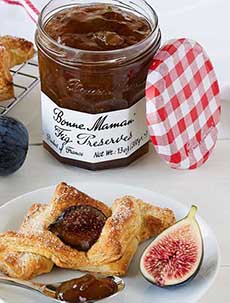
    Jar Of Fig Preserves With A Breakfast Pastry
    [1] Fig is traditionally a fall flavor, but this popular variety is available year-round (all photos © Bonne Maman).

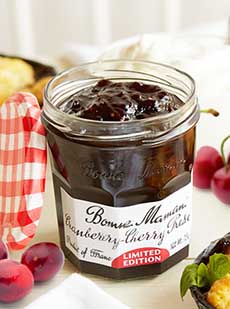
    A Jar Of Bonne Maman Cranberry Cherry Preserves
    [2] Cranberry Cherry Preserves. The line can also be used in baking and 20 more ways beyond toast.


    Strawberry, grape, and raspberry are the three most popular flavors of jams*, jellies, and preserves in the U.S. Regardless of your personal faves, how about switching up your flavors for fall?

    Bonne Maman (the name means “good mom”), preserves and spreads produced in France. The brand has all of the top flavors. But for a fall/winter seasonal twist, they also offer:

  • Cranberry Cherry Preserves (Limited Edition)
  • Fig Preserves
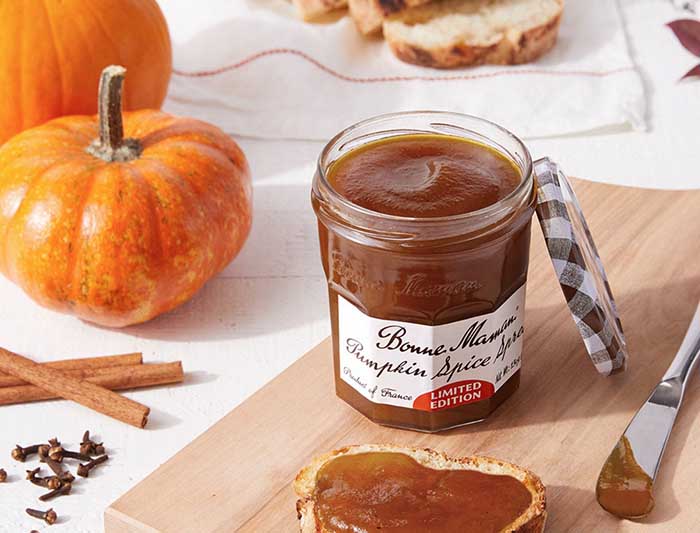
  • Pumpkin Spice Spread (Limited Edition)
  •  
    The line is all-natural: no artificial coloring, no high fructose corn syrup, no added preservatives.

    In addition to great flavor, we particularly like the wide-mouth jar—easy to spoon out the preserves from the beginning through the last little bit.

    The signature gingham-patterned lid and homemade-style handwritten script label are also appealing—the script of an artisan (or your great-grandmother).
     
     
    NICE FOR GIFTING

    There’s also a gift box with all three flavors. Individual jars are nice for small gifts and stocking stuffers.

    And if you show up with a box of warm croissants, so much the better!
     
     
    GET YOUR FALL FLAVOR PRESERVES

    Check your grocer’s or head to BonneMaman.us for the seasonal treats.
     
     
    > The history of jam, jelly, and preserves.

    > The differences between jams, jellies, preserves, marmalade, chutney, and more.

    > 20 different uses for jam, jelly, and preserves.

    > Uses for fig spreads and preserves.

     
    A jar of Bonne Maman Pumpkin Spread, also spread on a piece of toast.
    [3] In addition to a bread spread, Pumpkin Spread can turn vanilla ice cream into a pumpkin parfait.
     
     
    __________________

    *Strawberry, grape, and raspberry are followed by apricot, blackberry, blueberry, and cherry [Source: Statistica]. Statista speculates that the reason the top two are strawberry and grape is because Smuckers and Welch’s, two of the leading jelly and jam companies in the U.S., have devoted a ton of marketing for these flavors. And they both work well on that American classic, the PB&J [source].


    CHECK OUT WHAT’S HAPPENING ON OUR HOME PAGE, THENIBBLE.COM.


    Comments off


    © Copyright 2005-2026 Lifestyle Direct, Inc. All rights reserved. All images are copyrighted to their respective owners.