THE NIBBLE BLOG: Products, Recipes & Trends In Specialty Foods


Also visit our main website, TheNibble.com.

PRODUCT: Simit, The Turkish Ur-Bagel

If you’ve been to Turkey, you’ve probably eaten a simit or two (called gevrek in some parts of the country; the word means crisp).

They’re one of the national breakfast foods of Turkey, baked fresh throughout the day in neighborhood bakeries and sold to the public by food cart vendors (or simply from a tray carried on the vendor’s head!).

Simit falls somewhere between a roll and a bagel: The crumb is less dense and less moist than a bagel crumb, and the exterior is more crusty.

It’s coated with lots of sesame seeds: It isn’t simit without the sesame seeds, which deliver texture, flavor, lots of fiber and heart-healthy linolenic acid and omega-3s.

Simit, which has been called the “Turkish bagel,” is popular in parts of the Middle East, Greece and the Balkans. And Simit + Smith, which launched last month in New York City, is hoping they’ll become as beloved in America…

Not just as breakfast food, served plain or with jam or cheese and a glass of tea, as in Turkey.

Simit is easily Americanized into a sandwich and an anytime snack. It’s the next imported food waiting to be discovered.

With fillings from classic Middle Eastern (black olive paste and kasseri cheese) to classic American (smoked salmon and cream cheese), they’re a hit. The Nutella and banana sandwich is a revelation.

You’ll notice in photos #2 and #3 that some shapes are not round. These were made to have more appeal for sandwiches.

And who knew that tea grows in Turkey (in the mountains in the north)? The tea at Simit + Smith is so delicious—floral and honeyed—we wanted to buy the foodservice-size bag (which isn’t for sale…yet).

  Authentic Simit
[1] Have your turkey and Jarlsberg cheese on a simit. Photo courtesy Simit + Smith.


[2] Have your turkey and Jarlsberg cheese on a simit. Photo courtesy Simit + Smith.

 
With half the calories of bagels and a no sugar (yes, there’s sugar in most bagels), we hope that simit becomes trendy and then a fixture in America’s multicultural food scene. You can check the expansion on the Simit + Smith website.


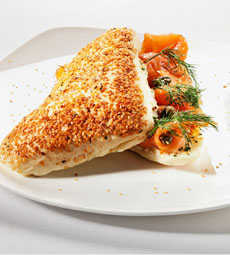
[3] Smoked salmon on a simit: No bagel required. Photo courtesy Simit + Smith.
 

If you’ve traveled a bit, you may have encountered simit by other names: koulouri in Greece, gevrek in Bulgaria and Serbia, gjevrek in Macedonia and covrig in Romania, among other names.

Simit’s size, crunchiness and chewiness vary slightly by region, even within Turkey. If you like things sweeter, head to Devrek, where the simits are made with molasses.

If you’re passing through Manhattan, head to the Upper West Side or the Financial District and have a simit or two (here are the locations). All the sandwiches are delicious, and the Nutella and banana is a must-have.

If you’re full, get it to go.


Comments off

TIP OF THE DAY: What Guys Really Want For Valentine’s Day (& Every Day)

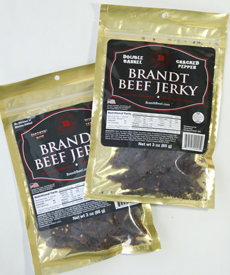
Melt-in-your-mouth gourmet jerky. Photo by
Elvira Kalviste | THE NIBBLE.

  Sure, there are guys who love chocolate and cupcakes.

But unless you know your guy is one of them, smart money is on gourmet jerky as the most welcome Valentine guy food gift.

THE NIBBLE tastes a reasonable amount of jerky, sent for our consideration. Much of it is tough and chewy, leaving behind gristle that needs to be, well, disposed of.

When we receive a gourmet jerky—tender, moist jerky that disappears to the last bit—we take notice.

So we noticed the packages of Brandt Beef Jerky that arrived last week. Brandt Beef is a family owned, premium natural beef producer that serves the upscale restaurant and retail markets with filet mignon, ribeye, strip steak and other desirable cuts.

 
Brand has turned some of that fine beef into jerky in five flavors:

  • Barbeque Mesquite
  • Cracked Pepper
  • Orange Teriyaki
  • Traditional Recipe
  • Volcanic Jalapeño
  •  

    We truly enjoyed the long strips of tender meat, with no leftover gristle: flavorful, gourmet beef jerky.

    Five packages are $39.99, in single flavors or a variety pack. Buy it online at BrandtBeef.com.

    WHAT IS JERKY?

    The word jerky derives from Quechua, the language of the Incas. Ancient man preserved meat by drying it over hot fires. The Incas called this dried meat “charqui.”

    While the prehistoric method of meat preservation was used by other ancient peoples, it was not known in Europe; the first European visitors to the New World found Native Americans making “charqui” from the meat of any animal they hunted (that which wasn’t consumed immediately). The word became Americanized to jerky.

    Today’s jerky eaters enjoy it as a snack rather than a necessity, and have the luxury of eating jerky marinated in a variety of spices, salt and/or sugar—seasonings that were not available to many ancients.

     
    Jerky packaging tends to be plain: It’s what’s inside that counts. Photo by Elvira Kalviste | THE NIBBLE.
     
    All the fat is trimmed from the meat because fat doesn’t dry. The jerky is then dried in low-heat smokers—not hung on racks to dry in the sun as was done pre-modern day. But like ancient jerky, the modern product can be stored for long periods of time without refrigeration.

    Chewy, grisly jerky doesn’t have a place at our table. But gourmet jerky? Bring it on!
      

    Comments off

    PRODUCT: Waffle Pancakes Griddle


    Fusion food of a different sort: waffle
    pancakes. Photo courtesy Williams-Sonoma.


    Pancakes or waffles: Can’t decide? This innovative griddle from Nordic Ware makes it simple to prepare delectable waffled pancakes—pancakes textured like waffles—in a jiffy.

    The innovative cast-aluminum nonstick griddle produces seven 3″ diameter, crispy golden cakes with deep pockets for syrup or toppings. We also used them to make dessert pancakes, topped with a scoop of ice cream, sliced bananas and chocolate sauce (fun and delicious).

    The riveted cast stainless steel handle stays cool; the nonstick finish ensures easy release and quick cleanup.

    Made in USA, the pan is currently a Williams-Sonoma exclusive, at retail stores or online.

    It’s yours for $39.95.


    THE DIFFERENCE BETWEEN PANCAKES & WAFFLES

    Pancakes are generally soft and spongy, while waffles are crispy. Historically, waffle batter has more fat than pancake batter; the extra fat contributes to the crisping.

    Most mixes we see today state that they can be used for pancakes or waffles. If waffles made from such mixes don’t turn out crispy enough for you, try a waffles-only batter, or make it from scratch.

    Check out our review of the best pancake mixes.

    Check out our Pancake & Waffle Glossary for all the different types of pancakes and waffles.


    Comments off

    VALENTINE GIFT: Sixth Course Chocolates

    At a fine restaurant, after a five course dinner, including dessert, the sixth course is a dish of chocolates or mignardises with coffee.

    The founders of Sixth Course Artisan Confections describe them selves as “good pastry chefs [gone] rogue.”

    The Bay Area confectioners used Guittard couverture chocolate, made in San Francisco, along with local dairy and Start with two talented pastry chefs: Borganic herbs, then chose sustainable, recycled packaging

    The results are superb. While there’s no heart-shaped gift box, if your Valentine craves the finest couverture and exciting flavors, head to SixthCourse.com to partake of these lovelies.

  • Chef’s Choice boxes, shown in the photo, are made in Caramels, Sampler and Wine & Spirits Sampler. One of each would be just perfect for this chocolate lover.
  •  


    Chef’s Choice is a sampling of the superb
    bonbons, caramels and truffles; but you can
    also have one of everything. Photo courtesy
    SixthCourse.com.


    Caramels for your Valentine: Passion Fruit Habanero and Cayenne. Photo courtesy Sixth Course.
     
  • Individual flavors can be hand-selected. Current flavors include Baileys & Cream, Brandied Cherry, Cayenne Caramel, Ceylon Cinnamon Caramel, Chai Tea Caramel, Champagne Fizz, Coconut Rum, Earl Grey & Candied Meyer Lemon, Grand Marnier Twist, Hazelnut Praline, Honey & Fennel Pollen, Milk Chocolate Malt Crunch, Passion Fruit Caramel, Passion Fruit Habanero Crunch, Raspberry Cosmopolitan, Rosemary Caramel, Sage & Brown Butter Caramel, Smoked Salt Caramel and Whiskey Neat Truffles. Hungry yet?
  • Heart Shaped Caramels. For Valentine’s Day, six Passion Fruit Habanero Caramels and six Cayenne Caramels are packaged in a sustainable, reusable wood box.
  •  
    OK, Valentine: You know what we want. Send lots!
      

    Comments off

    TIP OF THE DAY: Lower Calorie Piña Colada

    In our youth, we used to have an annual “Tropical Winter” party on Valentine’s Day. It was for everyone who had nothing else to do, those who disliked Valentine’s Day and anyone who simply liked a good Piña Colada.

    Piña Coladas were the drink of the evening. The fare was tropical-inspired, from fruit skewers and chicken skewers to rumaki*, a broiled, bacon-wrapped chicken liver and water chestnut hors d’oeuvre that was all the rage at the time.

    Coconut water was years from appearing in American markets. If only Tropical Winter had lasted until it arrived, we’d have offered a Piña Colada Lite, substituting very-low-calorie coconut water (6 calories/ounce, or 12 calories per drink) for very-high-calorie Coco López (130 calories/ounce, or 260 calories per drink; plain coconut milk is 65 calories/ounce).

     
    Go light with coconut water instead of Coco López. Photo courtesy TasteNirvana.com.
     

    Piña Coladas are delicious, but they sure pack in the sugar and saturated fat. Here’s a “drink this, not that” tip from coconut water brand Taste Nirvana, on how to lower your Piña Colada calories while still enjoying a taste of the tropics and natural coconut flavor.

    CLASSIC PINA COLADA RECIPE

    Ingredients Per Drink

  • 2 ounces Coco López Real Cream of Coconut (substitute coconut water)
  • 2 ounces pineapple juice
  • 1½ ounces rum
  • 1 cup ice
  • Optional garnish: pineapple wedge and/or maraschino cherry
  •  
    Preparation

    1. MIX ingredients in blender until smooth. Pour into a tall glass.

    2. GARNISH and serve.

    WHAT’S COCO LÓPEZ?

    Coco López is a brand of cream of coconut, invented in 1954by Ramón López Irizarry, a professor of agriculture at the University of Puerto Rico. The ingredients on the can include coconut milk, sugar, water, emulsifiers, stabilizers and thickeners (guar gum, locust bean gum, mono- and diglycerides, polysorb 60, sorbitan monostearate, Propylene glycol alginate) and preservative (citric acid).

    The creamy heart of the coconut had long been used in Caribbean desserts. But separating it from from the coconut pulp was an arduous process.

    With funds from the government, Irizarry worked on a solution. He ulimately left teaching to produce and sell his product, which was adopted not just by cooks but by bartenders.

    According to the book “La Gran Cocina Del Caribe” by José L. Díaz de Villega, the Piña Colada made its debut on August 16, 1954 at the Caribe Hilton’s Beachcomber Bar in San Juan, Puerto Rico, a watering hole for a star-studded clientele. The hotel management had requested that bartender Ramón “Monchito” Marrero create a new signature cocktail. Marrero worked for three months on the recipe.

    Piña is Spanish for pineapple, and colada means strained; the drink is usually served blended with ice. The Piña Colada has been the official beverage of Puerto Rico since 1978.

     
    *Rumaki is a mock-Polynesian hors d’oeuvre, believed to be invented by Victor Bergeron, founder of Trader Vic’s.


    Comments off

    The Nibble Webzine Of Food Adventures
    RSS
    Follow by Email


    © Copyright 2005-2026 Lifestyle Direct, Inc. All rights reserved. All images are copyrighted to their respective owners.