THE NIBBLE BLOG: Products, Recipes & Trends In Specialty Foods


Also visit our main website, TheNibble.com.

TOP PICK OF THE WEEK: Yellow Tail Sparkling Rosé

If you’re buying sparkling wine for Christmas or New Year’s Eve, you may be tempted to buy Champagne. But unless your guests are wine connoisseurs, you can have just as pleasant an experience with other sparkling wines, for a third to half of the price of the least expensive bottle of Champagne.

Champagne is a name-protected sparkling wine that is made only in the Champagne region of northeast France. Every other wine that has bubbles is called sparkling wine.

You can find sparklers from other regions and nations in the $10 to $12 range that are very satisfying in the glass. When mixed into a cocktail, no one can tell the difference.

But the difference in price is substantial. The most affordable Champagnes tend to be in the $35 range. If you’re buying several bottles, do the math.

We do buy Champagne and look for values—both the houses we know, like Pol Roger Brut Reserve, $35, and smaller houses that the wine clerk recommends. Champagne Nicolas Feuillatte and Jacquart are $35, the better-known Mumm is $40.

A number of years ago, on a recommendation from wine expert Robert Parker, we purchased and went crazy for the $35 Egly-Ouriet, a smaller producer we’d never heard of. Today you can find bottles from $38 to $65, depending on the vintage and the retailer.


Yellow Tail Bubbles
We buy Yellow Tail Bubbles Sparkling Rosé by the case! It’s also available in Sparkling White. Photo courtesy Yellow Tail.

 
WHEN YOU NEED A LOT OF BUBBLY…

When multiple bottles are required, we turn our sights elsewhere, to sparkling wine varieties that are $8 to $15 a bottle. Prices will vary by retailer, but keep an eye out for:

  • Asti Spumante from Italy: Martini Asti is about $12; the sweeter Cinzano Asti, $13, is great with dessert.
  • Australian Sparklers: Our favorite is Yellow Tail Bubbles in regular and rosé, $10.
  • Cava from Spain: For $8, look for Cristalino Brut and Cristalino Brut Rosé; Freixenet Cordon Negro Brut is $12 and Freixenet Cava Carta Nevada Semi Dry (sweeter) is $9.
  • Crémant from France: Numerous labels of this Loire Valley sparkler sell for $12-$15.
  • Prosecco from Italy: Good sparklers are available for $9-$10.
  • California Sparklers: In the lower ranges, look for Robert Mondavi’s Woodbridge Brut, $10 and Moet et Chandon’s Chandon Brut, $17.
  • Other American Sparklers:: Domaine Ste Michelle Brut from Oregon ($10) and others from New York to Texas.
  • Sekt from Germany, finally appearing more often on U.S. shelves (here’s more about it).
  •  

    NOTE: If you’re checking prices online, make sure they’re for standard 750ml bottles, not half bottles or splits.


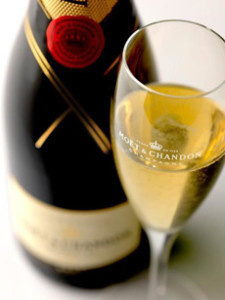
    Moet et Chandon Champagne
    Yellow Tail sparkling wine from Australia
    (photo at top of page) is $10. Moet et
    Chandon Champagne from France (photo
    above) is $40. Photo via Pinterest |
    Facebook.
      WHY IS CHAMPAGNE SO EXPENSIVE?

    It’s a question of supply and demand. The supply is limited because by law, Champagne can only be produced in the Champagne region of northern France. There’s no more land that can be planted with grapes.

    The demand began around 1715 in Paris, when Philippe II became the Regent of France. He liked sparkling Champagne and served it nightly at dinner. The cachet was taken up by Parisan society. Winemakers in Champagne began to switch their products from still wines—the majority produced at the time—to sparkling.

    Throughout the 18th century, new Champagne houses were established. Moët & Chandon, Louis Roederer, Piper-Heidsieck and Taittinger were among the major houses founded during this period.
     
    Is Champagne Better Than Other Sparkling Wines?

    Champagne has the most complex flavors among sparkling wines, and the greatest aging potential, which deepens the complexity.

    Its unique flavors—toasty and yeasty—are due to the layers of chalk underneath the region’s soil.

     
    A vast chalk plain was laid down in the Cretaceous period, 145 to 66 million years ago (it’s the same huge expanse that created the White Cliffs of Dover in England). The chalk provides good drainage and reflects the heat from the sun, two factors that influence the flavor of the grapes.

    Champagne makers perfected the méthode champenoise, adding a dosage of sugar that generates a secondary fermentation in the bottle. This creates the bubbles.

    While producers the world over use the méthode champenoise to make sparkling wines, only the vine roots in Champagne grow down into the chalk, creating the prized flavors and body.

    However, not everyone likes yeasty, toasty wines. Other regions produce lighter bodied wines with citrus and other fruity flavors and floral aromas. The only way to discover what you like is to taste, taste, taste.


    Comments off

    TIP OF THE DAY: Winter Beer Styles

    Today is the first full day of winter, which begins late this evening (11:48 p.m. EST). It’s the shortest day of the year, with the least amount of daylight.

    The good news is, starting tomorrow daylight hours will start getting longer. But there’s still plenty of time to celebrate winter with winter beers. They’re just waiting for you to pluck them from store shelves.

    If you’re serving beer for Christmas or New Year’s Eve, make a special effort to pick some up. Even if your area has limited craft beer offerings, Samuel Adams has a Winter Lager that should be in every store that sells the brand.

    Winter beers are brewed in the fall for winter release. Brewers work a season in advance, since it takes three months or so to assemble the special ingredients, brew the beer and let it mature before release.
     
    WHY WINTER BEERS ARE DIFFERENT

    Winter beers tend to be the strongest beers made by brewers. This follows the pattern of seasonal food and drink being heartier in the winter and lighter in the summer.

  • The color of winter beer is usually darker—cooper to deep amber hues—and the body is fuller.
  • There is often some winter spice seasoning, making the flavor more complex. This can range from the pumpkin pie spice group (allspice, clove, cinnamon, nutmeg) to holiday flavors like ginger and molasses. They may even get some actual pumpkin tossed into the mash (identified as pumpkin beers and ales).
  • They are often higher in alcohol.
  •  
    PARTY TIME

    Whether for holiday entertaining, a tasting party to brighten the January doldrums, Super Bowl Sunday or Valentine’s Day, you can put together an interesting assortment.

    Brad Smith of Beersmith advises these styles for the winter season:

  • Barley Wine*
  • Christmas/Winter Beer, Holiday Ales
  • Scotch Ale, Old Ale
  • Smoked Rauchbier
  • Stout, Porter and other dark beers
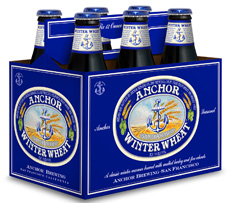
  • Winter Wheat and Bock Beers
  •  
    Here’s one beer site’s recommendation of 24 top winter beers.

    See THE NIBBLE’s beer glossary for the different types of beer.


    /home/content/p3pnexwpnas01 data02/07/2891007/html/wp content/uploads/GreatDivideHibernation6Pack 230

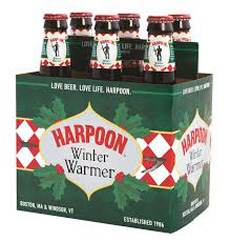
    /home/content/p3pnexwpnas01 data02/07/2891007/html/wp content/uploads/harpoon winter warmer 6 pack 230

    /home/content/p3pnexwpnas01 data02/07/2891007/html/wp content/uploads/victory winter cheers 230

    Winter Beer

     
    *Barley wine needs much longer than beer and ale—a year instead of three months. While barley wine may sound like it belongs in a warmer season, it is typically brewed ts an alcohol strength of 8% to 12% A.B.V. The word “wine” was bestowed because this range of alcohol is similar to wine. But as the name also says, it is made from barley, not fruit, so it is without doubt beer.


    Comments off

    RECIPE: Peppermint Mocha Coffee

    peppermint-mocha-coffee-tylerscoffee-230r

    Peppermint Mocha Holiday Coffee. Photo courtesy Tylers Coffee.
     

    You could spend $5 at Starbucks for a Peppermint Latte, or make this over-the-top cup from Tylers Coffee, a Tucson-based specialist in USDA organic, acid-free coffee.

    It’s one of Tylers* most popular seasonal recipes.
     
    WHAT IS MOCHA?

    The culinary term mocha refers to a mixture of coffee and chocolate flavors. But the original mocha did not have have anything to do with chocolate.

    It was a term that referred to the fine coffee (what we now call arabica) that was traded in the once-vibrant port of Al Mokha on the Red Sea coast of Yemen.

    Al Mokha was the major marketplace for coffee from the 15th century until the early 18th century, selling beans that were grown in the central mountains of Yemen.

    By the early 19th century, Yemen been supplanted by Ethiopia as the principal trader of coffee. (The coffee plant originated in the highlands of Ethiopia.)

    THE PEPPERMINT MOCHA

    Ingredients Per Cup

  • 5 ounces espresso or French Roast coffee
  • 1 ounce chocolate shavings
  • 1 ounce candy cane powder (grind up candy canes or striped peppermints)*
  • Garnish: whipped cream
  • Optional garnishes: mini candy cane, chopped candy cane, holiday sprinkles
  •  
    *In terms of why Tyler leaves the apostrophe out of is name: You’ll have to ask them!

    Preparation

    1. POUR the coffee into an eight-ounce glass or mug. Add the chocolate shavings and stir until dissolved.

    2. STIR in the candy cane powder. Finish with whipped cream, a mini candy cane and/or chopped peppermints and holiday sprinkles.
     
    *If you don’t want to grind candy canes you can use a drop of peppermint oil.
     
    Here are recipes for other peppermint-mocha beverages.


    Comments off


    © Copyright 2005-2026 Lifestyle Direct, Inc. All rights reserved. All images are copyrighted to their respective owners.