THE NIBBLE BLOG: Products, Recipes & Trends In Specialty Foods


Also visit our main website, TheNibble.com.

TIP OF THE DAY: Celebrate The Cherry Blossoms With Special Cocktail Recipes


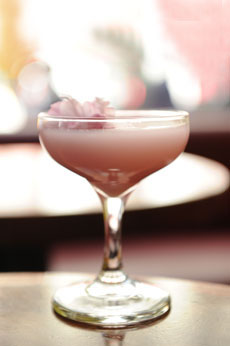
Cherry Blossom Cocktail (photo © Haru Sushi | NYC).
  This is a plan-ahead tip: Organize a cherry blossom cocktail party to celebrate the fleeting cherry blossom season.

In Japan, the arrival of the spring season is welcomed with hanami celebrations, otherwise known as cherry blossom parties. Flowering cherry trees produce breathtaking white and pink cherry blossoms, which bloom for a brief month each spring.

Celebrations include sipping saké or picnicking with friends, underneath the glorious blossoming trees in public parks. And what a tradition: The practice of hanami began in the eighth century!

You cam see photos of the beautiful blossoms, and download wallpaper, from National Geographic.

The U.S. has its own celebration: An annual Cherry Blossom Festival is held in Washington, D.C. The opening ceremony is March 23, 2013, and the festival runs through April 20th.

The D.C. trees are celebrating their 101st anniversary. In 1912, the Committee of Japanese Residents of New York donated two thousand Japanese Flowering Cherry trees to New York City. Most of the trees were planted in our nation’s capital as a symbol of friendship between the two countries.

 
If you have a cherry tree, lucky you—get out the party invitations ASAP. If not, you can grow your own (buy them from ArborDay.org). Of course, it will take some time before you can hold your own hanami under the blossoms; but while the tree grows, you can have cocktails next to them.

Otherwise, seek out a nearby flowering cherry tree and plan a picnic or a simple snack, perhaps with a cherry soda (since public places typically don’t allow the consumption of alcohol). Get ready for the next warm day and prepare to enjoy the fresh air and the blossoms.

By the way, there are some 1,000 different varieties of cherry tree. All of them blossom in the spring, but most, including the Japanese Flowering Cherry tree bears no fruit. Those varieties that do bear fruit from late May through August, depending on their location. Chew on some cherry history, facts and cherry trivia.


HAVE A CHERRY BLOSSOM COCKTAIL PARTY

Here are two delicious cherry cocktail recipes from Haru Japanese restaurant (haru means “spring” in Japanese; sakura means “cherry blossom”). The Sakura Breeze is on the menu from March 1, 2013 through April 30, 2013; the Cherry Blossom is available year-round.
 
 
CHERRY COCKTAIL RECIPE #1: CHERRY BLOSSOM COCKTAIL

Ingredients Per Drink

  • 2 ounces cherry vodka (e.g., Grey Goose, Svedka)
  • 1.5 ounce nigori saké
  • .5 ounce cherry juice
  • .5 ounce cherry purée*
  • Ice
  • Garnish: thawed frozen cherries on a skewer and/or and small pink or white pesticide-free flower(s)
  •  
    *You can buy cherry purée, make it by pulsing frozen cherries in the food processor or blender, or purée cherry pie filling. Use fresh peaches in season.

    Preparation

    1. COMBINE ingredients in a shaker over ice. Shake vigorously.

    2 STRAIN and served straight up in a Champagne coupe or “Cosmo glass”; garnish as desired.


    Sakura Breeze Cocktail. Sakura is the Japanese word for cherry. (photo © Haru Sushi | NYC).


    CHERRY COCKTAIL RECIPE #2: SAKURA BREEZE COCKTAIL

    Ingredients Per Drink

  • 2 shiso leaves (one to muddle, one to garnish—substitute: large basil leaves)
  • 2 ounces cherry vodka (e.g., Grey Goose, Svedka)
  • ¾ ounce St. Germain Elderflower Liqueur
  • ¾ ounce lemon juice
  • ¾ ounce simple syrup (simple syrup recipe)
  • 1 ounce cherry juice
  • Club soda to top
  • Ice
  • Garnish options: shiso leaf, edible pink or white flower, whole cherry or maraschino cherry with stem
  •  
    Preparation

    1. MUDDLE shiso leaf in a mixing glass. Add remaining ingredients and ice in a shaker, and shake vigorously for 8-10 seconds.

    2. FILL pilsner or other tall glass with ice; strain cocktail into ice-filled glass.

    3. TOP off with club soda. Garnish with a shiso leaf or other garnish.


    Comments off

    TIP OF THE DAY: Ways To Use Semolina Flour

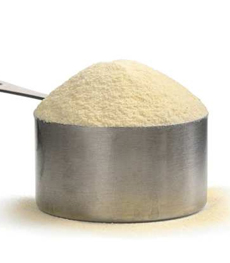
    Semolina flour. Photo courtesy King Arthur
    Flour.

      As we were writing about this past week’s Top Pick, Effie’s Semolina Crackers, we drilled down into semolina, the durum wheat-based flour from which they are made. Part of the review addresses “what is semolina.”

    We came across an article from Shubhra Krishan, author of Essential Ayurveda: What It Is And What It Can Do For You and other books. Read the full article here.

    Here’s her short list of the health benefits of semolina:

  • Energy: For those who lead an active lifestyle, semolina is a quick and nourishing source of energy.
  • Fullness: Semolina is digested slowly. This helps you feel full longer.
  • Kidneys: The potassium content in semolina helps to improve kidney function.
  • Minerals: The trace minerals in semolina, such as phosphorus, zinc and magnesium, are beneficial for the health of your bones and nervous system.
  • Vitamins: Semolina is a good source of two vital vitamins: E and the B group.
  •  
    WAYS TO USE SEMOLINA IN EVERYDAY COOKING


  • Bread: Bake semolina raisin bread—it’s so good, you should make extra loaves for the freezer. Here’s a semolina fennel raisin bread recipe. Or, substitute semolina flour for some of the all-purpose flour in any bread recipe. Itwill yield a tender crumb and a crisp crust.
  • Cereal: Make this semolina porridge recipe. It‘s delicious comfort food, and requires only milk and semolina flour (plus optional pinch of salt, pat of butter, chopped nuts, drizzle of honey, dried fruit, fresh berries, etc.).
  • Cookies: Make lemon semolina cookies.
  • Fish & Chicken: Use semolina with fried or grilled fish or chicken. Coat the protein in semolina before crumbing or battering; it forms a seal between the fillet and the batter. This tip comes from an owner of a fish and chips shop, who says that one can coat and stack the fish fillets and they won’t stick together, as they would with all purpose flour. She says that they can actually be coated the day before.
  •  
    Semolina is a better thickener than all-purpose flour. Photo by Evegny B. | ISP.

    When grilling, semolina provides a golden crunch and also helps to retain moisture.

  • Pasta: Whip up some homemade pasta.
  • Pizza: Roll out pizza crust with semolina flour, which will give it a crunchy exterior. If you like a chewy pizza crust, make the dough with semolina flour.
  • Soups, Stews, Gravies: Thicken soups, stews and gravies with semolina flour. It doesn’t clump as readily as all-purpose flour. Add a pinch at a time as the recipe simmers, stirring constantly, until you reach the desired thickness.
  •  
    IF YOU HAVE OTHER SEMOLINA RECOMMENDATIONS, LET US KNOW.
      

    Comments off

    NEW YORK & SAN FRANCISCO: Paulette Tavormino Food Photography


    Figs, grapes and morning glories. Photo ©
    Paulette Tavormina Photography | NYC.
     

    There’s just one more week to see Paulette Tavormina’s exquisite still life photographs at the Robert Mann Gallery in New York City: Then they head to San Francisco. The show opens at March, a retailer of luxury kitchenware and other goods, on March 14, 2013 and continues through June 1.

    They look like 17th century Old Master paintings, re-envisioned in a contemporary medium and a modern approach.

    Largely self-taught, Paulette Tavormina has been exhibited internationally and was the winner of the Grand Prix at the 2010 International Culinaire Photography Festival in Paris.


    She has worked on set as a food stylist in Hollywood and also photographs works of art for Sotheby’s. Her work has been featured in prominent publications including the New York Times, Boston Globe, L’Express, Martha Stewart magazine and Photo Technique magazine.

    Paulette lives and works in New York City: a good place for a lover of beautiful food. Visit her website, TavorminaPhotography.com.


    Comments off

    Breakfast Ice Cream & 20 More Deconstructed Food Recipes

    We love deconstructed food (if you’re not familiar with the concept, scroll down). It’s done for artistry and for fun, but the result must taste as good or better than the original.

    Ample Hills Creamery, one of the most creative and beloved artisan ice cream shops in New York (Prospect Heights, Brooklyn, to be exact), has deconstructed breakfast cereal.

    Instead of a bowl of cereal with milk and sugar, popular cereal flavors are infused into the milk that is churned into ice cream, with additional cereal mixed in.

    The flavor, called Breakfast Trash [photo #2], is made by steeping Cap’n Crunch, Corn Pops, and Frosted Flakes into the ice cream’s milk base. The inclusions (mix-ins) are Fruit Loops.

    It’s a fan favorite, says proprietor Brian Smith.

    While we might quibble with the name (calling beloved cereals “trash” is not really cool), we like the concept as breakfast dessert—or even the entire breakfast, if you’re an ice-creamaholic.

    Have an ice cream machine? Try it at home. Use a recipe for vanilla ice cream as a pattern.
     
     
    > Check out 20 deconstructed recipes below.

    > Find our favorite ice cream recipes and brands by pulling down the menu at the right.

    > The different types of ice cream and frozen desserts: a glossary.

    > The history of ice cream.


    Bowl Of  Fruit Loops Breakfast Cereal
    [1] This is more of a re-construction than a deconstruction: A bowl of Fruit Loops breakfast cereal is turned into Fruit Loops ice cream (photo © Food Matters).


    [2] Ice cream for breakfast: a deconstructed bowl of cereal (photo © Ample Hills Creamery).


    [3] Deconstructed Buffalo wings (photo © Carlos Andrés Varela Photography).

      WHAT IS DECONSTRUCTED FOOD?

    A concept that originated with creative chefs, “deconstructed” food takes the individual components of a classic recipe and separates and rearranges them.

    It was originally developed as an expression of the chef’s artistry and technique.

    The deconstructed dish can be unrecognizable from the original recipe, but when consumed it delivers the same flavor sensation as the original.

    New York City caterer Canard Inc. deconstructed Buffalo wings (see photo): Chicken meatballs made with hot sauce are fried, speared with celery, and served on Chinese soup spoons, garnished with a dollop of Roquefort dip. There are no chicken bones and no mess, but you’re getting a Buffalo wing experience.

    Try deconstructing an American classic for a snack today:
    Take plain or toasted cubes of bread and serve them with a fondue fork and two dipping sauces: peanut butter and jelly. It’s a deconstructed peanut butter sandwich!


    MORE DECONSTRUCTED FOOD RECIPES

    If you’re serious about deconstructing the glass of milk, churn up some vanilla ice cream without the sugar or the vanilla.

    Here are some deconstructed recipes in THE NIBBLE’s collection:

  • Deconstructed Banana Split
  • Deconstructed Black Forest Cake
  • Deconstructed Blueberry Pie
  • Deconstructed Cocktails: Bellini, Bloody Mary, Kir Royale & Pina Colada
  • Deconstructed Buffalo Wings Parfait
  • Deconstructed Buffalo Wings
  • Deconstructed Caesar Salad
  • Deconstructed Cannoli
  • Deconstructed Caprese Salad
  • Deconstructed Ceviche
  • Deconstructed Coffee Ice Cream
  • Deconstructed Crab Cake
  • Deconstructed Enchilada Salad
  • Deconstructed Fajita Salad
  • Deconstructed Fruit Loops Cereal
  • Deconstructed Guacamole
  • Deconstructed Lobster
  • Deconstructed Margarita
  • Deconstructed Ratatouille
  • Deconstructed Spring Roll
  •  
     

    CHECK OUT WHAT’S HAPPENING ON OUR HOME PAGE, THENIBBLE.COM.


    Comments off

    Cara Cara Oranges, The “Red Navel” Orange

    We’d read about Cara Cara oranges, we’d seen photos; but we hadn’t tasted one until this week. It was exquisite: sweet and “old school,” when all fruit was grown to be perfectly sweet and lush.

    (Today, too much fruit is grown to look great on the shelf, to be durable for transport, to eliminate bothersome seeds, and just about every reason other than natural sweetness and deep taste.)

    Cara Cara oranges are a variety of navel orange, distinguished by their rosy pink, juicy, sweet flesh and low acidity.

    The rosy flesh has a berry-flavored zing with a touch of spice. Depending on where the oranges are grown, the undertones can be cherry, cranberry, raspberry, strawberry or a combination.

    Cara Caras are not unlike like blood oranges, which are grown in the U.S. but hail from Italy, where they also were a natural mutation. As with blood oranges, some have a pink blush outside on the peel, as well as in the flesh.

    Cara Caras are also called “pink navel” or “red navel” oranges.
     
     
    CARA CARA ORANGE HISTORY

    The Cara Cara variety was first discovered in 1976 on a Washington navel orange tree growing at the Hacienda Cara Cara, a private home in Valencia, Venezuela. It is believed to have been a mutation.

    The delightful “new” orange was propagated. It has since been crossed with the Bahia navel orange and bred to remove the seeds, which increases consumer appeal.

    The variety was first planted in Florida groves. Twelve years ago, commercial growing began in California, where the variety thrived in the climate of the San Joaquin Valley.

    The trees bear fruit from December through April.

    Cara Caras did not enter the national consumer market until the late 1980s.

    For years, they were carried only by specialty markets.

    The fruit was finally distributed nationally about 10 years ago by produce companies like Melissa’s Produce and Sunkist.

    They are now available at a broader range of grocers nationwide.


    [1] No, they’re not Ruby Red or Red Star grapefruit, but pink navel oranges, called Cara Caras (photo © Good Eggs).


    [2] The oranges are torched, or bruleed, to caramelize their sugars at The Pines in Brooklyn (photo © The Pines [alas, now closed]).


    A delicious halibut dish with Cara Cara
    oranges and beets (recipe). Photo courtesy
    Tasty-Trials.com
     

    CARA CARA ORANGES ARE MORE NUTRITIOUS

    As a bonus, Cara Caras deliver more vitamin power. The Sunkist Nutrition Bureau found a wealth of nutritional advantages in Cara Cara oranges: higher in vitamin C, A and fiber than other navels. Sunkist calls its Cara Cara “The Power Orange,” and has trademarked the term.

    Like other oranges, Cara Caras are a good source of folate and potassium, and the rosy flesh provides Lycopene, the disease-fighting antioxidant found in red-fleshed fruits from papaya to tomato to watermelon.
     
     
    HOW TO ENJOY CARA CARA ORANGES

    First and foremost, Cara Caras are a wonderful hand fruit:* very juicy and sweet. You can enjoy them at breakfast, snack time or on the run.

     
    Look for Cara Cara oranges that are firm and heavy for their size. The juiciest, sweetest fruit will have a sweet, clean fragrance rising from the peel.

    If you won’t eat all of them immediately, store the oranges in a cool spot for up to one week or refrigerate for up to two weeks.
     
     
    RECIPES: COOKING WITH CARA CARA ORANGES

    Cara Caras are popular with chefs for use in vinaigrettes and cooked sauces. They pair beautifully with white-fleshed fish such as halibut, and also make a terrific orange sorbet.

    Here’s a delicious recipe for Halibut with Cara Cara Orange Miso Cream Sauce and Roasted Beets

    Check out these recipes from Sunkist:

  • Grilled Salmon With Sauteed Sunkist® Cara Cara Oranges Recipe
  • Fresh Cara Cara Pico De Gallo Recipe
  • Cara Cara Citrus Mint Salad with Ginger Lime Dressing Recipe
  • Grilled Halibut with Cara Cara Navel Orange and Walnut Romesco Recipe
  •  
     
    WHAT ARE NAVEL ORANGES

    There are two major species of eating oranges: Navel and Valencia (bitter orange varieties, such as the Seville, are used in marmalade and other recipes but not as hand fruit.) There are also “minor” varieties in limited supply, such as blood oranges.

  • Navel oranges are easy to identify: They have a belly button-type formation opposite the stem end. Considered the world’s finest orange for eating, navels are seedless and they peel and segment easily. Domestic Navel oranges are available from November through May—a long growing season, which adds to their popularity. Subspecies include the Bahianinha or Bahia navel, Cara Cara, Dream Navel, Late Navel and Washington or California Navel.
  • Valencia oranges, often called summer oranges, are the main juicing orange. They are small to medium sized, usually thin-skinned, and may have seeds. They are available in the U.S. from February through October.
  •  
    _______________

    *The term “hand fruit” refers to a piece of fruit that is eaten from the hand, whether or not it needs to be peeled: apples, bananas, stone fruit (apricots, peaches, pears, plums) and so forth. Even though they can be eaten with the fingers, berries are not hand fruits.


    Comments off

    The Nibble Webzine Of Food Adventures
    RSS
    Follow by Email


    © Copyright 2005-2026 Lifestyle Direct, Inc. All rights reserved. All images are copyrighted to their respective owners.