THE NIBBLE BLOG: Products, Recipes & Trends In Specialty Foods


Also visit our main website, TheNibble.com.

Biscuit Pot Pie: When Pot Pie Isn’t Always A Pie

Pot pie (also spelled potpie) is a favorite American comfort food. But the name is misappropriated. Originally, “pot pie” referred to a crustless mixture of meat pie ingredients and noodles, stewed in a pot on the stove top.

Over time, the term became used to designate a meat pie with conventional crusts, baked in the oven in a deep pie plate or casserole dish. There’s more on the history of meat pies below.

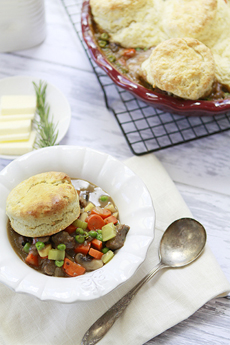
The pot pie can be baked without a bottom crust but with a conventional top crust or a biscuit topping (the dough is dropped onto the top), like a cobbler. Personally, we prefer a crisp biscuit to a crust.

Here’s a recipe for a “crustless” pot pie using biscuits comes to us from PotatoGoodness.com; the original recipe was sent to them by GoodLifeEats.com. Prep time is 1 hour, cook time is 1 hours, 35 minutes.
 
 
RECIPE: TWO POTATO BEEF & VEGETABLE POT PIE WITH ROSEMARY BISCUIT CRUST

Ingredients For 6 Servings

For The Filling

  • 2 teaspoons olive oil
  • 1-1/4 pound stew beef, cut into bite sized pieces
  • 1 teaspoon salt
  • 1/2 teaspoon pepper
  • 1 large yellow onion, diced
  • 12 ounces sliced mushrooms
  • 1/3 cup red wine
  • 4 carrots, peeled and sliced into rounds
  • 3 stalks celery, chopped
  • 2 parsnips, peeled and sliced into rounds
  • 2/3 cup frozen of fresh shelled peas
  • 1-2 red potatoes, cut into bite sized cubes
  • 2 bay leaves
  • 3 cloves garlic, minced
  • 1-2 teaspoons fresh thyme leaves
  • 1/2-3/4 teaspoon finely minced fresh rosemary
  •  
    For The Sauce

  • 4 tablespoons butter
  • 1/2 cup plus 1-1/2 tablespoons flour
  • 1/3 cup milk
  • 2-1/4 cup beef broth
  •  
    For The Biscuits

  • 1-2 baked russet potatoes
  • 2/3 cup buttermilk
  • 1 cup all purpose flour or freshly ground spelt flour
  • 3/4 cup cake flour
  • 1 teaspoon sugar
  • 2-1/2 teaspoon baking soda
  • 1/2 teaspoon baking soda
  • 1/2 teaspoon salt
  • 8 tablespoons (1 stick) very cold or frozen butter
  • 1-2 teaspoons very finely minced fresh rosemary
  •  
    Preparation: Filling

    1. HEAT the olive oil in a large cast-iron skillet or pan. Add the beef, season with salt and pepper and cook over medium-high heat until it is browned on all sides. Remove and set aside on a plate.

    2. ADD onion to the pan, with additional oil as necessary. Sauté until tender, about 5 minutes. Add the mushrooms and sauté for an additional 5 minutes.

    3. RETURN beef to the pan and add the red wine to deglaze, taking care to scrape up any browned bits on the bottom of the pan as they offer a lot of flavor (see how to deglaze a pan). Cover and cook over low heat for 30-40 minutes, or until beef is tender. (Optional technique: use a pressure cooker on high pressure for 10 minutes.) Meanwhile…

    4. PREHEAT the oven to 400°F and prepare the sauce. In a medium saucepan, add the butter and melt. Whisk in the flour, then the milk and broth. Bring to a boil and simmer until thickened, about 5 minutes. Set aside.

    5. UNCOVER and add the carrots, celery, potatoes and parsnips. Cook for 5 minutes. Add the peas. Stir in the sauce.

    6. POUR the ingredients into a large casserole dish and top with the uncooked biscuits (recipe below). Bake for 35 minutes. Cool 5 minutes before serving.
     
    Preparation: Biscuits

    1. REMOVE the flesh from the baked potatoes. Mash it with a fork or press it through a potato ricer. This will take 1-2 potatoes and should result in a total of 1/2 cup of potato. In a small mixing bowl, combine the 1/2 cup potato with the buttermilk. Whisk until smooth and set aside.

    2. COMBINE in a medium bowl the flours, sugar, baking powder, baking soda and salt. Whisk until well sifted. Cut the butter into the flour mixture either using two knives, a pastry blender, or a cheese grater (to grate frozen butter into the flour mixture). Add the rosemary and stir to combine.

    3. MAKE a well in the center of the flour mixture and add the buttermilk potato mixture. Stir until combined, and then when you can’t stir it anymore, turn it out onto a lightly floured surface and gently knead until you can form a rough ball.

    4. FLATTEN the dough into a circle about 1/2-3/4 inch in thickness. Using a biscuit cutter or a drinking glass (about 2-1/2″ to 3″ in diameter for the listed baking time) turned upside down, cut as many rounds as you can. Using the dough scraps, form another circle of the same thickness. Repeat cutting until you have used all the dough.


    POT PIE HISTORY

    Meat pies likely date back to milling of flour in ancient times—but before the invention of pie plates. Very thick crusts were used as baking vessels, and were popular banquet fare during the Roman Empire.

    By the 16th century, the English gentry revived the ancient custom of meat pies. Venison was the meat of choice. The recipe crossed the pond to America, where it became as American as…pot pie! Chicken, beef and vegetable pot pies are the most common; but if you have venison, by all means, enjoy a historic venison pot pie.


    beef-pot-pie-biscuit-crust-potatogoodness-230
    [1] Pot pie without the pie: Use biscuits instead (photo © Good Life Eats).


    [2] Beef stew cubes (photo © Lobel’s Meats | NYC)


    [3] Fresh thyme adds great flavor notes: earthy, slightly lemony, minty (photo © Good Eggs).


    [4] Parsnips are a very under-appreciated vegetable in the U.S. We put them in chicken soup, too (photo © Barbro Bergfeldt | Fotolia).
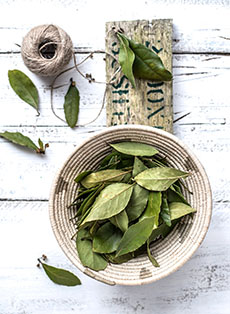

    [5] Bay leaf and beef stew are a natural pairing (photo © Monika Grabkowska | Unsplash).
    rosemary-basket-burpee-230

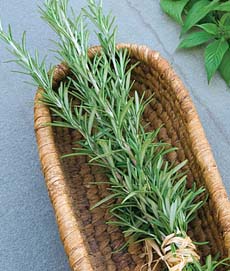
    [6] Fresh rosemary makes a difference (photo © Burpee).


    Comments off

    RECIPE: Beet Tartare

    Deep red beets are a natural for Valentine’s Day. In fact, our heart beets for them.

    Top chefs agree. Here’s a recipe from one of our favorite Top Chef finalists, Fabio Viviani.

    Among his other pursuits, Chef Fabio serves as the brand ambassador for Bertolli Olive Oil (which happens to be the world’s number one brand). He is also the host of the award-winning web series “Chow Ciao!” on Yahoo!

    We can’t get to Fabio’s Firenze Osteria in North Hollywood, California; but we can whip up his recipe.

    Fabio serves the beet tartare with lobster tail poached in olive oil. You can substitute shrimp for the lobster; or serve the tartare as a side or a first course, presented with whatever you like.

    Prep and cooking time: 45 minutes.
     
     
    RECIPE: LOBSTER WITH BEET TARTARE

    Ingredients For 1 Serving

  • 2 cups extra virgin olive oil
  • 1 clove garlic
  • Zest from 1 lemon
  • 4 sprigs fresh thyme, chopped
  • 1 lobster tail (or equivalent amount of shrimp)
  • 1 large red beet, parboiled until fork tender
  • 1 tablespoon shallots, chopped
  • 1 teaspoon orange zest
  • 1 teaspoon Dijon mustard
  • 1 tablespoon white balsamic vinegar
  • Optional garnish: edible flower, fresh herbs
  •  
    Preparation

    1. PREPARE the beets: Dice the beets into small pieces so they resemble chopped tuna. Place in a bowl and add the shallots, orange zest, mustard, vinegar and 1 tablespoon olive oil. Season to taste with salt and pepper.

    2. PREPARE the lobster: Place the olive oil, garlic, lemon zest and 2 sprigs of thyme into a small pot and place over low heat. Once the garlic starts to sizzle, add the lobster.

    3. COOK for about 5 minutes or until the lobster is cooked through (but not overcooked—it will be tough and dry). Remove and set aside.

    4. PLATE: Add the diced beets to a mold or ramekin; place on the plate with the lobster and garnish as desired.
     
     
    WHAT IS TARTARE?

    Steak tartare, or tartar steak, is a meat dish* named after the legend that Tartars† did not have time to cook their meat, so ate it raw on horseback.

    Steak tartare is made from finely chopped or minced raw beef or horse meat, plus seasonings. With its growing popularity over the last 30 or so years, other recipes have adopted the name. Salmon tartare, tuna tartare, tomato tartare, carrot tartare and strawberry tartare are some examples.


    beet-tartare-fabioviviani-230
    [1] Beet tartare (under the edible flower) and poached lobster (photo © Fabio Viviani).


    [2] If you don’t like lobster, scallops are equally delicious and more budget-friendly (photo © Iliane Solenyi | Panther Media).

    detroit-red-beets-beauty-goodeggs-230
    [3] We love fresh beets, but they are one of the rare vegetables where the precooked, plastic-packaged or canned versions taste just as good (photo © Good Eggs).


    _________________

    *The typical recipe is round raw beef mixed with onions, capers, Worcestershire sauce and a raw egg, served with toast points. A variation, tartare aller-retour, is tartare patty lightly seared on one side. Steak tartare is often served with frites (French fries). In Belgium, the dish is known as filet américain. American? What happened to the Tartars?

    †The Tartars, also spelled Tatars, are an ethnic group in Eastern Europe and Northern Asia. Most Tatars live in the Russian Federation. To Americans, the most famous of the Tartars is Genghis Khan, whose troops invaded Europe in the 13th century. The most famous Tartar-American is the actor Charles Bronson.


    Comments off

    RECIPE: Beet Mashed Potatoes

    Beets and mashed potatoes are a delicious side with any protein, and a perfect color for Valentine’s Day.

    At any time of year, this lavish mash recipe is sure to impress. It’s easy to prepare when you use packaged baby beets, typically found shrink-wrapped in the produce department. This recipe is courtesy Love Beets. Find more beet recipes at LoveBeets.com.

    The recipe serves two: prep time 5 minutes, cooking time 20 minutes.

    RECIPE: MASHED BEETS & POTATOES

    Ingredients

  • 1 pound all-purpose potatoes, peeled
  • 1/2 package baby beets (3.25 ounces) or
    equivalent canned or fresh-cooked beets
  • 4 tablespoons crème fraîche*
  • Salt and pepper
  •  

    mashed-potatoes-beets-lovebeets-230

    Purple passion: mashed beets and potatoes. Photo courtesy LoveBeets.com.

     
    ___________
    *Buy crème fraîche or make your own with this recipe.


    mashed-beets-potatoes-steak-lovebeets
    Serve the mash with your favorite protein.
    Photo courtesy Love Beets.
     

    Preparation

    1. PEEL the potatoes and cut each into 8 pieces. Put them into a large pan of salted water and bring to boiling. Simmer for 10 minutes until the potatoes are fork-tender. While the potatoes cook…

    2. CHOP the beets into quarters.

    3. DRAIN the potatoes and add the quartered beets and crème fraîche to the pan. Mash everything together well until you have a smooth pink mash. Season to taste.


    THE HISTORY OF BEETS

    Beets, Beta vulgaris are a root vegetable: leaves grow above ground, and the edible root is below. In America, the shortened form, beet, is used instead of the longer beetroot.

    Beets evolved from wild sea beet, which grew in places as wide-ranging as Britain and India. It was first cultivated in the eastern Mediterranean and Middle East—although only the leaves were eaten. (Even today, beet greens are delicious. Don’t throw them away: Sauté them in olive oil with some minced garlic.)

    Roman recipes included cooking beets with honey and wine. Apicius, the renowned Roman gourmet, included a beet broth recipe in his cookbook as well as beet salad with a dressing of mustard, oil and vinegar. All are still fine recipes today.

    The original beet roots were long and thin like carrots. The rounded root shape of today was developed in the 16th century; by the 18th century it was widely cultivated in central and eastern Europe. Many of today’s classic beet dishes originated in this region, including borscht.

    In 19th century England, beets’ dramatic color were often used to brighten up salads and soups. The high sugar content made it a popular ingredient in cakes and puddings (and in the U.S., led to the creation of red velvet cake).

    Today there are many varieties of beets sizes large and small, including candy-striped (with red and white concentric circles), orange, white and yellow. Look for these specialty beets in farmers markets.
     
    BEET TIPS

    You can use cooked beets in any recipe that requires raw beets. Just reduce the cooking time accordingly.

    Alas, beet juice does stain. If you aren’t a very neat cook or eater, wear dark clothing! But beet juice is a water-soluble dye, so try one of these methods to clean up stains:

  • To remove from hands, rub with lemon juice and salt before washing with soap and water.
  • To remove from fabric, rub a slice of raw pear on the stain before washing or rinse in cold water before washing in detergent.
  • For cutting boards and containers, use a bleach solution.
  •   

    Comments off

    TIP OF THE DAY: Drizzled Soup Garnish

    Have you ever been served a bowl of soup with a drizzle of oil? Floating on the surface of the soup, it’s a fashionable garnish at better restaurants.

    But the oil does more than look pretty. It adds a rich dimension of flavor to the soup and creates a more complex aroma. It’s an easy and inexpensive way to go from everyday to gourmet.

    OIL DRIZZLE FOR SOUPS

    In our book, a drizzle of flavored olive oil elevates a bowl of soup to top tier restaurant level. A tablespoon or less—depending on the size of the bowl—does the trick.

  • Depending on the soup, you can match an olive oil infused with basil, chile, garlic, oregano, rosemary, sage, smoked, truffle or wasabi, among others. You can use plain olive oil, of course; but we far prefer the exciting hit of flavor from infused oils.
  • You can also “go nuts” with almond, hazelnut, pecan, pistachio, walnut and other nut oils.
  • Other oils you may have in your pantry, from pumpkin seed to sesame, are also delicious accents.
  •  

    cucumber-yogurt-soup-chocolatelabSF-ps
    Cucumber yogurt soup with a kick of chili oil, a garnish of thin-sliced baby radishes, fennel and diced orange. Photo courtesy The Chocolate Lab | San Francisco .

     
    SOME SPECIFIC MATCHES

  • Avocado oil, lightly nutty and deep green, is delicious with black bean soup.
  • Basil oil, a lighter green, is wonderful with tomato soup (and any soup that could use a hit of basil).
  • Pumpkin seed oil, nutty with a dramatic deep green color, with gazpacho, tomato soup, roasted red pepper soup, lentil soup, split pea soup.
  • Rosemary oil is delicious with any bean or lamb-based soup.
  • Truffle Oil with to any soup, but we love it with chicken, beef and root vegetable soups like carrot and turnip. (Use less truffle oil than other oils, as it tends to have strong flavor.)
  • Sesame oil wherever you’d like an Asian accent (as with truffle oil, use less—droplets are the best option).
  • Walnut oil adds a toasty accent to puréed vegetable soups.
  •  

    oil-drizzle-thegrillroomDC-230sq
    The double drizzle: pumpkin seed oil and
    crème fraîche garnish squash soup. A few
    microgreens garnish the center. Photo
    courtesy The Grill Room | D.C.
      THE DOUBLE DRIZZLE

    In a lighter soup you can contrast colored oils: a swirl of one with some contrasting droplets of another.

    With a darker soup, you can use a cream-based product—crème fraîche, infused heavy cream, sour cream, yogurt.
     
    HOW TO DRIZZLE

    You may have natural technique, or you may have to practice to get a nice swirl. Place the oil on a teaspoon and drizzle from the tip. If you want to practice, drizzle inexpensive oil on a plate.

    Another technique is to use a squeeze bottle or medicine dropper to create a circle of droplets, or a random pattern. In the top photo above, both swirls and droplets are used.

    You can combine both techniques and use a different oil, or balsamic vinegar, for the droplets.

     
    HOW TO DRIZZLE CREAMY GARNISHES

    Heavy cream works just fine, but crème fraîche, sour cream and yogurt are too thick to drizzle; they need to be thinned. You can do this with water, milk or cream.

    While sour cream and yogurt contribute natural tang, you can add flavor to them, or to crème fraîche or heavy cream. Lemon zest, flavored salt and pepper are some options. You can infuse heavy cream with herbs: crush the herbs and let them sit in the cream for an hour or longer. Strain and discard the herbs.

     
    RECIPE: LEMON CRÈME FRAÎCHE

    Ingredients

  • 1/2 cup crème fraîche
  • 1 teaspoon grated lemon zest
  • 1 tablespoon of lemon juice
  • 1 to 2 tablespoons water
  • 1-2 dashes salt and pepper (to taste)
  •  
    Preparation

    1. BLEND the crème fraîche, lemon zest, lemon juice and salt and pepper.

    2. THIN as needed with water to a drizzle consistency.
     
    Soup’s on! And today, February 4th, is National Homemade Soup Day. Check out our favorite soup recipes.


    Comments off

    VALENTINE GIFT: Favorite Gourmet Chocolate

    hearts-flowers-johnandkiras-230sq
    Wildflowers & Hearts chocolates (the box is
    in the photo below). Photo courtesy John &
    Kira’s.
     

    One of our favorite chocolatiers, year in and year out, is John & Kira’s. Using Valrhona couverture, the exquisite flavor, beautiful design and a touch of whimsey make us want box after box.

    We love the Chocolate Bees and Lovebugs (chocolate ladybugs). Our favorite product, perhaps because there’s nothing like it elsewhere, are the Chocolate Covered Figs, filled with a whiskey-accented chocolate ganache.

    But for Valentine’s Day, the Wildflowers & Hearts box seem spot-on. Order yours at JohnandKiras.com. A nine-piece box is $29.

    Red Chocolate Hearts are dusted with a golden sheen and filled with cinnamon-accented pistachio ganache. Wildflowers are 66% cacao chocolate ganache.

    A nine-piece gift box is $29.00.


    VALENTINE’S DAY HISTORY

    The holiday named for the Christian saint Valentine had its beginnings as the raucous annual Roman festival of Lupercalia, held on February 15th. Men stripped naked and spanked maidens with whips with the goal of increasing their fertility. It was a wildly popular event.

    In the fifth century C.E.—at least 150 years after Emperor Constantine made Christianity the official religion of the Roman Empire—church leaders sought to convert popular pagan festivals into Christian festivals. (Christmas is another example of this.)

    Conveniently, there was a legend about St. Valentine to which Lupercalia could be pegged. According to the story, in the third century C.E. the Roman Emperor Claudius II, seeking to bolster his army, forbade young men to marry. The priest Valentine helped lovers by performing marriages in secret. For his defiance, Valentine was executed in on February 14, 270.

      hearts-flowers-box-230
    The nine pieces go quickly—but very happily. Photo courtesy John & Kira’s.
     
    THE FIRST VALENTINE CARD

    The first Valentine note on record was a couplet penned in the 15th-century by Charles, Duke of Orléans to his wife. The earliest surviving Valentine notes in English were written in 1477.

    But it wasn’t until the 19th century that cards became popular. Handwritten cards gave way to mass-produced greetings. By the mid-20th century, tokens of affection extended to other gifts, including flowers and chocolates.

    The first heart-shaped box of chocolates in North America was produced by Ganong Bros in Canada (founded 1873). The boxes were originally used during the Christmas season but subsequently remained for Valentine’s Day (source: Wikipedia).

    Today, we know enough about chocolate to care about what’s in the box. Hold the cardboard heart; send us John & Kira’s.
      

    Comments off

    The Nibble Webzine Of Food Adventures
    RSS
    Follow by Email


    © Copyright 2005-2026 Lifestyle Direct, Inc. All rights reserved. All images are copyrighted to their respective owners.