|
For those moments when unexpected guests arrive for Christmas, or when acquaintances give you an unexpected gift—we have a strategy:
Make homemade bark or fudge in advance. They have a long shelf life; it’s easy to carry a small tin with you for chance encounters, and even people who don’t eat sweets will be pleased to have something nice to serve their own guests, or to re-gift.
It’s also a sweet gift to take on casual visits over the holidays.
Here are two holiday-accented options, plus the difference between cream and creme.
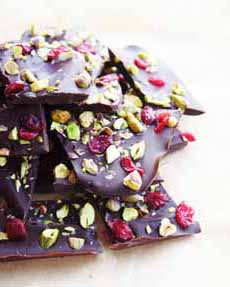
RECIPE #1: CHOCOLATE ORANGE PISTACHIO BARK
Using salted pistachios gives this bark the popular sweet-and-salty profile. We adapted this recipe from one by the Florida Orange Juice.
1 cup orange juice
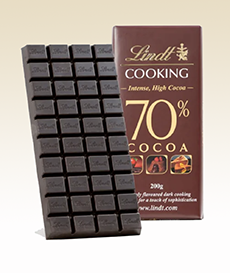
16 ounces quality semi-sweet chocolate (Callebaut, Lindt, etc.)
1 cup dried cranberries
1 cup salted pistachios, chopped if desired
Preparation
1. PLACE the orange juice in a small saucepan over medium heat. Reduce to ¼ cup and cool.
2. MELT the chocolate over a double boiler. While the chocolate melts, stir occasionally as you…
3. LINE a small baking sheet with parchment paper. Pour the melted chocolate onto the parchment to a ¼-inch thickness. Swirl in the cooled orange juice with a spatula, creating thin channels in the chocolate.
4. SPRINKLE the cranberries and pistachios over the chocolate and lightly press. When the chocolate is completely hardened…
5. BREAK into pieces and package. For home gifting, a simple box or gift bag with a ribbon is fine (wrap the pieces in wax paper for protection). For toting around, consider something more durable. For longer storage, keep it in an airtight container.
RECIPE #2: WHITE CHOCOLATE CRANBERRY FUDGE
We adapted this snowy holiday fudge from Mom On Timeout (love that name!).
It’s just the thing to take over the river and through the woods to Grandmother’s house…or to the neighbors next door.
Ingredients
Cooking spray
2 cups sugar
¾ cup regular sour cream
½ cup unsalted butter, room temperature
½ teaspoon salt
1 cup chopped* white chocolate (we use Lindt chocolate bars)
1 jar (7 ounces) marshmallow creme/cream†
1 teaspoon pure vanilla extract
5 ounces dried cranberries
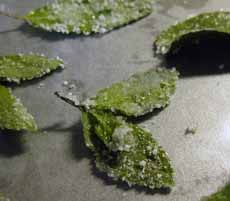
Optional garnish: green sprinkles or candied mint leaves
Preparation
1. LINE a 9″ x13″ baking dish with parchment or foil; lightly spray with cooking spray.
2. COMBINE the sugar, sour cream, butter, and salt in a heavy 2-quart saucepan. Bring the mixture to a boil over medium heat, stirring frequently. Continue cooking, stirring occasionally, to the soft ball stage (238°F on a food thermometer).
3. REMOVE from the heat, add the chocolate and stir until completely melted. Stir in the marshmallow cream and vanilla extract until completely blended. Next, blend in the dried cranberries. Pour the mixture into the baking dish and cool to room temperature. If you want a green accent, add it now. Then…
4. PLACE the pan in the fridge for several hours or overnight, before cutting into squares.
5. STORE in an airtight container. For home gifting, a simple box or gift bag with a ribbon is fine (wrap the pieces in wax paper for protection). For toting around, consider something more durable. For longer storage, keep in an airtight container.
|