Cook With Peanut Butter & A Thai Sesame Noodles Recipe
|
|
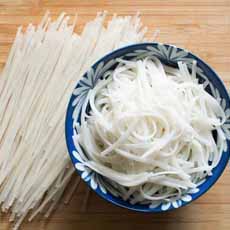
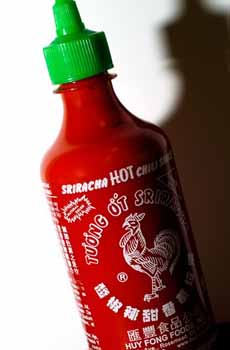
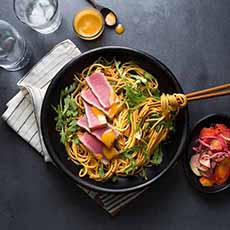
Once Again is a line of artisan nut butters that are organic and non-GMO. Located in a small rural community in western New York, it is a good corporate citizen: 100% employee-owned and philanthropic. The company donates to more than 100 charities each year. The product line includes: > The recipe for Thai Sesame Noodles is below. > The history of sesame noodles is also below. > Here’s the history of peanut butter. > The history of noodles/pasta. (National Noodle Day is October 6th.) > The year’s 12 peanut butter holidays > The year’s 20 pasta holidays. National Noodle Day is October 6th. Because March 1st is National Peanut Butter Lovers Day, we’re going to home in on that product line. There’s everything a PB-lover could want: All those PB choices got us to thinking about cooking with peanut butter, beyond dipping sauce/peanut sauce, sandwiches/wraps/lettuce cups, and sweets (brownies, cake, cookies, fudge, ice cream, pies, pudding, etc.). Thanks to Once Again Peanut Butter for this yummy recipe. The difference between Thai and Chinese Szechuan sesame noodle dishes is primarily the noodles. The Thai dish uses rice noodles, and the Chinese dish uses wheat noodles (like linguine). The Thai recipe also has more vegetables and uses (not surprisingly) Thai flavors like cilantro, sweet chile sauce, lime juice, and rice vinegar. Sesame noodles are also a popular Chinese dish. Check out the year’s 17 Chinese food holidays. Ingredients For 4 Servings 1. PLACE the peanut butter, cilantro, water, sweet chili sauce, lime juice, rice vinegar, sugar, ginger, soy sauce, sesame oil, hot chili sauce, and garlic in a blender. Purée until smooth. Set aside. 2. HEAT the vegetable oil over medium-high heat. Add the vegetables, season lightly if desired, and sauté for 3-4 minutes, until the vegetables have softened but still maintain some crunch. Set aside. 3. COOK the noodles in simmering salted water for 1-2 minutes. Note that rice noodles cook very quickly. Drain the noodles and place them back in the pot. Toss with the peanut sauce. 4. SERVE: Arrange the noodles in a shallow bowl or on a plate. Top with a large scoop of vegetables. Garnish with a lime wedge and basil. |
|
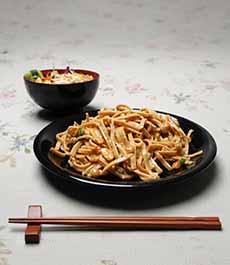
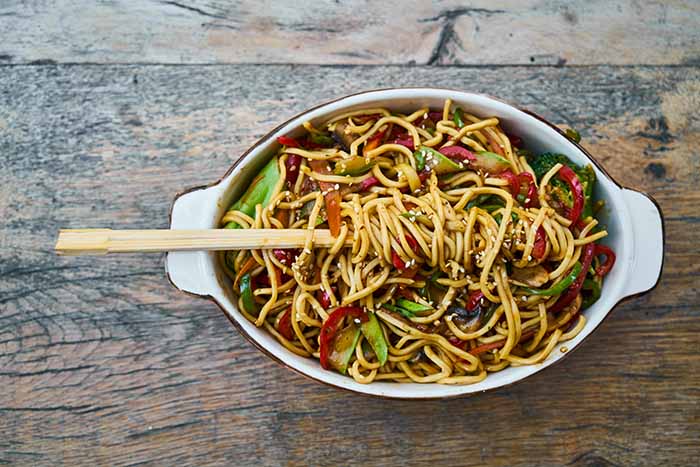 [7] Sesame noodles (photo © Enginak Yurt | Pexels). THE HISTORY OF SESAME NOODLES Sesame noodles, as we know them today, are often associated with Chinese cuisine, particularly dishes from northern China, where sesame seeds and sesame oil have been used for thousands of years. The use of sesame paste (zhī ma jiàng, similar to tahini but made from roasted sesame seeds for a deeper, nuttier flavor) or sesame oil in noodle dishes is a hallmark of Chinese culinary traditions, especially in regions like Beijing and Sichuan. In modern China, they’re a popular dish that combines sesame paste, soy sauce, vinegar, and chili oil. Recipes vary among regions (as they do just about everywhere). For example, in Sichuan the sesame noodles, served cold (or room temperature), often have a spicy kick. (Hot or cold, we especially enjoy them with a generous garnish of sliced scallions, sesame seeds, and chopped peanuts [sometimes honey roasted].) Sesame seeds were introduced to China from Central Asia or India via the Silk Road, likely during the Han Dynasty (206 B.C.E–220 C.E.). They became a staple ingredient in Chinese cooking, valued for their nutty flavor and versatility. Sesame oil, made from roasted sesame seeds, became a key ingredient in Chinese cuisine, especially in northern China, where it was used to flavor cold dishes, noodles, and dumplings. That’s why food historians credit the origin of sesame noodles to northern China, where wheat-based noodles are a dietary staple. The cold sesame noodle dish, often served with a rich sesame paste sauce, became popular as a refreshing and flavorful meal, especially in the hot summer months. In Sichuan cuisine, sesame noodles evolved to include bold flavors like chili oil, garlic, and Sichuan peppercorns. This variation, often called Sichuan cold noodles (liáng miàn), became a classic street food dish. The combination of sesame paste, soy sauce, vinegar, and chili oil created a balance of nutty, savory, tangy, and spicy flavors. Variations of sesame-flavored noodle dishes can be found in other parts of Asia. such as Japan and Korea, where sesame seeds and sesame oil are widely used in cooking. Japanese sesame noodles like goma dare udon, for example often use a lighter sesame sauce. The Korean version is bibim guksu. It’s easy to make your own peanut sauce at home, with just peanut butter, sesame oil, and soy sauce, with sugar or honey to taste. Then, just boil a pot of pasta! |
||
|
CHECK OUT WHAT’S HAPPENING ON OUR HOME PAGE, THENIBBLE.COM. |
||