THE NIBBLE BLOG: Products, Recipes & Trends In Specialty Foods


Also visit our main website, TheNibble.com.

TIP OF THE DAY: Drink Your Peaches (Peach Sangria, Peacharita, Etc.)

Peach Sangria Recipe
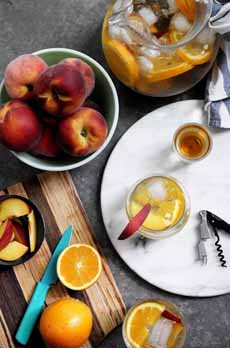
[1] This weekend, how about a big pitcher of peach cooler? (Photo courtesy Sparkling Ice.)

Peach Sangria Recipe
[2] You can use any glass you like. Collins glasses are sturdier, but wine glasses are elegant (photo courtesy Carrabbas Italian Grill).

Peacharita
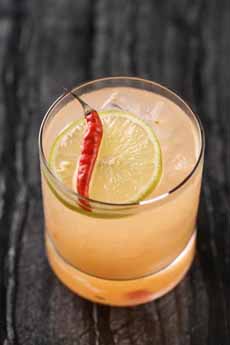
[3] A Peacharita, with a birds-eye chile garnish (photo courtesy Peninsula Hotel | New York).


As you enjoy summer’s juicy fresh peaches—and peach cobbler, peach ice cream, peach pie, peach salsa and other peachy things to eat—don’t forget peachy things to drink.

You can make a Peacharita—peach schnapps replacing the Cointreau in a Margarita (photo #3). Here’s the recipe.

But don’t overlook peach sangria and peach coolers. Recipes follow.
 
 
RECIPE #1: PEACH SANGRIA WITH SCHNAPPS (Photo #2)

Ingredients For 6-8 Servings

  • 2 large fresh yellow peaches (about 1 pound), sliced
  • Other fruits of choice, e.g. orange slices, strawberries
  • 3/4 cup peach liqueur or peach schnapps (the difference)
  • 1 bottle white wine
  • 1 liter club soda, flavored club soda or ginger ale, chilled
  •  
    Preparation

    1. PLACE the peaches and other fruit in a pitcher, and add liqueur and wine. Stir. When ready to serve…

    2. POUR the sangria into glasses; make sure each glass has a nice amount of fruit. Top off with the carbonated beverage; stir gently as desired.
     
     
    RECIPE #2: PEACH SANGRIA WITH PEACH VODKA

    Prep time is 10 minutes, chilling time is 2+ hours. Adapted from All Recipes.

    Ingredients

  • 1 (750 ml) bottle dry white wine
  • 3/4 cup peach flavored vodka
  • 6 tablespoons frozen lemonade concentrate, thawed
  • 1/4 cup white sugar
  • 1 pound white peaches, pitted and sliced
  • 3/4 cup seedless red grapes, halved
  • 3/4 cup seedless green grapes, halved
  • Ice cubes
  •  
    Preparation

    1. COMBINE the first four ingredients in a large pitcher. Stir until sugar is dissolved. Add the fruit.

    2. REFRIGERATE at least 2 hours or overnight, to allow the flavors to blend.

    3. SERVE over ice, and use a slotted spoon to include peaches and grapes with each serving.
     
     
    SANGRIA TIPS

    You are the master of your sangria.

  • If you want more pronounced flavor, add more of that ingredient.
  • If you want a less sweet drink, use unsweetened plain or flavored club soda next time.
  • Use prosecco for the wine. Prosecco, an Italian sparkling wine, is known for its peach flavors. You can substitute it for the still wine; or for the club soda, for a stronger drink.
  • Adjust the sweetness. If you add an ingredient with sugar, adjust the other sugar items so it won’t be too sweet. You can always add more sweetness, but you can’t take it away (without doubling the proportions, that is).
  •  

  • Ginger ale vs. club soda: Both will lose their carbonation in the pitcher, but ginger ale will leave the ginger flavor.
  • Substitute rosé for the white wine; use peach nectar instead of other ingredients like lemonade and soda, etc.
  • For a more sparkling sangria, fill each glass half full with sangria and top off with ginger ale or club soda.
  • Keep it peachy. This recipe from Bobby Flay has 1 bottle of wine, 3 ounces brandy, 2 ounces triple sec, 1 cup orange juice, 1 cup pineapple juice, 2 ounces simple syrup —but only 3 ounces of peach purée. It’s a delicious sangria, but not a particularly peachy one.
  • Use an optional herb garnish for color and the tiniest bit of flavor: basil, tarragon, thyme or rosemary.
  • The history of sangria.
  •  
     
    RECIPE #3: PEACH WINE COOLER (Photo #1)

    Thanks to Sparkling Ice—makers of zero-calorie sparkling water in 13 flavors—for this recipe.

    Ingredients

  • 1 peach, sliced
  • ½ orange, sliced
  • ¾ cup peach brandy
  • 1 bottle white wine, chilled
  • 4 cups Sparkling Ice Essence of Peach (calorie-free; substitute peach club soda or plain club soda with peach extract)
  •  
    Preparation

    1. PLACE the peaches, oranges and brandy in a pitcher, and lightly muddle. Add the wine and the Peach Sparkling Ice and stir.

    2. SERVE over ice and garnish with a peach slice.


    Comments off

    FOOD FUN: Slab Pie Art

    Since the old-fashioned slab pie started trending a few years back, almost every fruit pie we’ve made has been a slab pie. Why? They’re sooooo easy!

    A slab pie is a shallow pie that’s baked in a jelly roll pan or a rimmed baking sheet. It has a much higher crust-to-filling ratio than a standard pie, so it’s definitely for the crust-loving crowd, or the hand pie-loving crowd.

    When we want a lot of fruit, we make a cobbler or crisp (the difference).

    MORE SLAB PIE BONUSES

  • Since less filling is needed, a slab pie stretches pricey fresh fruit.
  • It feeds quite a few more people than a standard 9-inch pie: almost as much as two pies, in fact.
  • Only 1 crust is needed. Although some people make a lattice or two-crust slab—which affords picking up the square and eating it like a slab pie—we roll out just one crust and make a streusel.
  • It’s easy to cut and serve.
  • It gladly accepts all the standard pie garnishes: caramel sauce, chocolate shavings, crème anglaise/custard sauce, ice cream, whipped cream, a wedge of sharp cheddar, etc.
  •  
    READY, SET, BAKE!

    You can use any fruit filling in a slab pie with this slab pie recipe template. Head for the summer fruits:

  • Berries: single-berry or mixed berry. Here’s a recipe for a raspberry slab pie; just add your berry mix of choice.
  • Stone fruits (cherry, nectarine, peach, pear, etc.).
  • Black mission and other figs are also in season, and delicious in a pie topped with vanilla ice cream. Might we suggest a tablespoon of orange liqueur (e.g. Grand Marnier) in the filling?
  •  
    You’ve got the weekend ahead of you: Pick your slab pie.

      Mixed Berry Slab Pie

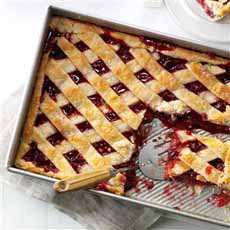
    [1] Take a tip from Pamela’s Products: Make a super-easy slab pie and unleash your inner artist with cookie cutters and a sharp paring knife.


    [2] The typical slab pie has a plain or lattice top crust (photo courtesy Taste Of Home).

     
    Then get out your cookie cutters and a sharp paring knife, and create a flower garden top crust (photo #1) or other design.
      

    Comments off

    TIP OF THE DAY: Easy Tomato Chutney

    Heirloom Tomatoes
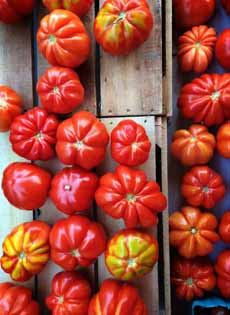
    [1] Turn summer tomatoes, ripe off the vine, into…

    Tomato Chutney
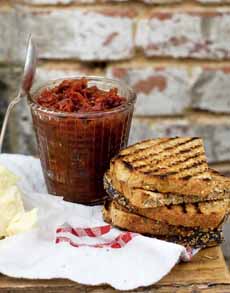
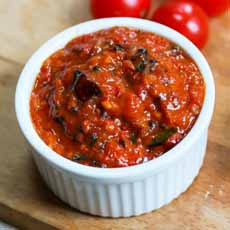
    [2] Tomato chutney! (Photo 1 courtesy Okonomi | Brooklyn, photo #2 courtesy Jamie Oliver).

    Tomato Chutney

    [3] This authentic Indian version has chili powder, garlic, garam masala and ginger. Here’s the recipe from Smart Cooky.


    August is the best “tomato month” of the year. Aside from eating them raw with just about anything, what else to do with the crop of summer tomatoes?

    Among your many options, make some tomato chutney. It’s a delicious summery treat to:

  • Spread on breakfast toast, or as a condiment with eggs.
  • As a condiment on burgers, grilled cheese and other sandwiches.
  • Instead of ketchup, anywhere.
  • On grains, potatoes and vegetables.
  • With a cheese plate.
  •  
    It’s also a welcome house gift, and keeps for up to 4 weeks in the fridge.

    In the following recipe, one pound of tomatoes doesn’t make a whole lot of chutney. Do a test batch—it’s an easy recipe—to decide how much you want to make.

    Since the chutney cooks up into a jam-like consistency, you can also use very ripe tomatoes that are often better priced. You can use one variety, or a combination of assorted tomatoes (including different colors).
     
     
    RECIPE: EASY TOMATO CHUTNEY

    Ingredients Per Pound Of Tomatoes

  • 8 ounces red onions
  • 1 pound local tomatoes
  • 1 fresh red jalapeño (1-2 tablespoons) or equivalent milder* chile
  • 5 tablespoons red wine vinegar
  • 1/2 cup brown sugar
  • Salt and pepper to taste
  • Optional: 2 tablespoons chopped cilantro‡
  •  
    Preparation

    1. PEEL and finely slice the onions; roughly chop the tomatoes; and de-seed and finely slice the chile.

    2. PLACE all ingredients in a pot, season to taste and stir well to combine. Simmer for 30 to 40 minutes or until jammy.

    3. POUR into a clean† jar and let cool.

    ________________

    *If you want no heat at all, use red bell pepper.

    †Since this is not a recipe for canning, the jar doesn’t have to be sterilized. However, to ensure cleanliness, use one that has been run through the dishwasher.

    ‡You can play with accents such as basil, garlic, lemon or lime zest and other favorite flavors.
    ________________

    WHAT IS CHUTNEY?

    Chutney is a spiced condiment, served as a side dish, that originated in India. Chatni is the Hindi word for strongly spiced. It is made of fruits or vegetables; and is typically served as an accompaniment to food (i.e., not as a spread).

     
    Fruit chutney consists of chopped fruit (tomato is a fruit), vinegar, spices and sugar cooked into a chunky sweet-tart-spicy mix. According to one explanation, it “blurs the Western distinction between preserves and pickles” [source].

    Some of the most common Indian chutneys are made with coconut, mango, peanut, sesame or the ground herbs, such as coriander or mint. The spice level of chutney can range from mild to hot, and the consistency from a fine relish to a preserve or conserve.
     
    A QUICK HISTORY OF CHUTNEY

    Historically, chutneys were only served by everyday folk on special occasions such as weddings. It was more of a staple for the wealthy. That’s because in the era before stoves, it was a time-consuming undertaking: The chutney was slowly cooked under the hot Indian sun over a period of several days, until it was deemed to have attained the right flavor and consistency.

    This method is still employed in modern India, in homes which do not have stoves. “Solar cooking” is even specified in recipes for those who do have them.

    Each region has its own recipes, using local ingredients.

    Simple spiced chutneys, similar in preparation to pickles, have been dated to 500 B.C.E. This method of preserving food was subsequently adopted by the Romans.

    Beginning in the late 17th century, fruit chutneys from India were shipped to European countries like England and France as luxury goods. These were largely mango chutneys in sticky syrups, packed into ceramic pots.

    European cooks made their own [affordable] versions, substituting peaches or melons for pricey imported mangoes.

    By the 18th century, chutneys made in England were exported to to colonies in colonies Australia and North America.

    By the 19th century, many chutneys were manufactured in India specifically for export to Europe—including Major Grey’s, perhaps the best-known brand in the U.S.

    The recipes of these exports conformed to British tastes rather than to Indian authenticity; that is to say, they were generally sweet and lacked the intense flavors, saltiness, or peppery heat preferred in India).

    Today, thanks to the growth of Americans of Indian ancestry, a wide variety of chutney is available in the U.S. Do try the savory varieties, such as cilantro and mint. They’re delicious—and sugar-free.

    Here’s more of the history of chutney.


    Comments off


    © Copyright 2005-2026 Lifestyle Direct, Inc. All rights reserved. All images are copyrighted to their respective owners.