THE NIBBLE BLOG: Products, Recipes & Trends In Specialty Foods


Also visit our main website, TheNibble.com.

Maple Orange Dressing Recipe For Fall & Thanksgiving

This year we’re adding a Maple-Orange Vinaigrette recipe to our Thanksgiving tradition.

We’ve typically used a classic Dijon vinaigrette with fresh herbs, but when we saw this recipe from the Wisconsin Cheese folks, we had to try it (and that was back in August!).

We’ve made it numerous times since. The flavors are so spot-on for Thanksgiving and all of the salads that follow through the holidays.

The recipe comes from our friends at WisconsinCheese.com, which includes a treasury of recipes with cheese from the Dairy Farmers of Wisconsin.

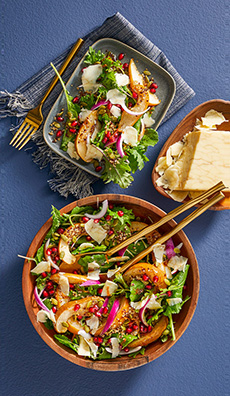
They served this dressing over a fancy fall salad of roast pears, baby kale, red quinoa, pepitas, pomegranate seeds, and grated Cheddar.
 
 
RECIPE #1: MAPLE-ORANGE VINAIGRETTE
 
Ingredients For 1/2 Cup Vinaigrette

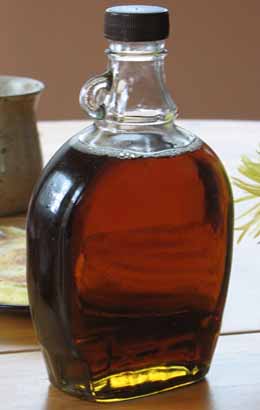
  • 2 tablespoons maple syrup
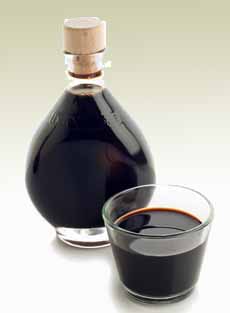
  • 2 tablespoons balsamic vinegar (photo #3)
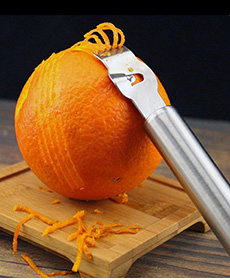
  • 1 tablespoon orange zest (photo #4)
  • 1 teaspoon Dijon mustard
  • 1/4 cup olive oil
  • 1/4 teaspoon salt
  • Freshly-ground pepper to taste
  •  
    Preparation

    1. WHISK the maple syrup, balsamic vinegar, orange zest, and Dijon mustard in a small bowl.

    2. SLOWLY WHISK in the olive oil. Season with salt and pepper to taste.
     
     
    RECIPE #2: ROASTED PEAR SALAD WITH MAPLE-BOURBON CHEESE
     
    There’s enough rich food at our Thanksgiving table that people would clamor for a simpler green salad—which we have traditionally Thanksgiving-ized with a garnish of pumpkin seeds, dried cranberries, and julienned fresh sage.

    But the recipe below (photo #1) is heartier, and leftovers served with some leftover sliced ham or turkey could be a main meal.

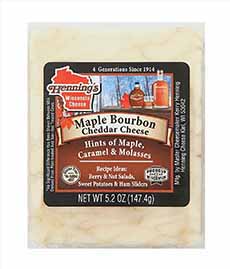
    This salad takes advantage of a delicious Wisconsin-made Cheddar, Henning’s Maple Bourbon Cheddar Cheese, a white Cheddar with delicate hints of maple and bourbon (photo #5).

    Don’t worry: it doesn’t contain enough bourbon to require purchase by adults only. The alcohol content is negligible to non-existent in the final product. The flavor of bourbon remains, but any alcohol present largely evaporates during the production and aging process.

    The cheese melts in your mouth and would be a great addition to a holiday cheese board.

    You can substitute another Cheddar. We didn’t order enough packages of Henning’s, so when it was gone, we substituted Cabot’s Horseradish Cheddar—a completely different flavor counterpoint.

    The conventional (not flavored) Cabot Cheddars are equally excellent, and any of their flavored Cheddars will work, too*.

    Ingredients For 6-8 Servings

    Prep time is 30 minutes.

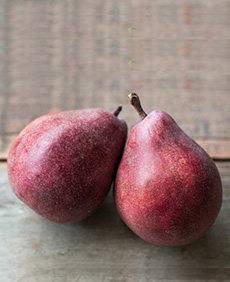
  • 3 medium Anjou pears† (photo #6), cored and cut 1/2-inch slices
  • 1 tablespoon olive oil
  • 1 tablespoon maple syrup (photo #2)
  • Salt and pepper
  • 2 bags (5 ounces each) fresh baby kale salad mix (about 10 cups—we substituted baby arugula)
  • 2 cups cooked red quinoa, cooled
  • 1/2 medium red onion, thinly sliced
  • 1/2 cup roasted salted pepitas (pumpkin seeds)
  • 1/2 cup pomegranate seeds
  • 6 ounces Henning’s Maple Bourbon Cheddar cheese, shaved (1-1/2 cups)
  •  
    Preparation

    1. HEAT the oven to 400°F. Line a 15 x 10-inch baking pan with aluminum foil. Drizzle the pears in a bowl or on another pan with the olive oil and maple syrup; toss to coat.

    2. ARRANGE the pears in a single layer on the prepared pan. Lightly season with salt and pepper.

    3. BAKE for 15-17 minutes or until the pears are tender, turning once. Cool completely on a wire rack.

    4. TOSS the salad mix with 1/4 cup vinaigrette in a large serving bowl. Top with the pears, red quinoa, red onion, pepitas and pomegranate seeds. Drizzle with remaining vinaigrette; toss to coat. Sprinkle with the shaved Cheddar.
     
     
    THE HISTORY OF THE FOODS IN THE VINAIGRETTE

    > Balsamic Vinegar History

    > Black Pepper History

    > Dijon Mustard History

    > Kale History

    > Olive Oil History

    > Oranges History

    > Pears History

    > Pomegranate History

    > Pumpkin History

    > Salt History
     
     
    ________________
     
    *Cabot Flavored Cheeses: Buffalo Style Cheddar, Everything Bagel Cheddar, Garlic Herb Cheddar, Habanero Cheddar, Horseradish Cheddar, Pepper Jack, Smoky Bacon Cheddar, Tuscan Cheddar, Wildly Horseradish Cheddar. See them here.

    Anjou Pears: If you can find red Anjous, they are preferable to green because you’ll be leaving the skins on.


    Roasted Pear Salad
    [1] A salad for fall and Thanksgiving (photo © Wisconsin Cheese).

    Maple Syrup
    [2] Maple syrup (photo © Miguel Andrade | Wikipedia | Public Domain).


    [3] Balsamic vinegar (photo © Pompeian | Facebook).

    Zesting An Orange
    [4] Zesting an orange zest (photo © Waitlover | Walmart).

    Package of Henning's Maple Bourbon Cheddar
    [5] Henning’s Maple Bourbon Cheddar (photo © Henning’s Cheese).

    Anjou Pears
    [6] Anjou pears. They come in red and green. If you have a choice, red is more festive for the holidays (photo © Good Eggs).


    CHECK OUT WHAT’S HAPPENING ON OUR HOME PAGE, THENIBBLE.COM.


    Comments off

    Thanksgiving Cocktail Recipes: Tweaked Martini & French 75

    Martini With Olive & Lemon Peel
    [1] The Harvest Moon Martini adds some oloroso sherry—which provides nutty autumn notes—to the classic Martini recipe (photos #1, #2, #5 © Golden State Distillery).

    French 75 Cocktail
    [2] The sparkling French 75 cocktail, gin-based with a fall garnish.

    A small bowl of juniper berries
    [3] Gin is made from juniper berries plus botanicals (photo © Silk Road Spices).

    Olives stuffed with anchovies
    [4] Manzanilla olives stuffed with anchovy. You can get them here (photo © Donostia Foods).

    A bottle of Gray Whale gin
    [5] Gray Whale Gin on the California Coast.

    California Gray Whale
    [6] California Gray Whale (photo by José Eugenio Gómez Rodríguez | Wikipedia).


    When Gray Whale Gin asked us to consider variations classic cocktails for Thanksksgiving, we were intrigued by the suggestion of a fall twist to the Martini: add some oloroso Sherry.

    We tried it, we liked it, and we share the recipe with you (below).

    We also turned to the nearest search engine to learn more about using sherry in Martinis, which we share later in this article.

    A second suggestion, for a classic sparkling cocktail with a fall twist, was equally delicious.

    So treat your holiday guests to one or both of these recipes. We liked them so much, we’ve made them every day this week!

    > The history of gin.

    > The different types of gin.

    > The history of the Martini.

    > The history of the French 75 cocktail.

    > The history of cocktails.

    > The history of Thanksgiving.
     
     
    RECIPE #1: HARVEST MOON MARTINI

    Oloroso sherry is a dry, full-bodied, fortified wine with a complex flavor profile that includes nutty, spicy, and autumnal notes.
     
    Ingredients Per Drink

  • 2 parts Gray Whale Gin
  • 0.5 part oloroso sherry
  • 0.5 white (blanc) vermouth
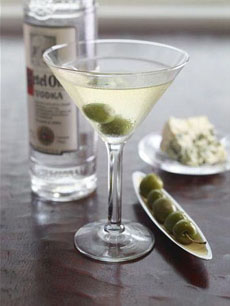
  • Garnish: olive and lemon twist*
  •  
    Preparation
     
    1. STIR all ingredients well over ice and strain into a coupe glass.

    2. GARNISH with olive and lemon twist*.
     
     
    What About Other Types Of Sherry In Your Martini?

    Sherry can add complexity to a martini, making the drink more than the sum of its parts.

  • Fino sherry is dry, unoxidized, and a good choice for adding salinity to a Martini. The Tuxedo is a classic Martini that uses fino sherry instead of vermouth, and is finished with orange bitters.
  • Manzanilla sherry has acidity that can make the Martini taste a brighter.
  • Amontillado sherry is spicier and slightly deeper than fino and manzanilla.
  • Oloroso sherry is nutty and fuller-bodied.
  •  
     
    RECIPE #2: FALL FRENCH 75

    The garnish of an apple fan gives this year-round drink a fall touch.
     
    Ingredients Per Drink

  • 1.5 parts Gray Whale Gin
  • 0.5 part fresh lemon juice
  • 0.5 part apple cider
  • 0.5 part honey syrup recipe below
  • 4 parts Prosecco (substitute other sparkling wine)
  • Ice cubes
  • Garnish: apple fan slices or wedge†
  •  
    Preparation

    1. COMBINE all ingredients except the Prosecco into a cocktail mixing glass and shake it with ice.

    2. ADD the Prosecco to the mixing glass and strain the contents into a coupe or flute. Garnish with apple slices.
     
     
    ADDING SHERRY TO A MARTINI

    Sherry adds a variety of flavors and complexities to a Martini, including nuttiness, salinity, and a brighter taste. It works with both gin and vodka Martinis.

    Oloroso is a dry, oxidatively aged sherry wine that’s full-bodied, nutty, and savory with notes of fig, cinnamon, and clove—just right for fall. (The Spanish word oloroso means “fragrant.”
      
     
    RECIPE #3: HONEY SYRUP

    Honey syrup is essentially simple syrup made with honey instead of granulated sugar.
     
    Ingredients

  • 1/2 cup honey
  • 1/2 cup water
  •  
    Preparation

    1. COMBINE the honey and water in a small saucepan over medium heat. Stir until the honey is dissolved.

    2. COOL and transfer to an airtight container. The syrup will keep, refrigerated, for up to 1 month.
     
     
    ABOUT GRAY WHALE GIN

    Gray Whale Gin was founded on the principle that a consciously crafted spirit can do some good in the world. One percent of the proceeds of every bottle are contributed to Oceana, the largest organization in the world devoted to ocean conservation.

    Gray Whale Gin is perfected with sustainably sourced and wild harvested botanicals foraged along the migratory path of the California Gray Whale, including Juniper (Big Sur), Limes (Temecula Valley), Fir Trees (Sonoma), Sea Kelp (Mendocino Coast), Mint (Santa Cruz) and Almonds (Central Valley).


    ________________
     
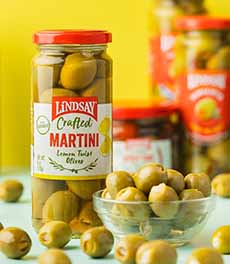
    *We substituted an anchovy-stuffed olive from Donostia Foods. The also produce olives stuffed with lemon paste.

    As a sweet alternative, we soaked some dried cranberries in vermouth and loved how they soaked up the alcohol—so much so that we soaked more cranberries and rolled a log of goat cheese in them. You can also press them into the top of a warmed Brie.

    *Arctic, Gala, Ginger Gold, Goldrush, and Opal  
    Preparation varieties are resistant to browning when cut.


    CHECK OUT WHAT’S HAPPENING ON OUR HOME PAGE, THENIBBLE.COM.


    Comments off

    It’s All About Bees! Honey~Luscious Flavored Honey Gifts

    It’s All About Bees, a line of creamed honey, liquid honey, and honey-based condiments (BBQ and other sauces, fruit butters, jams, jellies, mustards, salsas, syrups) by third-generation beekeeper Wendy Fletcher.

    Her honey heritage dates to the 1930s when her grandfather kept bees in Homer, Nebraska.

    In the 1970s, the Fletchers started beekeeping full-time. Four families bought an existing beekeeping operation in Iowa and ultimately settled in Omaha, Nebraska.
     
     
    FABULOUS FLAVORED HONEYS FROM
    IT’S ALL ABOUT BEES!

    Almost 25 years ago, the company began selling flavored honeys at farmers markets and craft shows, and then expanded to their own gift store and other retailers.

    The line is hand-crafted and the natural flavorings are simply delish.

    They are special, and there are varieties for every palate. Grandpa Rexroat would be proud.

    For holiday season gifting, they come in sizes small enough for Thanksgiving party favors and large enough for a family.
     
    Artisan Honeys

    The company specializes in small-batch, artisan, all-natural, and sustainably-produced.

    The recipes are lower in sugar—containing, the company says, 30% less sugar than other flavored honeys. There are:

  • Spreadable creamed honey in 23 flavors (photo #1).
  • Liquid honey in 10 flavors, packaged in squeezable plastic honey bears (photo #2).
  • There are also raw, unflavored varietal honeys (Buckwheat, Orange Blossom) in jars, honey bears, and honey sticks; plus honey-based personal care products.
  •  
    For holiday gifts, we looked at the seasonal flavors. Each flavor is so pure and distinctive, we’re glad we tried a selection.

    [Note to Santa: We’d be delighted to try them all.]
     
    Holiday Flavors

    Though they’re available year-round, these are spot-on flavors for the holidays. The flavors are fresh and lively. Cinnamon, for example, tastes like a stick of cinnamon was freshly grated into the jar.

    For holiday gifts, we selected jars of:

  • Apple Cinnamon Honey
  • Cinnamon Honey
  • Chai Spice Honey
  • Christmas Berry Honey
  • Ginger Honey
  • Gingerbread* Honey
  • Pumpkin Spice Honey
  •  
    Most flavors are available in three sizes:

  • 2-ounce minis (party favors, stocking stuffers)
  • 10-ounce half-pints
  • 22-ounce pints
  •  
    At the rate we’ve been spooning up the wonderful chocolate honey and peanut butter honey flavors (a.k.a. “candy in a jar”), we’ll need to re-order the largest size.
     
    More Flavors

    Beyond our holiday flavor picks, there’s plenty on offer:

  • Family Favorite Flavors: Chocolate, Peanut Butter, Salted Caramel, and Vanilla Honeys.
  • Fruit Flavors: Blackberry, Cherry, Elderberry, Lemon, Lime, Orange, and Raspberry Honeys.
  • Herb & Spice Flavors: Lavender, Lavender Beenilla, and Turmeric Honeys.
  • Hot Flavors: Cayenne and Extreme Ginger in creamed honey jars; honey bears with squeezable liquid heat in Hot Honey and Really Hot Honey.
  •  
     
    GET YOUR HONEY FROM IT’S ALL ABOUT BEES!

    You can find the products:

  • At Whole Foods Markets, other fine retailers, and Amazon (all have limited flavors and sizes).
  • Everything is available on ItsAllAboutBees.com.
  •  
    If you ordered one of every flavor, what would we think?

    We’d think you were in for a really sweet time.

    Why not have a holiday tea party to kick it off? Use the honeys to:

  • Sweeten tea.
  • Spread then on crackers and canapés.
  • Use as condiments with cheeses and charcuterie.
  • Mix them into dips for fruit.
  • Spread them on shortbread and graham crackers or on loaf cakes (angel food, carrot, and pound cakes, zucchini bread).
  •  
     
    ANNUAL HONEY HOLIDAYS

  • January 11: National Hot Toddy Day
  • January 18: Winnie the Pooh Day
  • May, First Full Week: National Wildflower Day
  • May 20: World Bee Day
  • August, First Saturday: National Mead Day
  • August 2: Don’t Step On A Bee Day
  • August, Third Saturday: World Honey Bee Day
  • September: National Honey Month
  • September: Rosh Hashanah*
  • November 17: National Baklava Day
  •  
     
    MORE HONEY HAPPINESS

    > The different forms of honey.

    > 30 tasty uses for honey.

    > Ways to use creamed honey.

    > The history of honey.

    > Honey facts and trivia.

    > Honey statistics.

    > Honey varietals (monofloral honeys).

    > Pairing varietal honeys with foods and beverages.

    > Photo glossary: The different types of honey, sugar, and syrup.

    > Storing and using honey.

    > How to get every last drop of honey from the jar.
     
     
    HOW HONEY IS MADE

  • Worker bees collect nectar from the base of the flower with their tongues, and use “pollen baskets” (corbiculae) on their hind legs to collect pollen from the anthers (the top of the stamens)
  • They fly back to the hive to pass the nectar and pollen to other worker bees (all workers are female), who store it in the honeycomb cells (photo #10).
  • Those bees use enzymes and proteins in their stomachs to break down the nectar’s complex sugar, sucrose sugar, into simpler sugars into fructose and glucose and by the removal of excess moisture into simpler forms that are less likely to crystallize.
  • They fan the substance with their wings to remove excess moisture. This turns the substance into the thick, viscous liquid we call honey.
  • More nectar and pollen are brought back to the honeycomb cells. Worker bees then seal the cells with a thin layer of wax secreted from their abdomens.
  • Beekeepers use centrifugal force from a spinning device called a honey extractor. This removes the honey from the comb while leaving the wax comb intact, allowing the bees to reuse it.
  • Trivia: Only female bees have stingers. Worker bees, all females, do all the work in the hive. Males (called drones) do nothing; their only job is to mate with the queen to produce more bees. When mating season is over, the worker bees force the drones, out of the hive where they die from starvation or hypothermia.
  • Etymology: The English word honey began in the ancient Germanic tongue as huna(n)go, which became honung in Old Norse, and then hunig in Old English. In Medieval English that became hunig, which turned into the modern word honey (and its variation, “hunny” if you’re part of Winnie The Pooh’s cohort).
  •  

    Jars Of Apple Cinnamon Honey
    [1] Honey in fall and holiday flavors: Apple Cinnamon, Chai Spice, and Cinnamon (photos #1, #2, #3 © It’s All About Bees!).

    Jars Of Chai Spice-Flavored Honey
    [2] Flavored honeys in wonderful flavors come in jars of spreadable creamed honey and honey bear squeeze bottles of liquid honey.

    Jars Of Christmas Honey
    [3] Christmas, Gingerbread, and other holiday flavors are great for gifts.

    Caramel Sundae In A Glass Sundae Dish
    [4] Use flavored honey to top ice cream (photos #4, #6, #7, #8, #10 © National Honey Board).

    Apples & Honey
    [5] Serve flavored honey with apples, pears, or oranges—a wonderful add-on when the fruit isn’t as sweet as you’d like (photos #5, #9 © Good Eggs).

    Mojito Rum Cocktail
    [6] A Mojito made with honey instead of refined cane sugar.

    Latte In A Tall Glass
    [7] How about sweetening your latte with cinnamon honey?

    A bagel with fresh strawberries and honey
    [8] What’s new on bagels? How about fresh strawberries and peanut butter honey?

    Pancakes With Honey
    [9] Beyond maple syrup: pancakes with the flavored honey of your dreams (cayenne? lavender?).

     
    A worker bee making honey in the honeycomb cells
    [10] A worker bee making honey in the honeycomb cells (photo © National Honey Board).
    _______________

    *Rosh Hashanah, the Jewish New Year, occurs in the Hebrew calendar 163 days after the first day of Passover. It is usually—but not always—determined by the new moon closest to the autumnal equinox, which falls in September or October.

    †The flavor was more clove than mixed gingerbread spices.


    CHECK OUT WHAT’S HAPPENING ON OUR HOME PAGE, THENIBBLE.COM.


    Comments off


    © Copyright 2005-2026 Lifestyle Direct, Inc. All rights reserved. All images are copyrighted to their respective owners.