|
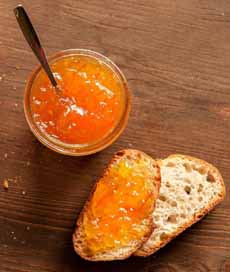
[1] The most popular use for marmalade: as a bread spread (photo courtesy Beth’s Farm Kitchen).

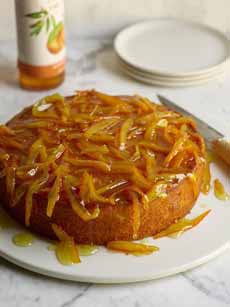
[2] Olive oil cake with a marmalade topping. The recipe is below. (photos 2 and 3 courtesy Lucero Olive Oil).
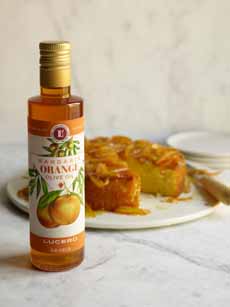
[3] Mandarin orange agrumato olive oil. Learn about agrumato below.
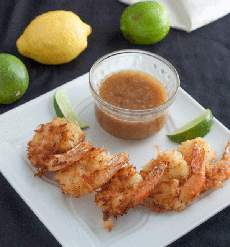
[4] Coconut shrimp with marmalade dipping sauce. Here’s the recipe from Binky’s Culinary Carnival.
|
|
Marmalade is a soft citrus-based jelly that includes the flesh and often the peel of the fruit, suspended throughout the jelly base. The sweetness of the jelly is offset by the bitterness of the peel.
Some products that are called marmalade—onion and tomato marmalades, for example—are actually misnamed jams and preserves. Here are the different types of jam, jelly and other sweet spreads.
Marmalade can be made from kumquats, lemons, limes, grapefruits, mandarins, oranges (bergamot, Seville, sweet oranges) and other citrus fruits. It can be made from a single fruit or a combination.
Here’s the history of marmalade, which dates back some 2,000 years.
Beyond bread, toast and other breakfast breads, there are many other uses for marmalade. In most applications, warm the marmalade first.
> National Marmalade Day is March 5th.
BEYOND BREAD: 30 MORE USES FOR MARMALADE
Baked apple/pear sauce
Baked brie topping
Barbecue sauce enhancement (stir it in)
Batter swirl: brownie batter, cornbread, pound cake, etc.
Cake frosting or filling
Cheese condiment
Cocktail with gin, tequila or vodka (combine in a cocktail shaker or add to a bottle)
Compound butter
Cookies (sandwich cookies, thumbprints, etc.)
Cranberry relish (instead of fresh oranges)
Cream cheese block (top with marmalade for a bread/cracker spread
Crêpes and omelet filling
Dipping sauce (with mayonnaise, sour cream, yogurt)
Fried chicken condiment
French toast, pancake or waffle topping
Glaze for simple cakes (angel cake, cheesecake, pound cake) and fruit tarts, brisket, fish, ham/pork/sausages, poultry (heat jam with some of water or lemon juice until it melts; then pour on top)
Gourmet pizza (blue cheese, marmalade and prosciutto on a ricotta base, or a fresh fruit pizza, for example)
Grilled cheese or BLT sandwich spread
Homemade ice cream (add some Grand Marnier!)
Ice cream/sorbet topping (make a “Creamsicle” with vanilla ice cream)
Marmalade fool (fresh fruit folded with whipped cream and marmalade)
Marmalade popsicles (thin with juice or water and freeze)
Marinades
Oatmeal or grains mix-in
Pan sauce (deglaze the pan)
Poke cake
Salad dressing (mix a spoonful into a vinaigrette)
Sandwich spread (cheese, ham, turkey, vegetable)—alone or mixed with mayonnaise or mustard
Smoothie mix-in
Yogurt or cottage cheese mix-in
RECIPE: ORANGE OLIVE OIL CAKE WITH MARMALADE TOPPING
Here’s a cake recipe from Lucero Olive Oil that brightens any winter day. It tides us over before spring begins to bring local fresh fruit.
You’ll notice that one of the ingredients is Lucero’s Mandarin Orange Agrumato Olive Oil. Agrumato is a process developed in the Italian region of Abruzzo.
Oranges or lemons were crushed simultaneously with the olives to produce exceptionally flavored olive oils. Agrumi means citrus in Italian; to make a food “agrumato” is to make it citrusy.
|
Today the crushing technique is used with other fruits, herbs such as basil and oregano, and some of the onion family (garlic, onions and shallots).
Ingredients
1 tablespoon extra virgin olive oil
¾ cup Lucero Mandarin Orange Agrumato Olive Oil (substitute other orange olive oil)
¾ cup sugar
2 eggs
½ teaspoon Maldon sea salt or substitute
⅔ cup buttermilk
1½ cups all purpose flour
2 teaspoons baking powder
1 teaspoon baking soda
½ cup thick-cut orange marmalade (substitute 2 tablespoons powdered sugar)
Preparation
1. PREHEAT the oven to 350°F. Apply 1 tablespoon extra virgin olive oil liberally to a 9” cake pan.
2. BEAT the eggs and sugar in mixer until foamy, approximately 2 minutes. Add the salt, buttermilk, and orange agrumato olive oil, continuing to beat until combined (about 1 additional minute at medium speed).
3. COMBINE the flour, baking powder and baking soda in a separate bowl combine. Using the lowest mixing speed, add the flour mixture to the wet mixture and process until the mixture is only just combined. Avoid over-mixing.
4. TRANSFER the batter into the prepared pan and bake until the center of the cake comes out clean using a toothpick or cake tester, about 30 minutes.
5. COOL the cake in the pan for about ten minutes, then turn onto a rack to completely cool.
6. DECORATE by spooning warm marmalade over the top of the cake right before serving, or by sifting powdered sugar over the top.
CHECK OUT WHAT’S HAPPENING ON OUR HOME PAGE, THENIBBLE.COM.
|