|
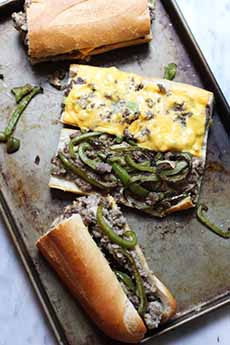
[1] Cheddar is a cheesesteak staple, but most people prefer American cheese (or perhaps, that’s all that’s on offer—we also like provolone). Here’s the recipe (photo © Supherb Farms).

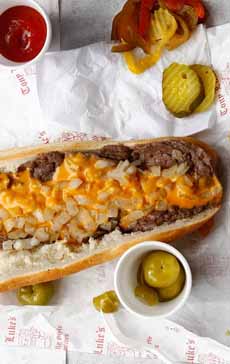
[2] According to Tony Lukes’s, a venerable Philadelphia emporium, American cheese is the most popular (photo © Tony Luke’s | Visit Philly).
[3] Make cheesesteak with an international flair, like this Korean-fusion version with bulgogi beef, hot chiles and sriracha on a baguette. Here’s the recipe (photo © California Milk Advisory Board).
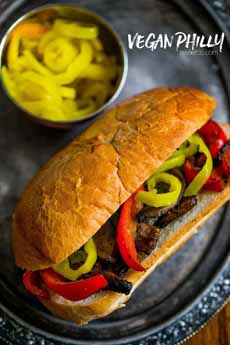
[4] A vegan “cheesesteak” made with grilled vegetables. Here’s the recipe from Sweet CS Designs (photo © Sweet CS Designs).
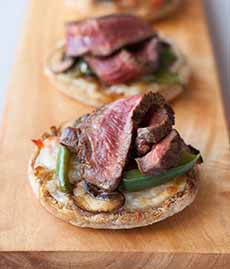
[5] Sirloin on an English muffin. Here’s the recipe (photo © Pre Brands).
[6] This one is made with ground beef. Here’s the recipe (photo © The Baker Chick).
|
|
March 24th is National Cheesesteak Day, celebrating the fourth-most influential hallmark of Philadelphia—after the Declaration of Independence, the Liberty Bell and Ben Franklin. (Some might re-order this to put cheesesteak first.)
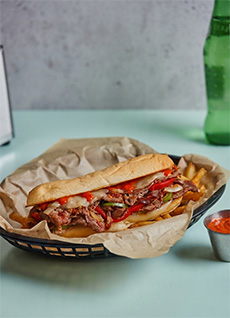
What is cheesesteak? It’s not a piece of cheese slapped onto a steak, like a cheeseburger. Rather, it’s a chopped fantasy of flavors that many Philadelphians revere as their favorite fast food.
Cheesesteak (photo #1) is made of thin slices of grilled steak, covered with melted cheese and served on a long roll. Traditionally, it includes grilled peppers and onions or hot cherry peppers.
It has been personalized with different ingredient options at different cheesesteak emporia.
And it’s become a fusion food, like the Korean bulgogi-hot chile cheesesteak in photo #4. Or embrace onto other ideas, like vegan “cheesesteak” (photo #5) or Buffalo chicken cheese “steak.”
Below:
> The history of cheesesteak.
> The different types of cheesesteak.
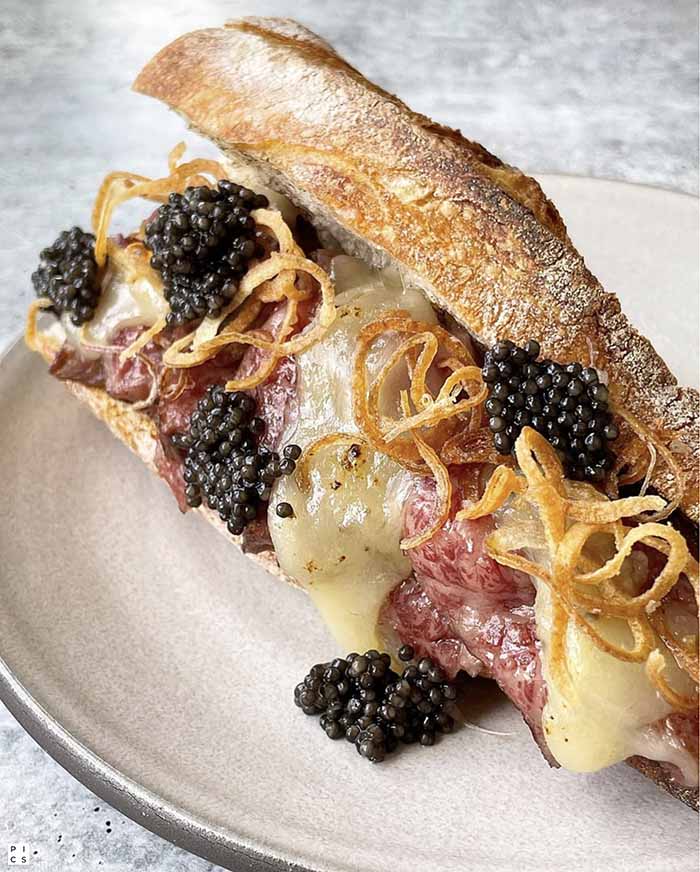
> The “ultimate” gourmet cheesesteak.
Elsewhere on The Nibble:
> The year’s 28+ sandwich holidays.
> The year’s 25+ beef holidays.
> The year’s 30 cheese holidays.
HOW ABOUT A CHEESESTEAK PARTY?
When the grill comes out for the season, consider a DIY cheesesteak party. It’s fun to build your own (blue cheese, anyone?) and see what others have created.
You can make it a gourmet cheesesteak party with better steak, better cheese, better bread and toppings (e.g. caramelized onions).
Ingredients
The Basics
Sliced steak (grilled flank steak; also chicken if there are non-beef eaters)
Bread: Italian rolls (also the best long roll you can find, e.g. baguette, whole wheat hoagie rolls, Italian rolls, etc.)
baguette, French, Hero/hoagie, Italian,
Cheese (cheddar or American is standard [not to mention Cheez Whiz], but also consider asiago, blue, goat, gruyère, provolone, etc.
Sautéed or grilled green bell peppers and onions – or –
Caramelized onions and separately sautéed green peppers and mushrooms
Marinades
Classic marinade: olive oil, lemon juice, garlic powder, dried basil, dried parsley, Worcestershire sauce, soy sauce and black pepper. Optional: hot sauce and sliced fresh garlic.
Classic fresh herb marinade: olive oil, red-wine vinegar, fresh oregano (finely chopped), fresh thyme, granulated onion or onion powder, minced fresh garlic cloves, Worcestershire sauce, salt, black pepper
French marinade: olive oil, wine, wine vinegar, tarragon, garlic, a bit of salt and pepper
Italian marinade: olive oil, wine, wine vinegar, lemon juice, vinegar, chile flakes, oregano, garlic, a bit of salt and pepper
Plus
Grilled vegetables as a vegetarian/vegan options (photo #3)
Green salad for the bread-averse (and anyone else who wants a salad)
Condiments
Dijon or grainy mustard
Giardiniera, a pickled Italian relish.
Chopped raw onions
Hot sauce
Marinara sauce
Pickled jalapeños
Worcestershire sauce
Creative Options
Buffalo chicken hoagie: chicken, buffalo sauce and fried onions. Here’s a recipe.
Cheesesteak hoagie, cheesesteak plus hoagie dressings (lettuce, tomato, mayonnaise).
International variations, like the Korean cheesesteak in photo #4.
THE HISTORY OF CHEESESTEAK
The term “cheesesteak” originated with the Philly Cheesesteak. Before then, there were simply steak sandwiches, sliced beef on bread.
According to VisitPhilly.com, Philadelphia’s official tourism site, the cheesesteak in the 1930s by Pat Olivieri.
Olivieri was a hot dog vendor in South Philly. One day, he expanded his menu by adding some sliced beef to the grill. A cab driver was lured by the aroma of grilling meat, and ordered a steak sandwich, which he received on an Italian roll.
By the next day, the buzz about the sandwich had spread among cabbies; locals were attracted to it; and shortly Olivieri opened a shop on 9th Street and Passyunk Avenue, called Pat’s King of Steaks, to sell his steak sandwich.
But it was still not a cheesesteak!
According to nephew Frank Olivieri Jr., the cheese was added in the 1940s by an otherwise unspectacular employee named Joe Lorenza, who added slices of provolone to the sandwich [source].
Eventually, he added cheese to the recipe.
In 1966 a rival shop across the street: Geno’s. While Geno’s was not the first to add cheese to the sandwich it is credited with creating the Whiz, using Cheez Wiz instead of sliced cheese. (Frankly, we prefer something more refined, like gruyère.)
The friendly rivalry wages on decade after decade, as do the arguments among customers as to whose cheesesteak is better.
Word spread rapidly through the cabbie rumor mill, and drivers from all over the city soon visited Olivieri for steak sandwiches. Olivieri eventually opened up Pat’s King of Steaks on 9th Street and Passyunk Avenue. manager Joe Lorenza, according to Philadelphia Magazine.
By the way, if you’re in town, both Pat’s and Geno’s are open 24 hours a day, seven days a week. Other cheesesteak vendors have popped up developed their own loyal clientele.
Below: The different types of cheesesteak.
|
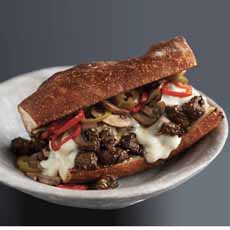
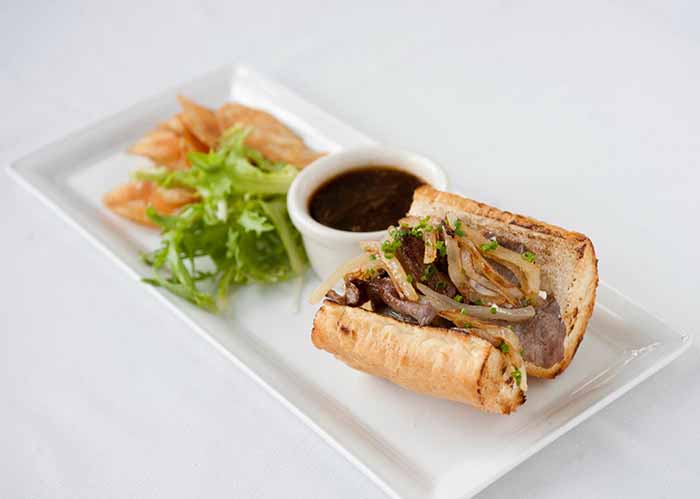
[7] On a toasted baguette (photo © Eddie Merlot’s Steakhouse).
DIFFERENT TYPES OF CHEESESTEAK
Following the Philly Cheesesteak, numerous cheesesteak variations have popped up over time. Here are some notable ones:
Regional Variations
California Cheesesteak: Uses the classic ingredients plus lettuce, tomato, and mayonnaise.
New York Cheesesteak: the classic ingredients plus grilled onions, bell peppers or hot cherry pepper, and sometimes a roll toasted with garlic butter. Toasted or not, New York uses a hero roll or Italian bread, firmer and crustier than the Philadelphia hoagie roll.
But that’s not all! Some NYC vendors add mushrooms, others use chopped beef instead of thin sliced beef, spicy versions add jalapeños or crushed red pepper.
Texas Cheesesteak: This version uses pepper jack cheese and barbecue sauce, with jalapeños for a kick.
Cheese Variations
The classic Philly uses Cheez Whiz, provolone, or American cheese. But some prefer:
Blue Cheese Cheesesteak: Blue cheese crumbles or sauce are added to the original for a bold and pungent twist.
Pizza Steak: Uses melted mozzarella cheese plus sauce.
White Cheddar Cheesesteak Trades processed American cheese and Cheese Whiz for “real” cheese: sharp white Cheddar.
Meat Variations
Beyond or Impossible Cheesesteak: A vegetarian/vegan alternative using plant-based meat and dairy-free cheese. Here’s a vegetarian recipe with grilled portobello mushrooms.
Chicken Cheesesteak: A swap of grilled or chopped chicken for the beef, often seasoned like the original.
Buffalo Chicken Cheesesteak: The chicken is tossed in Buffalo [wing] sauce*, sometimes with blue cheese or ranch dressing.
Pork Cheesesteak: Pulled or roasted pork is used instead of beef.
International Twists
Italian Cheesesteak: Taking a cue from the Italian sausage and peppers sandwich, beef replaces the sausage, along with onions and Italian-style seasonings: garlic, oregano, etc.
Korean Bulgogi Cheesesteak: Bulgogi-marinated beef, kimchi, scallions, sesame seeds and spicy mayonnaise (mayo plus gochujang or sriracha sauce).
Unlike a traditional cheesesteak, a Korean Bulgogi Cheesesteak typically uses mozzarella, provolone, or white American cheese. It may also use a Korean-style shredded cheese blend.
Mexican Cheesesteak: A combination of carne asada, queso, jalapeños, and sometimes guacamole. Carne asada is marinated flank steak, skirt steak, or sirloin that is grilled over high heat for a smoky, charred flavor.
Not to mention:
Cheesesteak Pizza: Here’s a recipe. You can also put the filling atop nachos or in taco shells.
Philly Cheesesteak Baked Potato: The recipe.
[8] The pièce de résistance: wagyu beef, Gruyère cheese, and a caviar garnish (photo © RegalisFoods).
________________
*Buffalo sauce is a spicy, tangy, and buttery hot sauce typically used for Buffalo wings, but also on cheesesteaks, fries, mac and cheese, pizza, sandwiches and wraps. Hot sauce (usually Frank’s RedHot) is blended melted butter and sometimes vinegar, garlic powder, and/or Worcestershire sauce.
CHECK OUT WHAT’S HAPPENING ON OUR HOME PAGE, THENIBBLE.COM.
|