|

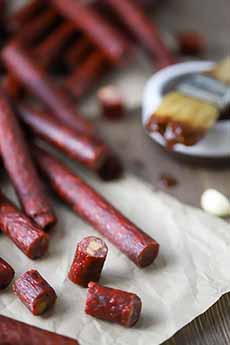
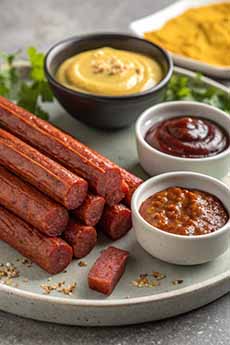
[1] Beef sticks, also called meat sticks (and made with other meats and poultry), are a growing market (photo © PS Seasoning).
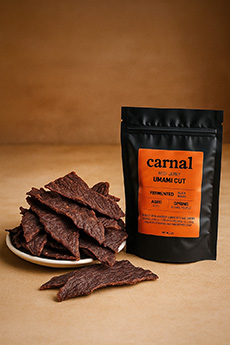
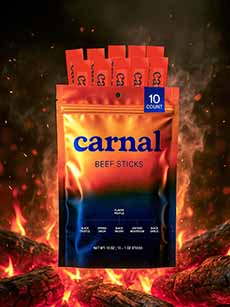
[2] As of this writing, the jerky is sold out, but the beef sticks are available (photos #2, #3, and #4 © Carnal Jerky).
[3] Carnal Beef Sticks, our new favorite meat snack.
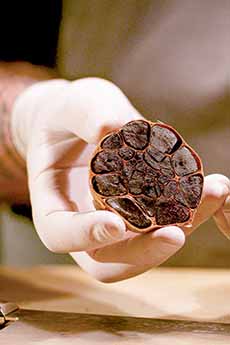
[4] Black garlic is a fermented garlic bulb, adds another layer of flavor. Here’s more about it.
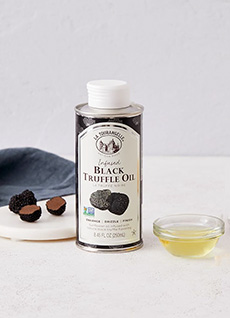
[5] We don’t know which truffle oil Carnal uses, but we use La Tourangelle, a California producer. See ways to use it every day in the ‡footnote (photo © La Tourangelle).
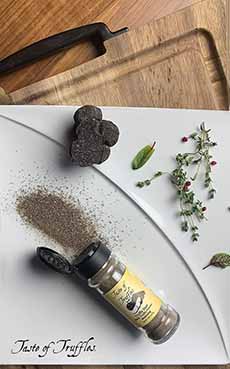
[6] Carnal also enhances the truffle flavor with truffle powder, also called truffle dust or truffle zest. We keep a shaker of it with our spices, to enhance eggs, grains, pasta, fish, meats—even ice cream (photo © Taste Of Truffles).
[7] Check out the 19 recipes (photo © Cook Craft & Create).
More Ways To Use Meat Sticks
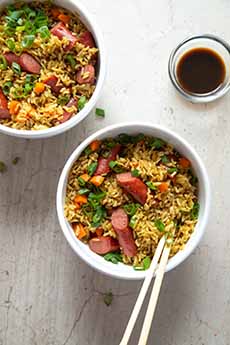
[8] Beef stick fried rice. Here’s the recipe (photos #8 and #9 © Green Ridge Naturals).
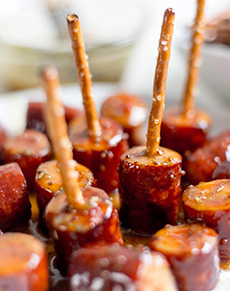
[9] Meat stick lollipops with a pretzel stick.
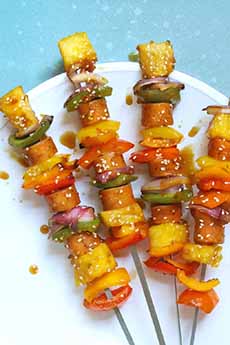
[10] How about Hawaiian kabobs? Here’s the recipe (photo © Gilbert’s Craft Sausages).
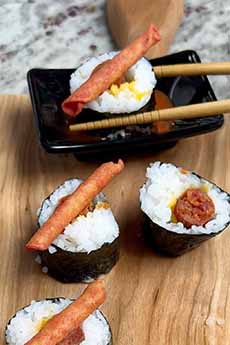
[11] What will TikTok think of next? Meat stick sushi Tic Toc. Add a crab stick for surf-and-turf (image © Noah Klein | Tic Toc).
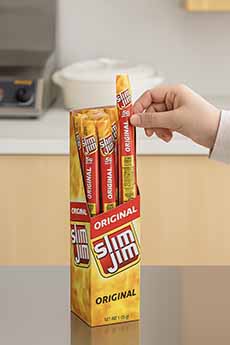
[12] For many decades, Slim Jim was the number-one meat stick. It was bypassed by Jack Link’s in 2023 (photo © Webstaurant Store).
|
|
September 23rd is National Meat Stick Day. Call them meat sticks, snack sticks, beef sticks, whatever you like: there’s a big caveat. There are meat sticks and there are MEAT sticks.
Our Top Pick Of The Week, Carnal brand beef sticks, has given us a whole new perspective on the snack and deserves the title MEAT in all caps.
A bit of history: Back in our high school days, after our first bite of a famous-brand meat stick, we asked, “Who eats this stuff?” Evidently many people, but we were not about to become one of them.
Over the years, brands proliferated as more people sought grab-and-go meat snacks, some consumers believing them to be good protein snacks (sure, except for the salt and fat).
As we write about food, different brand samples came our way. Some were superior to others, and for those who liked the convenience of meat stacks, we were happy to see the category expand with artisan brands made with grass-fed beef, clean ingredients, different meat and poultry options, and interesting seasonings.
Yet, nothing turned our head enough to want to tell our readers about them. Until now.
Carnal has raised the beef stick bar.
Created by Michelin-trained chefs who wanted better meat snacks, these “snacks” are not just for snacking. You can add them to any number of recipes—something we wouldn’t think of doing with a supermarket (or gas station) meat stick.
> Head to CarnalJerky.com to get yours!
A description of these meaty bites follows, along with:
> Ways to use meat sticks in recipes.
> The history of meat sticks.
> The protein value of beef sticks.
> How to make your own meat sticks.
Also on The Nibble:
> The history of jerky.
> The year’s 25+ beef holidays.
> The year’s 90 snack holidays.
CARNAL ELEVATED BEEF SNACKS
Developed by Michelin-trained chefs James Zamory, Aaron Saurer and Sean McDermott, Carnal beef snacks were created to disrupt the world of beef jerky; the beef sticks followed.
It’s not just the use of superior beef; it’s the sophisticated seasonings like black garlic and black truffle (photos #5 and #6) that make the flavor profile special.
The chefs, who worked together at the three-Michelin-starred Eleven Madison Park in New York City, were convinced by an entrepreneur in Bellingham, Washington, to relocate. Initially focused on creating a restaurant named Carnal, in the process they created the better beef bites.
The snacks became so popular in the area—and the meat snacks category was growing so well—that the team decided to move away from the restaurant business to focus solely on making Carnal the top national fine jerky and meat stick brand. It launched nationwide this year with:
Carnal Umami Cut Beef Jerky (photo #2)
Carnal Beef Sticks (photo #3)
They’re sugar-free, gluten-free, keto-friendly and paleo. And ever so tasty!
CARNAL UMAMI CUT BEEF JERKY & BEEF STICKS
Wait—you might say—how can “Carnal” be umami-cut beef? “Umami” is a flavor profile (the fifth taste, alongside sweet, sour, salty, and bitter (here’s more about it). It is not an anatomical cut of beef like ribeye or brisket.
You would be correct. Carnal, the company has used the word as branding language, meant to convey a premium, chef-driven approach. (While we’re at it, there’s a dissection of the world “carnal” in the **footnote.)
While “umami cut” isn’t a literal butcher’s cut, it may sound like a butcher’s designation to some. This elevates the brand by making it sound like a prized portion of meat.
The brand says that “cut” is also partly descriptive of how the jerky is sliced: in a hearty, steak-like style, giving a chew and mouthfeel closer to cooked beef than to thin jerky.
And the Carnal products are definitely loaded with umami flavor.
They’re seasoned with aged soy sauce, fermented black garlic, and premium black truffle oil†—all high in the glutamates* that create the deeply savory and meaty umami taste.
And may we add, a very sophisticated umami taste.
Another reason for the rich flavor is a specialized confit method used by the chefs, who rendered the bone marrow from the short ribs they cooked in the restaurant as a glaze for the jerky. In a word: yum.
REAL BLACK TRUFFLE, REAL BLACK GARLIC
Black truffle. Forget the cheap truffle oil knock-offs (read all about them in the †footnote). Carnal uses the real thing: black winter truffle. The beef is infused with both premium black truffle oil (photo #5) and hand-shaved black winter truffle powder (photo #6).
This isn’t just a hint of truffle; it’s a layered, Michelin-level-worthy flavor that elevates the beef.
Black garlic, fermented for weeks by a local artisan (\photo #4), undergoes a flavor metamorphosis to a smoky, sweet, almost molasses-like depth, exploding with pure umami. It is no longer “garlic,” but is transformed into an exotic, delightful flavor.
MORE HARMONIOUS FLAVOR FUSIONS
There are move flavors that create the beef stick’s layered flavor profile: tangy sundried tomato, peppery black radish, earthy shiitake mushrooms, fresh bright coriander, and crisp spring onions. Together, the depth of complexity does even more to heighten these savory snacks.
BEEF STICKS AS AN INGREDIENT IN RECIPES
Beef sticks are a cousin of jerky: a thin, semi-dry sausage that can be made from pork, beef, venison, game, or combinations.
We admit to enjoying several premium jerky brands, but no beef stick has captured our heart and palate—until soft and much moist Carnal Beef Sticks.
The premium meat and flavorings can elevate an everyday dish, from pasta to stews to quesadillas. In dishes without other protein, they also provide some.
The suggested uses that follow work with both beef sticks or jerky. Both work well as a bacon or sausage substitute in many recipes.
Just note that they’re already salted, so taste your recipe before adding additional salt.
While jerky is already cut into bite-sized pieces, slice or dice the beef sticks.
With both, add them near the end of cooking to prevent overcooking.
How creative can you get? See photo #11.
Beef Sticks At Breakfast
Breakfast hash: Mix diced beef sticks with potatoes, onions, and peppers.
Omelets: Use as filling along with cheese and vegetables.
Scrambled eggs: Add diced beef sticks and as a nice counterpoint, garnish with diced chives.
Beef Sticks In Salads & Wraps
Bacon replacement: For salads from Cobb to spinach.
Chef salad: Slice and add to mixed greens with cheese and vegetables.
Grain bowl garnish: Top barley, brown rice, or quinoa bowls with slices.
Potato salad/pasta salad: Dice and mix into potato or pasta salads.
Wraps: Use in place of deli meat in tortilla wraps.
Beef Sticks In Pasta, Pizza, And More
Carbonara-style pasta: Use instead of bacon or pancetta.
Mac and cheese: Add diced beef sticks for extra protein.
Pizza topping: Slice thin and use like pepperoni.
Kabobs: Add cheese, veggies, fruit to the beef (photo #10).
Beef Sticks In Appetizers, Sides & Snacks
Beef Stick Fried Rice: See photo #8. Here’s the recipe.
Charcuterie boards: Use whole as part of meat and cheese platters.
Quesadillas: Slice beef sticks and combine with cheese between tortillas.
Rice and Grain Dishes: Add diced beef sticks to rice pilaf for smoky flavor.
Stuffed jalapeños: Mix diced beef sticks with cream cheese.
With Dips: Different dips make a fun snack (photo #7). Also serve the dips with meat stick lollipops (photo #9).
THE HISTORY OF BEEF STICKS
Beef sticks, also called meat sticks or snack sticks, are a modern, snack-sized version of Europeam dry, cured sausages: Old World meat preservation traditions meets 20th-century American food processing.
Long before refrigeration, cultures in Central and Eastern Europe, Germany, Italy, and Spain developed air-dried, salted, and spiced sausages that were firm, portable, and could last weeks.
Typically made from beef, pork, or mixed meats ground with salt, curing agents, and spices, the mixture was stuffed into casings and air-dried or smoked.
German, Italian, and Polish immigrants to the U.S. in the 18th and 19th centuries, brought these recipes with them.
The late 19th–early 20th century) saw the rise of industrial meat processing, using mechanical grinders, stuffers, large smokehouses, and packaging equipment. This allowed sausage makers to produce uniformly-shaped, shelf-stable products in much greater volume.
The Slim Jim
The story of beef sticks begins Adolph Levis, a Philadelphia-born son of European Jewish immigrants and high school dropout who earned his living pickling meat (like pig’s feet) and vegetables and selling the products to shops and taverns located in Philadelphia., wanted a smaller, spicier, and more shelf-stable version of Old World smoked and dried sausages.
Working with a meat packer in Philadelphia, he created a thin, fermented, smoked meat stick that could be eaten without further cooking. It became the ubiquitous Slim Jim (photo #12).
By 1929, Slim Jim was being sold locally in bars, often alongside beer as a salty, tangy snack.
Sometime in the mid-20th century, sausage makers began producing thin, finger-sized versions of these cured sausages. These had the same salt-and-spice cure, but were dried or smoked to a chewy, jerky-like texture.
Slim Jim, which began as a regional sausage made by an immigrant butcher, became one of America’s most recognizable convenience-store snacks.
Marketed as a portable protein snack, it appealed to factory workers, hunters, outdoorsmen, truckers, and others who wanted high-energy, shelf-stable foods.
After General Mills acquired Slim Jims in 1967zzs, it brought meat sticks into gas stations and convenience stores nationwide and created the beef snack market.
Packaging advances: Vacuum-sealing and flexible plastic film extended shelf life and allowed for single-serve, grab-and-go portions.
Flavor diversification: While the original recipes mirrored peppery smoked sausage, flavors later expanded to include teriyaki, spicy chili, and even exotic meats (venison, bison).
The Market Grows
Beef sticks became popular as a portability, shelf-stable snack (no refrigeration required). From on-the-go lifestyles to outdoor sports, school lunches and casual snacking, protein snacks attract a wide range of customers.
The meat snacks market in the U.S. is valued at $20.66 billion in 2025 and is projected to grow to $28.54 billion by 2030, registering a compound annual growth rate (CAGR) of 6.67%. This represents strong growth driven by increasing demand for protein-rich meat snacks such as beef jerky, beef sausages, beef sticks, and links…extending beyond beef to other meats and poultry [source].
ARE BEEF STICKS A GOOD PROTEIN SNACK?
They can be, but with some important considerations. First, the good news:
Protein Benefits
Beef sticks can fit into a healthy diet as an occasional protein snack, especially higher-quality, grass-fed versions with minimal ingredients.
High protein content, typically 6-14g protein per stick.
Complete protein, with beef containing all nine essential amino acids.
Convenient and portable, no refrigeration needed.
Satisfying, as protein and fat help you keep full longer.
Low carb, usually 1-3g carbs, good for low-carb diets.
|
Look for grass-fed options. The beef has a better fatty acid profile, with no antibiotics or hormones.
You don’t want fillers: just beef, salt, and spices. Cheaper products typically contain fillers, poor-quality meat, and excess sodium.
Quality varies significantly among brands.
Nutritional Concerns
High sodium, often more than 300-500mg per stick (which can be 20-25% of your daily value).
Processed meat contains preservatives like sodium nitrite.
Saturated fat, which raises your LDL (bad) cholesterol, can be significant.
This means that shouldn’t be your primary protein source, no matter how tasty you may find them.
WANT TO MAKE YOUR OWN?
If you have a meat grinder and want more uses for them, make your own beef sticks. They’re a great way to utilize your venison or leftover trimmings.
They can be seasoned with virtually any profile and enhanced with add-ins like cheese.
And they’re great gifts, including party favors and stocking stuffers.
Here’s how to do it.
________________
*Glutamates are naturally occurring amino acids found in many foods, and also comprise the food additive known as monosodium glutamate (MSG). They enhance the savory or “umami” flavor in food. But it’s not just taste that’s important: Glutamates are the building blocks of protein and are essential for various bodily functions, including metabolism and brain function.
**Carnal, for lovers of language, is a somewhat archaic use of the adjective when referring to meat. The word derives from the Latin carnalis, which itself derives from caro/carnis meaning flesh or meat. So in its most literal sense, carnal means “of the flesh” or relating to flesh/meat.
However, the meaning of the word evolved and in contemporary usage, carnal means something quite different: (1) relating to physical (especially sexual) desires and appetites, (2) sensual, (3) worldly or earthly, as opposed to spiritual.
The original meaning of the word is retained in terms like carnivorous (meat-eating), carnivore/carnivorous (meat-eating), Carnival, the feast before Lent, literally “farewell to meat” (from Latin carne vale), and even carnation, named for its flesh-pink color. On a similar but less pleasant note, carnage, which refers to widespread slaughter, originally meant heaps of flesh/bodies).
References to meat today are words like meaty, fleshy, beefy, pork-like, etc. We do opine, however, that if you hunger for, and are passionate about, delicious beef snacks, you should simply get a cache of Carnal leave the semantic shifts to the etymologists, historical linguists, lexicographers, and philologists.
***Foods that are naturally high in umami:
>Fermented and aged: cheeses like aged Cheddar, Parmesan, and Roquefort; soy-based foods like soy sauce, miso paste, fermented black beans; fish sauce.
>Marine foods: anchovies, dried seafood (bonito flakes, dried scallops and shrimp), seaweed.
>Vegetables: mushrooms (porcini and shiitake, especially when dried, which concentrates the glutamates), tomatoes (sundried, or cooked, where the glutamates are more concentrated); caramelized onions (ditto), slow-cooked beans (long cooking breaks proteins into glutamates).
>Meats, cured and aged: prosciutto salami, and other charcuterie.
†You get what you pay for in truffle oil. The difference is a chemically-produced product versus a natural product. The differences: Here’s more about them.
Less expensive truffle oil contains little to no actual truffle. Prices range from about $8 to $20 for a 250ml/8-ounce bottle. These are typically made with neutral oil (e.g. olive, Canola/grapeseed, sunflower) plus synthetic aroma compounds, most often 2,4-dithiapentane, a lab-made chemical that mimics the earthy-garlicky smell of truffles. A mass-produced product, you can detect a “chemical” note in the aroma. The flavor is often one-note: strong, pungent, sometimes overwhelming.
Even brands that smell intensely “truffly” at first can taste artificial, flat, or harsh after a moment on the palate.
These oils are typically found in grocery store shelves and used to give flavor to truffle fries, burgers, etc. in casual restaurants. They’re used more as a punchy seasoning than a delicate accent.
Pricey truffle oil is made by infusing real black or white truffles steeped in EVOO oil, in small batches using artisanal production methods. The bottles are small, too, reflecting use for a hint. These can be divided into two price ranges:
> Premium/high-cost, ranging from about $30 to $80 for a 250ml/8-ounce bottle, made with real truffle extract/infusion, but in somewhat larger batches than ultra-premium, and not wholly artisanal techniques. Examples include specialty Italian or French producers (Urbani, Sabatino, La Tourangelle’s high-end line [a Nibble favorite]).
> Ultra-premium, ranging from about $100 to $200, made in the smallest batches with true artisanal techniques and extra virgin olive oil to produce a balanced, nuanced flavor that resembles fresh truffles. They use fresh seasonal truffles (white Alba or Périgord black) steeped directly into EVOO in small batches. It is an ongoing part of the line, consistently offered year after year. They are used by high-end restaurants and sophisticated home cooks. An example is Urbani White Truffle Oil in EVOO.
They are used sparingly in fine dining, drizzled over meats, pastas, or risottos to add an exciting layer of flavor.
They’re sold at specialty shops and online purveyors. But be sure to buy from a reputable retailer, whether online or bricks-and-mortar. Fakes abound.
> Limited Edition: We need to mention that there are versions at even higher prices are mentioned here for rare infusions of the best truffles (Alba, Perigord—more about truffles). These are produced in small quantities, often made during fresh truffle season (e.g., Alba white truffles in autumn, Périgord black truffles in the winter). They are batch-specific, with natural steeping of fresh truffles into the EVOO. They are short runs, seizing the moment, not always able to be repeated from year to year. An example would be labeled “Limited Edition White Alba Truffle Oil, 2024 Harvest” that’s only bottled while those truffles are available—but you are not likely to come across a bottle at a retail, since they are sold directly by producers to their best clients.
‡Truffle oil is an inexpensive way to get the flavor of truffle into foods. But when you buy a bottle, make it “truffle season” in your house. The aroma dissipates quickly after opening, so use up the oil within a few months. Fortunately, it works almost everywhere—as a bread-dipper, in salads or on meat, fish, eggs, chicken, corn and other vegetables. Just don’t cook with truffle oil—the scent evaporates when the oil is heated. Instead, brush it onto the food when it comes off the flame, or drizzle it into soups. Truffle oil’s “companion,” truffle vinegar, can be used to deglaze, but vinegar is not the ideal form in which to enjoy a hint of the fungus.
CHECK OUT WHAT’S HAPPENING ON OUR HOME PAGE, THENIBBLE.COM.
|