THE NIBBLE BLOG: Products, Recipes & Trends In Specialty Foods


Also visit our main website, TheNibble.com.

Hard Tacos a.k.a. Crunchy Tacos For National Crunchy Taco Day

National Taco Day is the first Tuesday of October, coinciding with the first Taco Tuesday of the month. So why do we need a second holiday, March 21st*, National Crunchy Taco Day?

Why, to celebrate hard tacos a.k.a. crunchy tacos! They merit their own holiday because in Mexico, home of the taco, most tacos are made with soft corn tortillas (sometimes with flour tortillas, but corn is more flavorful).

So where did that crispy shell that many Americans associate with a taco come from? We’ll reveal that in a moment, but first:

To put them all in one list, the year’s four taco holidays are:

  • January 25: National Fish Taco
  • March 21: National Crunchy Taco Day
  • March 31: Día del Taco (in Mexico)
  • October, 1st Tuesday: National Taco Day
  •  
    Below:

    > The history of the crunchy taco.

    > Crunchy tacos vs. soft tacos.

    Elsewhere on The Nibble:

    > Bake hard taco shells from corn tortillas (so easy!).

    > The history of tacos.

    > Taco party menu.

    > 20+ hard taco recipes.

    > Ice cream tacos recipe.

    > The year’s 25+ Mexican and Tex-Mex food holidays.
     
     
    THE HISTORY OF THE CRUNCHY TACO

    No one can say for certain who first fried a soft tortilla and filled it, but they appeared in Mexico sometime after the soft version.

  • The tacos with fried, crunchy shells are called tacos dorados, or golden tacos, because frying the soft taco is fried until crispy golden brown.
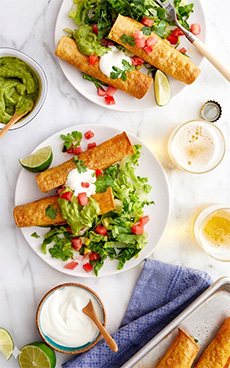
  • Flautas are also a form of crispy tacos that are filled, rolled and instead of folded, then fried.
  •  
    While these two exist in traditional Mexican cuisine, the mass-produced, pre-formed crunchy shell was popularized in the 1950s by Glen Bell (the founder of Taco Bell) to make them easier to serve quickly.

    The earliest American recipe for hard tacos was published in a California-Mexican cookbook in 1914. A corn tortilla was stuffed with ground beef, sealed, pan-fried, then [wait for it!] smothered it in chili gravy [source].

    In the U.S. they are called hard shell tacos or crunchy tacos.

    In terms of who popularized the hard shell in the U.S.: Point your finger at Gene Bell of Taco Bell.

    When he launched what would become a major American food franchise on March 21, 1962, in San Bernardino, California†, he put crunchy tacos—fried tortilla shells, not soft tortillas—on the menu. Crunchy tacos were easier to prepare than soft ones.

    (Note the date? It became National Crunchy Taco Day).

    Bell was the first taco seller to fry his taco shells in advance (traditionally they were fried on demand).

    With all due respect, not all hard-shell tacos taste like Taco Bell, Del Taco, or other chains, much less Old El Paso shells from the supermarket. They’re pretty tasteless.

    A quality Tex-Mex restaurant—whether fancy or a taco truck—will fry them fresh daily.
     
     
    CRUNCHY TACOS VS. SOFT TACOS: THE DIFFERENCE

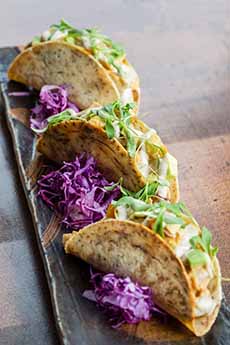
    Crunchy tacos, also called hard-shell tacos, are corn tortillas fried into a U shape. Rigid, they are stuffed with meat, seafood, or beans, plus lettuce, tomatoes, and cheese (and many add-ons, from guacamole to sour cream).

    Some sources call them Anglo-Tacos and/or Cali-Mex cuisine.

    While prefabricated taco shells have a bad reputation, when prepared freshly with care, the Tex-Mex crunchy taco is delicious.
     

  • Traditional Tacos: Soft. In Mexico, the vast majority of tacos are served on warm, soft corn (or sometimes flour) tortillas. The focus is on the pliability of the tortilla and the quality of the filling (like al pastor or carne asada).
  • Crunchy Tacos: The hard-shell taco as we know it is largely a Mexican-American (Tex-Mex) innovation. While “tacos dorados” (tacos that are stuffed and then fried until crispy) exist in traditional Mexican cuisine, the mass-produced, pre-formed crunchy shell was popularized in the 1950s, as mentioned earlier, by Glen Bell, the founder of Taco Bell, to make tacos easier to serve quickly.
     
    So, hats off to the good tasty hard tacos out there: Crunch away!

  •  


    [1] Hard tacos, or crunchy tacos, have a rigid shell that is deep-fried (photo © Sirena Gourmet Latin Seafood | San Diego [permanently closed]).


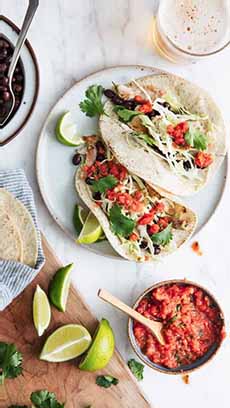
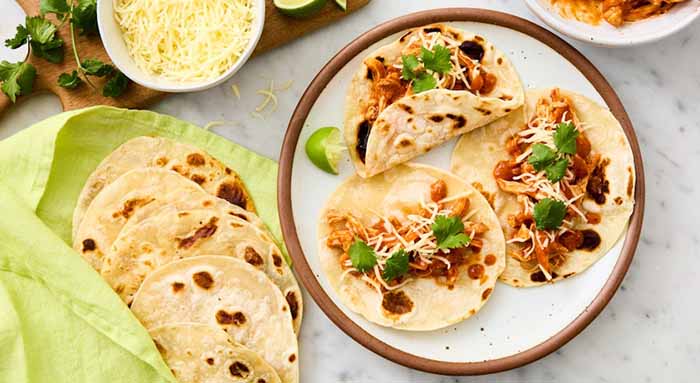
    [2] Soft tacos may have grill marks from being quickly heated on a griddle—in fact, they’re more interesting that way (photos #2, #3, and #4 © Good Eggs).

    Ingredients For DIY Tacos
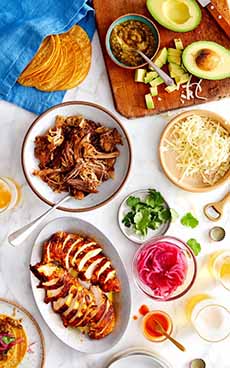
    [3] DIY tacos with shredded pork and grilled chicken. Note that while served flat, the tortillas are fried.

    A plate of chicken taquitos
    [4] Chicken taquitos: the tortilla is filled, rolled, and fried.

     
    Depending on your point of view:

  • You love the crunch of fried taco shells and don’t care if you end up brushing crumbs and fillings from your clothing. Or…
  • You prefer a soft taco that wraps around the filling like a blanket, holding them in when you take a bite.
  • Soft tacos are much neater—although less textured—eating.
  • With hard tacos, we personally need a fork to pick up everything that falls out.
  • We like both versions; although the crunch of nachos or a basket of tortilla chips is just as satisfying.
  •  
    If you’re pining for crunchy tacos, head to a good Mexican restaurant that fries them from scratch.
     
    Chicken Tinga Soft Tacos
    [5] Chicken tinga with soft tacos and smoky tinga sauce. Here’s the recipe (photo © Good Eggs).
     
    ________________

    *March 21st is also California Strawberry Day, National French Bread Day, National Healthy Fats Day, and National Vermouth Day. It’s the only date we’ve come across that hosts five food holidays.

    †Before Taco Bell, he launched Bell’s Drive-In and Taco Tia in the San Bernardino area. His non-Hispanic customers called them TAY-koes. The first franchise opened in Torrance, California in 1964. Today there are 7,072 locations worldwide (as of 2018) [source].
     

    CHECK OUT WHAT’S HAPPENING ON OUR HOME PAGE, THENIBBLE.COM.


    Comments off

    Easter Treat: Omnom’s Milk Chocolate Almonds & Chocolate Bars


    [1] Mr. Carrots’ Mango-Passion Milk Chocolate Almonds (all photos © Omnom).


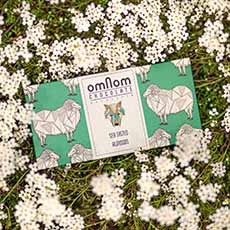
    [2] Mr. Bunny’s friend from the farm, the sheep, delivers a salted-almond chocolate bar.


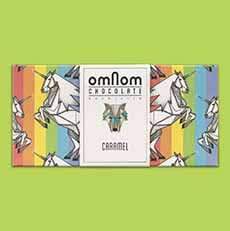
    [3] Introduce the Easter bunny to a unicorn, who brings a caramel chocolate bar.


    Instead of a chocolate bunny rabbit, how about something crunchier? Mr. Carrots’ Mango-Passion Milk Chocolate Almonds are an Easter-themed confection from one of our favorite chocolatiers, Omnom. Think of them as little Easter eggs (photo #1).

    The tropical flavors of mango and passion fruit shout “springtime,” too.

    You or your giftee can nibble on these milk chocolate-covered almonds for Easter and beyond.

    You can also use the bright yellow nuggets to garnish a cupcake or ice cream.

    The acidity of the passion fruit and the fruitiness of the mango accent the velvety texture of the milk chocolate and the salty toasted almond. DEE-licious!

    > Get your Mango-Passion and Milk Chocolate Almonds here.
     
     
    CHOCOLATE BARS FOR EASTER

    The Easter-themed sheep (well, he’s the father of the Easter lamb) covers a milk chocolate bar with almonds (photo #2).

    His friend, the unicorn (photo #3), is welcome at any holiday celebration. For Omnom, he delivers a milk chocolate bar with caramel bits. Both bars are among Omnom’s best sellers.

    Omnom is a Nibble Top Pick Of The Week, and everything we’ve tried has been rave-worthy.

    There are nine flavored chocolate bars, four single-origin bars, three flavors of malt balls (“crunch balls”), and other delights.

    > Check out all the Omnom confections.
     
     
    ABOUT OMNOM CHOCOLATE

    Omnom may just be the most delicious artisan food in Reykjavik, Iceland. The bean-to-bar artisan line is so wonderful that we put Reykjavik on our destination list.

    Each bar has a beautifully designed wrapper that embraces an animal from Scandinavian folklore. The designs are so enchanting that we haven’t thrown out the empty wrappers. We’ll re-purpose them for something nice.
     
     
    > THE HISTORY OF CHOCOLATE

    > THE DIFFERENT TYPES OF CHOCOLATE

    > EASTER EGG HISTORY


    CHECK OUT WHAT’S HAPPENING ON OUR HOME PAGE, THENIBBLE.COM.


    Comments off

    It’s Spring: Create A Spring Salad Recipe

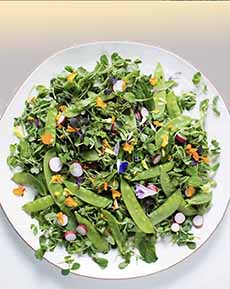
    Does the spring salad recipe in photo #1 look complicated? It couldn’t be easier. So start your celebration of spring with a lively spring salad. Photo #1 is a simple mixture of:

  • Pea shoots (photo #2), a fleeting spring treat
  • Fresh mint
  • Baby radishes
  • Snow peas
  • Edible flower petals
  • Vinaigrette of EVOO and fresh lemon juice
  •  
    You can top the salad with your protein of choice to make it a main course. Photo #3 features a poached egg—plus lots of Périgord black truffles* (for those with deep pockets).

    > The history of salad.
     
     
    WHAT MAKES IT A “SPRING SALAD?”

    What makes a salad a “spring” salad?

    It’s tender, has a splash of color beyond green, and uses ingredients that come into season in spring, delivering something beyond wwinter’s mix of celery, cucumbers, carrots, iceberg and romaine lettuces, mushrooms, onions, and Red Globe radishes. These include:

  • Asparagus
  • Boston/butterhead lettuce
  • Fiddlehead ferns
  • Garlic scapes
  • Delicate herbs (chives, dill, parsley)
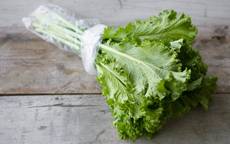
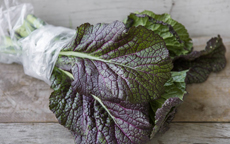
  • Mustard greens (photos #7 and #8)
  • Pea shoots, greens, and green peas
  • Ramps
  • Red leaf lettuce
  • Watercress…
  •  
    ..and much more. (Other harbingers of spring such as morel mushrooms and nettles must be cooked.)

    > Check out this list of spring vegetables and fruits.

    In the “olden days” prior to the 1970s or thereabouts, produce was seasonal. Green peas were the products of spring, as were asparagus, green beans, and other items on the spring produce list.

    Now, in-demand produce is available year-round, whether greenhouse-grown or imported from the Southern Hemisphere, where the seasons are opposite ours (carbon miles be damned).
     
     
    WHAT’S A SPRING MIX SALAD

    You may have noticed in the packaged salad section of your produce department a blend called “spring mix.”

    In general, a spring mix usually contains tender baby lettuces and baby spinach. It may also include red and green romaine, red and green oak leaf lettuce, other heirloom lettuces, chard, arugula, endive, and radicchio.

    Spring mix is normally harvested at a very young age, while the greens are still small and tender [source].
     
     
    MORE SPRING SALAD INGREDIENTS

    Don’t hesitate to try something new. If you’re a fan of spring peas, you’ll be delighted by the taste of pea shoots (photo #4), pea greens, and pea blossoms.

    The best place to find exciting ingredients is a farmers market, followed by a specialty produce store.

  • Asparagus
  • Baby arugula
  • Baby lettuces (butter lettuce [Boston lettuce] and bronze or red oak leaf lettuce)
  • Other baby greens, including spinach
  • Beets: red, orange and yellow (choose two colors, or substitute striped chioggia beets, photo #5)
  • Capberberries†
  • Chard
  • Chives
  • Dandelion greens (photo #5)‡
  • Escarole
  • Microgreens
  • Pea shoots (photo #2) and pea greens
  • Watercress
  • Optional garnish: capers, croutons
  • Radish: look for specialty radishes, e.g. breakfash radish, watermelon radish (photo #4)
  •  
     
    10 MORE SPRING SALAD RECIPES

  • Basil Vinaigrette
  • Blood Orange Vinaigrette
  • Meyer Lemon Vinaigrette
  • Smoked Salmon With Spring Salad
  • Spring Panzanella Salad (bread salad)
  • Spring Potato Salad
  • Spring Salad: Asparagus & Radishes
  • Spring Salad Bouquet
  • Spring Salad With Burrata Cheese
  • Spring Salad With Warm Bagna Cauda Dressing
  •  

    ________________

    *There are only winter and summer truffles. Here’s more about them.

    †While capers and caperberries are plucked from the bush beginning in May, they are typically pickled and thus available year-round. They go so well with fish and spring produce.

    ‡Dandelion greens are actually a weed, but one that packs in lots of vitamins and minerals (a great source of vitamins A, C, and K, calcium, folate, and potassium). They may be the most nutritionally dense green you can eat, outstripping kale and spinach.

    Dandelion greens have a potent flavor that mellows when cooked. They can be eaten raw, braised, steamed, and used in place of spinach [source].


    [1] Spring salad #1: pea shoots, mint, snow peas and more (photo © California Olive Ranch).


    [2] Pea shoots, a fleeting gift from Mother Nature (photo © Sid Wainer & Sons).


    [3] Spring salad #2: Romanesco broccoli, zucchini, pea shoots, baby greens, poached egg and garnish of Perigord truffles* (photo © D & D Restaurants | London).


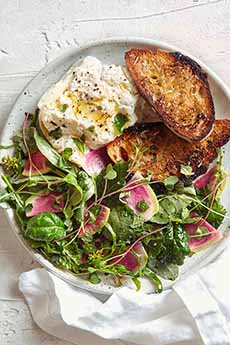
    [4] For breakfast or lunch, spring salad #3, with watermelon radishes and burrata. That’s a drizzle of EVOO on the burrata. You can substitute a poached egg. Here’s the recipe (photo © Good Eggs).

    Spring Salad
    [5] The bright striped circles are chioggia beets (photo © Fosters Market Cookbook).


    [6] Dandelion greens are a spring treat. There’s more about them in the footnote‡ (photo © Good Eggs).

    Mustard Greens
    [7] Mustard greens are members of the cancer-fighting Brassica genus (photos #7 and #8 © Good Eggs).

    Red Mustard Greens
    [8] You may be lucky and come across red mustard greens. They’ll add color to your salad.


    CHECK OUT WHAT’S HAPPENING ON OUR HOME PAGE, THENIBBLE.COM.


    Comments off


    © Copyright 2005-2026 Lifestyle Direct, Inc. All rights reserved. All images are copyrighted to their respective owners.