THE NIBBLE BLOG: Products, Recipes & Trends In Specialty Foods


Also visit our main website, TheNibble.com.

RECIPE: Make Fried Clams For National Deep Fried Clams Day

November 1st is National Fried Clams Day.

Fried clams is a dish that we always eat at restaurants, because cleaning, shucking and deep fat frying is a lot of work.

It’s especially more so because a recipe like the following yields just 12 fried clams. That’s enough for one hearty eater.

But if you’re game, here’s a recipe from an authentic Down Easter, Tim Connolly of Freeport, Maine.

The recipe is courtesy of Taste Of Home magazine.

One thing about eastern-style fried clams is that they’re made with the whole claim, and a cornmeal-based batter. Plus:

  • Clam belly. They’re made with clam belly, the most tender part of the clam (the soft, round center of the clam).
  • Clam strip. A clam strip, a cheaper cut, is usually a sliced-up surf clam. It is the type used in frozen fried clams (a 6″ surf clam can weigh 2 pounds!). The surf clam is too tough to be eaten raw, so it is sold breaded and frozen, canned, used for sauces and chowders.
  • Clam strips were first developed as a food source in the 1950s, for Howard Johnson’s (the scoop).
  • Clam neck. The neck is the chewy part that protrudes outside of the clam. To cook it (or eat raw clams), slip off the outer skin (membrane) and discard.
  •  
    Below you’ll find:

    > A recipe for great fried clams.

    > The year’s 5 clam holidays.

    > The history of fried clams.

    Elsewhere on The Nibble:

    > The year’s 56 fish and seafood holidays.

    > The history of clams.

    > Clams 101: what you need to know about buying and preparing clams.
     
     
    RECIPE: DEEP FRIED CLAMS

    You can fry the clams in an electric skillet, a deep-fat fryer, or other pot you use for frying.

    The recipes for cocktail sauce and tartar sauce are in the footnotes below.

    Ingredients

  • 1-1/2 cups yellow cornmeal, divided
  • 1/2 cup cake flour, divided
  • 2/3 cup water
  • 12 fresh cherrystone clams, shucked
  • Canola or peanut oil for deep-fat frying*
  • 1/2 teaspoon salt
  • Optional garnish: fresh parsley
  • For serving: lemon wedges, tartar sauce†, seafood cocktail sauce‡, ketchup (National Tartar Sauce Day is the first Friday after Lent begins)
  •  
    Preparation


    [1] Fried cherrystone clams. The recipe is below (photo © Taste Of Home).


    [2] Fried Ipswich clams (photo © Arch Rock Fish [alas, permanently closed]).


    [3] Serve the clams with tartar sauce (above), cocktail sauce, ketchup, or simply fresh lemon wedges: The choice is yours. The recipes for tartar and cocktail sauces are in the footnotes below (photo © Taste Of Home).

     
    1. COMBINE 3/4 cup cornmeal and 1/4 cup flour with the water in a shallow bowl, forming a batter. In another bowl, combine the remaining cornmeal and flour.

    2. DIP the clams in the batter and shake off the excess. Coat with the cornmeal mixture.

    3. HEAT the oil to 375°F. Fry the clams, a few at a time, for 4-5 minutes or until golden brown. Drain on paper towels. Sprinkle lightly with salt.

    4. SERVE immediately with lemon and sauce(s)—recipes are below in the footnotes. While frozen fried clams need some added flavor, fresh fried clams don’t need a dipping sauce. A lemon wedge will do.
     
     
    THE YEAR’S 5 CLAM HOLIDAYS

  • January 21: National New England Clam Chowder Day
  • February 25: National Clam Chowder Day
  • March 31: National Clams on the Half Shell Day
  • July 3: National Fried Clam Day‡
  • November 21: National Deep Fried Clams Day‡
  •  
    Plus

  • Lent, 1st Friday: Friday Fish Fry Day
  •  
     
    THE HISTORY OF FRIED CLAMS

    While clams had been cooked for millennia, in New England Americans had traditionally baked them (the Native Americans taught clambakes to the Pilgrims) or cooked in chowders. But modern fried clams were created by restaurant owner Lawrence “Chubby” Woodman of Essex, Massachusetts. Part of the Cape Ann peninsula, (distinct from Cape Cod), Essex is known for its antique shops, shipbuilding history, and beautiful beaches, attracting tourists.

    Woodman and his wife Bessie had a clam shack, selling freshly dug steamer clams, ice cream, and homemade potato chips. As the story goes, on July 3, 1916, he had on hand a vat of hot oil for his potato chips and a large quantity of clams harvested from the mud flats of Essex. A visiting fisherman friend suggested that he try frying some clams in the oil. Following the first batch, some tweaking perfected the recipe, and the modern fried clam was born: a salty, crunchy-crisp coating with a soft, briny clam underneath.

    Woodman developed the technique of shucking soft-shell clams (he used local Ipswich clams), dipping them in evaporated milk and a cornmeal/flour batter, and deep-frying. His deep-frying technique was quick, efficient, and perfect fare for a roadside stand; he effectively transformed clams into fast-food.

    While this may seem like a no-brainer to us, Woodman’s fried clams were a new, public sensation. Before Woodman, fried clams might have been made using hard-shell clams or different coatings, but Woodman’s specific recipe and commercial approach established the beloved New England classic. Other restaurants adopted the practice and eventually inspiring the creation of clam strips by others, bringing fried clams to the masses.

    The next leap forward in fried clams were clam strips, invented around 1932 by Thomas N. Soffron, a clam digger and restaurateur from Ipswich, Massachusetts (just 3-6 miles from Essex). Seeking a more durable, easily transportable alternative to the traditional soft-shell fried, he sliced the “foot” off of hard-shell clams and fried them. His clam strips became popular nationwide through an exclusive deal with the Howard Johnson’s restaurant chain.

    Woodman also came up with the idea of mobilizing the traditional New England clam bake. He loaded a truck with food (clams, lobster, potatoes, corn), boilers, and wood and brought it to the customer’s preferred location. The family business, founded in 1914, is still growing strong: a large employer in the area with more than 200 staff during the summer months. Here’s more about it.
     
    Clam Roll With French Fries
    [4] Clam strips make it easy to enjoy a clam roll (photo © Ant DM | iStock Photo).
     
    ________________

    *Canola oil and peanut oil are ideal for deep frying, because of their high smoke points

    Tartar sauce recipe: Combine 3/4 cup mayonnaise, 1/4 cup sour cream, 2 teaspoons sweet pickle relish, and 1 teaspoon lemon juice. Optionally add capers and finely minced shallot or chives, and more pickle relish to taste. You can substitute 4 tablespoons of Dijon mustard for the sour cream.

    Cocktail sauce recipe: Combine 1/2 cup ketchup, 2 tablespoons horseradish, juice from 1 lemon wedge, several dashes of Worcestershire sauce, and optional hot sauce to taste.

    ‡‡July 3rd, National Fried Clam Day, commemorates the creation of the modern fried clam by restaurant owner Lawrence “Chubby” Woodman of Essex, Massachusetts, in 1916. November 1st, National Deep Fried Clams Day, is a similar observance whose specific origin is unclear. But with two different days to celebrate fried clams, who’s complaining?


    CHECK OUT WHAT’S HAPPENING ON OUR HOME PAGE, THENIBBLE.COM.


    Comments off

    TOP PICK OF THE WEEK: Schmacon, The Best Beef Bacon

    /home/content/p3pnexwpnas01_data02/07/2891007/html/wp content/uploads/schmacon and eggs 230q
    [1] Schmacon and eggs (all photos © Schmacon).


    [2] A Schmacon Cheeseburger (photo © Miguel Andrade | Unsplash).


    [3] Use Schmacon wherever you’d use bacon. Here, Schmacon with a peanut butter dip. Now that’s snacking!


    [4] Gotta love the Schmacon logo.


    [5] Schmacon at Costco.


    The creator of Schmacon Certified Angus Beef® Bacon, smoked and uncured, calls it “beef’s answer to bacon.”

    For the many people would gladly exchange their pork bacon for flavorful beef bacon: Here it is, the best-tasting beef bacon out there.

    Schmacon (that’s SHMAY-con, rhyming with bacon) looks like bacon and smells bacon; it cooks like bacon–preferably in the oven for maximum crispness (photo #1), although it can be cooked in a frying pan.

    The resulting crisp strips of Schmacon tastes of beef instead of pork, but with the smoky, spicy spirit of bacon.
     
     
    SCHMACON BENEFITS

    For a similar meat experience:

  • A serving of Schmacon contains 30 calories, 2 g fat, and 60 mg sodium.
  • A serving of pork bacon averages 60-90 calories, 4.5-7 g fat, and 190-360 mg sodium.
  • Schmacon has no added nitrates or nitrites.
  • It is certified Halal.
  •  
    More benefits:

  • Schmacon cooks in half the time of raw pork bacon.
  • It generates much less grease; and, as with bacon grease, you can use the grease to cook potatoes and eggs, make German potato salad, etc.
  • For everyone without a great kitchen exhaust fan: There’s no lingering smell of old bacon fat in the air.
  • Like bacon, Schmacon can be frozen; but we bet you’ll run through the package pretty quickly.
  •  
     
    WHY SCHMACON IS SO GREAT

    Meatier, lower in sodium, calories and fat, Schmacon is a much healthier bacon alternative. You get more meat and less fat.

    And it’s not just more meat: It’s delicious meat.

    Schmacon is not the first beef bacon on the market, but but it’s head and shoulders above the rest.

    It was three years in development!

    Most other beef bacon is manufactured with the same technique as pork bacon, but that made no sense to Schmacon CEO Howard Bender.

    He started from scratch, testing different cuts of beef, spice blends and cooking processes until, three years later, he was satisfied.

    We think the result is terrific, and so does the industry: The National Restaurant Association gave Schmacon its Food and Beverage Innovations Award.
     
     
    WAYS TO USE SCHMACON

    We don’t have to tell you how to use bacon, but…use it anywhere you’d use pork or turkey bacon.

    Beyond Schmacon and eggs, and as a side to pancakes and waffles, we use it to make:

  • Bacon cheeseburgers and hot dogs
  • Bacon quiche
  • Bean and lentil dishes
  • BLTs
  • Brussels sprouts
  • Chowder
  • Hot bacon vinaigrette (with the leftover bacon grease)
  • “Larded” filet mignon or turkey breast
  • Spinach salad and wedge salad with blue cheese dressing
  • Surf and turf: bacon-wrapped scallops
  •  
     
    FINALLY, AVAILABLE TO CONSUMERS NATIONWIDE

    When we first wrote about Schmacon five years ago, it was new on the market and was focusing its efforts on selling bulk packages to restaurants and foodservice.

    Not just in the U.S., either: Schmacon is way popular in the pork-free Middle East.

    Now, it’s in America in certain regions of Costco, Walmart and other large chains. Here’s a store locator.

    You can buy Schmacon online here.

    But this killer beef bacon needs your help, so help spread the word that it exists.

    Run out and buy some and tell your friends, so that the big retailers will keep it in stock.

    Spread the word and you’ll enjoy Schmacon for a long, long time.

    Discover more at Schmacon.com.


    Comments off

    RECIPE: Candy Corn Ice Cream For National Candy Corn Day

    Diana Hardeman, founder of Milk Made, is one of the great artisan ice cream makers of New York and beyond.

    Known for her creative ice cream flavors, it’s no surprise that she made Candy Corn Ice Cream.

    She has allowed us to share the recipe with you today, October 30th, National Candy Corn Day.

    For more ice cream delights, sign up for her newsletter.

    “Even if you hate candy corn (as I do),” says Diana, you may like this flavor.

    “Yes it tastes like candy corn, but with all the saccharine, honey-like aspects of the candy and none of the chalky, wax-like texture*.”

    What to listen to as you eat the ice cream?

    > Diana’s Halloween Playlist!
     
     
    RECIPE: CANDY CORN ICE CREAM

    Ingredients For About 1 Quart

  • 1.5 cups cream
  • 1.5 cups milk
  • 1/3 cup sugar
  • 1 cup candy corn
  • 4 egg yolks
  •  
    Preparation

    1. SET up an ice bath. Fill a large bowl with ice and water, then place a medium sized bowl on top. Set aside.

    2. HEAT the milk, cream, and sugar in a medium saucepan, over medium heat. Once the sugar has melted, add the candy corn and stir constantly, scraping the bottom of the saucepan, until it is melted. Do not let candy corn stick to bottom; it will burn. In a separate bowl…

    3. STIR together the egg yolks. When the candy corn is melted (you may still have some small pieces and that is okay; you’ll strain them out later), gradually pour about ¼ cup of the mixture into the egg yolks, whisking the yolks constantly as you pour. Then scrape the warmed yolks back into the saucepan, whisking constantly.

    4. COOK over low heat, stirring constantly and scraping the bottom until the custard thickens enough to coat the spatula, or it reaches 160°F.

    5. STRAIN the custard into the bowl over the ice bath. Stir until cool. Refrigerate to chill thoroughly (8 hours or preferably overnight).

    6. FREEZE in an ice cream maker according to the manufacturer’s instructions.

    7. SCOOP the ice cream into a freezer-safe container. You can garnish the pint with whole or chopped pieces of candy corn. Place in freezer to set (about 4 hours).
     
     
    Notes From Diana

  • You can decide how strong you want the candy corn flavor to be. Add more or less to taste. I always err on the side of more in any recipe, for that WOW factor. So I have been very liberal with the candy corn in this recipe. If you want a lighter taste, use less candy corn.
  •  


    [1] Halloween yummy: candy corn ice cream (recipe and photo © Diana Hardeman).


    [2] This recipe uses four egg yolks. Here’s what to do with the egg whites.

    Candy Corn
    [3] Who invented candy corn? Here’s the scoop. Plus, here’s how candy corn is made (photo © Liz West | Wikipedia).

  • Because this flavor has so much sugar (candy corn is made from sugar, corn syrup, confectioner’s glaze, salt, dextrose, gelatin, sesame oil, artificial flavor, honey, yellow 6, yellow 5, and red 3), it yields a softer ice cream. It will not freeze as hard as other ice creams, both in the ice cream maker and in your freezer. The more candy corn you add, the gooier it will be.
  • For the authentic candy corn taste, use Brach’s Candy Corn: no generic brands, no different shapes, no special flavors.
  •  
    Thanks, Diana. We love softer, gooier ice cream.
     
     
    MORE CANDY CORN RECIPES

  • Candy Corn Cocktail
  • Candy Corn Cookies
  • Candy Corn Fruit Salad
  • Candy Corn Fudge
  • Candy Corn Ice Cream Cones
  • Candy Corn Layer Cake
  • Candy Corn Popcorn Balls
  • Candy Corn Pudding
  • Halloween Monster Munch
  •  
     
    ________________

    *Candy corn is coated with carnauba wax, also called Brazil wax and palm wax. It is made from the leaves of the carnauba palm (Copernicia prunifera), a plant native to and grown only in northeastern Brazil. Here’s more about it.


    CHECK OUT WHAT’S HAPPENING ON OUR HOME PAGE, THENIBBLE.COM.


    Comments off

    Guacamole Garnishes & International Guacamole Recipes


    [1] Start with plain guacamole, chunky or smooth; then mix in your favorites from a long list of choices (photo © McCormick).


    [2] DIY guacamole provides a variety of mix-ins; here at Cocina 214 in Winter Park, Florida (photo © Cocina 214).


    [3] You can go fusion-style, too. Here, Argentinian-style guacamole, with grilled beef (photos #3 and #4 © Avocados From Mexico).


    [4] Head to Asia with this guacamole blended with Korean spices.


    [5] This glass Lazy Susan, at 40 inches wide, is ready to party (photo © Kohl’s).


    [6] Ready, set, go avocado (photo © Aldi).


    Guacamole is one of those foods that gets lots of attention around the Super Bowl and Cinco de Mayo, and September 16th, which is National Guacamole Day.

    But we love it all year around.

    We keep an eye out for sales on avocados—when a large lot of them are already ripe at the grocer and will be too ripe to sell in another day or two.

    Since there are so many ways to embellish guacamole, our favorite is a DIY garnish buffet.

    We serve using a turntable—our Nana’s large Lazy Susan, a revolving tabletop server that enables each person to spin it to get to a favorite item without needing to ask someone to pass it.

    The Lazy Susan has gone out of fashion, except for the plastic versions made for easy access to cabinet storage (we keep our spices on two double-stack turntables).

    Today, a large Lazy Susan like Nana’s seems to be found mostly at restaurant supply stores; although we did find this glass version at Kohl’s (photo #5).

    For a party, you can instead spread the garnishes out on a buffet or table.

    For a family dinner, simply say, “Please pass the pineapple.” (We serve guacamole and chips as an appetizer.)

    Check out the international guacamole recipes below.
     
     
    RECIPE: DIY GUACAMOLE OR AVOCADO BAR

    To serve DIY guacamole, all you have to do is mash the avocado. Then supply bowls large enough so that each person can add the avocado and mix-ins and blend them together.

    For an avocado bar, use avocado slices instead of mashed avocado.
     
     
    RECIPE: DIY GUACAMOLE
     
    Mix-Ins

  • Bell peppers, diced
  • Black olives, sliced
  • Chives, cilantro and/or parsley, fresh, snipped
  • Cilantro, chopped
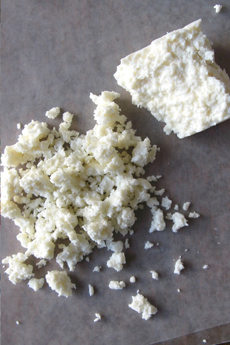
  • Cotija or feta cheese, crumbled
  • Garlic, minced or garlic chips
  • Jalapeño or other chile, sliced
  • Mango or pineapple, small dice
  • Roasted red pepper (pimento), diced
  • Red onion or scallions, thinly sliced
  • Tomatoes, small dice or halved grape tomatoes
  •  
    Fusion

    See 16 fusion recipes below.

  • Bacon, chopped
  • Green goddess dressing
  • Hummus
  • Mayonnaise
  • Ponzu sauce
  • Sweet chili sauce
  •  
    Condiments

  • Crema or sour cream
  • Hot sauce
  • Salsa
  • Salt
  •  
    Garnishes

  • Balsamic glaze for drizzle
  • Crumbled cotija cheese
  • Lime wedges
  • Parsley, chopped
  • Pomegranate arils
  •  
    For A Main Course

  • Grilled sliced chicken or meat, fajita-style, or grilled shrimp
  •  
    Optional Base

  • Black beans
  • Salad greens
  •  
    Plus

  • Agua fresca
  • Beer
  • Crudités
  • Tortilla chips
  • Tortillas
     

    BEYOND MEXICO: A WORLD OF GUACAMOLE RECIPES

  • Argentinean Guacamole
  • British Guacamole
  • Cajun Guacamole
  • California Guacamole
  • Caribbean Guacamole
  • French Guacamole
  • Greek Guacamole
  • Italian Guacamole
  • Japanese Guacamole
  • Korean Guacamole
  • Lebanese Guacamole
  • Moroccan Guacamole
  • Nordic Guacamole
  • SoCal Guacamole
  • South-Of-The-Border Guacamole
  • Southwestern Guacamole
  •  


    Comments off

    Pumpkin Gnocchi Recipe With Butter Sage Sauce For National Gnocchi Day

    The 29th of every month is National Gnocchi Day—in Argentina, where it’s spelled ñoqui, but pronounced the same as the Italian word, NYOH-kee).

    People all over the country get together on the same day every month, at home or at restaurants—to eat gnocchi.

    A nice idea: We just may start it in our own home.

    Gnocchi is a pillow pasta, rolled into little pillowy dumplings.

    The original Italian dish was made with flour and a potato filling, although the concept expanded to include pumpkin, ricotta, spinach, pumpkin and sweet potato.

    Fusion cooks around Buenos Aires even make gnocchi filled with ham and cheese [source].

    We’ll take a goat cheese and bacon gnocchi, please. What would you like in yours?

    Today’s recipe is all about pumpkin gnocchi.

    The planets are in alignment: October is National Pasta Month and National Pumpkin Month.

    Add to that the 29th of the month, and eating pumpkin gnocchi must provide the eater with some kind of good fortune (or at least, the calories should disappear).

    You can also celebrate with gnocchi soup (photo #2—here’s the recipe).

    Before we get to the recipe, here’s how this quirky holiday began.
     
     
    THE HISTORY OF GNOCCHI DAY

    The story credits the occasion to the Italian immigration to Argentina (their descendants now make up about 50% of Argentina’s population.

    This Argentine custom has been a tradition since the first wave of Italian immigrants migrated to the country in 1814 [source].

    Since the 29th is almost the end of the month, many families were tight on cash as they waited for their next paycheck, which came on the first of the month.

    Potatoes and flour are inexpensive ingredients that enabled the housewife to make a filling (and tasty!) meal.

    Some say that the 29th commemorates a patron saint of Venice, San Pantaleon, who was canonized on the 29th, so on each month the 29th is celebrated as his feast day [source].

    What About Good Luck?

    As people from the “old country” brought their superstitions along with their recipes, a superstition accompanies the gnocchi.

    It assures the eater that good luck may be on the horizon.

  • Eat gnocchi on the 29th of the month and place a coin or bill under your plate while you’re eating.
  • Then, take that money with you after the meal and carry it with you. It will bring you good luck.
  • A variation of the superstition says to donate the money to charity in order to reap the good fortune.
  •  
    The tradition spread to neighboring Paraguay and Uruguay, and hey: Will someone please bring it up north to the U.S.A.?
     
     
    > THE HISTORY OF GNOCCHI
     
     
    HOW TO ENJOY PUMPKIN GNOCCHI

  • You can make the recipe below, from scratch.
  • You can buy fresh or frozen pumpkin gnocchi at the store, and simply make the butter sage sauce.
  •  
    We chose the latter, but if you like the idea of making gnocchi from scratch:

  • Get the gnocchi kit from DeLalo (photo #4—it’s used in the recipe below).
  • Watch this tutorial on how to make gnocchi.
  •  
    Either way, you need fresh sage. We have ways to use the extra sage (photo #3), below.
     
     
    RECIPE: PUMPKIN GNOCCHI WITH BUTTER SAGE SAUCE

    Ingredients

  • 1 DeLallo Potato Gnocchi Kit
  • 1 1/2 cups water
  • 1/2 cup canned pumpkin
  • 1 teaspoon salt
  • 1 teaspoon nutmeg
  • 2 teaspoons lemon zest
  • 1/2 cup flour for dusting
  • 1 1/2 cups butter
  • 10 sage leaves
  • Balsamic vinegar, for drizzling
  • Parmigiano Reggiano cheese, for garnish
  •  
    Preparation

    1. MAKE the dough. Add the the package contents to a small mixing bowl and combine with the water, pumpkin, salt, nutmeg and lemon zest.

    2. STIR with a fork until dough begins to form. Knead by hand until the dough no longer sticks.

    3. TRANSFER to a lightly floured surface and form into a loaf shape. To prevent sticking, keep the surface and the dough lightly floured at all times.

    4. USE a knife to cut dough into 1″ strips. Roll out each strip by hand into long ropes. Cut each rope into 1″ pieces. Optional: To create gnocchi’s signature ridges, press the back of a fork into each piece.

    5. COOK the gnocchi. Bring a large pot of salted water to a boil. Add gnocchi and cook for 3-5 minutes. The gnocchi are finished once they float to the top.

    Meanwhile…

    6. MELT the butter in a saucepan on medium-low heat. Once melted, add the sage leaves and stir.

    7. TOSS the finished, drained gnocchi with the butter sage sauce. On medium heat, cook them together for approximately 2 minutes.

    Then, for the best taste and texture…

    8. ALLOW the gnocchi to sit in the sauce once cooked for about 5 minutes. Drizzle with balsamic vinegar, sprinkle with shaved Parmigiano Reggiano cheese and serve.
     

    USES FOR EXTRA SAGE

    Beyond making the sage butter in this recipe, you can:

  • Chop and add to grains, omelets, pasta sauce, salads.
  • Cover it in olive oil, refrigerate and use for sautes.
  • Freeze it in oil for future use.
  • Garnish soups.
  • Infuse honey, oil or vinegar.
  • Use as a plate garnish.
  • Make compound butter to use for other sauces and spreads.
  • Make sage pesto.
  • Mix into stuffing.
  •  


    [1] Fall comfort food: pumpkin gnocchi. In this photo, the gnocchi have been made with angled edges, instead of the traditional oval shape (photos #1, #2 and #4 © DeLallo).


    [2] Add gnocchi to pumpkin soup. Here’s the recipe. Ut uses regular gnocchi in a soup made from pumpkin purée and chicken broth. But you can substitute pumpkin gnocchi for a “double pumpkin gnocchi soup.”

    A Bunch Of Fresh Sage
    [3] Fresh sage has an herbal flavor that is slightly peppery, with hints of eucalyptus, lemon and mint. It is one of those herbs, like basil and rosemary, that provides “aromatherapy” just by inhaling the bunch (photo © Good Eggs).

    DeLallo Potato Gnocchi
    [4] DeLallo’s Potato Gnocchi Kit. Get it here.


    [5] Homemade gnocchi with marks made with the back of a fork (photo © Neco Garnicia | Stock Xchange).

    Canned Pumpkin
    [6] Be sure to buy plain pumpkin purée, not pumpkin pie mix, which has sugar and spices (photo © Jessica Gavin Photography).


    Comments off

    The Nibble Webzine Of Food Adventures
    RSS
    Follow by Email


    © Copyright 2005-2026 Lifestyle Direct, Inc. All rights reserved. All images are copyrighted to their respective owners.