|
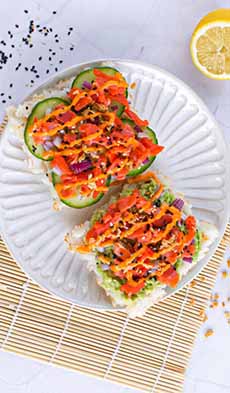
Before National Rice Month ended (September), we hastened to make a recipe that was wildly popular at a Sunday brunch: sushi waffles.
When we first heard of them, we imagined a savory buckwheat waffle topped, chirashi-style, with bright slices of fish. While that sounds interesting, this was not that recipe, although we do have a version of the latter in Recipe #2 below.
Instead, the waffle is not made of batter, but a square of sushi rice (recipe #1).
And if you don’t want to make waffles from rice, recipe #2 places the fish atop conventional waffles.
And the fish can be smoked salmon or your favorite sashimi (i.e., raw fish).
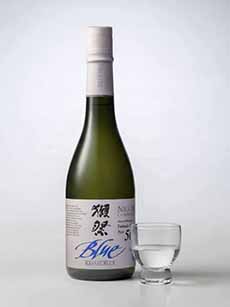
We enjoyed both recipes with a lovely bottle of >Dassai Blue sake (photo #8) and a chaser of genmaicha, green tea blended with toasted rice (a must-try for green tea fans).
The recipe follows, but first.
> How to make sushi rice.
> Below: How sushi rice is different.
> The history of rice and the different types of rice.
> The different types of sushi: a photo glossary.
> The different types of smoked salmon.
> The history of sushi.
> The year’s 7 sushi holidays.
> The history of waffles.
> The different types of waffles: a photo glossary.
> The year’s 8+ waffle holidays.
> The different types of sake.
> Dassai Blue sake, which we greatly enjoyed with the sushi waffles (photo #8).
RECIPE #1: SUSHI RICE WAFFLES WITH SMOKED OR RAW SALMON
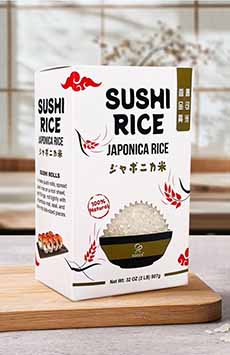
So many people are making sushi at home, that even Whole Foods sells sushi rice under their 365 brand and it’s easy to find online.
Our changes to the original recipe:
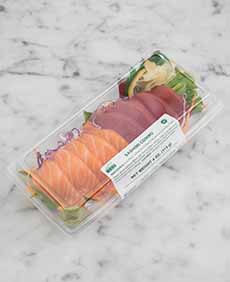
Smoked versus raw. Do you want to use raw fish or smoked salmon? The original was made with the latter, but we went straight for the raw fish. We purchased a container of takeout raw salmon sashimi and another of mixed sashimi.
Marinated cucumber. The original recipe used plain cucumber, which, to us, didn’t blend in. We marinated the sliced cucumber in rice wine vinegar for an hour before using.
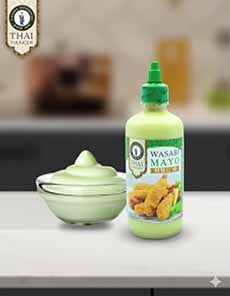
The video shows the waffles being garnished some type of pink mayonnaise or sauce, but provides no ingredients for it. So we made wasabi mayo, by mixing the wasabi from the takeout sashimi into mayonnaise. You can also purchase ready-made wasabi mayo (photo #6).
The sushi waffle takes its inspiration from the crispy-rice sushi that was first created by Chef Katsuya Uechi, the CEO and owner of Katsuya Group†. The pad of crispy rice is used in the manner of a pad of regular nigiri sushi rice.
Thanks to Alaska Seafood for the recipes, which they made using wild smoked Alaska red salmon.
Ingredients For 4 Waffles
1 cup sushi rice (see *footnote)
2 tablespoons rice vinegar
2 teaspoons sugar
Neutral oil to grease waffle iron
4 slices Alaska smoked salmon or sashimi (photo #3), cut into pieces
½ avocado, mashed with a splash of lemon juice
½ red onion, chopped, or equivalent sliced scallions
½ English cucumber, thinly sliced and quick-pickled (substitute pickled ginger—photo #10)
½ lemon, juiced
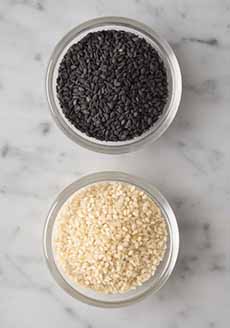
Optional garnishes: sesame seeds (photo #7), wasabi mayo (photo #6)
Preparation
1. PREPARE the sushi rice. Cook the rice rice according to package instructions. While it cooks, mix the rice vinegar and sugar in a small bowl until dissolved. Let the rice cool, then stir in the vinegar mixture.
2. GREASE a waffle iron and spread the sushi rice evenly. Cook for about 8 minutes, or until crispy and golden. Remove from the waffle iron
3. TOP the crispy rice waffles with mashed avocado, then the red onion and cucumber, then the smoked salmon. Drizzle with lemon juice and garnish sesame seeds. Drizzle the spicy mayonnaise over the top or serve it on the side.
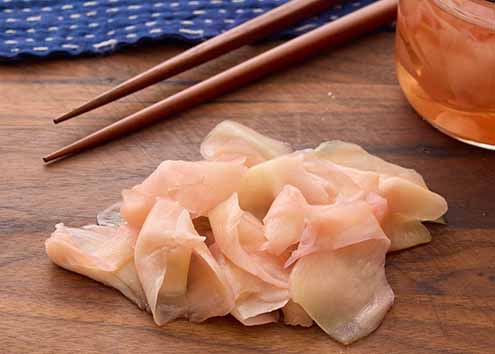
[10] Gari, pickled ginger for sushi. You can buy it or make it with this recipe (photo © All Recipes).
HOW IS SUSHI RICE DIFFERENT?
The differences between sushi rice and all-purpose, long-grain white rice are:
Type of Rice
Sushi rice is made from short-grain or medium-grain Japonica rice, which has a higher starch content, making it stickier—ideal for holding its shape in sushi.
Regular white rice (like long-grain or Jasmine) has less starch and cooks up fluffier and less sticky.
Seasonings
Sushi rice is seasoned after cooking with a mix of rice vinegar, sugar, and salt, giving it a slightly sweet, tangy flavor.
Regular white rice is typically lightly salted during cooking.
There are many types of rice. Check them out here.
RECIPE #2: REGULAR WAFFLES WITH SUSHI TOPPINGS
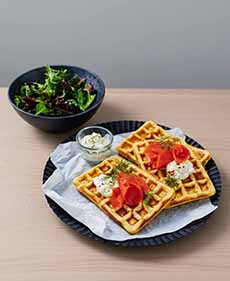
If you use a prepared waffle mix, you can use that instead of making your own mix from scratch. We actually prefer this recipe on whole-grain waffles, although photo #9 shows regular wheat waffles. They are served with a yogurt-lime topping and a side salad.
Ingredients
2 cups flour
1 teaspoon baking powder
3 eggs
7 tablespoons butter at room temperature plus extra for greasing the waffle iron
¾ teaspoon each salt and pepper
1 cup buttermilk
2 sprigs fresh dill, stems removed, patted dry, finely chopped
1 slice smoked salmon or sashimi
For The Topping
1 small lime, washed and patted dry
⅔ cup plain Greek yogurt
Red chili flakes
Salt to taste
For The Salad
We used bag of Asian salad mix.
3½ cups loosely packed lettuce mix of choice, washed and patted dry
2 tablespoons olive oil
Juice of half a lemon
½ teaspoon mustard
1 teaspoon maple syrup
Salt and freshly ground black pepper to taste
For Plating
7 ounces smoked salmon or sashimi
Garnish: snipped chives or more dill
Preparation
1. MAKE the yogurt topping. Zest a little of the skin, cut it lime in half, and squeeze its juice. Mix the yogurt with the lime zest and juice, and season with salt and red chili flakes.
2. MAKE the salad dressing. Combine the olive oil, lemon juice, mustard, and maple syrup; season with salt and pepper. Toss with the lettuce right before serving.
3. MIX the flour, baking powder, eggs, butter, ¾ teaspoon salt, ¼ teaspoon pepper, and buttermilk until well combined.
4. CUT a slice of smoked salmon into small cubes and add it to the batter along with the chopped dill. Cook the mixture in a pre-greased waffle iron until the waffles are golden brown.
5. TOP the cooked waffles with the remaining salmon, the salad, and the lime dip. Garnish with dill or chives and enjoy.
DASSAI BLUE SAKE
|
|

[1] Sushi waffles: delicious, fun, and easy to make (photos #1, #4, #5 and #9 © Alaska Seafood.
[2] You need sushi rice, not regular rice. Here’s the difference (photo Soeos | Amazon).
[3] We purchased a box of takeout sashimi instead of using smoked salmon (photo © Whole Foods Market).
[4] The cooked sushi rice goes into the waffle iron.
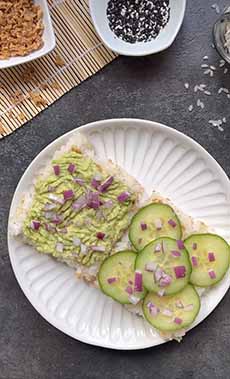
[5] The crisped rice is layered with toppings, until it looks like photo #1. At this stage, you can see the mashed avocado, red onion, and pickled cucumber. Next step is to add the fish and garnishes.
[6] We used wasabi mayonnaise instead of the pink spicy mayonnaise in photo #1 (photo © Thai Dancer | Food Specialize Co., Ltd | Facebook).
[7] Use black or white sesame seeds or a sprinkling of both. Black sesame has more flavor (Nano Banana photo).
[8] We enjoyed the sushi waffles with a bottle of Dassai Blue nigori sake. Produced in the U.S.A., it is smooth with a tiny amount of sweetness that paired perfectly. See more about the sake below (photo © Dassai Blue).
[9] Conventional waffles topped with smoked salmon (raw if you prefer) and yogurt-dill cream. We preferred the ones we made with whole-grain waffle mix compared to refined wheat.
|
Each sake producer makes different varieties of sake (see our Sake Glossary). We are particularly fond of nigori, a cloudy sake with a slight touch of sweetness that pairs nicely with the saltiness of soy sauce.
With our sushi waffles we enjoyed a bottle of Dassai Blue Nigori Type 50 (photo #8). The brand is made in the U.S. under the auspices of the renowned Japanese sake producer, Asahi Shuzo, which also makes the original Dassai brand sold in Japan. The American product is called Blue to differentiate it from that made in Japan.
(And the company recently changed its name to Dassai Inc. because of the confusion with the Asahi beer company, which is no relation.)
The “Blue” in the brand name was taken from an old Japanese proverb: “Although blue dye comes from the indigo plant, it is bluer than indigo.” This underscores the brewery’s ambition not to just copy the Japanese Dassai, but to even exceeed it and in the process make the finest sake in the U.S.
The state-of-the-art Dassai Blue Sake Brewery is located in Hyde Park, a town in Dutchess County, New York (the hometown of Franklin D. Roosevelt). It offers tours (with a tasting for those of legal drinking age).
Like the original Dassai, Dassai Blue focuses exclusively on brewing junmai daiginjo, the highest grade of sake. The name translates to “pure rice,” meaning that only rice, water, shobu (yeast starter), and koji (a mold with enzymes that break down rice starch into sugar) are used in its production. There is no added brewer’s alcohol, which creates that acrid taste in lesser grades of sake.
Good sake, including the ginjo and daiginjo grades, should always be chilled in order to display their delicate, highly aromatic qualities. They can be enjoyed alone or with food.
Nigori (meaning cloudy) is the unfiltered style of sake. In nigori, the fine rice sediment (called sake kasu or lees) is intentionally left in the bottle, giving the beverage a milky, hazy appearance and a slightly richer, often sweeter flavor with a creamy mouthfeel and supply texture.
The number 50 in Type 50 refers to the rice polishing ratio (RPR) in the rice wine. In other words, the rice grains have been polished down to 50% of their original size before brewing. This results in a cleaner, fruitier, and more refined taste profile than lower grades of sake, and is the minimum threshhold for the Junmai Daiginjo classification.
Dassai is made with Yamada Nishiki rice, a short-grain Japanese rice cultivar called the “King of Sake Rice.” It’s sourced from both Japan and a partner farm in Arkansas.
We enjoy the balance of light sweetness (which comes from the rice) and the crisp, refreshing finish. Put your nose to work and you’ll find fruity aromas, with notes on the palate of green apple, melon, pineapple, even almond.
Nigori can be enjoyed alone and is also the perfect complement to any meal. Sake is best served chilled, at 41°F (5°C) or below.
So why is some sake served warm?
The practice of warming sake, known as kanzake, dates back more than 1,000 years. Before modern refrigeration and sophisticated brewing, warming was the common way to enjoy sake, especially during the cold winter months.
Today in the U.S., only futsushu‡, “table sake,” is warmed, usually to mask imperfections in the flavor.
________________
*Raw rice triples in volume when cooked, you simply divide the desired cooked amount by 3. So ⅓ cup raw rice will give you approximately 1 cup of cooked rice. For 4 waffles, use 1/2 cup raw rice. Or, cook the whole cup; you’ll find numerous ways to use any uneaten rice.
†Katsuya Restaurant Group operates Japanese restaurants primarily in Los Angeles, as well as locations in New York, Miami, and the Bahamas. His most iconic dish is spicy tuna on crispy rice, which has become widely popular and inspired many variations at other restaurants, including sushi pancakes.
‡Futushi, meaning table sake or regular sake, is the most popular and affordable category of sake in Japan, accounting for the majority of production. Unlike specially designated grades of sake, which have strict government quality standards, futsushu has fewer regulations. This enables a wide range of styles and qualities, some of which include additives like brewer’s alcohol, coloring, and/or sweeteners. It’s drunk both chilled and warm.
CHECK OUT WHAT’S HAPPENING ON OUR HOME PAGE, THENIBBLE.COM.
|