THE NIBBLE BLOG: Products, Recipes & Trends In Specialty Foods
Also visit our main website, TheNibble.com.
|
November 27, 2011 at 8:31 am
· Filed under Candy & Confections, Christmas, Kosher Nibbles, Tip Of The Day
|
|
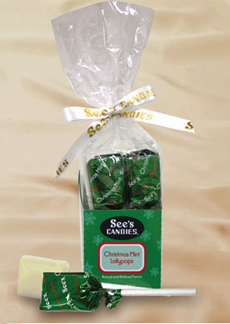
Creamy mint lollypops from See’s Candies are a hit! Photo courtesy Sees.com.
|
|
Over the holidays, when people show up at the door—neighbors, letter carriers, package deliverers (lots of them!) and so on—we like to send them them off with a little something special.
In years past, we’d hand out homemade cookies, but those buttery cookies got messy, requiring napkins and plastic sandwich bags.
This year we’re streamlining and giving everyone a delicious Christmas Mint Lollypop from See’s Candies.
The white lollys in green foil wrapping are not kid food: They’re truly gourmet lollipops (both lollipop and lollypop are correct spellings).
The flavor of the heavy cream base is lightly accented with mint. And, dear to our hearts, the sugar is in perfect balance—not sugary-sweet like many lollipops.
In addition to the Christmas Mint Lollypops, there are Cinnamon Lollypops; mixed-flavor Lollypops in Butterscotch, Chocolate, Coffee and Vanilla; and the same four flavors in a Hanukkah Lollypop Box.
|
|
Get a bunch for yourself, too, and extras for stocking stuffers.
See’s Candies are certified kosher by KSA.
What would you give as a mini-gift? Let us know!
|
|
|
Permalink
|
|
November 26, 2011 at 6:04 am
· Filed under Condiments, Fruits, Nuts & Seeds, Recipes, Thanksgiving & Fall, Tip Of The Day
|
|
15 Ways To Use Leftover Cranberry Sauce
Add 1/2 cup cranberry sauce to pancake batter.
Make cranberry syrup for French toast, pancakes and waffles: Combine 1 cup cranberry sauce and 2 tablespoons maple syrup in saucepan, then mix over low heat for 10 minutes. Cool or serve warm.
Purée and mix into a cocktail with gin, tequila or vodka with a splash of orange liqueur.
Add prepared horseradish or balsamic vinegar to taste, to turn cranberry sauce into general condiment. Use on burgers, meat and poultry-based sandwiches, eggs and hot meat, poultry and seafood dishes.
Add Dijon mustard to taste as a dip for sliced sausage or meatballs.
Add to a grilled cheese sandwich—especially with Brie, Cheddar, goat cheese or Gorgonzola Dolce.
Substitute for jelly in a cream cheese and jelly sandwich.
Use as a condiment with a cheese plate.
Top a baked Brie.
Mix with plain yogurt for a creamy dip.
Make a pizza with goat cheese, cranberry sauce and fresh basil.
Make goat cheese and cranberry bruschetta.
Mix into chicken salad or tuna salad.
|
|

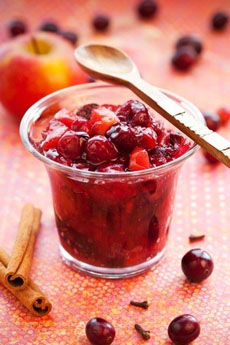
Post-Thanksgiving uses for cranberry sauce.
Photo by Sarsmis | Fotolia. |
|
Sweeten as needed and spoon into tartlet shells, topped with orange zest, crème fraîche and/or mascarpone.
Use as a topping for ice cream or sorbet—as is, or puréed as needed.
Do you have a favorite use for leftover cranberry sauce? Let us know!
|
|
|
Permalink
|
|
November 25, 2011 at 6:04 am
· Filed under Recipes, Thanksgiving & Fall
|
|
What about the leftovers? Photo courtesy
iGourmet.com |
|
Have too many leftovers?
We love the fried stuffing balls we wrote about on Wednesday. The recipe also turns leftover cranberry sauce into a dip for the stuffing balls.
What about too much turkey and too many sweet potatoes? Here are some ideas from Spice Islands and THE NIBBLE:
Turkey Cranberry Sandwich
Mix cranberries with mayonnaise and make a turkey sandwich on better-for-you whole wheat bread or toast. Add leftover stuffing, salad or a combination of lettuce, tomato and sliced cucumbers. As a side with your sandwich, crunch on any remaining crudités.
Turkey Pot Pie
Leftover turkey is a wonderful excuse to make pot pie! Here’s a recipe.
|
White Bean Turkey Chili
Use a traditional white bean turkey chili recipe with cumin—here’s a recipe from Emeril Lagasse. For a more complex flavor, add two teaspoons of vanilla to the recipe. Long a “secret” ingredient in chili, vanilla, also from Mexico, mellows the heat of the chiles, pairs well with cumin and adds a rich, earthy taste and aroma.
Sweet Potato Mash
You can turn candied sweet potatoes into mashed potatoes as a side, or sweetened to taste with sugar and pumpkin pie spices (plus some vanilla extract) to fill tartlet or pie shells.
Cranberry Compote
Mix cranberry sauce with a dash of cinnamon, orange liqueur and a teaspoon of vanilla. Heat on the stove until warm and pour over vanilla or berry ice cream or sorbet.
Tomorrow: 15 things to do with leftover cranberry sauce.
|
|
|
Permalink
|
© Copyright 2005-2026 Lifestyle Direct, Inc. All rights reserved. All images are copyrighted to their respective owners.