THE NIBBLE BLOG: Products, Recipes & Trends In Specialty Foods


Also visit our main website, TheNibble.com.

Healthier Bread Options For National Bread Month

November is National Bread Month and we admit: We’d rather have great bread than a steak! We received an email from nutritionist Dietitian Desiree Nielsen about healthier bread options, and we’re passing them on to you.

Bread often gets a bad rap with fingers pointing to it for empty calories, refined carbs, diet-unfriendly and more.

Desiree offers some myth busters so you can feel no guilt about enjoying bread in your diet. Disclosure: She partners with Silver Hills Sprouted Bakery, so these tips focus on sprouted grains.

But sprouted grains are great! Silver Hills sprouted breads were our Top Pick Of The Week earlier this year. We found Silver Hills breads to be much tastier than other brands we tried.

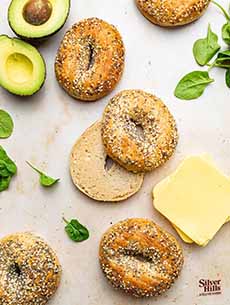
It’s not just sliced bread. Silver Hills also makes bagels, buns, and tortillas. We just had one of the bagels for breakfast!
 
 
MYTH: Whole Grain Breads are the Healthiest

This statement is largely accurate. We know that whole grains are healthy. But what many of us don’t know is that sprouted whole grains are even better, unlocking more nutrition your body can use. Sprouted grains:

  • Have increased microbiome-boosting fiber to aid digestion while keeping you full and satisfied.
  • Offer an anti-inflammatory boost thanks to higher antioxidant activity (300%-470%) due to with flavonoids and other anti-inflammatory nutrients such as vitamin C and manganese.
  • Make minerals more bioavailable, including zinc and selenium which are immune-supportive minerals (and help you to help stay healthy this winter).
  •  
     
    MYTH: All Bread is Vegan

    Beyond the basic flour, water, and salt, many breads contain additional ingredients. These can include fats; sweeteners such as corn syrup, honey, or sugar; eggs; or dairy-based ingredients like butter or whey. Read the labels, and if you want bread that is 100% plant-based, choose brands that are certified vegan.
     
     
    MYTH: Bread Doesn’t Have Protein

    For those looking to up their protein intake, turn to sprouted bread. When grains begin to sprout, vital enzymes are released, breaking down starch stores and digestive inhibitors.

    This is why sprouted grains have lower glycemic index levels as well as increased soluble fiber and protein. Some, like Silver Hills sprouted breads, have 6–7g of protein per slice.

    And by the way, the flavor of sprouted breads are more complex and flavorful than standard white or whole wheat breads.
     
     
    Bread Isn’t Diet Friendly

    Not all carbs are created equal. Eliminating bread carbs across the board means eliminating some great sources of fiber and nutrients.

    Whole sprouted grains have complex carbs. Essential nutrients, like B vitamins and vitamin C, are made more available to the body, giving you a boost of focus, mental alertness, and greater energy to power through your day.

    Are you ready to take a bite?
     
     
    > What are sprouted foods?

    > The history of bread.

    > The different types of bread.


    Silver Hills Bakery Sprouted Grain Bagels
    [1] The sprouted bagels are a real treat (all photos © Silver Hills Sprouted Bakery).

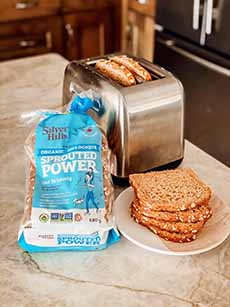
    Silver Hills Sprouted Grain Bread In A Toaster
    [2] Morning toast will be tastier and better for you.

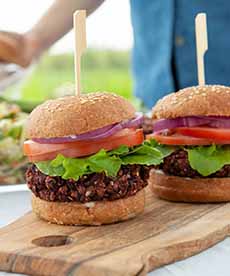
    Vegan Burgers On Silver Hills Sprouted Hamburger Rolls
    [3] A sprouted roll for your burger is so much more flavorful than typical white bread rolls.

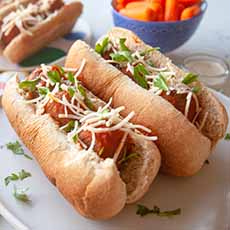
    Meatball Sub On A Sprouted Grain Roll
    [4] Enjoy your meatball sub on a sprouted roll.


    CHECK OUT WHAT’S HAPPENING ON OUR HOME PAGE, THENIBBLE.COM.


    Comments off

    Painterland Sisters Skyr Yogurt For National Greek Yogurt Day

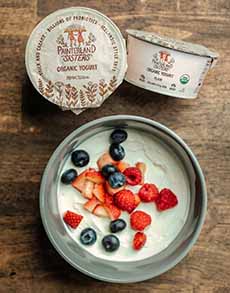
    Painterland Sisters Skyr With Fruit
    [1] A bowl of skyr with fresh fruit is a protein-packed breakfast or lunch (photos #1, #2, #3, #6, and #7© Painterland Farms).

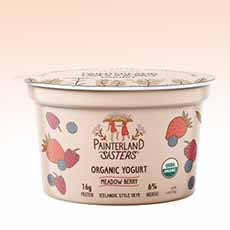
    Painterland Sisters Skyr
    [2] In a store’s yogurt section.

    Painterland Farms Organic Skyr
    [3] Close-up on a cup.

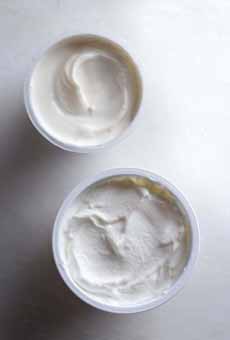
    Comparing The Thickness Of Skyr vs. Greek Yogurt
    [4] Compare the thickness of skyr on top, versus Greek yogurt on the bottom (photo © Cook’s Science).

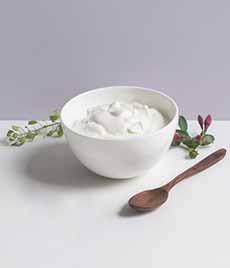
    Bowl Of Plain Skyr
    [5] A bowl of thick, creamy skyr. It was eaten this way—plain, unflavored, unsweetened—until recent times (photo © Icelandic Provisions).

    Painterland Sisters
    [6] The Painter sisters.

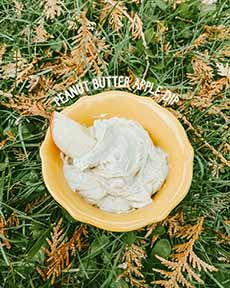
    Peanut Butter Dip Recipe
    [7] Peanut butter apple dip with plain skyr. Here’s the recipe.


    November 9th is National Greek Yogurt Day. We’ve written lots about Greek yogurt, and much less about its Norwegian-Icelandic cousin, skyr (pronounced SKEER).

    With both Greek yogurt and skyr, more of the water is strained away, creating the extra-thick, creamy texture and mouthfeel.

    Skyr is thicker than Greek yogurt and less tangy-an option for those who find plain Greek yogurt a bit too tangy (photo #4).

  • Greek yogurt is yogurt, made from regular milk (whole or skim) that’s been cultured with specific bacteria and then fermented. It is then triple-strained, draining away the watery whey, which results in a much thicker consistency than regular yogurt.
  • Skyr is an Icelandic-style strained yogurt made with milk (whole or skim) that is heated; then skyr-specific cultures (bacteria) are added. Over time, the cultures activate and begin to ferment the milk, forming curds and whey. At this point, the whey is removed, leaving a thicker, creamier paste—more concentrated than Greek yogurt and higher in nutrients.
  •  
     
    MEET PAINTERLAND FARMS SKYR

    Painterland Farms is a fourth-generation organic farm owned by the Painter family. Sisters Stephanie and Haley Painter, who manage the yogurt business, are two of the four siblings of the current generation.

    In the rolling hills of north-central Pennsylvania, they aim to preserve, showcase and utilize their family’s organic dairy and crop farm. They practice regenerative farming.

    Painterland skyr is absolutely delicious. The sisters have created a brand of whole-milk skyr with five flavors, each high in protein and probiotics, and low in sugar (the total sugar in sweetened varieties is 7g).

    Painterland skyr is thicker and creamier than the Greek yogurt standing next to it on the shelf. That’s because it has 6% milkfat instead of the typical 5% of whole milk Greek yogurt. (As with, say, 0% skim milk versus 1% versus 2%, you can taste the difference added by each percentage of fat.)

    Each 5.3-ounce cup has:

  • 16g protein (18g for Plain)
  • 12 billion probiotics
  •  
    The five flavors include Blueberry Lemon, Meadow Berry, Plain, Strawberry, and Vanilla Bean.

    Painterland skyr is organic, non-GMO, lactose-free, and gluten-free. The brand is certified OU Kosher (Dairy).

    One of the things we like best about skyr versus Greek yogurt is that skyr has less sugar in the sweetened flavors. Painterland uses organic cane sugar, but not that much of it.

    It may not be the liking of those with a sweet tooth, who prefer a more preserves-packed yogurt. But we’re very content with the low level of sugar in Painterland skyr. It engenders a more subtle flavor that lets the clean, pure, creaminess of the yogurt shine through.

    Here’s a store locator.

    Discover more at PainterlandSisters.com.
     
     
    THE HISTORY OF SKYR

    Skyr is a yogurt-like product that has been around for more than 1,000 years, since the days of the Vikings. (Greek yogurt has probably been around since )

    It originated in Norway and became a diet staple in Iceland as well.

    It’s believed that some version of skyr predates the Viking settlement of Iceland in 874 C.E. (although perhaps it was as early as 800 C.E.—here’s more about the Vikings) [source].
     
     
    The Modern Progression Of Skyr

    Icelandic skyr was and is made from skimmed raw sheep’s milk or cow’s milk.
     
    Skyr remained a product known largely to Scandinavians until 2005. That year, it was first exported to the U.S. and sold at Whole Foods Markets. Licensed production began the next year in Denmark and Scotland.

    The commercial distribution of skyr outside of Iceland increased in the 2010s. Marketing positioned skyr as a low-sugar, no-fat, high-protein product consumed as a snack. (In fact, it can be consumed in any way that yogurt is consumed, at every meal of the day.)

    In 2012, 80% of exported Icelandic skyr went to Finland and 20% to the U.S. [source].

    Skyr changed slightly in America: Some producers made it from whole milk in addition to or instead of a skim milk variety.

    It was also made without rennet, an organic substance that contains the enzyme rennin. It can be obtained from certain animals and plants. And it is an essential component of cheese: it coagulates milk into curds and whey.
     
     
    Is Skyr The Same As Yogurt Cheese?

    You may hear of skyr being called a yogurt cheese. Some skyrs are made with rennet, which makes them technically cheeses. Why use rennet? It’s a natural coagulant that makes the product thicker.

    The category of spoonable dairy products can be broken down into technical cheeses and non-cheeses.

    The use of rennet turns skyr, and other products such as fromage blanc and quark, into cheese.

    This is technically so, even though they look the same (relatively speaking) as yogurt, sour cream, or other soured and or cultured milk product that is made without rennet and is not a cheee.

    You can’t tell the difference between these “cheeses” and “non-cheeses” by looking at them or tasting them. It’s all in the recipe.

    ‘Nuff said?
     
      
     > The history of yogurt.
     
     
    > The different types of yogurt.


    CHECK OUT WHAT’S HAPPENING ON OUR HOME PAGE, THENIBBLE.COM.


    Comments off

    GIFT OF THE DAY: Hot Sauce For A Cause

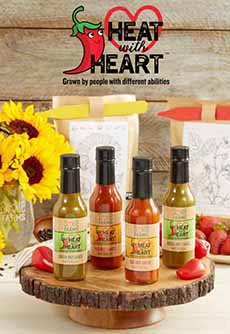
    Heat With Heart Hot Sauce
    [1] Smile Farms sells red and green varieties of hot sauce(both photoa © Smile Farms.

    [2] The first step is planting the seeds.

      Heat with Heart™ hot sauce is a feel-good stocking stuffer or party favor. The red and green hot sauce varieties are composed entirely of chile peppers grown by Smile Farmers.

    Smile Farms’ mission is to provide developmentally disabled adults with meaningful work opportunities at farms, urban gardens, greenhouses, and farm stands where they can grow and sell flowers, plants and produce in their local communities.

    More than 250 farmers recieve valuable educational, vocational, and paid employment opportunities, tending to their crops with incredible care and pride.

    In the hot sauce initiative, they experience the deep satisfaction of seeing their chile peppers go from seed to shelf, turning the literal fruits of their labor into a marketable product.

    When you purchase Heat with Heart hot sauce, 100% of the proceeds fund jobs and training for these individuals.

    All hot sauce orders are fulfilled by paid Smile Farms employees as well. It’s a wonderful endeavor.
     
     
    GET YOUR HOT SAUCE

    Head to SmileFarms.org.
     
     
    > The history of chile peppers.

    > The history of hot sauce.

    > The different types of chile peppers.


    CHECK OUT WHAT’S HAPPENING ON OUR HOME PAGE, THENIBBLE.COM.


    Comments off


    © Copyright 2005-2026 Lifestyle Direct, Inc. All rights reserved. All images are copyrighted to their respective owners.